Metro
ECOWAS Court Finds FG Guilty of Violating Rights of #EndSARS Protesters

- /home/rhoncare/pointblank.ng/wp-content/plugins/mvp-social-buttons/mvp-social-buttons.php on line 27
https://pointblank.ng/wp-content/uploads/2020/10/EndSARS-900x600.jpg&description=ECOWAS Court Finds FG Guilty of Violating Rights of #EndSARS Protesters', 'pinterestShare', 'width=750,height=350'); return false;" title="Pin This Post">
- Share
- Tweet /home/rhoncare/pointblank.ng/wp-content/plugins/mvp-social-buttons/mvp-social-buttons.php on line 69
https://pointblank.ng/wp-content/uploads/2020/10/EndSARS-900x600.jpg&description=ECOWAS Court Finds FG Guilty of Violating Rights of #EndSARS Protesters', 'pinterestShare', 'width=750,height=350'); return false;" title="Pin This Post">
The Community Court of Justice, ECOWAS, has ruled that the Federal Republic of Nigeria violated the human rights of Obianuju Udeh and two others.
The court found Nigeria in breach of Articles 1, 4, 6, 9, 10, and 11 of the African Charter on Human and Peoples’ Rights, specifically on the right to life, security of person, freedom of expression, assembly and association, prohibition of torture, the duty of the state to investigate, and the right to effective remedy.
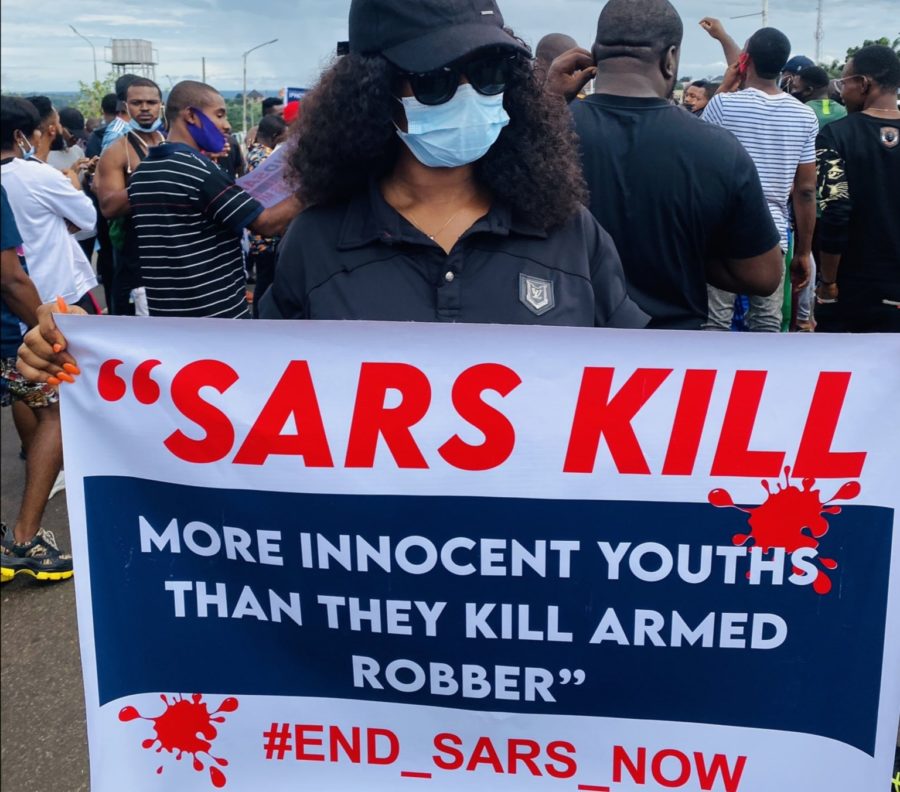
The applicants, Obianuju Udeh, Perpetual Kamsi and Dabiraoluwa Adeyinka, alleged that these violations occurred during the peaceful protests at the Lekki Toll Gate in Lagos State on October 20 and 21, 2020.
The presiding judge, Justice Koroma Sengu, who delivered the judgment, dismissed the allegation that the right to life as guaranteed under article 4 of the ACPHR is violated.
He, however, said that the Federal Government must pay each applicant N2 million as compensation for violations of their security of person, prohibition of torture and cruel, inhuman, and degrading treatment, rights to freedom of expression, assembly, and association, duty to investigate human rights violations, and right to effective remedy.
Additionally, he said the Federal Government must adhere to its obligations under the African Charter on Human and Peoples’ Rights, investigate and prosecute its agents responsible for these violations, and report to the court within six months on the measures taken to implement this judgment.
The applicants alleged that during the peaceful protests against the SARS unit of the Nigerian Police Force at Lekki Toll Gate on October 20 and 21, 2020, the respondent committed several human rights violations.
Triggered by the alleged killing of Daniel Chibuike, the protests aimed to address police harassment and brutality.
The first applicant’s claims include that the soldiers shot protesters, resulting in deaths and injuries, which she live-streamed, subsequently receiving threatening phone calls that forced her into hiding and eventual asylum.
The second applicant, responsible for protesters’ welfare, described how soldiers began shooting after a power cut, leading to her hospitalisation due to police tear gas.
The third applicant recounted narrowly escaping being shot, observing the refusal of ambulance entry by soldiers, and later witnessing inadequate hospital care for victims.
She argued that she and her colleagues took over the victims’ care and she faced ongoing threats and surveillance, believed to be by respondent’s agents.
The applicants sought declaratory relief and compensation from the court for these violations.
The respondent denied all claims made by the applicants, asserting that the protesters unlawfully assembled at the Lekki toll gate on October 20, 2020, under the guise of protesting against SARS.
The respondent also maintained that its agents followed strict rules of engagement and did not shoot or kill protesters.
It argued that the first applicant incited the crowd by playing music and using her Instagram page to stir disaffection against law enforcement, who were targeting escapee members of Boko Haram and bandits.
The respondent contended that the second applicant’s logistics and welfare support provision indicated her support for the violent protest.
It claimed that soldiers were present to restore peace until the police arrived, denying any harm inflicted on protesters and the refusal of ambulance access.
The respondent also denied that the third applicant’s presence was peaceful, asserting it was meant to escalate violence.
It argued that the Lagos State Government managed the treatment and care of the injured and submits that the applicants have not provided credible evidence to support their claims, or the reliefs sought.
In its judgment, the court found there was no violation of the right to life.
However, the court held that the respondent breached several articles of the ACPHR which occasioned fundamental breaches of human rights violation therein.
Furthermore, the court declared that the applicants were denied the right to an effective remedy.
The court ordered that the respondent make reparations to the applicants for the violation of their fundamental human rights.


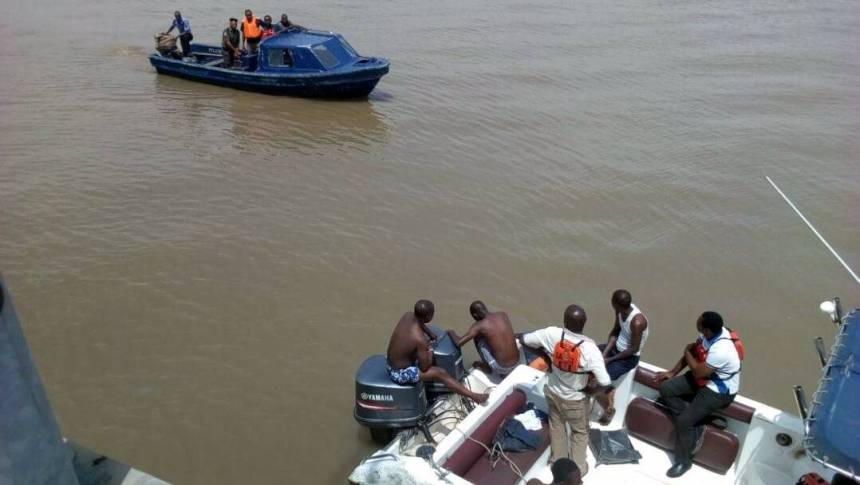
Several people are feared missing after a boat conveying mourners from a burial ceremony in Ukubie community, Southern Ijaw Local Government Area of Bayelsa State, sank on Friday near Oweikorogha community, throwing passengers into the river.
The incident, which has plunged the affected communities into panic and grief, involved a vessel popularly known as a Love Boat.
Reports said that the boat was conveying people who had attended a burial ceremony in Ukubie when it capsized shortly after passing Oweikorogha community.
Information emerging from the area indicated that several passengers were feared missing following the accident, although the exact number of people aboard the vessel and those unaccounted for had yet to be established as of the time of filing this report.
The incident has sparked anxiety among families and residents of Ukubie and Oweikorogha, as efforts continue to establish the fate of those who were travelling on the boat.
Residents and community members have mobilised to assist in the search for passengers who may have survived the accident.
The rescue efforts were said to be ongoing, with residents joining hands to locate those who were thrown into the water when the vessel went down.
However, the number of survivors, if any, had not been officially confirmed at the time of this report.
Families of the passengers were said to be anxiously awaiting information about their loved ones, as the incident cast a pall of mourning over the two communities.
The circumstances surrounding the boat mishap remain unclear, as authorities are yet to issue an official statement explaining what caused the vessel to sink.
It was also not immediately established how many passengers were aboard the boat or whether the vessel encountered mechanical difficulties or other challenges before capsizing.
Southern Ijaw is one of the major riverine local government areas in Bayelsa State, with several communities relying heavily on waterways for transportation because of the limited road network.
Boat transportation remains a major means of movement for residents travelling between riverine settlements, particularly during social gatherings, burial ceremonies and other community activities.
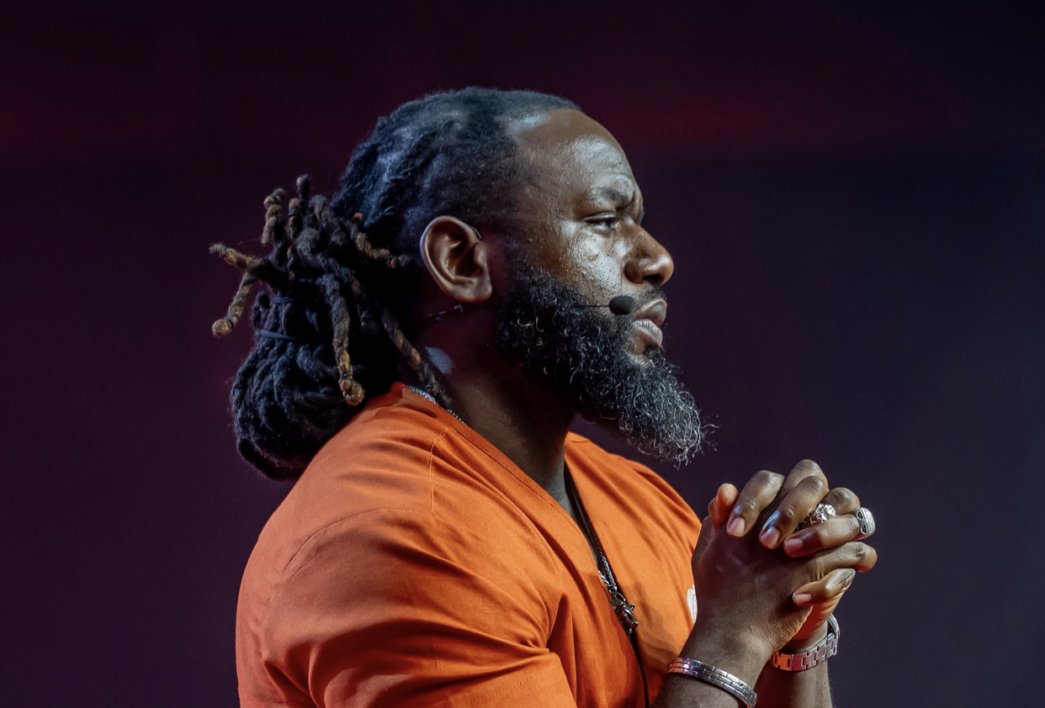
The Lagos State High Court has restrained Jimmy Odukoyafrom parading himself as the senior pastor and spiritual head of the Fountain of Life Church, following a legal challenge by the church’s board of trustees.
Justice O.O. Adewunmi-Oshin issued the order on Wednesday after hearing an application filed by the incorporated trustees of the church, who are seeking to prevent Jimmy from acting in the capacity of senior pastor.
The trustees told the court that Jimmy had ceased to occupy the position following the appointment of a successor by the church’s late founder, Pastor Taiwo Odukoya, who died in 2023.
In their application, the trustees sought an injunction to prevent Jimmy, either personally or through representatives, from interfering in the church’s administration and activities while the legal process continues.
According to reports, part of the order read: “A Pre-emptive Order of Injunction restraining the Respondent, whether acting personally or through any proxies in any alleged capacity as the Senior Pastor of the Church from interfering, disrupting, meddling with and or obstructing the activities, governance and any other business of the Church pending the Applicant’s full compliance with the High Court of Lagos State (Expeditious Disposal of Civil Cases) Practice Directions No. 2 of 2019 on Pre-action Protocol.”
The court also granted the trustees permission to commence the action under the pre-action protocol provided for in the Lagos State High Court’s practice directions.
In his ruling, the judge said: “Leave is hereby granted to the Applicant to commence this action under the Pre-Action Protocol pursuant to Paragraph 4 of the High Court of Lagos State (Expeditious Disposal of Civil Cases) Practice Direction No. 2 of 2019.”
The court proceedings came a day after the church’s board of trustees announced Jimmy’s removal as senior pastor, alleging that his appointment did not reflect the succession arrangements made by his late father.
The board explained that its decision followed a review of the church’s constitution and instructions allegedly documented by Taiwo before his death.
According to the trustees, they recently uncovered a video recording made by the late founder in December 2021, in which he outlined his preferred succession arrangement.
They further claimed that the recording was not made available to the board before Jimmy’s appointment, which they subsequently described as wrongful.

Access to reliable suppliers, working capital, inventory management and technology are critical to helping Africa’s neighbourhood retailers build sustainable businesses, according to a new Boost Africa feature highlighting TradeDepot.
For millions of small retailers across Africa, keeping products on their shelves is only one part of running a successful business. Access to affordable goods may bring customers through the door, but sustainable growth requires much more than having products available for sale.
From limited working capital and inconsistent supplies to the time spent sourcing goods from multiple distributors, small business owners face challenges that affect their ability to serve customers, expand inventory and remain competitive.
Consider a neighbourhood shop owner who understands what customers want but cannot afford to purchase enough stock to meet demand. Another retailer may spend hours contacting different suppliers and negotiating purchases, leaving little time to focus on customers and other aspects of the business.
These challenges highlight why small retailers need more comprehensive support systems to grow.
According to a feature by Boost Africa, sustainable retail growth depends on reliable access to suppliers, sufficient working capital, efficient operations and technology that helps business owners make informed decisions.
The initiative identifies several areas where small retailers need support, including access to products at competitive prices, inventory management, timely stock replenishment, financing and tools that reduce the cost and time involved in sourcing goods.
Technology is increasingly emerging as an important part of addressing these challenges.
Nigerian technology company TradeDepot is working to improve how small retailers access products by connecting them with manufacturers and distributors through its digital platform.
The company’s approach reflects a broader shift in retail distribution, moving beyond the supply of goods towards building an ecosystem that helps small businesses operate more efficiently.
Access to finance also remains a major part of this conversation.
Through Boost Africa, the European Investment Bank (EIB) invested €10 million in Partech Africa Fund, which subsequently backed TradeDepot.
The investment highlights how development finance and venture capital can support innovative African businesses working to address practical challenges across the continent.
Boost Africa supports investment in businesses developing solutions to economic and social challenges, with the potential to create wider opportunities for growth and development.
For neighbourhood retailers, the bigger issue is no longer just where to find products. It is how to access the finance, technology, supply networks and business support needed to turn small shops into sustainable enterprises.
As Africa’s retail sector continues to evolve, strengthening the businesses that serve communities every day could play an important role in building a more inclusive and efficient economy.
Watch the video: TradeDepot brings commerce closer to communities with Boost Africa.