
Headlines
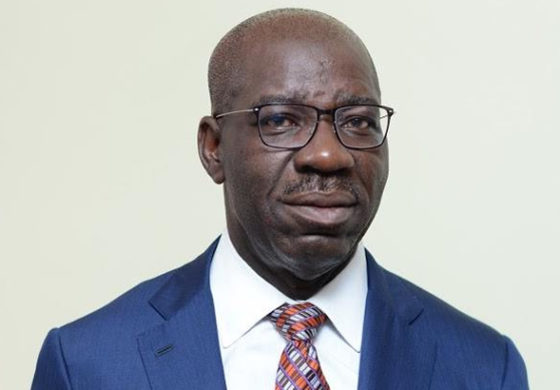
Edo 2020: Obaseki, Seven APC Govs Seek Audience with Buhari after Meeting Tinubu

- /home/rhoncare/pointblank.ng/wp-content/plugins/mvp-social-buttons/mvp-social-buttons.php on line 27
https://pointblank.ng/wp-content/uploads/2019/07/Godwin-Obaseki-edo-governor.jpg&description=Edo 2020: Obaseki, Seven APC Govs Seek Audience with Buhari after Meeting Tinubu', 'pinterestShare', 'width=750,height=350'); return false;" title="Pin This Post">
- Share
- Tweet /home/rhoncare/pointblank.ng/wp-content/plugins/mvp-social-buttons/mvp-social-buttons.php on line 69
https://pointblank.ng/wp-content/uploads/2019/07/Godwin-Obaseki-edo-governor.jpg&description=Edo 2020: Obaseki, Seven APC Govs Seek Audience with Buhari after Meeting Tinubu', 'pinterestShare', 'width=750,height=350'); return false;" title="Pin This Post">
Eight governors elected on the platform of the All Progressives Congress, on Sunday, held a meeting with the National Leader of the APC, Asiwaju Ahmed Tinubu, at the state House Marina, Lagos to make a case for the Edo State Governor, Godwin Obaseki.
Although details of the meeting were still sketchy as of the time of filing this report, it was gathered that the governors were at the closed-door meeting to seek Tinubu’s intervention in the search for truce in the political conflict between Obaseki and his godfather, the National Chairman of the APC, Adams Oshiomhole.
Governors who attended the meeting included the chairman of the Progressives Governors Forum, Abubakar Bagudu (Kebbi), Abdullahi Ganduje (Kano), Babajide Sanwu-Olu (Lagos), Rotimi Akeredolu (Ondo), Adeboyega Oyetola (Osun) and Dapo Abiodun (Ogun).
Others are Mohammed Abubakar (Jigawa) and Obaseki.
Five of the governors, including Obaseki, then proceeded to Abuja, preparatory to a meeting with the President, Major General Muhammadu Buhari (retd.).
A source privy to the meeting who pleaded anonymity because he was not authorized to speak to the media, said, “The governors met with our national leader, they laid their cards on the table and plainly asked for his intervention.
“They admitted that mistakes had been made especially with the governor’s refusal to pave the way for the swearing in of 14 elected APC members as members of the state Assembly.
“They also noted that the meeting ought to have held earlier and that the governor who was present at the meeting should have reached out to seek help much earlier before the situation degenerated to the level of a public spat between the governor and the national chairman.
“And being the kind of person, he is, our leader listened patiently and he is not one to rush into judgment before hearing from the other party. He will look at what is in the party’s best interest after consulting widely with other stakeholders before taking a final stand.”
The National Working Committee of the party had approved the direct primary as the mode of selecting the party’s standard bearer for the forthcoming governorship election in the state.
Loyalists of the governor are opposed to the mode arguing that it was meant to frustrate his chances of standing as the party’s standard bearer.
Obaseki and his estranged political godfather have been at odds over the former’s bid for a second term in office following a long-drawn battle for the political control of the state.
Pundits accuse the governor of working with his fellow governors opposed to Oshiomhole leadership style in an earlier attempt to force Oshiomhole out of office.
A member of the party’s National Working Committee who also pleaded anonymity for fear of retribution said, “Besides the feud between Obaseki and our National Chairman, we have to consider the overall interest of our party. The best thing to do for our party in Edo is to have direct primaries. This is why; it is the best for us even without the conflict between the two leaders. The last time we did primaries even for the election of Obaseki as governor, it was direct, we have done that there before, we can only improve on it than to go and try something new. Two, if we are learning from our past mishaps like what happened in Rivers State, there were litigations over the congresses we did before and we went into indirect and we used officials whose positions were being challenged in court as delegates and when the court nullified the congresses that brought the executives, everything done was nullified, we lost the opportunity to contest the elections in Rivers State.
“There are two chairmen in Edo, we have recognized the removal of the Anselem-led exco and the matter is still in court, whichever way the court rules, we may have a problem if we use the indirect using the executives as delegates.
“Then there is the issue of COVID-19 with the protocol of social distancing. It will be easier to manage a crowd in each ward instead of bringing four to five thousand people in one place as the indirect mode will require.”
When contacted, the APC National Vice-Chairman, South South, Hilliard Eta said, “As the governing political party, the APC will continue to lead by example when it comes to giving party members the right to choose candidates.
Also, the National Publicity Secretary of the party, Mallam Lanre Issa-Onilu, said, “The APC will, as always, provide a level playing field for all aspirants to pursue their legitimate aspirations in line with the constitution on our party guidelines.”
The Punch


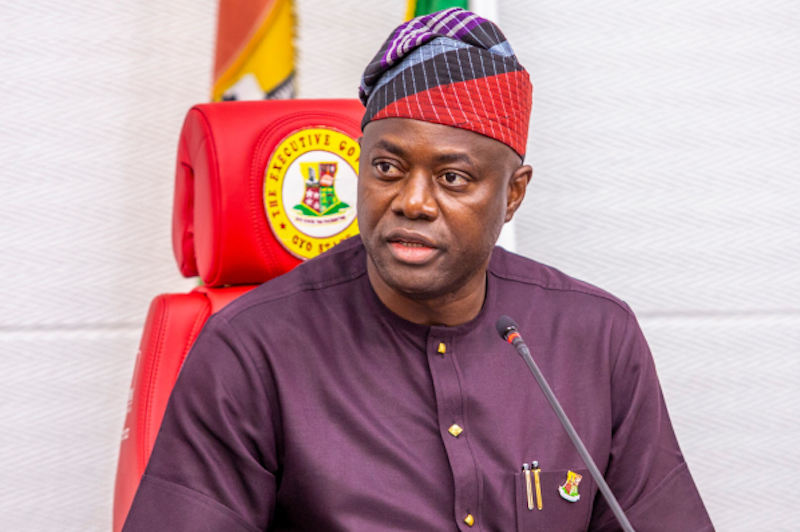
The Allied Peoples Movement (APM) presidential candidate, Seyi Makinde, on Thursday, criticised President Bola Tinubu’s “Emi Lokan” slogan ahead of the 2027 presidential election.
Makinde said Nigerians do not need “turn-by-turn nepotism”, arguing that voters should be free to decide who becomes the country’s next president in 2027.
The Oyo State governor spoke during the APM’s town hall meeting in Akure, Ondo State.
Makinde asked: “How can someone say ‘Eemi lokan’ in a country like Nigeria? You were given the opportunity. If you recall the 1999 presidential election, the South-West voted massively for Baba Olu Falae, but the rest of Nigerians voted for Baba Obasanjo. So, this is not an issue that only the South-West can resolve; it is an issue we must address collectively as Nigerians.
“We do not want ‘turn-by-turn nepotism’, nor do we want a situation where people say, ‘I will vote for projects because it is my turn’. You will not finish those projects, and when it becomes someone else’s turn, they will do the same thing. We will end up with a Nigeria where we cannot get value for the resources belonging to Nigerians.
“The Reset Nigeria agenda is about building a country where infrastructure development supports economic growth and addresses the concerns of young people and women.
“Once we fix our economy, no zone will be left behind, and no demographic group will be left behind.”
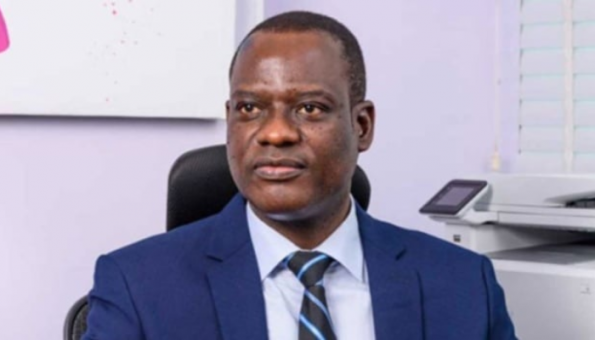
Minister of Finance and Coordinating Minister of the Economy, Taiwo Oyedele, has denied saying the Federal government will introduce a fuel tax when the economy stabilises and income levels improve.
In a post on X on Tuesday, Oyedele said his remarks during an interview with ARISE News was misrepresented, insisting that a “fuel tax is not on the table.”
However, during the interview with Rotus Odiri, ARISE News Business Correspondent, on the sidelines of the 2026 International Monetary Fund and World Bank annual meetings in Bangkok, Thailand, Oyedele said the tax would come when income levels improve enough for Nigerians to accommodate it.
He said taxes account for between 20 and 80 percent of pump prices in some countries, while many African countries impose between six and 10 different taxes on fuel products.
He said introducing fuel tax while petrol was still subsidised would have been counterproductive because government would effectively be paying the tax itself.
According to him, imposing the tax immediately after removal of petrol subsidy would be insensitive to Nigerians.
“The objective should be that instead of trying to suppress prices, which hasn’t worked for us, it hasn’t worked for any country in the world, not one. Instead of trying to suppress prices, think about how to grow income faster than prices rise,” Oyedele said.
“That’s how you bring prosperity and grow the middle class and that is exactly what we are doing as led by Mr. President himself.
“At the appropriate time, when the economy has stabilizes and income level will be able to accommodate it, those taxes will come. Not because we want to impose taxes,” he added.
In his Tuesday post, the minister reiterated that introducing a fuel tax at this time would be insensitive following removal of petrol subsidy, describing reports that government will introduce the levy when the economy stabilises as “fake news.”
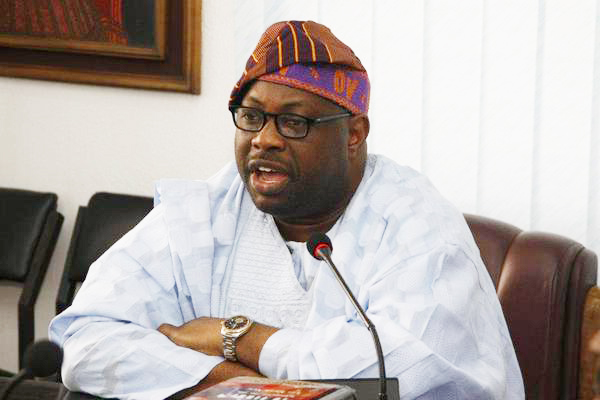
A chieftain of the African Democratic Congress (ADC), and Deputy Director of the Presidential Campaign Council, Chief Dele Momodu, has described former Vice-President Atiku Abubakar as the most nationally formidable and experienced among the leading contenders for the 2027 presidential election.
Momodu said Atiku’s experience at the national level distinguishes him from President Bola Tinubu and former Anambra State Governor, Peter Obi.
He stated this on Wednesday during an interview on Eagle 102.5 FM, Ilese-Ijebu, in Abeokuta.
“If you look at the antecedents of the three major candidates, between Atiku Abubakar and Peter Obi, you will see that Atiku is the most experienced. He has managed our country at the highest level,” he said.
Momodu traced Atiku’s political journey to the 1992 Social Democratic Party (SDP), presidential primary where he contested against late MKO Abiola and stepped down for him.
He said Atiku accepted the outcome without crisis even after he was not picked as Abiola’s running mate, describing it as a mark of true democratic temperament.
“He is the only one who started from around 1992, contested the SDP primary against Abiola and stepped down with uncommon equanimity. He did not make any noise,” Momodu said.
He noted that Atiku was among the founders of the Peoples Democratic Party, PDP, and served as Vice-President from 1999 to 2007.
Comparing Atiku with Obi, Momodu argued that while Obi’s best was demonstrated in Anambra, Atiku’s was at the presidency level managing the national economy.
“Peter Obi has tried his best in Anambra, while Atiku’s best is at the level of vice president controlling the economy of Nigeria. The difference is clear. He has matured in experience and exposure,” he said.
Momodu also said President Tinubu’s experience was largely limited to Lagos.
“What I’m trying to say is that Tinubu’s experience was limited to Lagos, and that is why when he became president, he thought Nigeria was Lagos. And he has found out now that Nigeria is not Lagos,” he said.
He argued that the current economic hardship under the present administration did not show prosperity, insisting Atiku remained better positioned to lead the country.
“Well, we are yet to see that prosperity, and if yesterday would determine today and tomorrow, it is obvious that Tinubu should retire now and let someone else do it,” Momodu added.
DailyPost


