
Headlines
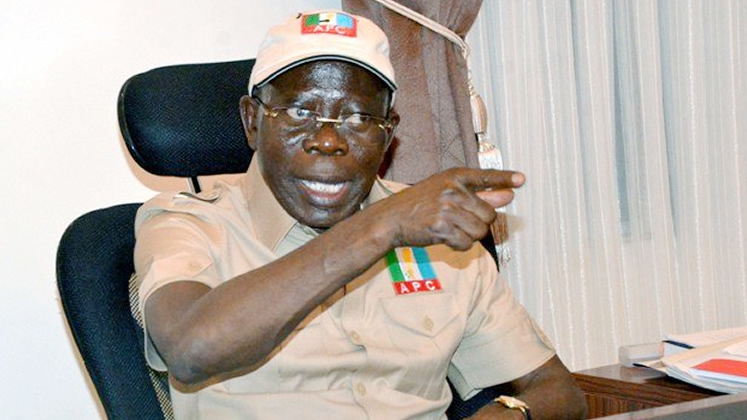
Edo APC Crisis Worsens as Faction Suspends Oshiomhole

- /home/rhoncare/pointblank.ng/wp-content/plugins/mvp-social-buttons/mvp-social-buttons.php on line 27
https://pointblank.ng/wp-content/uploads/2019/04/Oshiomhole.jpg&description=Edo APC Crisis Worsens as Faction Suspends Oshiomhole', 'pinterestShare', 'width=750,height=350'); return false;" title="Pin This Post">
- Share
- Tweet /home/rhoncare/pointblank.ng/wp-content/plugins/mvp-social-buttons/mvp-social-buttons.php on line 69
https://pointblank.ng/wp-content/uploads/2019/04/Oshiomhole.jpg&description=Edo APC Crisis Worsens as Faction Suspends Oshiomhole', 'pinterestShare', 'width=750,height=350'); return false;" title="Pin This Post">
There was confusion in Benin, the Edo State capital, on Tuesday, as the state chapter of the All Progressives Congress announced the suspension of its chairman, Anselm Ojezua.
Shortly after the announcement, another message emerged from the Government House announcing the removal of the state secretary, Lawrence Okah and the suspension of the party’s National Chairman, Adams Oshiomhole.
It was gathered that the sacking of Ojezua caught the state government unawares, forcing Governor Godwin Obaseki to summon an emergency meeting of party leaders in the state.
At the end of the meeting, the ruling party announced the suspension of Okah and Oshiomhole, having passed a vote of no confidence on them.
Earlier in the day, the State Working Committee of the APC had passed a vote of no confidence in Ojezua. Eleven out of the 16-member SWC voted against him during their meeting.
Consequently, Col. David Imoise (retd.) was elected to oversee the affairs of the party pending when “allegations of anti-party activities levelled against Ojezua are investigated.”
According to a statement by Okah, the change in leadership has been communicated to the party’s National Working Committee.
But a statement by the Special Adviser to the Governor on Media Strategy, Crusoe Osagie, said it was Okah that was sacked from office.
“The Edo State Chapter of the All Progressives Congress has removed the State Secretary of the party, Mr Lawrence Okah,” Osagie said.
He said the party also passed a vote of confidence in Ojezua’s leadership.
“This is coming as party chairmen across the 18 local government areas of the state passed a vote of no confidence in the APC National Chairman, Adams Oshiomhole,” he added.
Also, briefing journalists after a meeting of the party’s executive committee earlier, the state APC deputy chairman, Kenneth Asekomhe, said, “After the meeting of the State Executive Committee, in pursuant of Article 17, Section 5 of the APC constitution of 2014, as amended, we have passed a vote of no confidence in the state secretary of the APC, Mr Lawrence Okah. He is hereby removed from office.
“The committee also passed a vote of confidence in the state chairman of the APC, Mr Anselm Ojezua.”
The APC chairmen in the 18 local governments of the state also reaffirmed their support for the second term bid of Obaseki.
The APC Chairman in Esan Central LGA and Secretary, Edo State APC Chairmen Forum, Mike Anakaso, said the chairmen passed a vote of no confidence in Oshiomhole for his role in trying to disintegrate the party in the state.
The state APC auditor, Timothy Osadolor, and the financial secretary, Golda Oribhabor-Onwuka, distanced themselves from a document purporting to remove the state chairman.
Speaking at the party’s secretariat, the two party officials explained that they were taken in a commando-like style to the residence of the suspended secretary and forced to sign some documents.
Osadolor said, “We were taken in a commando-like style to the house of the state secretary, where I was forced to sign the documents purportedly removing Anslem Ojezua.
“There were just eight or nine signatures on the document. My name was badly spelt. I didn’t draw their attention to it but had to play along by signing the document with a fake signature.”
But some local government chairmen of the Edo APC described as untrue the purported vote of no confidence passed in Oshiomhole.
A statement by the leaders of the chairmen and chairman of the party in Etsako West, Mr Ibrahim Akokia, Suleman Bagudu (Etsako Central) and Lugard Alukpe (Owan West) said, “We are the chairmen of the party in the 18 LGAs and we are not aware of the meeting where a vote of no confidence was passed in the national chairman of our party, Oshiomhole, who is doing very well.
“Rather, we are aware that majority of the chairmen have suffered intimidation and harassment in the hands of the Governor Godwin Obaseki-led administration.
“Therefore, we chairmen have passed a vote of no confidence in Governor Obaseki, and the suspended state chairman of the party, Anslem Ojezua. They have not only failed the party, but the people of the state.”
They said from the statements of some leaders of the Peoples Democratic Party, Obaseki and Ojezua had been involved in anti-party activities and they lacked the moral rights to remain in the party.
They added, “Oshiomhole remains our leader and we pass vote of confidence in his leadership.
“We call on the National Working Committee of the party to expel Obaseki from the APC because he is on a mission to destroy the APC in Edo State, but we will resist it.
Meanwhile, the state PDP on Tuesday announced the exclusion of Pastor Osagie Ize-Iyamu from all party activities with immediate effect.
Ize-Iyamu had been reported to be making moves to join the APC.
A statement signed by the state Publicity Secretary, Chris Nehikhare, read,”In the last few days, the Edo PDP has been inundated with calls and enquiries regarding the stories trending both in the print and social media as it concerns one of our leaders, Pastor Osagie Ize-Iyamu.
“As a result of the ‘uneasy quiet’ from our dear pastor and the impression our silence will send to our teeming supporters and followers, the Edo PDP is left with no option but to announce the exclusion of Pastor Osagie Ize-Iyamu from all the PDP-related activities with immediate effect, until he acknowledges, accepts and addresses the issue of his defection to the APC.”


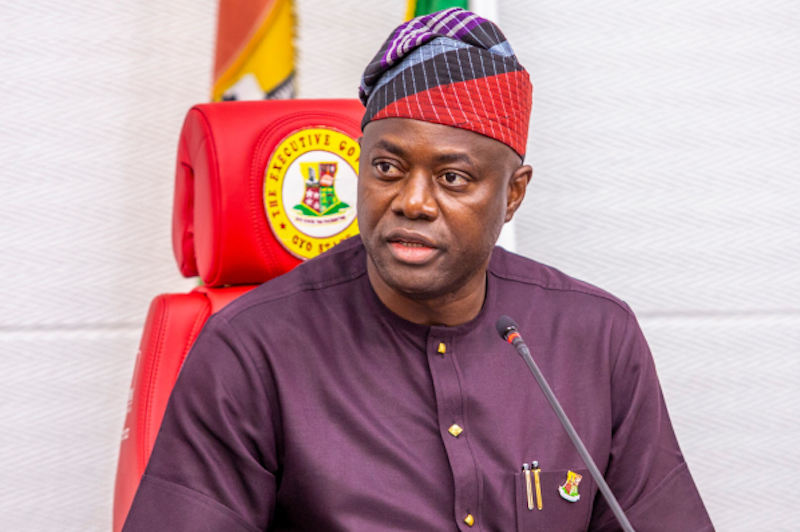
The Allied Peoples Movement (APM) presidential candidate, Seyi Makinde, on Thursday, criticised President Bola Tinubu’s “Emi Lokan” slogan ahead of the 2027 presidential election.
Makinde said Nigerians do not need “turn-by-turn nepotism”, arguing that voters should be free to decide who becomes the country’s next president in 2027.
The Oyo State governor spoke during the APM’s town hall meeting in Akure, Ondo State.
Makinde asked: “How can someone say ‘Eemi lokan’ in a country like Nigeria? You were given the opportunity. If you recall the 1999 presidential election, the South-West voted massively for Baba Olu Falae, but the rest of Nigerians voted for Baba Obasanjo. So, this is not an issue that only the South-West can resolve; it is an issue we must address collectively as Nigerians.
“We do not want ‘turn-by-turn nepotism’, nor do we want a situation where people say, ‘I will vote for projects because it is my turn’. You will not finish those projects, and when it becomes someone else’s turn, they will do the same thing. We will end up with a Nigeria where we cannot get value for the resources belonging to Nigerians.
“The Reset Nigeria agenda is about building a country where infrastructure development supports economic growth and addresses the concerns of young people and women.
“Once we fix our economy, no zone will be left behind, and no demographic group will be left behind.”
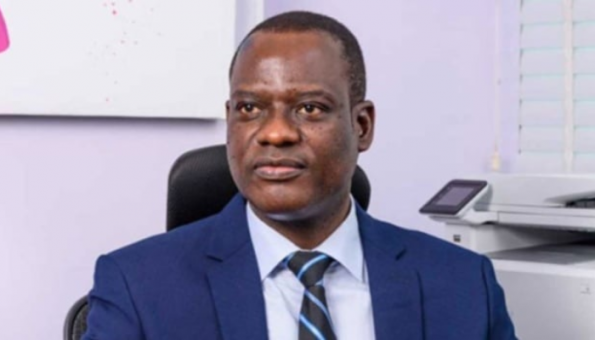
Minister of Finance and Coordinating Minister of the Economy, Taiwo Oyedele, has denied saying the Federal government will introduce a fuel tax when the economy stabilises and income levels improve.
In a post on X on Tuesday, Oyedele said his remarks during an interview with ARISE News was misrepresented, insisting that a “fuel tax is not on the table.”
However, during the interview with Rotus Odiri, ARISE News Business Correspondent, on the sidelines of the 2026 International Monetary Fund and World Bank annual meetings in Bangkok, Thailand, Oyedele said the tax would come when income levels improve enough for Nigerians to accommodate it.
He said taxes account for between 20 and 80 percent of pump prices in some countries, while many African countries impose between six and 10 different taxes on fuel products.
He said introducing fuel tax while petrol was still subsidised would have been counterproductive because government would effectively be paying the tax itself.
According to him, imposing the tax immediately after removal of petrol subsidy would be insensitive to Nigerians.
“The objective should be that instead of trying to suppress prices, which hasn’t worked for us, it hasn’t worked for any country in the world, not one. Instead of trying to suppress prices, think about how to grow income faster than prices rise,” Oyedele said.
“That’s how you bring prosperity and grow the middle class and that is exactly what we are doing as led by Mr. President himself.
“At the appropriate time, when the economy has stabilizes and income level will be able to accommodate it, those taxes will come. Not because we want to impose taxes,” he added.
In his Tuesday post, the minister reiterated that introducing a fuel tax at this time would be insensitive following removal of petrol subsidy, describing reports that government will introduce the levy when the economy stabilises as “fake news.”
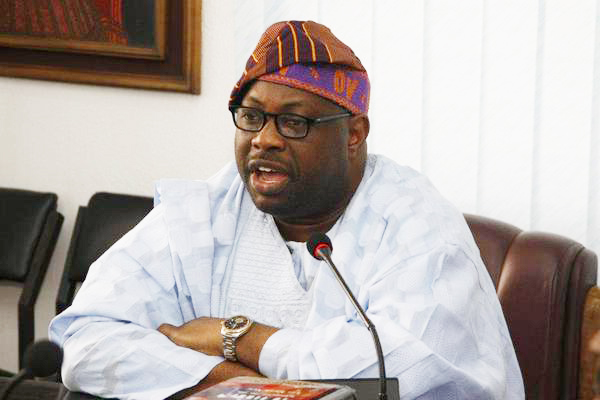
A chieftain of the African Democratic Congress (ADC), and Deputy Director of the Presidential Campaign Council, Chief Dele Momodu, has described former Vice-President Atiku Abubakar as the most nationally formidable and experienced among the leading contenders for the 2027 presidential election.
Momodu said Atiku’s experience at the national level distinguishes him from President Bola Tinubu and former Anambra State Governor, Peter Obi.
He stated this on Wednesday during an interview on Eagle 102.5 FM, Ilese-Ijebu, in Abeokuta.
“If you look at the antecedents of the three major candidates, between Atiku Abubakar and Peter Obi, you will see that Atiku is the most experienced. He has managed our country at the highest level,” he said.
Momodu traced Atiku’s political journey to the 1992 Social Democratic Party (SDP), presidential primary where he contested against late MKO Abiola and stepped down for him.
He said Atiku accepted the outcome without crisis even after he was not picked as Abiola’s running mate, describing it as a mark of true democratic temperament.
“He is the only one who started from around 1992, contested the SDP primary against Abiola and stepped down with uncommon equanimity. He did not make any noise,” Momodu said.
He noted that Atiku was among the founders of the Peoples Democratic Party, PDP, and served as Vice-President from 1999 to 2007.
Comparing Atiku with Obi, Momodu argued that while Obi’s best was demonstrated in Anambra, Atiku’s was at the presidency level managing the national economy.
“Peter Obi has tried his best in Anambra, while Atiku’s best is at the level of vice president controlling the economy of Nigeria. The difference is clear. He has matured in experience and exposure,” he said.
Momodu also said President Tinubu’s experience was largely limited to Lagos.
“What I’m trying to say is that Tinubu’s experience was limited to Lagos, and that is why when he became president, he thought Nigeria was Lagos. And he has found out now that Nigeria is not Lagos,” he said.
He argued that the current economic hardship under the present administration did not show prosperity, insisting Atiku remained better positioned to lead the country.
“Well, we are yet to see that prosperity, and if yesterday would determine today and tomorrow, it is obvious that Tinubu should retire now and let someone else do it,” Momodu added.
DailyPost


