
Metro
Eid el-Fitr: NSCDC Boss Deploys 20,000 Personnel, Assures Watertight Security


The Commandant General of the Nigeria Security and Civil Defence Corps (NSCDC), Dr Ahmed Abubakar Audi, has ordered the deployment of 20000 personnel to ensure peaceful celebration of Eid-el-fitr and adequate security of lives and maximum protection of all Critical National Assets and Infrastructure in the country, before, during and after the period. The CG further directed that personnel of the Corps must remain valiant and tactically prepared to neutralize the activities of criminals during the festive period and beyond.
A statement from the Corps’ Director of Public Relations, DCC Olusola Odumosu, quoted the CG as saying that the time to be extra vigilant and more security conscious is now, considering the current security situation in the country which calls for more concerted efforts and adequate preparation against sudden attacks on innocent citizens and Critical National Assets and Infrastructure by bandits, terrorists and other nefarious Individuals who takes advantage of festive seasons to unleash terror in order to make the country unlivable and the political space ungovernable.
Dr Audi reiterated that the Corps is going to join forces with other security agencies in the country to ensure hitch free worker’s day and Eid al-fitr celebration by declaring total war on all criminal elements bent on circumventing the peace and safety of the country. He declared that he has ordered the deployment of 20,000 personnel nationwide to every nook and cranny of the country to maintain security and fish out criminals from their hideouts.
The Corps helmsman maintained that the covert operations of the Corps ab initio have led to some criminal hideouts and black spots in some parts of the country and to this end, a marching order has been given to all State Commandants and Zonal Commanders to put to effective use all personnel during this period to curtail their excesses..
The Commandant General affirmed that all hands must be on deck and called for the deployment of well trained officers from the Tactical Unit, Arm Squad, Rapid Response Squad, Agro Rangers, Counter Terrorism unit, Chemical Biological Radiological Nuclear Explosive Unit (CBRNE), Special Female Squad, Anti Vandal Unit and the K9 unit to man all identified flash points, recreation centers, places of worship, motor Parks and train stations to prevent any act of sabotage or attack on innocent citizens and holiday makers.
According to the CG, all locations hosting the Critical Assets and Infrastructures across the country will be heavily guarded by the Corps to prevent attacks and stop a reoccurrence of such fire incident which led to the death of over 100 hundred people in an oil bunkering site in Imo State.
Dr Audi also noted that the security situation in the country calls for a robust synergy and collaborations among relevant security agencies to achieve a common goal of security the nation effectively. “For an effective security coverage during the long holiday leading to the Eid al-fitr celebration, there is a need for effective collaborations amongst security agencies to stem the tide of criminalities, therefore all my personnel have been warned to avoid any confrontation with any sister agency; the only confrontation I have permitted for them is against criminals, bandits and men of the underworld” the CG said.
The CG assured the nation of a very peaceful and serene Eid-al Fitr celebration, urging all muslim faithfuls to imbibe the tenets of love and peace in their relationship with their neighbours because where unity and love reigns, peace and progress is inevitable.



The Executive Secretary/CEO of the Lagos State Security Trust Fund (LSSTF) has presented three brand new operational vehicles to the Rapid Response Squad (RRS), Lagos. This is as he received the Commander of the Lagos-owned special force, CSP Shola Jejeloye who paid him a courtesy visit in his office yesterday Friday 16th January 2026. The new RRS operational vehicles continue the spotlight of LSSTF’s ongoing commitment to shore up the capacity of all security agencies in Lagos by providing much-needed security infrastructure, National Association of Online Security News Publishers, NAOSNP can report.
During the courtesy visit, the RRS Commander, Shola Jejeloye expressed profound appreciation to Dr. Ogunsan for his visible leadership and notable achievements since assuming office in November 2025. He described the LSSTF’s support as critical to the operational effectiveness of security agencies in Lagos State, noting that timely provision of logistics significantly enhances rapid response and crime prevention. ‘We don’t have any challenge that will not make us deliver. So we thank you very much for all the support you have rendered to us.’
CSP Jejeloye further appealed to the LSSTF to consider the repair, refurbishment, and rebranding of the RRS’s existing operational vehicles. According to him, such intervention would extend the lifespan of the fleet by more years, improve operational efficiency, and ensure a more consistent security presence across key areas of the state. ‘We are still looking forward to more support. We have some operational vehicles that are not working currently. We want to ensure that what we have we are putting them to active and judicious use.’
In his response, Dr. Ayo Ogunsan reaffirmed the LSSTF’s unwavering support for security agencies and commended the RRS for its professionalism, resilience, and sustained efforts in maintaining peace and order in Lagos. He described the RRS as a critical pillar in the state’s security architecture, ‘RRS is directly under our purview, you are our own Police, it doesn’t make sense if we are doing for others and not for you’, he stated, noting that the impact of RRS is evident in the rapid containment of emergencies and security threats which has improved public confidence.
Dr. Ogunsan assured the Commander that the request for refurbishment and rebranding of existing vehicles would be given due consideration. ‘Any organization that has over 100 vehicles in its fleet will have issues like this. We are thinking of a human capacity workshop where to train operatives of RRS and other security agencies, we are still looking at its workability. For the robust trainings for officers; we will seek your input alongside other senior officers to work on the curriculum and facilitators who are experienced ex-officers. We want to change the narrative of what people think about policing.’
The LSSTF CEO, Ogunsan highly praised the RRS Commander, CSP Jejeloye for his tough stance of best practices. ‘People actually need to study you. You are a principled Police officer, firm and friendly, many don’t see that friendly part of you because you do not know how to compromise on the kind of operations that you do on a daily basis. I appreciate the good things you do and I am happy to work with you. You have done it at the Lagos State Task Force and you are on the right track on this, I will support you.’
Members of the Commander’s entourage included the Station officer, RRS, ASP Oladele Ajayi; Officer in Charge of Communications, RRS, ASP Dipo Olurinde; and Osunmirem Sunday.
Also present at the meeting were the LSSTF Director of Administration, Mr. Degbola Lewis, and the Executive Assistant, LSSTF, Mrs. Adaobi Nwankwo.
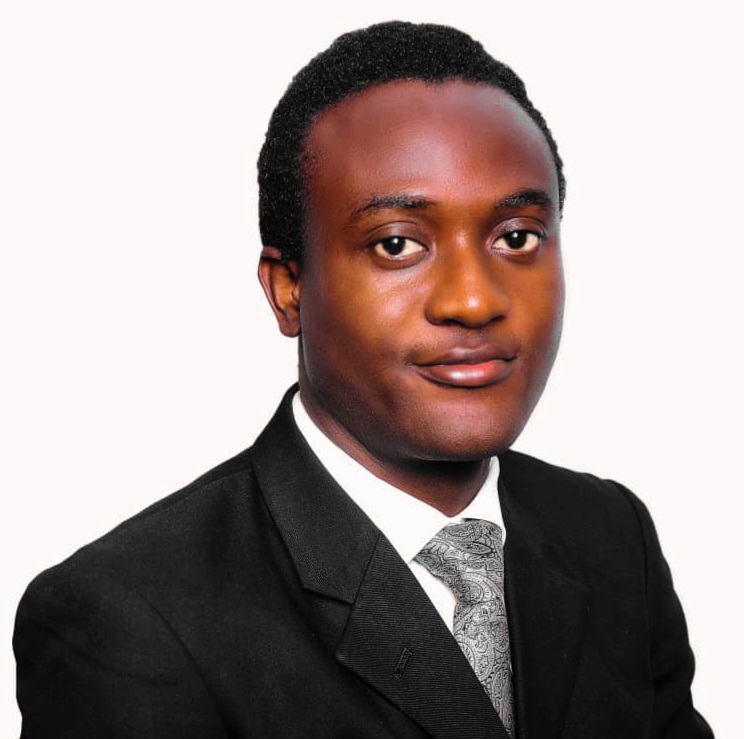
By Tolulope A. Adegoke PhD
“The most formidable borders we must cross are not geographic, but cognitive. True sovereignty—for peoples, corporates, or nations—begins with the courageous act of dismantling the internal architectures of limitation and rebuilding with the materials of our own authentic possibilities.” – Tolulope A. Adegoke, PhD
We live in a world shaped by history, yet our future is not predetermined by it. One of the most profound challenges facing individuals, corporations, and nations, particularly in contexts like Nigeria and Africa—is the legacy of mental colonialism. This isn’t merely a historical discussion; it’s about the unconscious frameworks that continue to dictate how we think, what we value, and what we believe is possible. Decolonizing oneself from this “mental slavery” is the essential first step toward delivering genuine, self-determined possibilities. This process requires honesty, courage, and a deliberate reclamation of thought.
Understanding the Invisible Chains
Mental slavery is the internalization of a worldview where the former colonizer’s culture, systems, and standards are seen as inherently superior, universal, and the sole benchmark for progress. It manifests in subtle ways: the devaluation of local languages and knowledge, the preference for foreign goods and credentials over local ones, and the persistent narrative that real solutions must always come from outside. This mindset creates a ceiling on imagination, fostering dependency and a crippling doubt in one’s own innate capacity to innovate and lead.
The Personal Journey: Reclaiming Your Inner Narrative
For the individual, decolonization is a deeply personal journey of unlearning and rediscovery. It starts with critical self-reflection.
- Questioning Knowledge: It asks, “Whose history am I learning? Whose definition of beauty, success, and intelligence have I accepted?” It involves actively seeking out and valuing indigenous philosophies, like the Ubuntu concept of “I am because we are,” not as folklore but as viable, sophisticated frameworks for living.
- Redefining Value: It means measuring personal success not only by proximity to Western lifestyles but by contributions to community, by cultural continuity, and by personal integrity aligned with one’s own roots.
- Language as Liberation: It recognizes the power of language to shape reality. Embracing one’s mother tongue in thought and creative expression becomes an act of resistance and a reconnection to a distinct way of seeing the world.
The Corporate Transformation: From Extraction to Ecosystem
Businesses and organizations are often perfect mirrors of colonial logic, built on hierarchical control, resource extraction, and the standardization of Western corporate models. Decolonizing the corporate sphere requires a fundamental shift in purpose and practice.
- Beyond Exploitation: It moves from a model that extracts value (from people, communities, and the environment) for distant shareholders to one that generates and circulates value within local ecosystems. It prioritizes regenerative practices and community equity.
- Innovation from Within: It rejects the mere copying of foreign business playbooks. Instead, it looks inward, developing uniquely African management styles, products, and solutions that respond to local realities, needs, and social structures. It sees the informal sector not as a problem, but as a reservoir of resilience and ingenuity.
- Partnership Over Paternalism: It abandons the “savior” complex—the idea that development is “delivered” from the outside. A decolonized corporate entity positions itself as a humble partner, listening to and amplifying local agency and existing expertise.
The National Project: Reimagining Governance and Identity
For nation-states like Nigeria, the legacy is etched into the very architecture of the state: borders that divide ethnic groups, economies structured for export of raw materials, and educational systems that glorify foreign histories.
- Institutional Reformation: True decolonization necessitates the courageous reform of institutions. This means auditing legal systems, constitutions, and national curricula to root out colonial biases and integrate indigenous knowledge and juridical principles.
- Economic Sovereignty: It demands a strategic, deliberate reduction of dependency. This involves prioritizing regional trade (like the African Continental Free Trade Area), adding value to natural resources locally, and investing in home-grown technology and manufacturing. It is a pivot from being a primary commodity exporter in a global system designed by others to being an architect of one’s own economic destiny.
- Cultural Agency: On the global stage, a decolonized nation defines itself. It conducts diplomacy based on its own historical experiences and philosophical foundations, not merely by aligning with blocs formed by colonial histories. It tells its own stories, controlling its narrative.
Nigeria and Africa: The Crucible of Challenge and Promise
Africa, with Nigeria as its most populous nation, is the undeniable focal point of this global conversation. The continent’s challenges are real, but they are too often diagnosed through the very colonial lens that contributed to them. Nigeria’s specific struggle—to forge a cohesive national identity from its stunning diversity, to manage resource wealth for the benefit of all, and to overcome governance failures—is a direct engagement with its colonial past.
The “African Renaissance” envisioned in frameworks like Agenda 2063 is, at its heart, a decolonial project. It seeks an Africa integrated by its own people’s design, powered by its own intellectual and cultural capital, and speaking to the world with confidence and authority.
A Universal Call: Why the Wider World Must Engage
This is not a project for the formerly colonized alone. The wider world, including former colonial powers and global institutions, has a responsibility to engage.
- Acknowledgment and Equity: It begins with a sincere acknowledgment of historical injustices and their modern-day economic and political echoes. It requires moving from a paradigm of charity and aid to one of justice, fair trade, and equitable partnership.
- Enriching Humanity: Ultimately, decolonizing the mind enriches all of humanity. It frees everyone from the limitations of a single, dominant story about progress and human achievement. It opens the door to a world where multiple ways of knowing, being, and creating can coexist and cross-pollinate, leading to more resilient and innovative global solutions.
Conclusion: The Freedom to Imagine Anew
In this moment of global reckoning and transformation, the work of mental decolonization is not a luxury; it is an urgent necessity. It is the hard, internal work that must precede lasting external change. For the individual, it delivers the profound possibility of wholeness. For the corporation, it unlocks sustainable innovation and authentic purpose. For nations like Nigeria and for the African continent, it is the non-negotiable foundation for true sovereignty and transformational progress.
The ultimate deliverable is freedom—the freedom to imagine a future unbounded by the past, and the agency to build it.
Dr. Tolulope A. Adegoke is a Distinguished Ambassador For World Peace (AMBP-UN); Nigeria @65 Leaders of Distinction (2025); Recipient, Nigerian Role Models Award (2024); African Leadership Par Excellence Award (2024).
He can be reached via: tolulopeadegoke01@gmail.com, globalstageimpacts@gmail.com

Alaafin of Oyo, Oba Abimbola Akeem Owoade I, has faulted Governor Seyi Makinde over the announcement on the rotational chairmanship of the Oyo State Council of Obas and Chiefs, describing as incorrect the claim that he was consulted on the decision.
In a statement issued on Thursday by his Director of Media and Publicity, Mr. Bode Durojaiye, the Alaafin said at no time did he meet with the governor or hold discussions with the Olubadan of Ibadanland or the Soun of Ogbomoso on the matter.
Governor Makinde, while inaugurating the reconstituted State Council of Obas and Chiefs, had announced that the chairmanship of the council would rotate among the Olubadan, the Soun of Ogbomoso, and the Alaafin of Oyo, with the Olubadan, Oba Rashidi Adewolu Ladoja, emerging as the pioneer chairman under the arrangement. The governor had also said the decision was reached in consultation with the three leading traditional rulers in the State.
However, the Alaafin’s Palace countered the claim, insisting that the monarch neither met with the governor nor endorsed the rotational arrangement.
“The attention of the Alaafin’s Palace has been drawn to a statement credited to His Excellency, Governor Seyi Makinde, that he consulted with the three traditional rulers in the state, the Alaafin, the Olubadan and the Soun of Ogbomoso, on the rotational chairmanship of the State Council of Obas and Chiefs,” the statement said.
“The Palace hereby states clearly that there was no time that His Imperial Majesty, the Alaafin of Oyo, Oba Engineer Abimbola Akeem Owoade I, held any meeting with either the state governor or any of the two traditional rulers mentioned above.
“Also, the Alaafin did not tell the governor or make a categorical statement on his endorsement of rotational chairmanship among the three traditional rulers in the state.”
The Palace added that the position of the Alaafin and the entire Oyo community on the issue of the State Council of Obas and Chiefs had earlier been clearly articulated in a memorandum submitted to the governor by the Oyo Council of Elders, reflecting the long-standing historical position of Oyo on the structure and leadership of the council.
The development adds a fresh twist to the controversy surrounding the reconstitution of the State Council of Obas and Chiefs, which had generated intense public debate in recent weeks.
While the state government insists that the rotational system promotes equity, unity, and harmony among traditional institutions, critics argue that the arrangement undermines historical precedence and the traditional hierarchy in Yorubaland.
The Alaafin, regarded as one of the most influential and revered monarchs in Yorubaland, occupies a central place in Yoruba history as the head of the old Oyo Empire and a symbol of cultural and political authority.


