
Business
Electric Vehicle Revolution: Sterling Bank Launches Qore to Accelerate Race

- /home/rhoncare/pointblank.ng/wp-content/plugins/mvp-social-buttons/mvp-social-buttons.php on line 27
https://pointblank.ng/wp-content/uploads/2023/06/IMG-20230626-WA0010-1000x600.jpg&description=Electric Vehicle Revolution: Sterling Bank Launches Qore to Accelerate Race', 'pinterestShare', 'width=750,height=350'); return false;" title="Pin This Post">
- Share
- Tweet /home/rhoncare/pointblank.ng/wp-content/plugins/mvp-social-buttons/mvp-social-buttons.php on line 69
https://pointblank.ng/wp-content/uploads/2023/06/IMG-20230626-WA0010-1000x600.jpg&description=Electric Vehicle Revolution: Sterling Bank Launches Qore to Accelerate Race', 'pinterestShare', 'width=750,height=350'); return false;" title="Pin This Post">
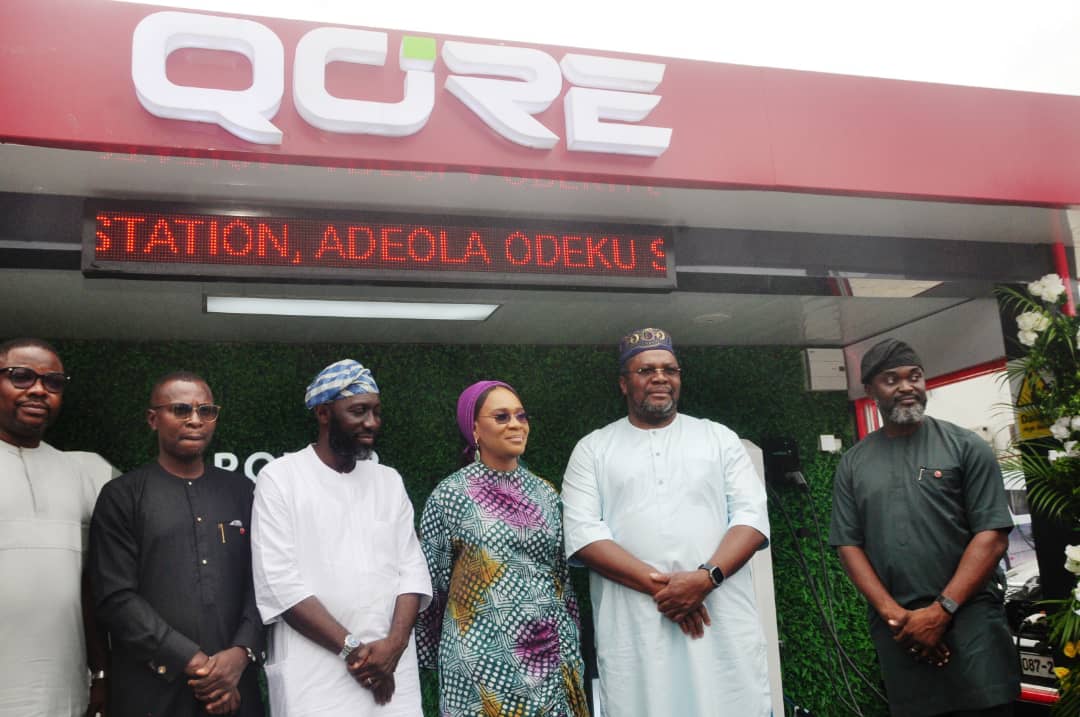
Nigeria’s leading commercial bank and one of Africa’s fastest-growing companies, Sterling Bank, has changed the course of Nigeria’s energy and transportation sectors with the launch of Qore; its suite of renewable energy-powered transportation solutions. Qore will offer the purchase and financing of electric vehicles (EVs), EV charging stations, conversion of fossil-fuel-powered engines to EV engines, battery swapping services for modular EVs, and more.
Speaking at the launch of Nigeria’s first publicly available EV charging station in Lagos, CEO of Sterling Bank, Abubakar Suleiman, said that the launch of Qore is a significant milestone in the bank’s journey towards powering Nigeria’s transportation sector with renewable energy.
According to Suleiman, “Qore will revolutionise the very idea of how we power movement by providing clean, sustainable and cost-effective options for individuals and businesses, while impacting positively on the sector’s environmental footprint.“
Also speaking at the launch, Group Head for Renewable Energy and Transportation at Sterling, Olabanjo Alimi, further explained that Qore focuses on improving mobility services in Nigeria by providing affordable and cleaner transportation alternatives to petrol and diesel powered vehicles. He described Qore as a “mobility project” that will offer a range of products, including the manufacture and sale of EVs, financing for the purchase and distribution of EVs, and mobility-as-a-service options to cater to first- and last-mile transportation.
Alimi said, “Qore will deliver innovative solutions through partnerships that provide sustainable energy options for vehicles through stations such as this. This will accelerate the adoption of clean mobility solutions that allow interested customers to buy EVs directly, or even convert their existing petrol- or diesel-powered vehicles to run on electricity.”
“Along with the readily available technology to convert petrol or diesel powered vehicles, Qore will drive EV adoption in the Nigerian market by providing charging infrastructure and battery swapping services to quicken the turnaround time of restoring power to EVs.”
He continued by saying that Qore had pioneered, along with the first publicly available charging station in the country, a proprietary payment solution that will allow for direct interaction with the battery management system of vehicles that charge up at the station.
The Group Head concluded by highlighting that this is a watershed moment for the Nigerian EV market, emphasizing Qore’s openness to partnerships and collaborations to increase the creation of EV infrastructure and adoption in the country.
The adoption of Qore’s suite of solutions is already increasing with the acquisition of 100 electric tricycles to power transportation in the Kano metropolis, as well as the conversion of diesel-engine ferries to electric power to improve the commute of individuals and businesses on Lagos’ waterways. The newly launched charging station adds another layer to the robust offerings.
Sterling has set itself apart as the first corporate organisation on the African continent to fully power up its offices with a renewable energy source by installing over 3000 Building Integrated Photovoltaic (BIPV) panels, generating 1 megawatt (1 MW) of electricity. This move will make the structure one of the largest on the continent, primarily powered by renewable energy, demonstrating the bank’s commitment to the growth and development of renewable energy in Nigeria.
Furthermore, the bank recently launched Imperium; an alternative energy solution, to power Nigerian homes and businesses through solar and renewable energy services tailored specifically for Nigeria’s peculiar energy needs.
Renowned for its now famous HEART of Sterling strategy; which focuses major investments in the Health, Education, Agriculture, Renewable Energy and Transportation sectors of the Nigerian economy, its irreverent brand voice and enviable talent management practices, the bank recently completed a major milestone towards the completion of its transformation into a financial holdings company with the relisting of its shares on the floor of the Nigerian Exchange (NGX).
The bank has maintained and increased momentum in 2023 with her citation as Africa’s Most Valuable Commercial Bank Brand for 2023 by the African Brand Magazine , in a poll conducted by GeoPoll and Kantar; two of the world’s leading brand research firms, a top three employer in Nigeria by LinkedIn in the social network’s annual Top 25 List, and most recently, one of the top 100 fastest growing companies in Africa by the prestigious Financial Times.


Nigeria’s leading voices in art and architecture will converge in Lagos as AD Consulting partners Ecobank Nigeria to present The Convergence: The Iconic Architect & the Icons of Art, a landmark cultural experience celebrating Nigeria’s creative excellence, heritage and legacy.
Scheduled to run from October 1 to 7, 2026, at the Ecobank Pan African Centre (EPAC), Ozumba Mbadiwe Avenue, Victoria Island, Lagos, the event will bring together internationally acclaimed architect Olajumoke Adenowo, Founder of AD Consulting, and some of Nigeria’s most distinguished visual artists for an immersive exploration of the relationship between architecture, art and African heritage.
Among the artists whose works will feature are Abiodun Olaku, Bunmi Babatunde, Kehinde Adewuyi, Tayo Quaye, Mufu Onifade, Alex Nwokolo, Fidelis Odogwu, Kassi Nathalie, Dotun Popoola, Steve Ekpenisi, Collins Abinoro and Joshua Nmesirionye among others.
Speaking on the concept behind The Convergence, Olajumoke Adenowo, Founder, AD Consulting, said: “Architecture and art are two of the most enduring expressions of who we are as a people. They tell our stories, preserve our heritage and give form to the values we want to pass on to future generations. The Convergence brings these two powerful voices together to celebrate Nigeria’s extraordinary creative heritage while creating a space for new conversations about identity, beauty, ownership and legacy.”
She added: “This is not simply an exhibition. It is an intentional meeting of architecture, art and people who understand that some of the most valuable things we can leave behind are not merely possessions, but ideas, culture and a sense of who we are. Through NeoHeritage, The Convergence creates a contemporary expression of our heritage while looking confidently towards the future.”
Also speaking, Austen Osokpor, Head, Marketing & Corporate Communications, Ecobank Nigeria, said the partnership represents an opportunity to support African creative excellence while creating a platform where culture, creativity, private wealth and enterprise intersect.
According to Osokpor, “Africa’s wealth is not defined by financial capital alone. Our culture, creativity, intellectual capital and heritage are equally important assets that must be preserved, celebrated and passed on to future generations. The Convergence gives us an opportunity to support this broader definition of African wealth by bringing together exceptional artists, architects, collectors and cultural patrons in one powerful experience.”
He added: “For Ecobank, this is more than an event. It is about creating meaningful platforms that connect people, ideas and opportunities, while reinforcing our commitment to African excellence. We are delighted to partner with AD Consulting and Olajumoke Adenowo on an initiative that places Nigerian creativity firmly within the wider African and global cultural conversation.”
Unlike a conventional exhibition or art fair, The Convergence has been conceived as a platform for dialogue, exploring how art and architecture shape identity, preserve cultural memory and create enduring legacies.
At its heart is Adenowo’s Neo Heritage philosophy, which connects Africa’s rich cultural inheritance with contemporary creative expression.
The experience is built around three design pillars: Light, Zeitgeist and The 4th Dimension.
The Convergence will open on October 1 with an exclusive Collectors & Patrons evening curated for invited collectors, patrons, high-net-worth individuals and distinguished guests.
The opening will provide an intimate opportunity to experience the exhibition, engage with participating artists and explore the works within a setting centred on art, architecture, ownership, cultural stewardship and legacy.
The programme will include curated viewing opportunities, conversations with artists and creative leaders, and experiences designed to foster meaningful connections among collectors, patrons, architects and cultural leaders.
The wider exhibition will continue from October 2 to 7, giving a broader audience the opportunity to experience the works and engage with the ideas underpinning The Convergence.
The programme will also feature a Patron’s Preview, Founders’ Cocktail featuring an Architecture Salon by AD Consulting, and a Collectors’ Circle, offering opportunities for private viewings and deeper engagement with the artists and their work.
Nigerians at home and in the Diaspora seeking to participate in the landmark Initial Public Offering (IPO) of Dangote Petroleum Refinery and Petrochemicals can subscribe conveniently through Zenith Bank, a receiving bank for the historic transaction and a designated electronic application channel for the offer. Subscription is open through the Zenith Bank website, the Zenith mobile app, internet banking, USSD, corporate internet banking and any Zenith Bank branch nationwide.
Across all of these channels, anchored by Zenith Bank’s network of 456 branches and 84 cash centres, investors enjoy a secure, fast and reliable route into the offer from anywhere in the world, at any hour. Whether the application begins on a phone in London, a laptop in Houston or across the counter of a Zenith banking hall in Lokoja, the path to ownership opens with a few taps and carries the investor smoothly through to completion.
Every subscription is linked to the investor’s Bank Verification Number, a seal of identity and security that accompanies each application from submission to allotment.
It is service the Zenith way: first-time and seasoned investors alike enjoy a straightforward and fully protected process, and the quiet confidence that their stake in history is processed through Zenith Bank.
Applications open on Monday, 14 September 2026 and run for 30 days, closing on Tuesday, 13 October 2026. According to the prospectus, the shares are offered at ₦525 each, with a minimum subscription of 10 shares, or ₦5,250. The offer seeks to raise ₦2.15 trillion, the largest equity offering ever undertaken on the African continent, and the prospectus further provides that retail investors who subscribe and hold their shares may qualify for bonus shares under the Retail Investor Incentive Programme, subject to regulatory approvals.
Zenith Bank stands ready to make participation effortless for investors who choose to take part. Nigeria’s largest bank by Tier-1 capital and the country’s most profitable bank, Zenith has built its reputation on combining scale with innovation, and that strength is now at the service of every investor in this offer. This is proven ground for the bank: Zenith Bank’s own most recent public offering was executed mainly through digital channels, a demonstration of digital readiness built on the bank’s robust digital infrastructure. That infrastructure has since been strengthened further through a comprehensive technological overhaul, positioning Zenith to serve its retail customers with the same excellence long enjoyed by its corporate clients, precisely the capability an offer of this scale demands.
Within the wider transaction, Quantum Zenith Capital & Investments Limited serves among the joint issuing houses, while Zenith Bank itself provides the secure and dependable channels through which applications are received and processed. Having successfully taken its own landmark offer to the market through digital channels, Zenith brings that same tested infrastructure and experience to the largest equity offering in African history. It is the same combination of financial strength, digital excellence and customer devotion that has earned Zenith Bank recognition year after year as one of Africa’s foremost financial institutions, trusted by millions of customers and by the corporates and governments behind the continent’s biggest transactions.
For over three decades, Zenith Bank has been the trusted gateway to Nigeria’s defining financial moments, and its channels are open for this one. Investors who wish to participate can fund their Zenith Bank account and subscribe through any of the bank’s platforms before the offer closes on 13 October 2026.
Please note that the details of the offer are provided in the prospectus and guided by extant regulations. Zenith Bank serves as a Receiving Bank and electronic application channel for this offer. Investors are advised to carefully read the Prospectus and, where appropriate, seek independent professional advice before making any investment decision.
Ecobank Nigeria has called on young Nigerians, particularly students, innovators, entrepreneurs, and creatives aged 16 to 25, to take advantage of the ongoing registration for InnovateX 2026, the Bank’s flagship youth innovation challenge offering ₦20 million in prizes, mentorship, business development support, and access to industry experts.
Powered by Blaze by Ecobank in partnership with Verve, InnovateX 2026 is designed to identify and support the next generation of innovators and creators developing solutions across inclusive finance, as well as the creative economy.
Beyond the financial support, participants will benefit from an intensive innovation journey featuring hybrid bootcamps, expert-led workshops, mentorship sessions, networking opportunities, and a grand finale pitch competition where finalists will showcase their ideas before a panel of industry leaders and investors.
The competition is open to young Nigerians working on innovative projects in technology, engineering, science, product design, content creation, digital media, entertainment, fashion, and other creative disciplines.
Encouraging young Nigerians to register, Victor Yalokwu, Head, Products & Analytics, Ecobank Nigeria, said: “Nigeria is blessed with an abundance of young talent, creativity, and entrepreneurial energy. Through InnovateX, we are providing a platform for young people to transform bold ideas into impactful solutions and sustainable businesses. We encourage students, innovators, tech enthusiasts, creators, and entrepreneurs across the country to seize this opportunity and take their ambitions to the next level.”
He added: “The future belongs to young people who are willing to innovate, solve problems, and create value. InnovateX is designed to equip participants with the knowledge, mentorship, exposure, and resources they need to succeed in today’s highly competitive and technology-driven world.”
Yalokwu further explained that InnovateX is not just about rewarding great ideas, but also about building confidence, nurturing talent, and connecting young people to opportunities that can help them grow personally and professionally. “Whether you are developing a tech solution, building a creative brand, or working on an innovation that can improve lives, InnovateX provides a valuable platform to showcase your potential and accelerate your journey towards success,” he said.
As part of its commitment to youth empowerment, Ecobank continues to provide innovative banking solutions through the Blaze Account, a youth-focused offering that gives customers access to exclusive opportunities, a uniquely designed debit card, free monthly transfers, and participation in initiatives such as InnovateX.
Young Nigerians interested in participating are encouraged to submit their applications through www.innovatex.africa before the registration deadline.
With ₦20 million up for grabs and a unique opportunity to gain mentorship, skills, exposure, and industry recognition, InnovateX 2026 is poised to become one of Nigeria’s most impactful youth innovation and entrepreneurship programmes.


