
Metro
Elevating Societies: Leadership As Enduring Bridge from Ruler-ship to Generational Prosperity


- /home/rhoncare/pointblank.ng/wp-content/plugins/mvp-social-buttons/mvp-social-buttons.php on line 27
https://pointblank.ng/wp-content/uploads/2025/08/DR.TOLULOPE-A.-ADEGOKE-AMBP-UN__-1-744x600.jpg&description=Elevating Societies: Leadership As Enduring Bridge from Ruler-ship to Generational Prosperity', 'pinterestShare', 'width=750,height=350'); return false;" title="Pin This Post">
- Share
- Tweet /home/rhoncare/pointblank.ng/wp-content/plugins/mvp-social-buttons/mvp-social-buttons.php on line 69
https://pointblank.ng/wp-content/uploads/2025/08/DR.TOLULOPE-A.-ADEGOKE-AMBP-UN__-1-744x600.jpg&description=Elevating Societies: Leadership As Enduring Bridge from Ruler-ship to Generational Prosperity', 'pinterestShare', 'width=750,height=350'); return false;" title="Pin This Post">
By Tolulope A. Adegoke PhD
“Real leadership is never about ruling over others—it is about standing beside them, lighting the path forward, and helping them discover strengths they never knew they possessed. Where rulership builds walls to protect power, true leadership builds bridges to a better future. In every choice we make between control and inspiration, we decide what kind of world our children and grandchildren will inherit. Let us choose the harder, nobler path: to lead with humility, vision, and unwavering commitment to the common good.” – Tolulope A. Adegoke, PhD.
Leadership and ruler-ship represent two fundamentally different approaches to power and governance. Ruler-ship tends to emphasize control, hierarchy, personal authority, and the maintenance of dominance, often prioritizing short-term gains or elite interests. In contrast, authentic leadership focuses on vision, service, empowerment, integrity, and the development of collective capacity. It inspires people to rise above immediate challenges and collaborate toward shared, enduring objectives. Far from being a mere management style, leadership serves as the critical systemic foundation enabling sustainable, inclusive, and transformative growth across every domain of human endeavor—political, economic, social, environmental, technological, and cultural—while securing a more prosperous and equitable world for generations to come.
This detailed examination highlights the profound differences between these concepts, analyzes their real-world consequences, showcases compelling examples of success, and proposes practical pathways for embedding genuine leadership at all levels of society.
Understanding the Core Distinction
Ruler-ship often manifests as top-down command, relying on coercion, patronage, or suppression of opposition to maintain order. While it may produce rapid decisions or visible projects, it frequently fosters corruption, stifles innovation, breeds resentment, and leaves institutions vulnerable once central authority weakens.
Leadership, particularly in its transformational, servant, and sustainable forms, operates differently. It seeks to elevate others, build resilient systems, and balance immediate needs with long-term well-being. Transformational leaders motivate people to achieve beyond their perceived limits by fostering purpose, trust, and shared vision. Sustainable leadership explicitly integrates economic vitality, social equity, and environmental responsibility, recognizing their interdependence.
This distinction matters deeply because it shapes outcomes not just for the present but for decades ahead. Ruler-ship extracts value; leadership multiplies it.
Real-World Impacts on Development and Society
History and contemporary evidence consistently show that rulership-driven systems tend toward fragility. Concentrated, unaccountable power may deliver initial stability or growth, but it often leads to elite capture, policy reversals, social divisions, and eventual crises.
Leadership-oriented governance generates self-reinforcing progress. By promoting transparency, human capital investment, innovation, and adaptive institutions, it equips societies to navigate complex global challenges such as climate disruption, technological change, and inequality. Transformational approaches enhance motivation, performance, and cohesion across organizations and nations.
The benefits span key sectors:
- Economic Growth: Leaders who prioritize education, infrastructure, diversification, and fair competition create environments where entrepreneurship and productivity thrive sustainably.
- Social Advancement: Inclusive leadership expands access to quality healthcare, education, and opportunity, strengthening social fabrics and reducing disparities.
- Environmental Stewardship: Forward-thinking leaders align development with ecological limits, driving innovation in clean technologies and responsible resource management.
- Political Stability: They reinforce institutions grounded in accountability, rule of law, and citizen participation, enhancing resilience.
- Cultural and Technological Evolution: Leadership that values creativity and ethics accelerates responsible innovation and enriches societal progress.
Illustrative Cases of Transformational Leadership
Several standout examples demonstrate the power of leadership over ruler-ship:
- Singapore’s Transformation: Under Lee Kuan Yew’s guidance, a small, resource-scarce nation evolved into a global hub of prosperity through disciplined investment in education, merit-based systems, anti-corruption efforts, and pragmatic long-term planning.
- Rwanda’s Post-Conflict Renewal: Facing immense challenges after genocide, focused leadership emphasized good governance, infrastructure, gender equity, poverty reduction, and economic modernization—dramatically improving living standards and positioning the country as a development leader.
- Liberia’s Recovery: Ellen Johnson Sirleaf steered her nation through post-civil war reconstruction by championing reconciliation, institution-building, and inclusive policies, demonstrating servant leadership committed to national healing rather than personal power.
- Broader Inspirations: Figures like Christiana Figueres in climate diplomacy and pioneering corporate leaders at organizations such as Patagonia illustrate systems-oriented leadership that builds coalitions and drives meaningful, large-scale change.
These cases contrast sharply with instances where authoritarian approaches yielded temporary gains followed by setbacks or instability.
How Leadership Functions as a Systemic Ladder
Leadership builds enduring progress through interconnected mechanisms:
1. Clear Vision and Foresight: Articulating inspiring, realistic futures that unite stakeholders around generational goals in areas like sustainability and innovation.
2. Talent Development and Empowerment: Investing in education, mentorship, and broad participation to cultivate capable successors and unlock widespread potential.
3. Strong, Accountable Institutions: Creating frameworks of transparency and integrity that endure beyond any single individual.
4. Collaborative Inclusion: Engaging diverse actors—public, private, and civil society—to generate creative, equitable solutions to complex problems.
5. Ethical, Balanced Decision-Making: Weighing economic, social, and environmental considerations to ensure holistic, responsible advancement.
6. Adaptability and Continuous Learning: Embracing feedback, monitoring results, and adjusting strategies to maintain relevance amid changing circumstances.
These elements create compounding benefits, strengthening societies’ capacity to thrive over time.
Fostering Leadership for Lasting Impact
Shifting from rulership to leadership demands intentional action:
- Integrate ethics, critical thinking, and sustainability principles into education systems at every level.
- Reform institutions to emphasize merit, accountability, term limits, and citizen oversight.
- Actively prepare youth, women, and underrepresented groups for leadership responsibilities.
- Protect civic space, independent media, and participatory governance to sustain pressure for integrity.
- Promote cross-border learning and collaboration among reform-minded leaders and nations.
While obstacles such as entrenched interests and global uncertainties persist, committed coalitions have repeatedly shown that meaningful change is possible.
A Call to Legacy: Building Tomorrow Today
Leadership, rather than ruler-ship, offers the most reliable pathway to sustainable and progressive development. It replaces extraction with multiplication, control with empowerment, and short-term expediency with generational stewardship. By embracing service, vision, and accountability, leaders in every sphere can help construct societies that are more innovative, equitable, resilient, and harmonious with the natural world.
The true test of our efforts lies in the inheritance we pass forward: healthier institutions, empowered citizens, preserved environments, and expanded opportunities. This vision calls for a deliberate cultural and structural shift toward authentic leadership—from local communities to global institutions. The responsibility is collective, the opportunity transformative, and the potential legacy profound. Through courageous, principled leadership, we can climb steadily toward a brighter, more sustainable future for all who follow.
Dr. Tolulope A. Adegoke, AMBP-UN is a globally recognized scholar-practitioner and thought leader at the nexus of security, governance, and strategic leadership. His mission is dedicated to advancing ethical governance, strategic human capital development, resilient nation building, and global peace. He can be reached via: tolulopeadegoke01@gmail.com, globalstageimpacts@gmail.com



The Edo State Special Criminal Court has sentenced four men to death for their involvement in the kidnapping of a woman at the Vegetable Market along Airport Road in Benin City.
Justice Aigbona Momodu handed down the sentences after finding the defendants guilty on multiple counts connected to the kidnapping case.
The convicts are Marvellous Isaac, Wisdom Michael, Rufus Emete Michael and Gift Raphael.
Isaac and Michael were sentenced to death on counts two through nine. They also received separate prison terms on other counts, including seven years on count one, while Isaac was sentenced to 10 years on count 10 and life imprisonment on count 11.
Rufus Emete Michael was sentenced to death on counts two, three, four, six and seven, in addition to a seven-year prison term on count one.
The fourth defendant, Gift Raphael, was sentenced to death on counts two, four, six and eight and received seven years imprisonment on count one.
Delivering the sentences, Justice Momodu ordered that the death sentences be carried out by hanging or lethal injection, in accordance with the court’s judgment.
The court also ordered the forfeiture of a JoJef pump-action firearm and ammunition tendered as exhibits during the trial.
The firearm, identified as Exhibit M, along with two unused cartridges and two spent cartridges listed as Exhibits E and E1, was ordered to be handed over to the Edo State Police Armourer at the State Criminal Investigation Department for destruction.
Justice Momodu directed that the exhibits be transferred to the police through the Deputy Director of the Criminal Division and destroyed within 30 days.
The convictions bring to an end the trial arising from the abduction of the woman at the Vegetable Market along Airport Road, an incident that added to concerns over kidnapping and armed crime in Benin City.
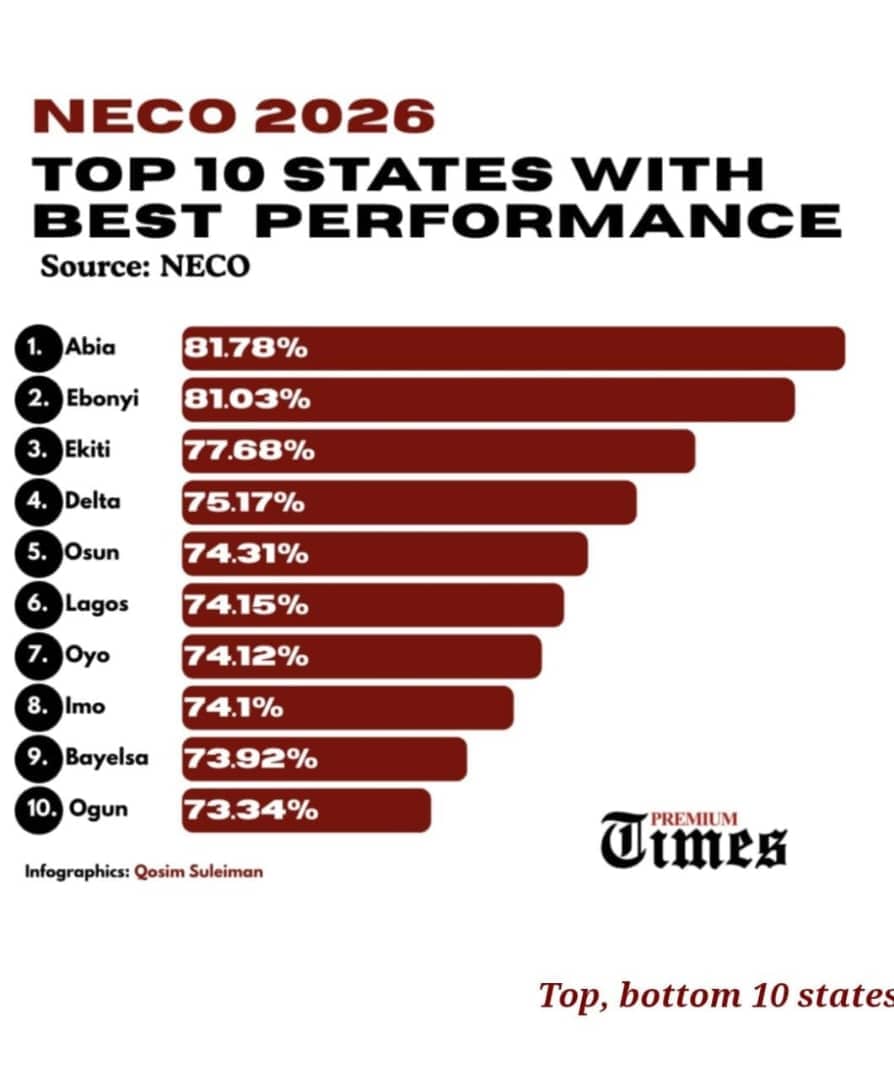
Osun State Governor, Senator Ademola Adeleke, has hailed the state’s strong performance in the 2026 National Examinations Council (NECO) Senior School Certificate Examination, describing the result as a positive reflection of ongoing efforts to reposition education in the state.
Osun placed fifth nationally in the 2026 NECO ranking, with 74.31 per cent of candidates recording at least five credits, including English Language and Mathematics.
While congratulating the students, teachers, parents, school administrators and other stakeholders, the governor noted that the state performance has been improving within a single digit rating for three consecutive years namely 2024, 2025 and 2026.
“Osun has moved from 33rd position in the 2022 NECO ranking to 5th in 2026, while improving its pass rate to 74.31 per cent. This is encouraging, and it shows that our sustained interventions in the education sector are yielding positive results,” the Governor said.
Governor Adeleke said the improved performance reflects his administration’s deliberate investment in the education sector, including the recruitment of additional teachers to strengthen the teaching workforce, while prioritising workers’ welfare and creating a more conducive environment for effective teaching and learning across public schools.
The Governor said the performance reinforces his administration’s determination to continue investing in education, noting that the objective is to build a system that gives every Osun child the knowledge, skills and opportunities needed to succeed.
“This result is encouraging, but we see it as a reason to do more. We will continue to invest in our schools, improve the learning environment, support our teachers and provide our students with the necessary tools to excel.
“We are building an education system that prepares our young people not only for examinations but for life,” the Governor said.
He assured that ongoing interventions in the education sector would be sustained and expanded, while urging students to remain committed to their studies.
His Excellency also commended teachers across the state for their dedication and sacrifices, assuring them that the administration would continue to prioritise measures that strengthen the education system and improve workers’ welfare.
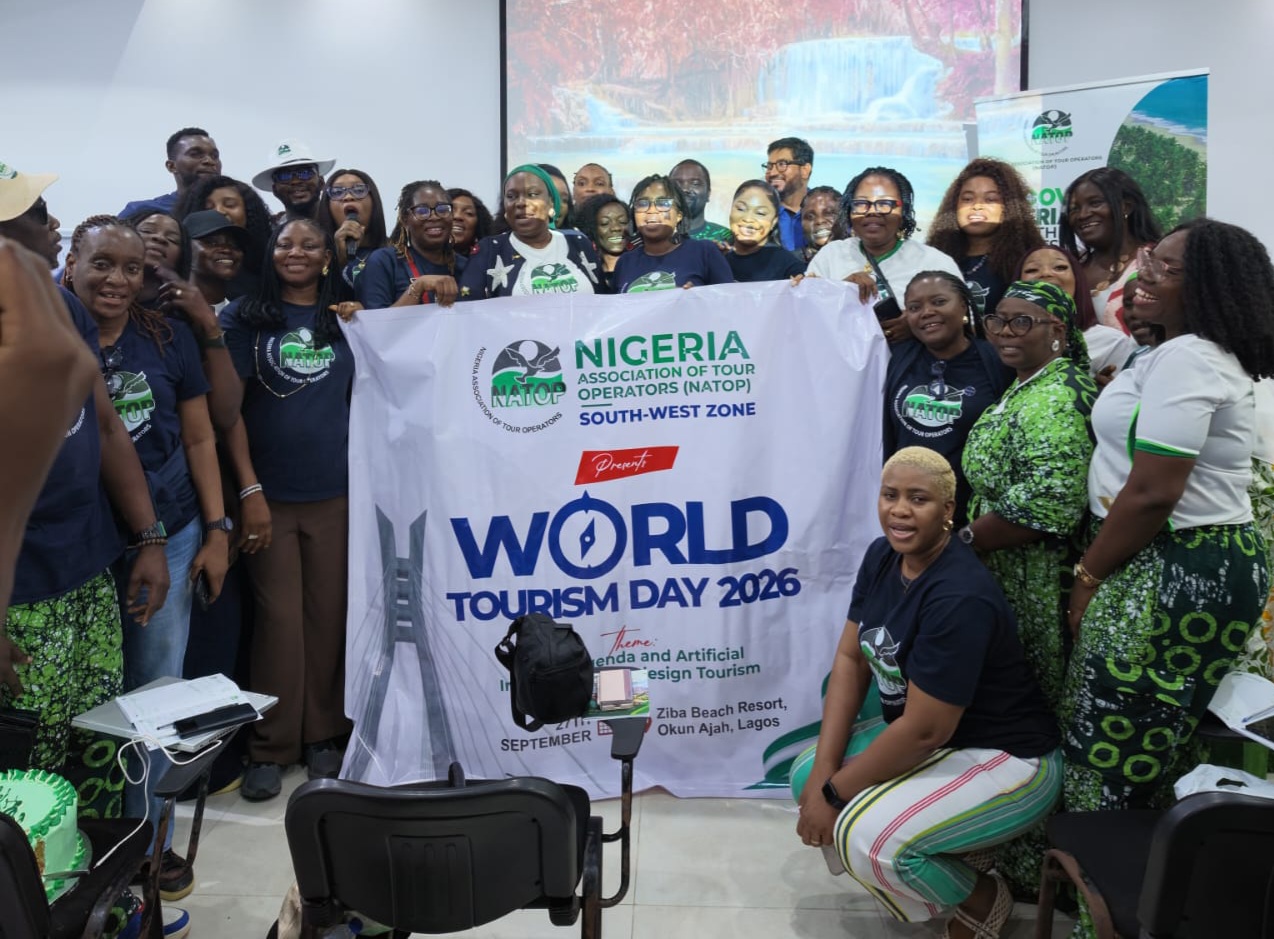
The Nigeria Association of Tour Operators (NATOP) marked the 2026 World Tourism Day with activities which capture capacity building, technology, destination promotion and domestic tourism, and celebration.
In the South West Zone, close to 200 tour operators gathered at Ziba Beach Resort, Lagos, for a special training focused on Artificial Intelligence and its application in tourism, equipping operators with digital tools to improve their businesses and destination marketing.
In Abuja, the FCT and Northern Zone, in collaboration with Naija Adventurers, staged a colourful Tourism Awareness Walk and Hike to the Centre of Nigeria.
The celebration also spread to the South-South Zone, where members marked the day with a destination tour, alongside activities to commemorate with the world tourism day celebrations.
In line with the theme for this year’s WTD celebration: ‘Digital agenda and artificial intelligence to redesign tourism’ the NATOP training on AI and application in tour operation at Ziba Beach Resort Lagos saw a large turnout of the members of the association.
The President of the association, Hajia Bolaji Mustapha explained that the idea for the location and training was to train members on how to do tour business, to know how to promote tourism digitally, using different AI tool and everything so that they will grow their businesses.
She said: “we follow the theme and, you know, blend with the old situation. Let’s do the training so that we attach it to the World Tourism Day with the theme that we have achieved something and also celebrate.”
She said the training will go a long way in helping the tour operators do greater content to digitally tell destination stories using AI, and also using the tool for expression.
Mustapha also explained why the association chose Ziba Beach Resort: “We always attach World Tourism Day to a tourism site. And definitely, if you look at this whole area and this community, that’s why we see that Ziba is a tourism site. We want to explore and of course. The resort newly launched its third phase. So, we will use this opportunity to look at their rooms, look at how we can sell this destination, to showcase it that the resort is actually in Nigeria, not Zanzibar. By using the place, we would kill two birds with one stones.
Facility tour of Ziba Beach Resort
“As tour operators who are willing to tell the good story of our Nigeria, we need to bring ourselves up to the speed, align with the digital revolution. Let everybody go digital. Because we also see the content creators are taking our business, we want to align it with what they do. We are the ones that understand the business and we’ll be able to tell the story better, so that anybody coming to Nigeria will be able to discover Nigeria with the experts.”
Also commenting on the celebration, the NATOP Vice President South West and chairman of the WTD Organizing Committee for the zone, Mrs. Wonuola Olatunde-Lamidi explained why NATOP South West’s usage of the 2026 WTD for training. She said many of the members still have a lot to learn about the tour business, and that some do not understand the foundation of the business, including how to create packages hence the need for the training.
Mrs. Olatunde-Lamidi spoke further: “Many don’t understand the foundation of what it is to create a tour package. And when you have people that are not well-trained in an industry, the industry will not grow. The kind of people that you also have will not have enough earning power to do many things. And because this is an industry that I have been in for 16 years, I run Diamonds and Pearls Travels with my husband. And I’ve seen Diamonds and Pearls Travels metamorphose into a company where people don’t just look at us as travel agents. We have become a Destination Management Company (DMC). We have become a trusted brand. We have become a company that when we talk about a destination, people want to go to that destination because of how we have portrayed the destination. And you may not realize that, as tour operators, you can actually decide where people go. You can make people go to a particular destination by marketing it, by letting them know the benefits of that destination.”
The tour operators had opportunity to tour the resort and unwind during the programme.


