
News
Era of Nationwide Fuel Queues Has Come to An End, Says Dangote

- /home/rhoncare/pointblank.ng/wp-content/plugins/mvp-social-buttons/mvp-social-buttons.php on line 27
https://pointblank.ng/wp-content/uploads/2019/05/Dangote.jpeg&description=Era of Nationwide Fuel Queues Has Come to An End, Says Dangote', 'pinterestShare', 'width=750,height=350'); return false;" title="Pin This Post">
- Share
- Tweet /home/rhoncare/pointblank.ng/wp-content/plugins/mvp-social-buttons/mvp-social-buttons.php on line 69
https://pointblank.ng/wp-content/uploads/2019/05/Dangote.jpeg&description=Era of Nationwide Fuel Queues Has Come to An End, Says Dangote', 'pinterestShare', 'width=750,height=350'); return false;" title="Pin This Post">
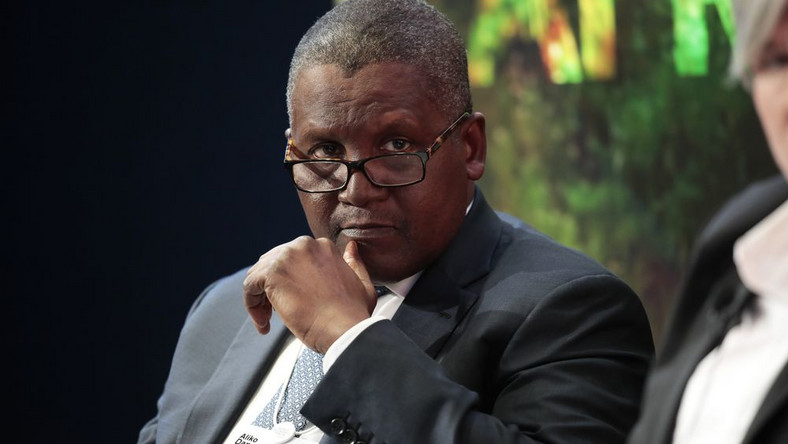
President of Dangote Group, Alhaji Aliko Dangote has assured Nigerians that the era of nationwide fuel queues has come to an end.
He, therefore, pledged uninterrupted petrol supply during yuletide period and beyond.
Addressing newsmen on Friday after a close-door meeting with President Bola Tinubu at the State House, Abuja, Dangote stressed:
“Historically, Nigeria has battled fuel queues since 1972. For the first time, we are eliminating those queues, not through imports but by producing locally. Even when we were servicing the refinery, there were no queues. I can assure you that queues are now history”.
He disclosed that Dangote Refinery has formally notified the Nigerian Midstream and Downstream Petroleum Regulatory Authority (NMDPRA) of its readiness to deliver 50 million litres of Premium Motor Spirit (PMS) daily, far above national consumption.
Dangote stated that the refinery will soon produce surplus volumes, adding that by February it will supply 15–20 million litres more than Nigeria needs.
This, he said, will allow exports to neighbouring countries, reducing the incidence of fuel scarcity across West Africa.
He also disclosed that domestic manufacturers, especially in the plastics industry, will now enjoy reliable access to locally produced feedstock, ending years of reliance on imports estimated at $400 million annually.
On way forward, Dangote announced an expansion programme that will raise the refinery capacity to 1.4 million barrels per day by 2028, surpassing India’s Reliance refinery, the world’s largest, at 1.25 million barrels per day.
His words: “But going forward, what do we really want to do? What we are going to do by 2028 we are going to take this refinery to the largest refinery in the world we’re going to beat reliance. Reliance is 1.25 million barrels per day, we will be at 1.4 million barrels per day. We have already launched that we have signed, and we’re going to start piling for the refinery by January, before January ending, and it will be delivered on time.”
The renowned industrialist also revealed plans to scale up the company’s urea production to 12 million tonnes annually, positioning Nigeria to overtake Russia and Qatar as the world’s leading producer.
“Our goal is to use our fertilizer company to supply the entire African continent,” he said.
Commenting on recent declines in petrol and diesel prices, Dangote attributed the trend to increased competition and a reduction in smuggling.
“Prices are going down because we must compete with imports. Luckily, smuggling has dropped significantly, though not completely”.
He stressed that the refinery business is a long-term national investment, saying “we’re not here to recover $20 billion overnight. The legacy I want to leave is that whatever Nigerians need, fuel, fertilizer, power, we will be part of delivering it.”
Dangote further highlighted logistics constraints affecting Nigeria’s solid minerals sector, particularly the congestion of major ports.
“Apapa is full. Tin Can is full. Lekki is mainly for containers. You cannot export coal or copper if you have nowhere to ship from,” he noted.
To address this, he said the Group is developing what would become West Africa’s largest deep-sea port at Olokola, expected to be completed in two-and-a-half years.
He expressed support for the Tinubu administration’s naira-for-crude initiative, describing it as a patriotic move to strengthen the economy, although he acknowledged pushback from international oil companies.
“It’s a teething problem, but it will be resolved, either through legislation or administrative action,” he said.
On concerns about global competition, Dangote maintained that the refinery will thrive.
“What we want is to make Nigeria the refining hub of Africa. All African countries import fuel. We want what we consume to be produced here”.
He also endorsed the government’s Nigeria-first industrial policy and urged wealthy Nigerians to channel resources into productive investment rather than luxury spending.
“If you have money for a private jet, invest in industries and create jobs,” he said, adding that domestic investors must drive industrialization to attract foreign capital.
Dangote acknowledged past hurdles, policy instability, smuggling, and factory closures, but expressed optimism that the country is now on a stable path toward sustainable industrial growth.
“Domestic investors must lead the way. Once they do, foreign investors will follow. Nobody advertises a good restaurant; when the food is good, word spreads,” he said.
He described his meeting with President Tinubu as a routine consultation on the economy and business environment, noting that it was “a very fruitful meeting.”
AriseNews


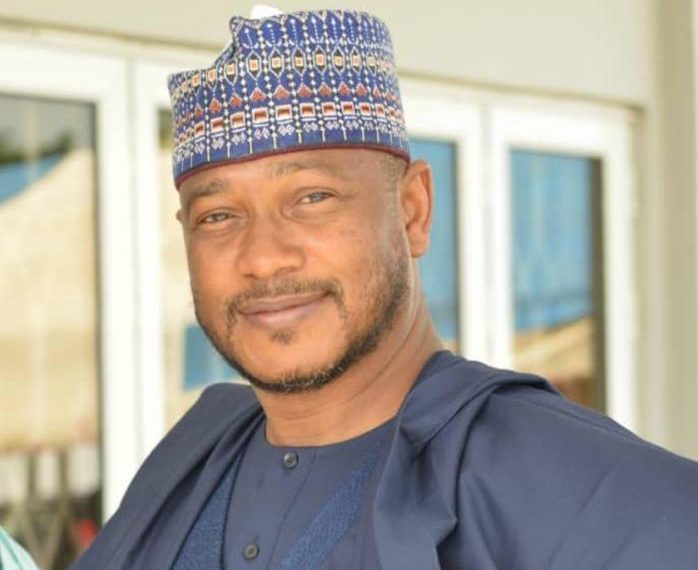
Eight members of the 24-member Zamfara State House of Assembly have resigned from the All Progressives Congress (APC).
The lawmakers cited insecurity, injustice and failure to address the wellbeing of the people.
In a joint statement, they said they could no longer remain in a party that had failed to provide adequate security for citizens, particularly in rural communities.
The affected lawmakers are Aliyu Ango Kagara (Talata Mafara South), Ibrahim Tukur Bakura (Bakura), Faruk Musa Dosara (Maradun I), Bashir Abubakar Masama (Bukkuyum North), Muktaru Nasiru Kaura (Kaura North), Nasiru Abdullahi (Maru North), Bashar Bello (Bungudu West) and Bashar Aliyu (Gummi I).
Kagara, an ally of former Governor Abdul’aziz Yari, said their decision followed the state government’s failure to tackle insecurity affecting their constituents.
“What we are challenging Governor Lawal’s administration about is even worse now compared to previous times, so we have seen no reason to continue remaining in the APC. Our constituents in rural areas who voted us into power to address their security concerns were not being given any attention,” he said.
He also alleged that the lawmakers had gone 32 months without salaries, allowances and other entitlements.
“This is our 32 months without salary, allowances and other entitlements as honourable members, and the people of Zamfara; the ball is in their court,” he said.
The lawmakers did not immediately disclose their next political party.
Reacting, APC Publicity Secretary in the State, Ibrahim Danmadamin Birnin Magaji, said the party is yet to receive official notification.
“We are still waiting for their correspondence from their respective political wards after reaching their local government executives, which would later be forwarded to us. We all saw it on social media platforms, but whenever we receive the copies officially, we would communicate with you on our stand,” he said.
The development adds to internal realignments within Zamfara APC ahead of the 2027 general elections.
A source quoted by Daily Trust, who spoke on condition of anonymity, said he did not blame the lawmakers, alleging that Governor Dauda Lawal had chosen to work with others instead of reconciling with them.

An intelligence-led operation by a combined team of troops of the Nigerian Army, Department of State Services (DSS) personnel, and Western Nigeria Security Network aka Amotekun officers, at the weekend in Owo forest, Ondo State, eliminated a senior leader of the Islamic State West Africa Province (ISWAP), Abdussamad Ohida.
Reports quoting security sources said Ohida, aka Anwar, who was on the verge of planning massive terrorist attacks in some southern states, was killed alongside many members of the terrorist organisation by the security forces who led a surprise attack on their forest hideout.
According to the sources, the eliminated ISWAP leader previously served as deputy to ISWAP Central Nigeria leader Abu Ikrimah, also known as Abu Uwais. Ikrimah was arrested by the DSS in 2023.
Following Ikrimah’s arrest, continued the sources, Ohida assumed leadership of ISWAP activities across parts of North Central and southern parts of the country, where he subsequently played a key role in the planning, coordination and execution of terrorist operations.
Through the interrogation of Abu Uwais, continued the sources, the DSS was able to gather credible intelligence on plans by Ohida to attack innocent persons during the forthcoming Yuletide.
“The plan was to attack civilians during the festive period and ultimately disrupt the 2027 general elections. This Intelligence was corroborated by intelligence partners from the United Kingdom, who supported the elimination operation,” offered one of the sources.
He said Ohida planned and executed the December 31, 2025, invasion of Ipele Divisional Police Station, Owo, Ondo State, carting away right AK-47 rifles before bringing down the station with an explosive. He mentioned the 28 July 2022 Suleja–Zuba Road, Niger State military checkpoint attack in which several soldiers, officers and civilians were killed.
He also blamed Ohida for the July 11, 2022, attack on Kuje Correctional Centre, Abuja; the 23rd April, 2022 attack on Ogaminana Police Station, Adavi LGA, Kogi State, which resulted in the death of five police officers, and the February 7, 2022, attack on Okene Area Command police station.
“The terrorist planned and executed the 24th December, 2020 attack on a Naval checkpoint in Okene, Kogi State, which resulted in the death of two naval officers, not to mention the several attacks he launched across parts of the country,” he added.
“We may not immediately realize it, but the elimination of Abdussamad Ohida represents a significant disruption to ISWAP’s leadership structure, operational network and expansion efforts in central and southern Nigeria.
“Ohida’s elimination, coming a few months after the killing of ISIS leader Abu Bilal al-Minuki, is a very big blow to ISWAP’s efforts to expand its operational presence in Nigeria, and underscores the growing efficiency of our security services,” he declared.
Amnesty International Nigeria has urged Nigerian security authorities to investigate allegations of political violence threats made by politicians ahead of the 2027 general elections and ensure that those found responsible are held accountable.
The human rights organisation made the demand in a statement shared on its verified Facebook page on Saturday, following reported remarks attributed to the Edo State Chairman of the All Progressives Congress (APC), Jarret Tenebe.
Amnesty International said Tenebe was reportedly quoted as threatening to deploy the “power of AK-47” against persons allegedly attempting to frustrate the APC’s ambition of securing 2.5 million votes for President Bola Tinubu in the 2027 presidential election.
“Tenebe made the threat during a campaign rally in Edo State, where political violence is already rampant,” Amnesty International said.
The organisation also raised questions over the response of Nigerian security agencies, particularly the Nigeria Police Force and the Department of State Services, to what it described as public threats of violence issued by politicians.
It noted that such remarks were being made “in utter disregard for the rule of law and the nation’s Electoral Act.”
Amnesty International called on the authorities to ensure that politicians and other public figures, irrespective of their political affiliations, are held responsible for actions or statements that incite, threaten or encourage politically, religiously or ethnically motivated violence.
The organisation further stressed that accountability should cover individuals involved in carrying out or promoting violence and human rights violations before, during and after the 2027 general elections.


