
News
Explore, Engage and Stick to Your Purpose

- /home/rhoncare/pointblank.ng/wp-content/plugins/mvp-social-buttons/mvp-social-buttons.php on line 27
https://pointblank.ng/wp-content/uploads/2019/09/Adegoke-1000x600.jpg&description=Explore, Engage and Stick to Your Purpose', 'pinterestShare', 'width=750,height=350'); return false;" title="Pin This Post">
- Share
- Tweet /home/rhoncare/pointblank.ng/wp-content/plugins/mvp-social-buttons/mvp-social-buttons.php on line 69
https://pointblank.ng/wp-content/uploads/2019/09/Adegoke-1000x600.jpg&description=Explore, Engage and Stick to Your Purpose', 'pinterestShare', 'width=750,height=350'); return false;" title="Pin This Post">
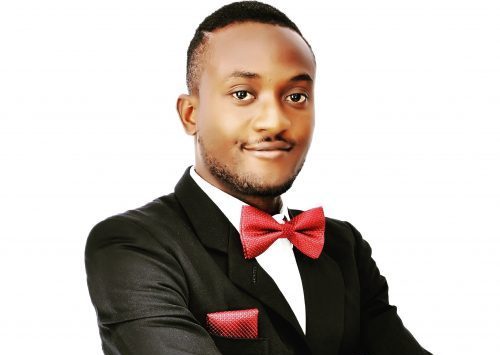
By Tolulope A. Adegoke
“At the centre of your being
you have the answer;
you know who you are
and you know what you want.”
– Lao Tzu
Harnessing the hero within is often galvanised and simplified by the practice of self-exploration, or productive introspection. This is the road that all winners in life must pass through. The biblical prodigal son, for instance, came back to his senses and recovered all he had lost, not primarily by determination, but by self- exploration.
How far a man conquers the world is a function of how well he conquers himself. Proverbs 16:32 says, “He that is slow to anger is better than the mighty; and he that ruleth his spirit than he that taketh a city.” Hence, the greatest, most prestigious and most rewarding journey any man would ever embark on is the journey of self-exploration, leading to self-discovery.
A man will ever remain primitive and ignorant, no matter how well he has travelled round the world, if he neglects to travel through himself. Empowerment for change or development does not come from travelling round the world; it comes from travelling through oneself.
Here is a practical and glaring example. The governments of many African countries frequently talk about attracting Africans in diaspora to come back home to make their countries better. I consider this unnecessary. Africans who will develop their countries are not necessarily those who have travelled round the world; they are simply those who have “travelled around” their minds.
Consider the case of the prodigal son again. Despite his travelling to a far country and mingling with the citizens of a foreign land, he never acquired the necessary wisdom or insight to have a successful life; but as soon as he embarked on the journey of self-exploration, he got connected to a programme of restoration.
Self-exploration enables an individual, group or nation to outgrow childish dependence on others. Rather, it helps in acknowledging, celebrating, developing and maximising innate or indigenous potentials for the benefit of others. Self-explorers do not just sit down and wait for others to make things work for them; instead, they get up and work out things by accepting the responsibility for making meaningful contributions to the world around them.
Wired for Exploits
Self-explorers are wired to meet needs. They do not waste time to first think of who to call on to help meet their needs or the needs around them; rather, they look inwards because they believe in what the Creator, God Almighty, has embedded in them. This they consciously and continuously work upon to become better and more useful to the society at large and not only to themselves!
It is neither accidental nor coincidental that life’s significant activities are usually done or carried out in seclusion. For example, real banking transactions are carried out in the “strong room”. Moreover, an organisation’s behaviour is cultivated, strengthened and accounted for in a secluded company boardroom. Also, surgical operations are usually carried out in a secluded place, known as the theatre. This reveals to us the power of self-exploration.
Often, self-exploration that leads to self-realisation requires a secluded or serene atmosphere that guarantees solitude and, perhaps, silence. Sometimes, silence tells us the truth more than words! A man who does not engage in silence is bound to perform below his potentials! In the case of the prodigal son, it wasn’t until he became alone with pigs, such that he had nobody to come to his aid, that he came to himself. The prodigal son being alone means that he disconnected himself from his previous distracting activities – he disconnected from clubbing, as well as hanging out with sluts and macho guys. He indeed disconnected himself from distractions so as to pay attention to the call of destiny!
Albert Einstein, one of the greatest scientists that ever lived, attested to the power of solitude, when he revealed:
“I am truly a ‘lone-traveller’ and never belonged to my country, my home, my friends, or even my immediate family with my whole heart. In face of all these ties, I have never lost a sense of distance and a need for solitude, feeling that increase with the year.”
What the above simply means is that productive silence or solitude goes beyond locking yourself in a room and avoiding all manner of human and mechanical noise. It actually involves disengaging your mind from all manner of desires, lusts, pursuits, and associations that are not beneficial to the discovery, development and deployment of your God-given potentials. Isaiah 30:15 says, “…in quietness and in confidence shall be your strength”
The Michael Jordan Example
Michael Jordan is globally recognised as one of the greatest names in the history of basketball. Indeed, the game of basketball would perhaps not have garnered as much attention and excitement without the legendary exploits of Michael Jordan. What many may not know however is that there are reasons beyond the visible that made Michael Jordan such a timeless star. His winning edge was his mastery of the ageless art of solitude. He once wrote this powerful piece online:
“When I am out there, no one can bother me. Being out there is one of the most private parts of my life…during the game; for a few times in my life, I feel untouchable…I mean that about a game being like meditation period for me. Anytime I am playing serious basketball, it’s like meditation.
Sometimes even in the middle of the game, I am able to think about things as loud as it is; it’s almost a quiet time for me. I know that basketball game can be very exciting, but for me the game is one of the calmest parts of my life.”
Jordan’s success secret can thus be said to be his ability to be united – spirit, soul and body – with the game of basketball, without allowing external or distracting forces to affect him. By this, he was able to initiate, maximise and sustain coherence with the unusual basketball energy he is endowed with.
Curiously, the art of silence has been neglected by the vast majority of mankind; yet it is as important as prayer. This is why those who are given to prayer without being given to silence make little or no contribution to human existence. Conversely, those who combine prayer with quality moments of solitude enjoy the grace to soar and contribute meaningfully to the advancement of humanity!
Bishop Oyedepo, in the book, “Maximising Your Destiny” reveals:
“Quietness enhances the quality of thinking. Quietness enhances productive reasoning. I cherish quietness and I will do anything to have it…that is why although we have many rooms in our house, I sometimes have to put certain guests in the hotel, to avoid the noise they will make in my home. Quietness is precious to me. It has great spiritual value…”
One of my enviable role models, Samson Adah Paul, wrote this mind-blowing piece that brings the creation story much more alive: “When God Almighty saw the need to create woman for man, he did not inspire man to employ the ‘art of prayer’, he simply inspired man to connect to the art of silence…” This is confirmed in Genesis 2:21-22, “And the Lord God caused a deep sleep to fall upon Adam, and he slept: and he took one of his ribs, and closed up the flesh instead thereof; And the rib, which the Lord God had taken from man, made he a woman, and brought her unto the man.”
Believe it, friend – silence informs! Since it is the seedbed of ideas, it can rightly be described as the powerhouse of societal progress and development. Consequently, any quest for progress and development that is pursued without the art of silence will ever be in vain. According to Samson Adah Paul, “Africans that will experience the fulfilment of the ‘African Dream’ will have to be masters of the art of silence. Mind you, silence in this context is not about being mute and dumb; it’s rather about being immune to distracting external forces, in order for one to initiate and maximise communication with the inherent resources endowed in man by God.”
Edison’s Example
Some aspects of Thomas Edison’s life have been a great lesson to me after taking time to study about him. I discovered too that his greatest strength was his mastery of the art of silence. He recorded a number of achievements, discoveries and exploits – but they were mainly as a result of his paying attention to necessary matters, while avoiding those he considered unnecessary. He had a physical challenge from birth – total deafness in one ear and partial deafness in the other. However, rather than seeking to find a way to remedy this defect, he rather chose to bear the burden, because – according to him – it was an advantage. He wrote this interesting piece:
“Even though I am nearly deaf, I seem to be gifted with a kind of inner hearing which enables me to detect sounds and noises that the ordinary person does not hear.”
Edison did not consider hearing disability as pain but as gain. And this helped to strengthen his concentration level – leading to amazing inventions that blessed humanity, rather than becoming a good excuse for him to fail in life.
You Need a Break
Harnessing your potentials doesn’t mean that you have to burn yourself out. You are still human, after all, and must therefore devise means of conserving and replenishing your physical strength.
There is nothing to be ashamed of about this. We all get tired sometimes. This is why we must be able to manage our energy and not only our time. We must be able to know when our energy gauge is getting low, and then back off; otherwise, we might make some bad decisions.
Our Lord Jesus Christ provides a good example for us on this. He retreated occasionally, when the multitudes pressed upon Him. There were times He pulled away, and either went to the mountain (a serene and holy place) to pray or got some other place to rest. Moreover, the Scripture reveals that God, our Heavenly Father, rested on the seventh day after creation.
When you are tired, withdraw from people. Look for a serene environment and lodge there for a while to regenerate and rest. Go on short vacations with your loved ones and enjoy a change of atmosphere.
Dr. Robert Schuller wrote: “When I am tired, I often do not see people. I owe a great deal to my dear wife. She knows me very well, and she arranged my calendar very clearly and carefully. She knows when my energies are taxed, and she blocks off time for renewal. Each year she plans mini-vacations for me immediately after busy times of the year. That way I never get burned out.”
I often adopt the withdrawal method too. I go to a cool and serene environment to reload my energy by having good quality rest. This way, I am refreshed and inspired towards greater exploits.
Dr. Tolulope A. Adegoke is an accredited ISO 20700 Effective Leadership Management Trainer. Email: adegoketolulope1022@gmail.com;


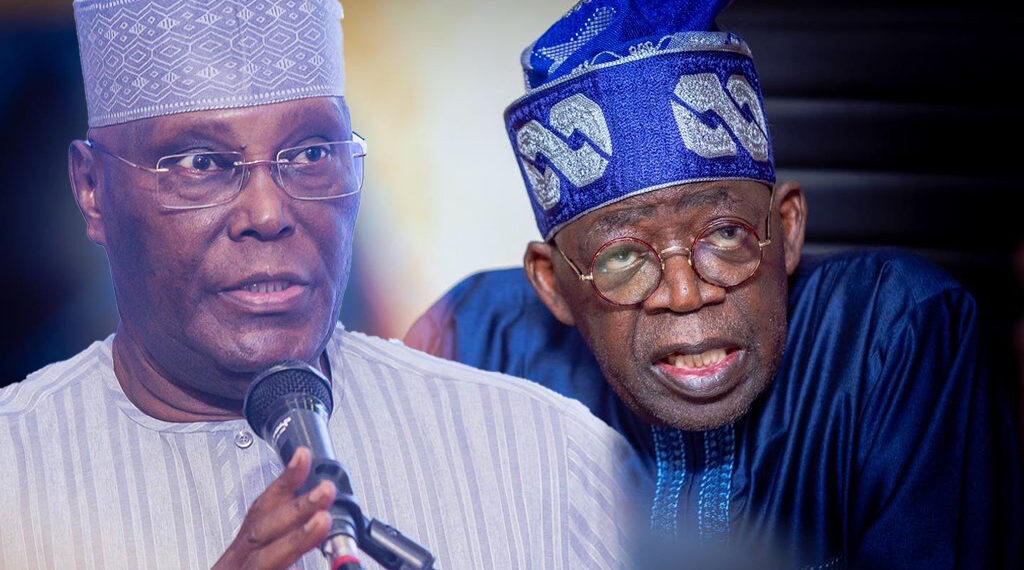
Former Vice President and African Democratic Congress presidential candidate Atiku Abubakar has accused President Bola Tinubu of presiding over a grotesque spectacle of executive excess: the reported distribution of 2026 model luxury SUVs, each worth more than ₦150 million, to APC youth leaders while millions of Nigerians are crushed by hunger and soaring costs.
Atiku said it was a brazen insult to ask Nigerians to endure hardship while party loyalists receive vehicles worth a fortune. He demanded an immediate public explanation from President Tinubu and the Presidency: who is paying for these SUVs, and why is such lavish political spending taking place while ordinary families struggle to afford food and transport?
In a statement issued by Phrank Shaibu, Director of Strategic Communication of the ADC Presidential Campaign Council, Atiku said:
“The APC National Youth Leader says these vehicles were donated by First Lady Oluremi Tinubu. Nigerians deserve to know where the money came from to buy and distribute so many 2026 model SUVs, each worth more than ₦150 million, for political mobilisation.
“The First Lady holds no elected or executive office.She is only a domestic appendage of the office of President. Were these vehicles bought with her personal funds, donations or public resources? Who paid for them? What was the total cost? The Presidency must provide a clear account. Nigerians cannot be expected to accept a fleet of extraordinarily expensive vehicles for party loyalists without knowing who financed them.
“At a time families cannot afford food, transport and other basic necessities, these gifts are a brazen insult to the people. The government has found a way to provide luxury SUVs for APC youth leaders, yet millions of Nigerians are still waiting for meaningful relief from the cost of living crisis. This is not merely a question of misplaced priorities. It is one of the most outlandish displays of executive recklessness in our history.
“First, APC women leaders reportedly received luxury vehicles. Now, according to the National Youth Leader, APC youth leaders are receiving SUVs from the First Lady. The earlier gifts came on the eve of the abduction of schoolchildren in Oyo State. Now another lavish round of political giving is taking place while Nigerians face hunger, insecurity and hardship.
“While Nigerians continue to ask where the savings from subsidy removal have gone, the Presidency must explain how such costly gifts are being funded. If the vehicles were paid for privately, the source of the funds should be disclosed. If public resources were used, the government must identify who authorised the spending and under what legal authority.
“The scale of these gifts raises grave questions about whether our collective patrimony is being diverted to buy political loyalty. Nigeria cannot be run as a captured state, where wealth and influence serve the powerful while ordinary citizens are left to struggle.
“The same youth leader who made the gifts public is reportedly travelling by private jet. That image of extraordinary privilege stands in jarring contrast to the hardship facing ordinary Nigerians. The Presidency must stop treating questions about wealth and spending as an inconvenience. Nigerians have a right to ask where the money came from.
“Nor is this culture of privilege confined to party officials; it reaches the very household of the President. His own son, Mr Seyi Tinubu, has been pictured, in widely circulated images, wearing a Richard Mille RM 67-02 Sébastien Ogier, a timepiece that sells for close to half a million dollars ($500k), while the same government asks ordinary Nigerians to endure hardship, tighten their belts and wait patiently for relief that never seems to arrive.
“A worker on the national minimum wage would need several lifetimes to earn what the President’s son wears on one wrist. When the household of the President and the youth leader of his party flaunt such wealth in a season of hunger, insecurity and joblessness, they are not merely displaying poor taste; they are telling Nigerians, in the plainest possible terms, how little their suffering registers in the corridors of power.
“Why is Bola inflicting such pain on Nigerians while those closest to his government enjoy such lavish privilege? Nigerians need answers, not another display of wealth for political mobilisation.
“When I am sworn in as President, every naira found to have been spent illegally will be thoroughly investigated, and everyone found culpable will be brought to justice.
“Tinubu made life difficult. I will make life affordable again.”
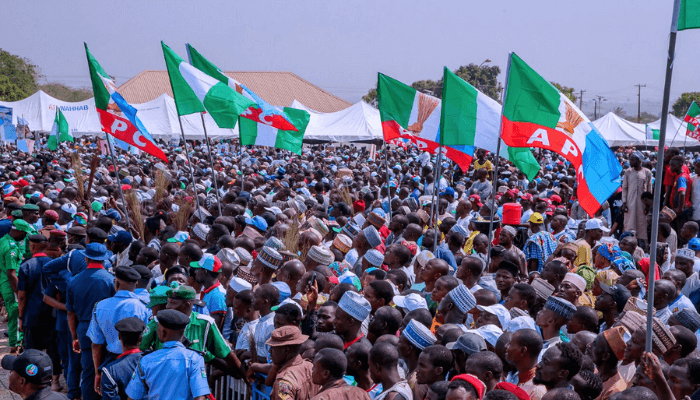
The African Democratic Congress Presidential Campaign Council (ADC-PCC) has described the All Progressives Congress (APC) Northwest zonal flag-off rally in Kaduna as a monumental disappointment, accusing the ruling party of relying on rented crowds, empty seats and recycled promises.
Reacting to the rally held at the Kaduna Township Stadium, the Director of Media and Publicity of the ADC-PCC, Kola Ologbondiyan, said an event intended to demonstrate the APC’s political strength across the Northwest had instead exposed what he described as the party’s declining public acceptance.
Ologbondiyan alleged that the APC mobilised people from the seven states of the Northwest and beyond, with payments reportedly ranging from ₦50,000 to ₦100,000 per person, yet the stadium, which he put at a capacity of 5,000, remained sparsely occupied.
“For a rally billed as the Northwest zonal flag-off, what we witnessed was a shameful spectacle. Despite the alleged mobilisation of crowds from across the zone and beyond, the stadium remained scantily filled, with empty seats everywhere,” he said.
He added that the turnout, which he described as disappointing, was compounded by what he called the unenthusiastic reception given to the speeches and messages of APC leaders.
The ADC-PCC Director also criticised President Bola Ahmed Tinubu’s reported commissioning of road projects at the event, describing the exercise as troubling and questioning the administration’s claims of performance.
Ologbondiyan further alleged that some attendees expressed dissatisfaction with the ruling party after leaving the stadium, chanting the Hausa phrase “Ba mu yi,” which he interpreted as a rejection of the APC and its policies.
“You can rent a crowd, but you cannot rent acceptance. Even if people attend a rally, that does not mean they have surrendered their convictions. The real test of public support is what Nigerians will decide at the ballot box,” he said.
The ADC-PCC accused the APC of returning to Kaduna with promises similar to those made during the 2015, 2019 and 2023 election cycles, arguing that the ruling party had failed to adequately account for its years in power.
It also faulted President Tinubu for, according to the council, shifting responsibility for the hardship facing Nigerians to opposition leaders rather than addressing the economic consequences of his administration’s policies.
Ologbondiyan particularly criticised the President’s position on fuel subsidy removal, which the ADC-PCC maintains has intensified the economic burden on households already struggling with rising living costs.
The council urged the APC to stop what it described as wasteful political jamborees, apologise to Nigerians over the prevailing economic difficulties and begin to prepare for an orderly transfer of power in 2027.
It maintained that the ADC represents a credible alternative for Nigerians seeking a change in leadership, promising that the electorate would use the next general election to express its dissatisfaction with the ruling party.
“The message from Kaduna is loud and clear: Nigerians are saying ‘Ba mu yi’ to the APC and Tinubu. Come 2027, they will speak even louder with their votes,” Ologbondiyan declared.
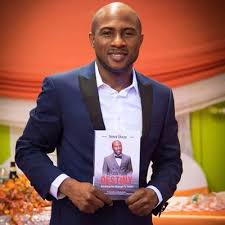
By Henry Ukazu
Dear Destiny Friends,
If you are asked, what’s your calling, what will be your response? If you are asked what your purpose on earth is, what will be your response? If you are asked who you are, what would be your response? These, no doubt, are interesting questions to decipher one’s calling.
Finding one’s calling is the best thing that can happen to anyone. According to one of my most cherished mentors, Dr. Yomi Garnett, the day you find your purpose is the day you become a millionaire. I couldn’t agree more with this saying because it is nothing but the gospel truth. This is because the best thing that can happen to anyone is knowing their calling.
According to Mark Twain, “The two most important days in your life are the day you are born, and the day you find out why. This is a fact. It’s quite unfortunate that many people are just existing as opposed to living. We were not created to exist, we were created to fill a vacuum, and we can only make an impact if we are intentionally answering our call.
Let’s circle back to the question I asked at the beginning of this article, what’s your calling? To answer this question, I would like you to approach it from a spiritual perspective. At creation, God called us to be something in the world, that’s why he gave us gifts and talents and told us to be fruitful and multiply.
Just like we all have names that our parents, friends, children, mentors, etc. call us. These names are reflections of what we mean to them or how they perceive us. Names are symbolic and have deep meanings if we apply reasoning to them. So, if we can answer the names we are called to earth, how about answering the name God called us at birth. I believe that’s the most important call or name we need to answer as human beings. When we answer the name God gave to us, the world will begin to respond to what we say because we have answered the mother’s call.
Why do I say this? Your purpose was made in heaven, but your calling is meant to be fulfilled on earth. It’s sad to see people answering different names they are not called. When God created you, there’s something he had in mind for you to accomplish or solve on earth, but it’s unfortunate that, due to life’s vicissitudes, some of us derail from the path God destined for us, and hence that’s the reason many of struggle because we are not working in the direction and pathway God designed for us to tread.
It should be known that your calling was not a conference call; the call was personal. If God wanted anyone to know your calling or purpose, he would have revealed it to anyone he wants, but he chose to reveal it to you, so the onus is on you to focus on it, follow it religiously and ultimately fulfill it because that’s the only way you can get fulfillment.
I also asked, what’s your purpose? Your purpose is the reason why you do whatever you are doing. In this context, your purpose is your why. According to Dr. Myles Munroe, “When the purpose of a thing is not known, abuse is inevitable.” Your purpose is the reason why you applied for a job, married your partner, started an NGO, a business, relocated/travelled, started school, or even wrote a book. There’s always a reason why we do something. That reason is the inspiration and motivation we need to forge when everything else fails.
Again, I ask you what’s your purpose? If you can’t figure out your purpose, I will strongly advise you to go to your creator (God) and ask him, what’s your purpose because he’s the person that created you. When people desire different interests in different majors, skills, profession, vocation, etc., it’s simply because someone puts the desire and interest inside them.
To understand how purpose works, there’s no problem on earth without a solution. The only problem without a solution is the problem the person with the solution hasn’t arrived.
Let me share a practical example on purpose. There was a story of an old man whose car (Ford) broke down in the middle of the road, all efforts to fix the car proved abortive. An old man was passing by and saw this man struggling to fix the car, he asked him, “What’s the problem?” The old man said, well, my car has refused to start. The stranger told the man to give a minute. The man initially refused saying who is this old man to fix what I have been working on for hours.
On second thought, he said, what will I lose if I give him a chance. He decided to listen to the old man who told him to give me a minute to check out the car. This stranger didn’t do much, he just touched a particular side of the engine and told the old man to start the car, and immediately the car cranked back to her life. The man was surprised and asked him, who are you? ” The stranger said, “I am Henry Ford, the owner of Ford Motors.
The moral of this story is, Henry Ford, the founder of Ford motors, knows his car more than everyone. So, if a mere mortal can know much, how much about the creator who will not know about our purpose?
When you find your purpose, you find your why, but when you find your why you must find your purpose.
The final question I asked: “Who are you? To answer these questions, I need you to focus on the inmate quality you are blessed with as opposed to what people think about you. What people think about you is your reputation, but who you are is your character. Some people associate titles to who they are. I think that’s the wrong interpretation. One might be a doctor, lawyer, Chief Operating Officer, professor, or even the governor or president, but that doesn’t make them good people with good traits, qualities, values and charismatic inmate abilities.
To lead one must have empathy, compassion, and heart of service. It is through these traits; one can see who a person really is and not the cloth of title they are showing the world.
So, to find one’s calling, here’s my sample suggestion: ask your creator (God), inquire what makes you happy, what you love to do, what do people compliment you on, what do you do with relative ease if you are woken from sleep? What is one thing you can do for free?
In conclusion, finding one’s calling is the best thing that can happen to anyone. The day you find your calling is the day you will begin to live your best life because you will begin to bless the world with your calling.
Henry Ukazu writes from New York. He works with the New York City Department of Correction as the Legal Coordinator. He’s the founder of Gloemi. He’s a Transformative Human Capacity and Mindset coach. He is also a public speaker, youth advocate, creative writer, and author of Design Your Destiny- Actualizing Your Birthright to Success, Unleash Your Destiny, and The Six Pillars of Success. He can be reached via info@gloemi.com


