
News
False Alarm: There’ll Be No Three Days Darkness, NASRDA Clarifies


- /home/rhoncare/pointblank.ng/wp-content/plugins/mvp-social-buttons/mvp-social-buttons.php on line 27
https://pointblank.ng/wp-content/uploads/2024/03/20170821-shankland-eclipse-14-1000x600.jpg&description=False Alarm: There’ll Be No Three Days Darkness, NASRDA Clarifies', 'pinterestShare', 'width=750,height=350'); return false;" title="Pin This Post">
- Share
- Tweet /home/rhoncare/pointblank.ng/wp-content/plugins/mvp-social-buttons/mvp-social-buttons.php on line 69
https://pointblank.ng/wp-content/uploads/2024/03/20170821-shankland-eclipse-14-1000x600.jpg&description=False Alarm: There’ll Be No Three Days Darkness, NASRDA Clarifies', 'pinterestShare', 'width=750,height=350'); return false;" title="Pin This Post">
The National Space Research and Development Agency (NASRDA) has debunked a video trending on TikTok platform of looming total darkness on the earth, which will supposedly last for a couple of days starting from April 8, due to eclipse of the sun.
The viral message has been trending via TikTok, claiming that there will be three days of darkness on earth, which would occur when the earth passes through the photon belt.
However, NASRDA’s Director of Media and Corporate Communications, addressing the issue, Mr. Felix Ale, confirmed that there would be an eclipse that would last only four minutes in the North America axis.
He said the four-minute eclipse would not even be witnessed in Africa.
“It will happen in North America axis. We will not feel it here because it will be at night in Africa. The eclipse will only last for four minutes and it will not affect us at all,” he said.
On his part, NASRDA’s Director of Physical and Life Science Department, Ayantunji Gbenro, described as false, the three days total darkness on earth being peddled on TikTok platform as a result of eclipse.
“It is a false alarm. This is my professional position. What is true is a total solar eclipse that will take place as the moon is ascending node on Monday, April 8, 2024, visible across North America.
“A solar eclipse occurs when the moon passes between earth and the sun, thereby obscuring the image of the sun for a viewer on earth.
“A total solar eclipse occurs when the Moon’s apparent diameter is larger than the Sun’s, blocking all direct sunlight, turning day into darkness,“ he explained.
Gbenro, who is also a Fellow Nigeria Institute of Physics added that totality occurs only in a narrow path across earth’s surface, with the partial solar eclipse visible over a surrounding region thousands of kilometres wide.
The viral Tik Tok video claimed there would be 72 hours of darkness across the globe occasioned by photons that would prevent the light of the sun or the stars from passing through it.
According to the video, there will be no break or periods of light during the days, only darkness and when sunlight will return to earth, it will mark beginning of golden age.
The post claimed that all sun lights will be blocked and solar panels will not generate energy.
It recommended people to stay at home and avoid traveling for safety reasons, stock food, water candles and other essential items.
NAN


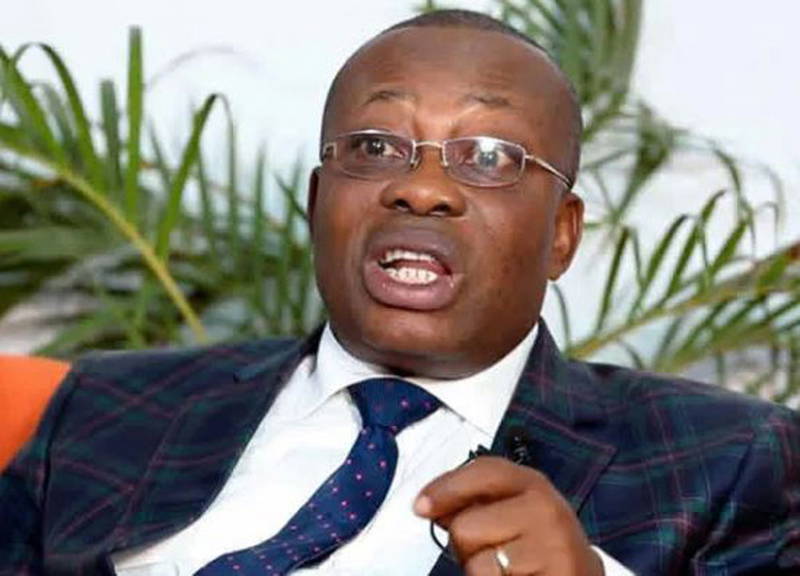
The Court of Appeal, Abuja Division, has dismissed the EFCC’s appeal and affirmed the ₦12 million compensation awarded to Dr. Monday Ubani, SAN, for his unlawful 21-day detention in 2019. The court also awarded ₦300,000 in costs against the Commission.
Ubani was detained after securing administrative bail for a client accused of jumping bail. Despite a court order directing the EFCC to release him conditionally or charge him with any alleged offence, the Commission failed to comply, prompting his lawyer, Chief Professor Mike Ozekhome, to institute a fundamental rights action in his favour.
On January 5, 2022, the Abuja High Court, presided over by Justice Sylvanus Oriji, ruled in Ubani’s favour. The EFCC appealed, challenging the trial court’s jurisdiction and the amount of compensation awarded.
In dismissing the appeal, the Court of Appeal rejected both arguments, holding that the compensation was justified and that the EFCC’s investigative powers do not permit arbitrary detention or disobedience of court orders.
The judgment reaffirms that law enforcement agencies remain subject to the Constitution and judicial authority. It also underscores the protection of fundamental rights, the limits of law enforcement powers and the consequences of unlawful detention.
Beyond the financial award, the decision highlights the responsibilities of sureties and the obligation of security agencies to obey court orders, making it a potentially significant reference in future fundamental rights litigation.
By Henry Ukazu
Dear Destiny Friends,
One of life’s most misunderstood concepts is the relationship between process and failure. When some people fail, they think they have done something wrong, but it could be that the person is experiencing the process, or their season has not yet come.
To understand this concept, let’s explain the two terms. A process is a series of structured actions, steps, or decisions taken in a specific order to transform input into a desired output or goal. Here are the key elements of a process
- Inputs: The raw materials, data, or starting requirements (such as ingredients, customer requests, or raw code).
- Activities/Steps: The specific tasks or decisions performed by people, tools, or machines.
- Trigger: An event or demand that kicks off the process (like submitting an order or launching an app).
- Output: The result, product, or delivered service.
- Owner: The person or role accountable for the outcome.
Failure, on the other hand, is the state or condition of not meeting a desirable, required, or intended objective. According to the Cambridge Dictionary, failure can result from any of the following:
- Omission or Neglect: Failing to perform an action that was promised, owed, or expected (such as a failure to pay on time or submit a report).
- System or Organ Malfunction: A situation where a machine, computer, engine, or bodily organ stops working properly (such as engine failure or kidney failure).
- Insolvency: A financial state of bankruptcy, such as the failure of a business or bank.
Having stated the above terms, one can decipher that process is a necessary tool for success. When a process is lacking, failure is inevitable.
I recently listened to a sermon by a Nigerian Pastor. According to the pastor, there’s something that looks like failure, but in a real sense, it is not failure; it is process. Sometimes in life, when we fail in business, examinations, careers, marriage, or even when our health fails us, the reason why they all happen is that we have failed to do the needful, or we need to go through a process.
Let me explain. Let’s say one has a business; if one has not taken the time to learn the trade very well, the person might fail for not learning a necessary skill required for the business, acquiring formal or informal education, or having a form of apprenticeship from a mentor, which might be all that’s necessary for the entrepreneur to succeed. This is what is called a process.
Also, a student will need to read, research, and do assignments to pass an examination. An employee will have to learn a job as an entry-level employee and work his way through to become the Chief Executive Officer. All this involves a process.
Marriage is not an exception. There’s no successful marriage without a form of mentoring or training. A man/woman must undergo a process of marriage counseling to learn about how to win in marriage. In this training, they will learn about communication in marriage, money in marriage, sex in marriage, money in marriage, and personalities in marriage
I strongly believe that there’s time for everything. There is an appointed time for everything. When something is not in its season, don’t expect to deliver. When one puts pressure, it’s bound to fail.
I can vividly remember what my most revered mentor, Dr. Yomi Garnett, counseled me on the importance of patience. A little background about the case: at that time, I had no job. I was working as a security officer. I tried to use my connections to secure a decent job, but it was very challenging. I reached out to Dr. Yomi, whom I call the sage because of his scintillating and rational wisdom. After ranting to him about my litany of problems, he said to me, “Henry, if you like, meet President Obama, Trump, etc.; if God is not ready to give you a job, you won’t get a job”. He went further to say, you can’t rush God. When the time is ready, God will align everything for you.
According to my mentors, there’s something God and the universe want me to learn. I must go through some process of refining for the task ahead. These refining processes might be preparing for the greater task by learning what needs to be learned, or it could be a case of God teaching me wisdom or something of value that will be useful to me in the near future which I may not be able to see now.
When I look back in retrospect, I can authoritatively say my mentor was right.
Sometimes in life, we prepare for the opportunities, while sometimes, we don’t prepare. We just learn on the job. But I honestly think it’s good to prepare before one embarks on any journey. That preparation is called a process.
To understand how the process works, do you know that if you plant corn in the season that is not the rainy season, you will believe it’s a bad seed, but no, that’s not the case because you planted the corn in the wrong season. Even the bible says there’s a time for everything.
Also, someone might finish university and become frustrated because he doesn’t have a job. What the person might not know is that their season is yet to manifest. It could also be that the student might need refinement, which comes with the process.
It’s instructive to note that when your season comes, nothing can stop it; there will be alignment, and the universe will work for you. What you did many years ago that failed to attract attention will begin to attract attention and draw you in.
Today, I pray, may you command attention in your season, not after your season.
Henry Ukazu writes from New York. He works with the New York City Department of Correction as the Legal Coordinator. He’s the founder of Gloemi. He’s a Transformative Human Capacity and Mindset coach. He is also a public speaker, youth advocate, creative writer and author of Design Your Destiny- Actualizing Your Birthright to Success, Unleash Your Destiny and The Six Pillars of Success . He can be reached via info@gloemi.com

Accomplished media entrepreneur and chieftain of the African Democratic Congress (ADC), Chief Dele Momodu, has said that nobody trusts President Bola Tinubu to conduct a free and fair election, including the President’s own supporters.
Momodu also noted that there is a belief that if the President does not win in 2027, he will not want to relinquish power.
He added that if Tinubu refuses to step down, he would be chased out of the Presidential Villa.
Momodu made the revelations while speaking on Arise News Prime Time belt.
“If you ask an average Nigerian today about Tinubu, ‘Do you trust Tinubu to conduct a free and fair election?’ I can tell you, 90 per cent of them will say no.
“Look, nobody trusts Tinubu to run a free and fair election, including his own supporters. They will tell you, ‘Oh, we are going to win. There is no way we won’t win.’ Ask them why, and they will say, ‘Oh, you know our oga now.’
“In fact, some people are even suggesting that if Tinubu loses the election, he will not agree to step down. I say, why won’t he agree? We will chase him away.
“Look, you do not know the determination of Nigerians. And now, I’m not resting my confidence on just my party. I’m talking about the ordinary man on the street who cannot imagine Tinubu coming back again. They just can’t.
“I can’t tell you our strategy in public. What we know is that, once upon a time, Tinubu fought for himself to secure a second term as governor of Lagos State.
“So, others are also working very hard behind the scenes. We are not going to come out in public and say this, but we know what to do to make sure that he does not get that second term. We also know that some of the people pretending to support him today—and I’m not trying to trivialise this thing.
“I know some of them. They are praying fervently that they will not have to go through this situation where governors become like houseboys. Governors are scared. Judges are scared. Legislators are scared.
“So, Tinubu has become a god whom nobody is ready to confront and say, ‘Oga, you’ve done your best. Please, go home.’”


