
Headlines
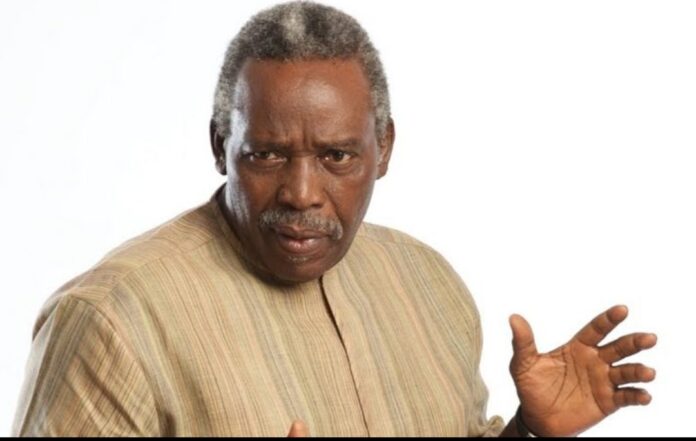
Family, Nollywood Stars Pay Glowing Tributes to Olu Jacobs

- /home/rhoncare/pointblank.ng/wp-content/plugins/mvp-social-buttons/mvp-social-buttons.php on line 27
https://pointblank.ng/wp-content/uploads/2026/09/Screenshot_2024-07-01-06-51-33-41_99c04817c0de5652397fc8b56c3b3817-696x441-1.jpg&description=Family, Nollywood Stars Pay Glowing Tributes to Olu Jacobs', 'pinterestShare', 'width=750,height=350'); return false;" title="Pin This Post">
- Share
- Tweet /home/rhoncare/pointblank.ng/wp-content/plugins/mvp-social-buttons/mvp-social-buttons.php on line 69
https://pointblank.ng/wp-content/uploads/2026/09/Screenshot_2024-07-01-06-51-33-41_99c04817c0de5652397fc8b56c3b3817-696x441-1.jpg&description=Family, Nollywood Stars Pay Glowing Tributes to Olu Jacobs', 'pinterestShare', 'width=750,height=350'); return false;" title="Pin This Post">
Nollywood practitioners, colleagues, family members and associates of late veteran actor, Olu Jacobs, on Wednesday night, celebrated his life and contributions to the entertainment industry.
The event, which held at Glover Memorial Hall, Lagos Island, attracted prominent actors, filmmakers and other stakeholders in the creative industry who gathered to honour the late thespian whose career spanned more than five decades.
Celebrities at the event reflected on his professionalism, humility, mentorship and immense influence on generations of actors.
Richard Mofe-Damijo described Jacobs as a father figure whose influence helped shape the careers of many actors, including himself.
He said Jacobs’ decision to return to Nigeria and invest his talent in the local industry helped create opportunities for younger performers.
“Uncle Olu was more than a colleague; he was a father figure to many of us.”
“His professionalism, discipline and commitment to excellence set a standard we continue to aspire to.”
“His legacy is not just in the films he made, but in the people he inspired and the industry he helped build.”
Sola Sobowale described Jacobs as a remarkable actor whose talent, kindness and humility made him a treasured figure in the industry.
She said his ability to command attention on screen was matched by his warmth and generosity off screen.
“Uncle Olu was a rare gift to Nigerian cinema, and we are blessed to have witnessed his greatness.”
“He carried himself with dignity, humility and a level of professionalism that every actor should learn from.”
“His legacy will continue to live through the stories he told and the generations he inspired.”
Segun Arinze described Jacobs as one of the defining figures of Nigerian acting, noting that his career provided a benchmark for aspiring performers.
He said the late actor’s contributions extended beyond his memorable performances to the standards he established for the profession.
“He was one of the people who showed us what it truly means to be an actor.”
“His dedication to his craft and his ability to bring every character to life were exceptional.”
“Olu Jacobs may have taken his final bow, but his influence on Nigerian entertainment will never fade.”
Fred Amata described Jacobs as an exceptional actor whose professionalism and dedication to the craft inspired generations.
“Uncle Olu was a master of his craft and he brought dignity and excellence to acting.
“His legacy will continue to inspire us.”
Jide Kosoko described Jacobs as a respected colleague whose contributions to Nollywood would remain unforgettable.
“He was a brother and a great professional and his impact on this industry cannot be overstated.
“We will forever cherish the memories and lessons he left behind.” he said.
Veteran actor, Adebayo Salami, popularly known as Oga Bello, described Jacobs as one of the pillars of Nigerian acting.
“Olu Jacobs was a great ambassador of our profession and he represented excellence, discipline and humility.
“His contributions to the industry will never be forgotten.” he said.
The late Oludotun Baiyewu Jacobs was born on July 11, 1942, in Abeokuta, Ogun State.
He trained at the Royal Academy of Dramatic Art (RADA), London, before building an international career in theatre, television and film.
He later returned to Nigeria, where he became one of the most respected figures in the country’s entertainment industry.
His distinguished career earned him several recognitions, including the national honour of Member of the Order of the Federal Republic (MFR), the Africa Movie Academy Award for Best Actor in a Leading Role and the Industry Merit Award at the Africa Magic Viewers’ Choice Awards.
Beyond his remarkable performances, Jacobs was celebrated for his contribution to the professionalisation of acting, mentorship of younger talents and promotion of Nigerian stories.
The Night of Tributes provided an opportunity for the industry to celebrate a man whose artistry, integrity and commitment to excellence helped shape Nigerian entertainment.
As colleagues and admirers remembered him, the gathering reaffirmed Jacobs’ enduring place in the history of Nigerian theatre and cinema.
The funeral service is scheduled for Friday, October 2, at This Present House, Lekki Phase 1, Lagos.
NAN


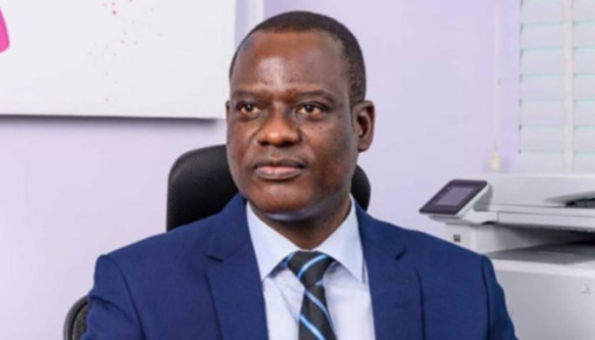
Minister of Finance and Coordinating Minister of the Economy, Taiwo Oyedele, has denied saying the Federal government will introduce a fuel tax when the economy stabilises and income levels improve.
In a post on X on Tuesday, Oyedele said his remarks during an interview with ARISE News was misrepresented, insisting that a “fuel tax is not on the table.”
However, during the interview with Rotus Odiri, ARISE News Business Correspondent, on the sidelines of the 2026 International Monetary Fund and World Bank annual meetings in Bangkok, Thailand, Oyedele said the tax would come when income levels improve enough for Nigerians to accommodate it.
He said taxes account for between 20 and 80 percent of pump prices in some countries, while many African countries impose between six and 10 different taxes on fuel products.
He said introducing fuel tax while petrol was still subsidised would have been counterproductive because government would effectively be paying the tax itself.
According to him, imposing the tax immediately after removal of petrol subsidy would be insensitive to Nigerians.
“The objective should be that instead of trying to suppress prices, which hasn’t worked for us, it hasn’t worked for any country in the world, not one. Instead of trying to suppress prices, think about how to grow income faster than prices rise,” Oyedele said.
“That’s how you bring prosperity and grow the middle class and that is exactly what we are doing as led by Mr. President himself.
“At the appropriate time, when the economy has stabilizes and income level will be able to accommodate it, those taxes will come. Not because we want to impose taxes,” he added.
In his Tuesday post, the minister reiterated that introducing a fuel tax at this time would be insensitive following removal of petrol subsidy, describing reports that government will introduce the levy when the economy stabilises as “fake news.”
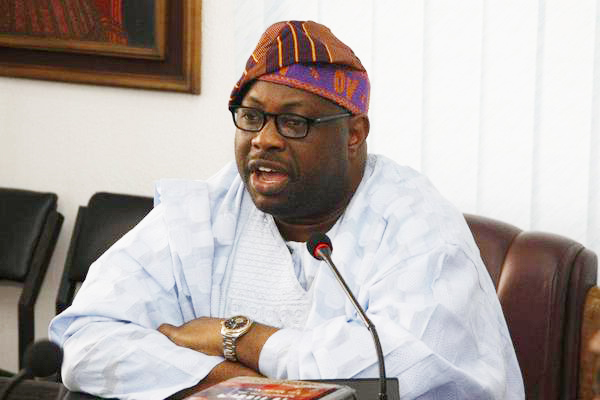
A chieftain of the African Democratic Congress (ADC), and Deputy Director of the Presidential Campaign Council, Chief Dele Momodu, has described former Vice-President Atiku Abubakar as the most nationally formidable and experienced among the leading contenders for the 2027 presidential election.
Momodu said Atiku’s experience at the national level distinguishes him from President Bola Tinubu and former Anambra State Governor, Peter Obi.
He stated this on Wednesday during an interview on Eagle 102.5 FM, Ilese-Ijebu, in Abeokuta.
“If you look at the antecedents of the three major candidates, between Atiku Abubakar and Peter Obi, you will see that Atiku is the most experienced. He has managed our country at the highest level,” he said.
Momodu traced Atiku’s political journey to the 1992 Social Democratic Party (SDP), presidential primary where he contested against late MKO Abiola and stepped down for him.
He said Atiku accepted the outcome without crisis even after he was not picked as Abiola’s running mate, describing it as a mark of true democratic temperament.
“He is the only one who started from around 1992, contested the SDP primary against Abiola and stepped down with uncommon equanimity. He did not make any noise,” Momodu said.
He noted that Atiku was among the founders of the Peoples Democratic Party, PDP, and served as Vice-President from 1999 to 2007.
Comparing Atiku with Obi, Momodu argued that while Obi’s best was demonstrated in Anambra, Atiku’s was at the presidency level managing the national economy.
“Peter Obi has tried his best in Anambra, while Atiku’s best is at the level of vice president controlling the economy of Nigeria. The difference is clear. He has matured in experience and exposure,” he said.
Momodu also said President Tinubu’s experience was largely limited to Lagos.
“What I’m trying to say is that Tinubu’s experience was limited to Lagos, and that is why when he became president, he thought Nigeria was Lagos. And he has found out now that Nigeria is not Lagos,” he said.
He argued that the current economic hardship under the present administration did not show prosperity, insisting Atiku remained better positioned to lead the country.
“Well, we are yet to see that prosperity, and if yesterday would determine today and tomorrow, it is obvious that Tinubu should retire now and let someone else do it,” Momodu added.
DailyPost
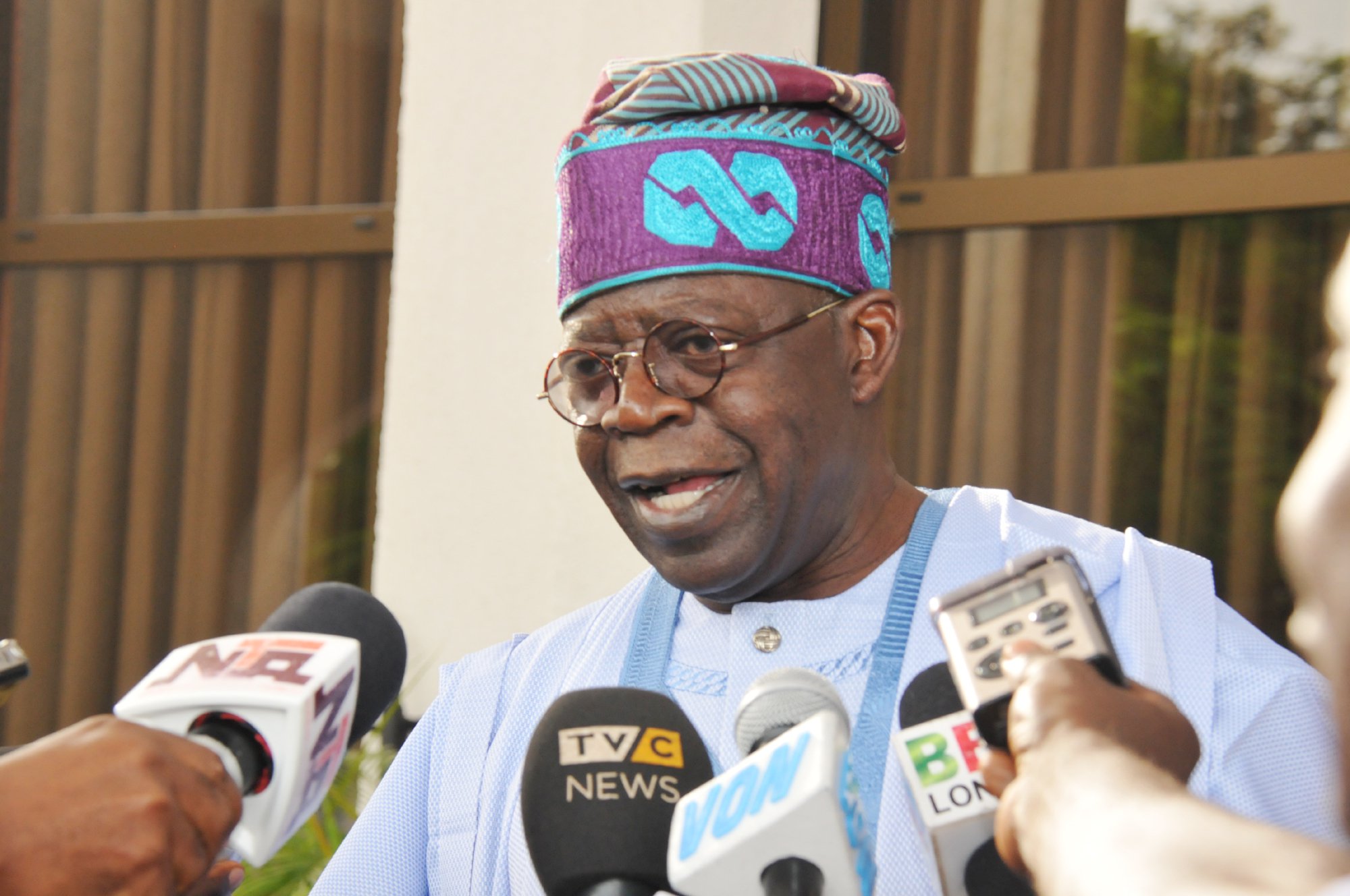
President Bola Tinubu says he has no regrets over the removal of petrol subsidy and other economic reforms introduced by his administration, insisting that Nigeria could not borrow its way to greatness.
Meanwhile, Minister of Finance and Coordinating Minister of the Economy, Taiwo Oyedele, has warned Nigerians against returning to petrol subsidy. He said the backtrack could trigger capital flight, undermining investor confidence and pushing the Naira to N3,000, N3,500 or even N4,000 per dollar.
But the Director of Media and Publicity of the African Democratic Congress (ADC) Presidential Campaign Council (PCC), Kola Ologbondiyan, challenged Oyedele to publish the economic model behind his warning that a return to fuel subsidy could push the naira to N4,000 per dollar.
The President spoke on Monday during the City Boys Movement retreat in Abuja, where he charged members of the group to mobilise support for his administration ahead of the 2027 general elections, insisting that the country’s future mattered more than the ambition of any individual candidate.
“No regrets,” Tinubu said, insisting that his administration would not be pushed back from its reform agenda.
He took a swipe at his political opponents, promising to restore the petrol subsidy, saying Nigeria could no longer afford to pay the fuel subsidy, and warning that reversing the policy would take the country back to an unsustainable economic path.
Defending his decision to remove the subsidy on his first day in office, Tinubu said the country was on the verge of financial collapse and could no longer afford the policy’s cost.
Tinubu also sought to reassure Nigerians about the direction of the economy, arguing that growth was steady and that the sacrifices associated with his reforms would ultimately offer citizens a future worth believing in.
Oyedele disclosed during a press briefing of the International Monetary Fund (IMF) and World Bank Annual Meetings in Bangkok, Thailand, yesterday, that investors had repeatedly questioned whether the government would abandon its reforms ahead of the next election cycle.
Ruling out the reversal of the government’s economic reforms, he maintained that any signal that Tinubu’s administration was contemplating or reinstating the subsidy would immediately affect financial markets, raise borrowing costs and worsen economic pressures on households.
“In all the meetings I have had, I came to a conclusion that the markets, including the domestic market, which you can read from the capital market, and the international market, have largely written off the opposition in Nigeria as unserious.
“If, for any reason, the President were to say we are merely considering the return of fuel subsidy, capital would react immediately, airfares would struggle, the naira would come under severe pressure, potentially moving towards 3,000, 3,500 or even 4,000.
The very fuel people want subsidised would become far more expensive in Naira terms,” Oyedele warned.
However, Ologbondiyan accused the Federal government of using fear to discourage debate on fuel subsidy, insisting that Nigerians deserve evidence, not alarming projections, on the potential economic consequences of restoring the policy.
Speaking to journalists, he described the minister’s warning as scaremongering and demanded that the government explain how it arrived at the projected exchange rate.
“The Minister of Finance is merely scaremongering. He cannot claim that a return to fuel subsidy will cause the naira to depreciate to N4,000 to the dollar without showing Nigerians the model behind that projection,” he said.
He questioned the reliance on investors’ concerns to oppose a subsidy’s return, challenging the government to identify the sources of the projections and disclose their calculations.


