
Business
FBN Holings Plc Announces New Board Appointments


- /home/rhoncare/pointblank.ng/wp-content/plugins/mvp-social-buttons/mvp-social-buttons.php on line 27
https://pointblank.ng/wp-content/uploads/2021/02/FBN-HoldCo-logo-new-1000x540.png&description=FBN Holings Plc Announces New Board Appointments', 'pinterestShare', 'width=750,height=350'); return false;" title="Pin This Post">
- Share
- Tweet /home/rhoncare/pointblank.ng/wp-content/plugins/mvp-social-buttons/mvp-social-buttons.php on line 69
https://pointblank.ng/wp-content/uploads/2021/02/FBN-HoldCo-logo-new-1000x540.png&description=FBN Holings Plc Announces New Board Appointments', 'pinterestShare', 'width=750,height=350'); return false;" title="Pin This Post">
FBN Holdings PLC (“FBNHoldings), Nigeria’s leading financial holdings company, has announced the appointments of Mr. Seni Adetu and Mrs. Juliet Anammah as Independent Non-Executive directors, while Mr. Otu Hughes has been appointed as a Non-Executive director. These appointments are subject to the approval of the Central Bank of Nigeria (“CBN”).
Speaking on the appointments, the Group Chairman of FBN Holdings Plc, Dr. Oba Otudeko, CFR, said, “On behalf of the board, management and staff of FBNHoldings, I am delighted to welcome the trio of Seni Adetu, Mrs. Juliet Anammah and Otu Hughes to the FBNHoldings board as they bring on board their combined professional experience and expertise of over 97 years, cutting across various industries and institutions of global repute.”
“I am certain that these rich experiences will have immediate and long-term impact on the group and its subsidiaries across Africa and beyond,” he added further.
SENI ADETU
Seni Adetu, a former Managing Director/CEO Guinness Nigeria Plc, has 35 years of private sector experience garnered at the highest levels primarily with John Holt Plc, Coca-Cola International and Diageo (Guinness) Plc in various countries within and outside Africa. He holds a first degree in Chemical Engineering and Masters in Business Administration (with specialization in Marketing), both from the University of Lagos. Adetu was at various times Marketing Director, Coca-Cola Nigeria Ltd, Managing Director of Coca-Cola, and the first African Managing Director/CEO and Executive Vice Chairman of Guinness Ghana Plc.
In 2009, Adetu was appointed Group Managing Director/CEO East African Breweries (EABL), the biggest company in East Africa, based in Kenya, during which time he was named Runner-up Forbes/CNBC CEO of the Year 2012 in East Africa. He was subsequently appointed MD/CEO of Guinness Nigeria Plc and Executive Chairman Diageo Brands Nigeria thus, again becoming the first Nigerian in nearly 20 years to lead that company. Adetu has had working stints in Hungary and the UK and has been exposed to various high-profile leadership courses globally including at the prestigious Harvard Business School.
He has served on the boards of various multinational companies in both Executive and Non-Executive capacity in Nigeria and abroad and was until recently an Independent Non-Executive Director on the Board of Fidelity Bank Plc and Non-Executive Director at APT Pensions Ltd among others.
Adetu is the Founder/Group CEO of Algorithm Media Limited and Ogilvy Nigeria Limited, two leading Marketing Communications agencies in Nigeria, in partnership with WPP, the world’s largest advertising and media agency network. He is a member of many reputable social clubs including the Metropolitan Club Lagos. He is also the immediate past National Vice President of the University of Lagos Alumni Association.
JULIET ANAMMAH
Juliet Anammah is Chairwoman Jumia Nigeria & Head of Institutional Affairs Jumia Group. Jumia is the largest eCommerce platform in Africa and the first African Tech start-up to be listed on the NYSE
She is an experienced executive with 28+ years of professional experience including 7 + years at Partner / Chief Executive level.
Before her current role, she was the CEO of Jumia Nigeria. Prior to joining Jumia, Juliet spent 16 years at Accenture and was the Partner managing Accenture’s Consumer Goods Practice in West Africa.
A Pharmacist by training, she started her career in Sales & Marketing with May and Baker (Sanofi-Aventis) in 1991 before joining Accenture as a Senior Strategy Consultant in 1999.
Juliet also serves on Corporate and non-profit Boards in a non-executive capacity. She is currently on the Boards of Flour Mills of Nigeria and APT Pensions as Independent non-executive member. She is also an EXCO member of Consultative Action Group for the Poor (CGAP) a not for profit agency funded by the World Bank, Bill and Melinda Gates Foundation and several Bilaterial/ Multilateral agencies.
She holds a Bachelor of Pharmacy degree, an MBA (Finance track) and is an alumnus of both Wharton College University of Pennsylvania (AMP) and Yale University.
OTU HUGHES
Otu Hughes has over 25 years’ experience in operations and strategy, principal investment, mergers and acquisition as well as capital raising in both the US and Sub-Saharan Africa. He started his career in 1993 with Lehman Brothers, providing strategic and financial advisory services to government entities and companies in privatisation and empowerment issues, notably Brazil (power and mining), Ghana (mining), South Africa (empowerment programmes), amongst others.
Otu joined Deutsche Bank in 1998 as Associate– Mergers, Acquisitions and Corporate Advisory Group with the oversight responsibilities of providing mergers, acquisitions, corporate and strategic financial advisory services to companies and government agencies across industries and countries, rising to Vice President. He is the Co-founder and Principal of Rofgam/Hughes Consulting and also worked at KeyBanc Capital Markets, amongst many others.
Otu is the Co-Founder & Managing Director of Candesco Limited, set up with the primary responsibility of developing and managing off-grid and independent power projects for Sub-Sahara Africa market, providing affordable, clean and stable power to clusters of communities.


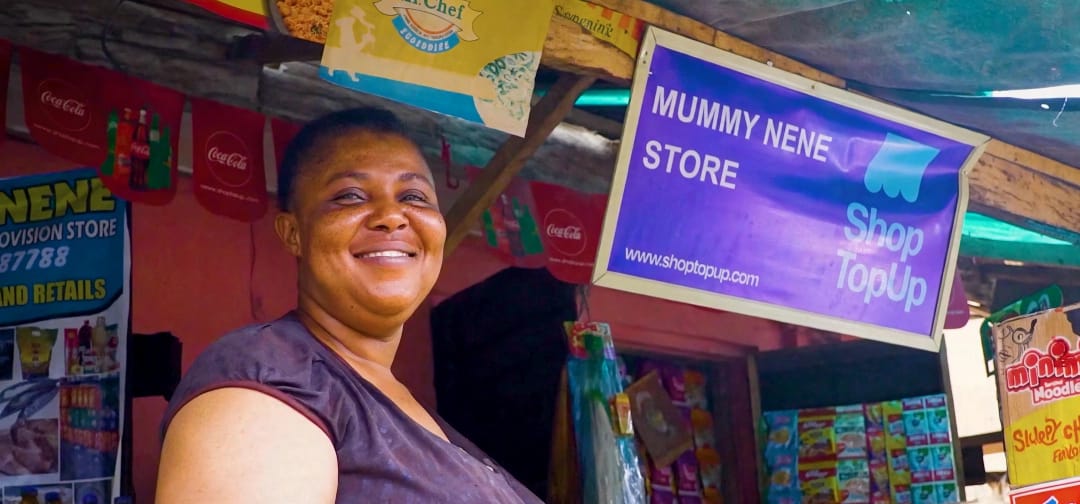
While conversations about the future of retail increasingly focus on supermarkets, shopping malls and online shopping platforms, millions of African consumers continue to rely on a more familiar and accessible business: the neighbourhood shop.
From small provision stores and corner shops to kiosks and informal retailers, these businesses remain an important part of everyday commerce, connecting communities to essential household products. However, behind their convenience lies a supply chain challenge that often limits their growth.
For many small retailers, sourcing products, managing inventory and securing enough working capital to keep their shelves stocked can be difficult. Fragmented distribution networks, multiple intermediaries and limited access to financing often make it harder for them to compete and expand.
Technology is beginning to offer a different possibility.
Digital platforms can simplify the way neighbourhood retailers purchase goods by connecting them more directly with manufacturers and distributors. They can streamline ordering, improve product availability and make inventory management more efficient.
Access to financial technology can further strengthen these businesses by helping eligible retailers secure the working capital required to replenish stock, respond to customer demand and grow sustainably.
One Nigerian technology company working to address these challenges is TradeDepot, which is using digital innovation to connect small retailers with manufacturers and distributors.
By making product sourcing and distribution more efficient, the company is helping to address some of the longstanding barriers facing small businesses in Africa’s retail sector.
However, scaling technology-driven solutions across a fragmented retail market requires more than innovation. It also demands significant investment.
This is where development finance and venture capital become important.
Through Boost Africa, the European Investment Bank (EIB) invested in Partech Africa Fund, a venture capital fund that subsequently backed TradeDepot. The investment illustrates how development finance can reach innovative African businesses through investment funds, providing capital to companies working to solve real economic challenges.
Boost Africa is a joint initiative of the European Investment Bank and the African Development Bank, with support from the European Union. The initiative supports African businesses and strengthens the continent’s entrepreneurial ecosystem by improving access to finance and opportunities for growth.
The wider significance of this investment goes beyond the technology platform itself. Strengthening neighbourhood retailers can contribute to more efficient supply chains, support small business growth and improve access to everyday consumer goods across communities.
For Africa, where small retailers remain central to local economies, the opportunity is substantial.
The future of retail may not necessarily involve replacing traditional neighbourhood shops with large supermarkets or online marketplaces. Instead, it could depend on equipping these existing businesses with better technology, stronger distribution networks and improved access to finance.
Ultimately, transforming retail may begin with something as familiar as the shop around the corner.
Boost Africa: From Capital to Impact.
Watch how TradeDepot is bringing commerce closer to communities through technology and investment
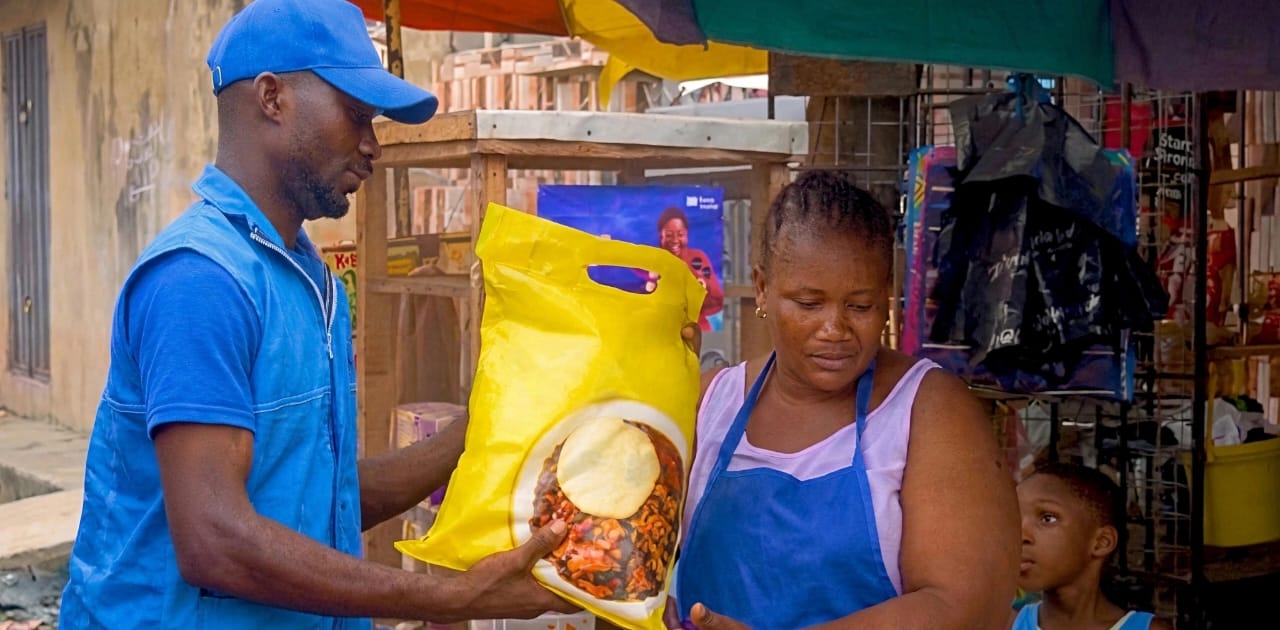
Ever wondered how the products on your neighbourhood shop shelves get there? Behind everyday purchases is a supply chain that can be costly, complex and inefficient, particularly for small retailers.
Nigerian technology company TradeDepot is changing this process by using technology to connect small retailers with manufacturers and distributors, making it easier for shop owners to order and receive the goods they need.
But transforming retail distribution takes more than an innovative idea. It requires investment to build, expand and scale.
Through Boost Africa, the European Investment Bank (EIB), alongside the African Development Bank and with support from the European Union, is helping strengthen the financing ecosystem for innovative African businesses.
One example is the EIB’s investment in Partech Africa Fund, which subsequently backed TradeDepot, helping channel capital into a Nigerian business working to improve how goods move from suppliers to neighbourhood shops.
The impact goes beyond technology. More efficient distribution can help small retailers access inventory, strengthen connections between manufacturers and suppliers, and bring commerce closer to the communities they serve.
Ultimately, TradeDepot’s story demonstrates how investment can go beyond funding to support stronger businesses, more efficient markets and opportunities for small retailers.
Boost Africa: From Capital to Impact.
Watch how TradeDepot is bringing commerce closer to communities.
▶ https://www.youtube.com/watch?v=zw9t2asF9Pc
Business
Beyond University Degrees: How ChipMango is Preparing African Engineers for Global Tech Industry

A university degree is a starting point, but practical industry experience can make all the difference.
Nigerian technology company ChipMango is bridging the gap through specialised semiconductor training and real-world chip design and verification projects, preparing African engineers for opportunities in the global technology industry.
Through Boost Africa, the EIB, AfDB and EU are strengthening the investment ecosystem supporting innovative African businesses.
Watch the video to discover how ChipMango is connecting engineering talent to real industry opportunities.
Watch the video:



