
Metro
FCT Police Neutralise Notorious Kidnapper, Dogo Saleh

- /home/rhoncare/pointblank.ng/wp-content/plugins/mvp-social-buttons/mvp-social-buttons.php on line 27
https://pointblank.ng/wp-content/uploads/2022/05/Police-1.jpg&description=FCT Police Neutralise Notorious Kidnapper, Dogo Saleh', 'pinterestShare', 'width=750,height=350'); return false;" title="Pin This Post">
- Share
- Tweet /home/rhoncare/pointblank.ng/wp-content/plugins/mvp-social-buttons/mvp-social-buttons.php on line 69
https://pointblank.ng/wp-content/uploads/2022/05/Police-1.jpg&description=FCT Police Neutralise Notorious Kidnapper, Dogo Saleh', 'pinterestShare', 'width=750,height=350'); return false;" title="Pin This Post">
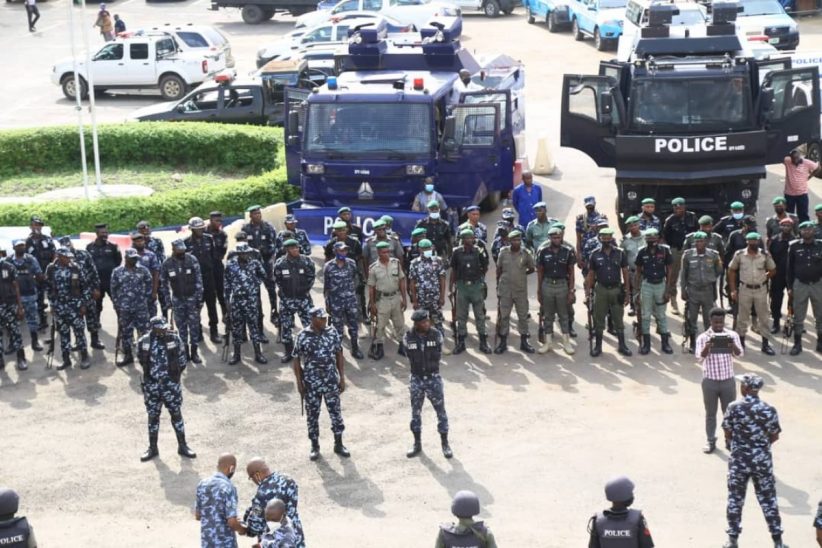
Operatives of the FCT Police Command have neutralized a notorious bandit, Salisu Mohammed, alias Dogo Saleh, who had been terrorizing residents, following an intense counter-kidnapping operation aimed at dismantling a syndicate responsible for violent crimes.
“The killing of the notorious kidnapper, whose gang mostly operates along the Kaduna – Lokoja – Enugu highway and within the FCT, is a major breakthrough in its relentless fight against criminal elements terrorizing the Federal Capital Territory and neighboring states. In a well-coordinated intelligence-led operation,” the police said.
The Command said: “On March 3, 2025, acting on credible intelligence regarding the movement of bandits into the FCT, the Officer-in-Charge of the Anti-Kidnapping Unit led operatives to block their access routes.
“After meticulous tracking, the operatives successfully intercepted and arrested Salisu Mohammed at Gidan Abe Forest while he was en route to Bwari Area Council, FCT.
“Salisu Mohammed, a 21-year-old Fulani man from Baban Saural village, Chikun Local Government Area of Kaduna State, was identified as a notorious hit man for bandit leaders operating in Rijana Forest, Kaduna State.
“He had terrorized communities along major highways, kidnapping unsuspecting victims and extorting huge ransoms.
“During the operation, he attempted to evade capture, abandoning his possessions, which included: one AK-49 rifle with two magazines, 60 rounds of 7.62mm live ammunition and N3,000,000 cash proceeds from previous kidnappings
“Further investigations revealed his direct involvement in several high-profile kidnappings and killings, including Kyauta Village, Chikun LGA (two years ago), two individuals, including a security officer, kidnapped. Ransom collected: Millions of Naira and the officer was later killed.
At Kike Village, one year ago, he was involved in the kidnap of a security officer’s wife, and collected millions of Naira ransom.
“Involved in kidnap of three individuals, 5 months ago at Bagada Village (five months where millions of naira ransom were collected.
“Involved in kidnapping of two men at a village near Kaduna Refinery one year ago, and collected millions of naira ransom, as well as the kidnapping one victim, a year ago at Karuga Village, Chikun LGA, Kaduna, collected millions of Naira ransom
“Involved in kidnapping of persons at Bagado Village, Chikun LGA eleven months ago and collected millions of naira ransom, kidnappings at Dan-Bushiya Village two years ago and collected: millions of nairavas ransom.
“Furthermore, he was involved in kidnapping of a woman and her two children at Police Quarters in Baban Saural, Chikun LGA. The officer and her children remain in captivity.
“Involved in attack on security outpost at Kujama Market, Kaduna recently, on January 5, 2025, during which two security personnel were killed and their firearms stolen.”
The Police added that “Salisu Mohammed and his gang were actively involved in kidnapping motorists along the Lokoja – Enugu highway.
“Led by his gang leader, Kanaboro, alongside Saleh and Abubakar, they recently kidnapped a tribal youth leader and others, collecting ransom before their release.
Other members of the gang so far neutralized, according to the Police, are Boka, the overall commander, his deputy, Sharmi, his assistant, Dogo Isa, another assistant, Gudan, who all operated a sub-camp each for detention of victims in the forest.
Continuing, the Police said: “The gang is loyal to Dogo Gide and collaborates with the Ansaru terrorist group for arms and ammunition supply.
“On March 4, 2025, at approximately 11:14 pm, leveraging intelligence provided by the arrested suspect, operatives launched a high-risk follow-up operation to dismantle his gang.
“The suspect led the Anti-Kidnapping Unit to Kwasau Forest, Kagarko LGA, Kaduna State, where his gang, led by one Abdu Musa, alias “Kanabaro,” had established a major hideout.
“Upon arrival, the Police team was ambushed by armed bandits attempting to free the suspect. The operatives swiftly engaged the criminals in a fierce gun battle, displaying superior tactical expertise and resilience.
“The bandits were ultimately overpowered and forced to flee into the forest with severe gunshot wounds.
“The suspect sustained fatal gunshot wounds inflicted by his own gang during the crossfire. He was rushed to Kubwa General Hospital, where he was confirmed dead.
“The bandits’ hideout was successfully dislodged. One officer, Inspector of the FCT Anti-Kidnapping Unit, sustained minor injuries and has since been treated and discharged. No other casualties were recorded.
“The Commissioner of Police, FCT Command, CP Olatunji Disu, has commended the officers involved in the operation for their bravery, professionalism, and tactical efficiency.
He assured residents that operations are ongoing to track and apprehend the fleeing gang members and dismantle all criminal networks operating within the region.


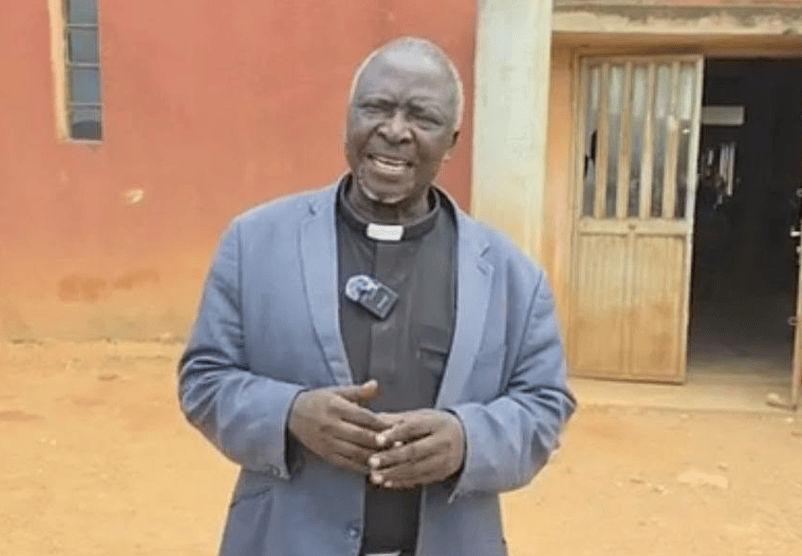
The Regional Chairman of Church of Christ in Nations (COCIN), Barkin Ladi Local Government Area of Plateau State, Rev. Ezekiel Dachomo, has denied reports that he prayed for the re-election of President Bola Tinubu and Vice President Kashim Shettima in the 2027 presidential election.
Dachomo, who is currently in Israel on what he described as his first International Christian Advocacy Tour, said his visit was aimed at drawing the attention of world leaders to the plight of Christians in Plateau.
The cleric made the clarification in a social media post on Monday night following reports that he had prayed for the success of the All Progressives Congress (APC) presidential ticket and expressed support for the Muslim-Muslim ticket.
Dachomo said his earlier post, in which he prayed for Nigeria, had been misconstrued as an endorsement of Tinubu and Shettima ahead of the 2027 election.
According to him, there was nowhere in the post where he prayed for the President and Vice-President to win the election.
“People are trying to frame me, saying I prayed for a Muslim-Muslim ticket. But I did not, and I will never pray for a Muslim-Muslim ticket because Nigeria belongs to both Muslims and Christians,” he said.
Dachomo said his prayers were for the well-being and success of Nigeria and its citizens, irrespective of their religious affiliations.
“I pray for both Muslims and Christians in Nigeria. I pray for Nigeria to succeed. If you truly want to come to God, come with a clean heart,” he added.
The cleric further stated, “I did not pray for President Tinubu and Vice President Shettima to win in 2027. My prayers have always been for Nigeria to succeed.”
Dachomo’s clarification came amid reactions to his ongoing advocacy tour in Israel, where he is seeking international attention to security challenges and what he described as the persecution of Christians in Plateau.
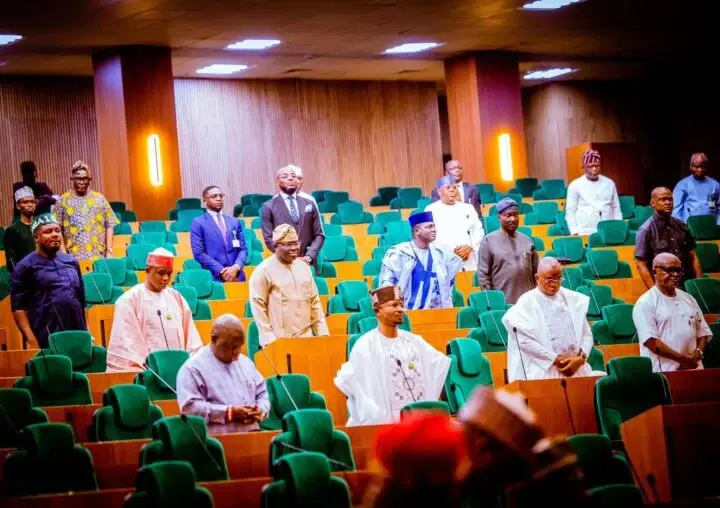
Ahead of the 2027 election, the House of Representatives Committee on Electoral Matters has urged the Independent National Electoral Commission (INEC) to disqualify candidates whose names are not contained in political party registers, as stipulated by the Electoral Act 2026.
In a statement on Tuesday, the Chairman of the committee, Bayo Balogun, drew the commission’s attention to a Supreme Court ruling on Sections 77(5), 77(6) and 77(7) and called for their full enforcement across all political parties.
Balogun, a member of the All Progressives Congress, APC, said that pending legal proceedings concerning the interpretation, constitutionality and enforceability of the sections had been resolved by virtue of the Supreme Court judgment.
The lawmaker recalled that the Supreme Court, on September 24, 2026, restored the provisions after setting aside the Court of Appeal judgment that had declared them unconstitutional.
According to him, the apex court held that the provisions were not inconsistent with the 1999 Constitution.
Balogun explained that Section 77(5) provides that only members whose names are contained in the membership register submitted to INEC are eligible to vote or be voted for at party primaries, congresses and conventions.
He said that Section 77(6) requires political parties to use the register submitted to the electoral umpire for such exercises.
Balogun urged INEC to proceed without further delay to enforce Sections 77(4) to 77(6) in the administration and monitoring of political parties and their electoral activities.
He further urged the commission to audit the membership registers and candidates submitted by political parties to establish whether the names of the candidates are contained in the registers earlier submitted to INEC in compliance with Section 77(5).
“This will be a litmus test for the commission – any culpable political party and candidates should be disqualified.
“Diligent enforcement of the provision would help prevent disputes and reduce the volume of litigation that could arise from alleged irregularities or non-compliance with Sections 77(4) to 77(6) of the Electoral Act,” Balogun said.
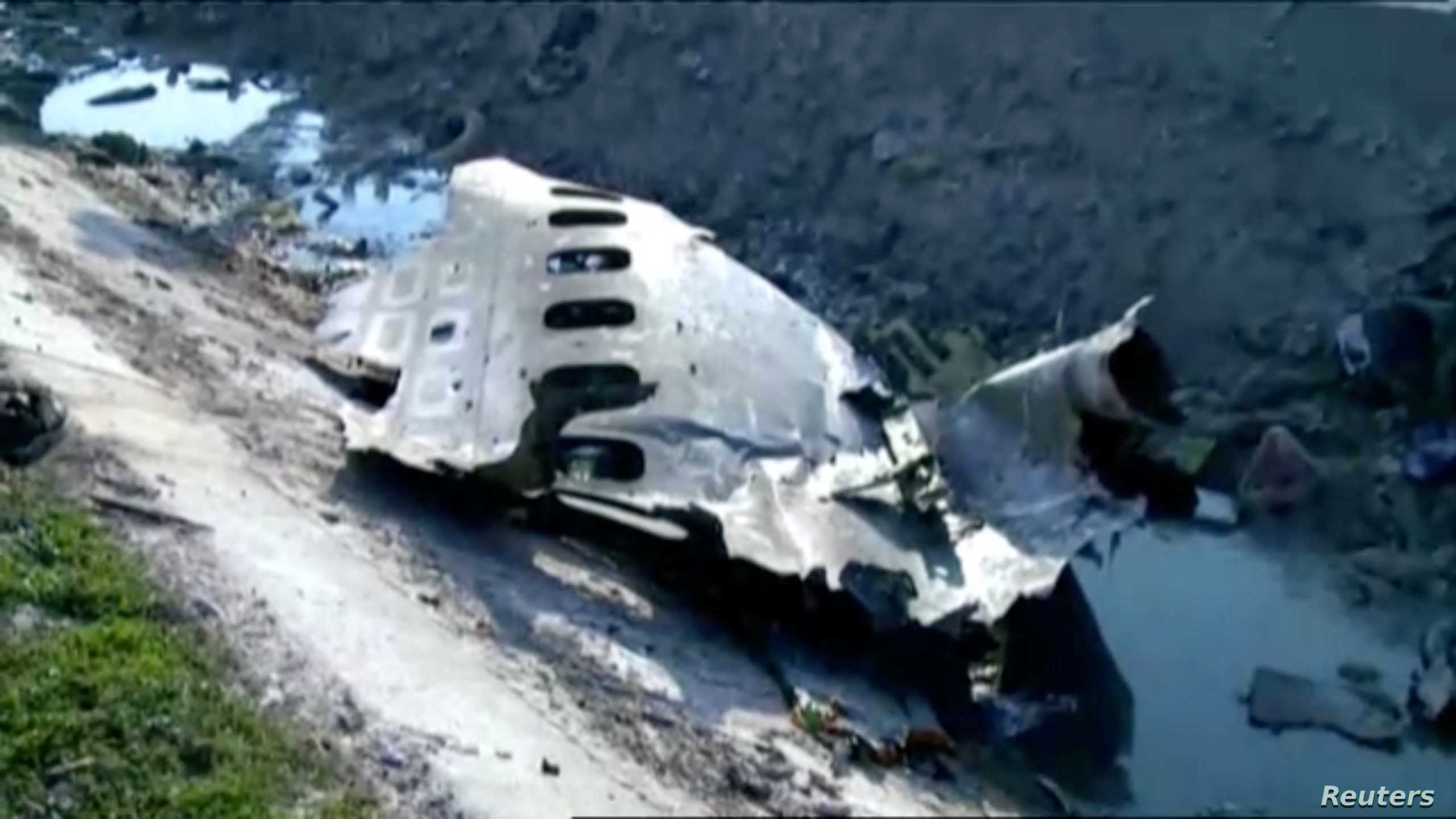
An helicopter crashed into a swamp near Naval Base in Igbokoda, the headquarters of Ilaje Local Government Area of Ondo State, on Monday.
The incident occurred at about 11.00a.m during heavy down pour, throwing the coastal community into panic.
The number of people on board of the helicopter was yet to be officially confirmed, while the condition of possible survivors cannot be confirmed.
Confirming the incident, Maurice Oripenaiye, the Chairman of the local government, told the News Agency of Nigeria (NAN) in a telephone interview that he could not ascertain the number of the victims.
Oripenaye also said he was yet to ascertain the identity of the crashed helicopter and the passengers.
“It happened during the heavy rainfall at about 11.00a.m. I cannot confirm the number of the people on board. I have deployed some youths to the area for rescue purpose,” he told NAN.
Similarly, the Police Command in Ondo State while confirming the crash, said details surrounding the incident were still emerging.
The command in a statement by its spokesperson, Abayomi Jimoh, a deputy superintendent of police, in Akure, said efforts were ongoing to establish the full circumstances surrounding the crash.
“The command urges members of the public, particularly residents of Igbokoda and adjoining communities, to remain calm and refrain from circulating unverified information.
“The public will be duly informed as soon as further credible information becomes available,” it stated.
(NAN)


