Connect with us

Headlines

FG Cites High Inflation and Economic Hardship As Reason for Postponing Petrol Subsidy Removal

Published

on

The Federal Government has postponed the planned petrol subsidy removal till further notice due to “high inflation and economic hardship”.

Subsidy or under-recovery is the underpriced sales of premium motor spirit (PMS), better known as petrol.

The government had planned to stop subsidy payments on petroleum products from July this year.

Zainab Ahmed, minister of finance, budget, national planning, disclosed this on Monday in Abuja at a meeting with Senate President Ahmad Lawan.

The meeting had Timipre Sylva, minister of state for petroleum resources; representatives of oil companies, among others, in attendance.

Last week, Lawal had said Buhari did not direct the removal of petrol subsidy, saying their “constituents are raising concerns over the policy”.

The National Economic Council (NEC) said it is still considering the recommendations of its ad-hoc committee – which proposed full deregulation and N302 per litre for PMS.

Petrol subsidy payments gulped N1.43 trillion in 2021, shrinking revenue accrued to the federation account to N542 billion – a shortfall from the projected N2.51 trillion. In December 2021, Nigeria spent N270.83 billion to cater for the cost of petroleum shortfall.

The finance minister said the government had to reconsider its decision after the 2022 budget was passed.

Ahmed said petrol subsidy was provided for in the 2022 budget to run from January till June.

She, however, said that after consultations with stakeholders — in view of the high inflation and economic hardship – additional provisions would be made beyond the initial period.

According to her, it has become clear that the timing for the removal of petrol subsidy will be problematic as the country still experiences heightened inflation.

“Provision was made in the 2022 budget for subsidy payment from January till June. That suggested that from July, there would be no subsidy,” Ahmed said.

”The provision was made sequel to the passage of the Petroleum Industry Act, which indicated that all petroleum products would be deregulated.

“Sequel to the passage of the PIA, we went back to amend the fiscal framework to incorporate the subsidy removal.

“However, after the budget was passed, we had consultations with a number of stakeholders, and it became clear that the timing was problematic.

“We discovered that practically, there is still heightened inflation and that the removal of subsidy would further worsen the situation and impose more difficulties on the citizenry.

“Mr President (Muhammadu Buhari), does not want to do that. What we are now doing is to continue with the ongoing discussions and consultations in terms of putting in place a number of measures.

“One of these include the roll-out of the refining capacities of the existing refineries and the new ones, which would reduce the amount of products that would be imported into the country.

“We, therefore, need to return to the National Assembly to now amend the budget and make additional provision for subsidy from July 2022 to whatever period that we agreed was suitable for the commencement of the total removal.”

On his part, Lawan appealed to the leadership of the Nigeria Labour Congress (NLC) and the Trade Union Congress (TUC) to shelve their planned industrial action over subsidy removal as it has become unnecessary.

TheCable

Continue Reading
Advertisement


Click to comment

Leave a Reply

Your email address will not be published. Required fields are marked *

Headlines

Atiku Tackles Obasanjo over Impeachment Sponsorship Claims Involving Na’Abba

Published

on

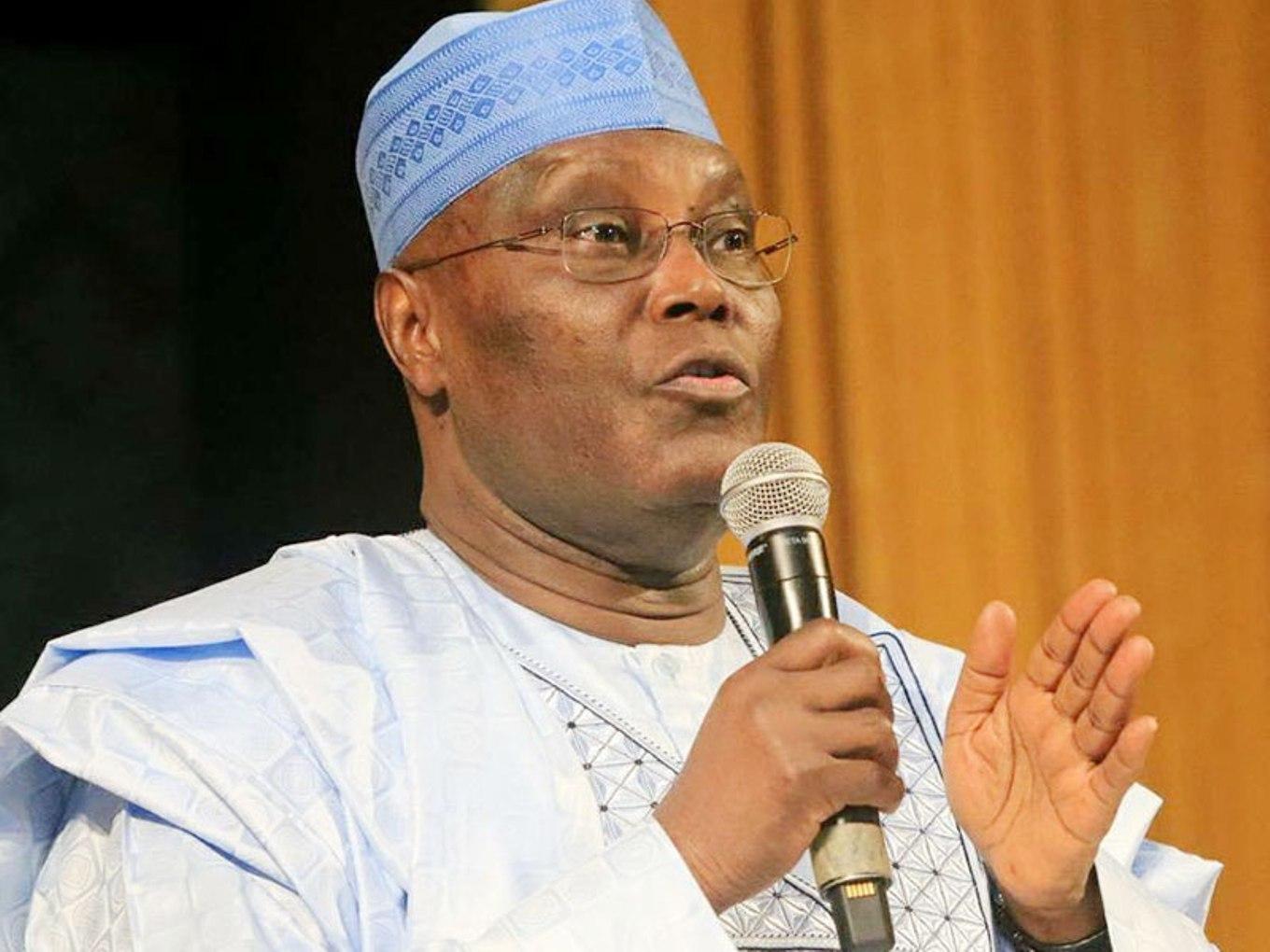
Former Vice President Atiku Abubakar has questioned why former President Olusegun Obasanjo waited until after Ghali Umar Na’Abba’s death to allege that he paid the former House of Representatives Speaker N5 million to initiate impeachment proceedings against him.

Atiku said raising the allegation when Na’Abba could no longer respond denied Nigerians the opportunity to hear the other side, describing it as a politically motivated attempt to damage his reputation and boost the electoral fortunes of Obasanjo’s unnamed kinsman ahead of the 2027 presidential election.

Obasanjo alleged in a letter to former Governor of Ogun State, Olusegun Osoba that Atiku invited Na’Abba to the Presidential Villa while he was away and convinced the former speaker that he should serve only one term.

The former president claimed the alleged payment formed part of Atiku’s attempt to seize power by “hook or by crook”.

However, Atiku rejected the allegation as politically motivated in a statement issued on Friday by his Senior Special Assistant on Public Communication, Phrank Shaibu.

The African Democratic Congress (ADC) presidential candidate aid the timing of Obasanjo’s allegation showed that it was intended to influence the political contest ahead of the 2027 general election.

Atiku accused his former principal of attempting to tarnish his reputation to give an unfair political advantage to an unnamed kinsman.

“Coming at a time when the political landscape ahead of the 2027 general election is taking shape, the obvious objective is to besmirch my person and reputation and confer an undeserved political advantage on the former President’s kinsman,” he said.

Atiku argued that Nigerians were too discerning to be distracted by an allegation revived for political convenience.

He challenged Obasanjo to openly identify and support his preferred presidential candidate instead of attempting to shape public opinion through claims that could no longer be independently tested.

“If former President Obasanjo has chosen to take a political position ahead of 2027, he should simply declare it and allow Nigerians to judge it on its merits,” Atiku said.

The former vice-president questioned why Obasanjo waited until after Na’Abba’s death to repeat the allegation, saying the timing denied Nigerians the opportunity to hear the former speaker’s version of events.

He also maintained that the bribery allegation had no judicial or official backing.

Atiku argued that Obasanjo’s government controlled the full powers of the Nigerian State and could have investigated and prosecuted any criminal conduct if credible evidence existed at the time.

“If there was indeed evidence of any criminal conduct as alleged, Nigerians are entitled to ask why no action was taken at the time by a government that wielded the full powers of the Nigerian state,” he said.

Atiku linked Obasanjo’s continued hostility towards him to their disagreement over the alleged attempt to secure a third presidential term.

He said he opposed the plan because it threatened Nigeria’s constitutional democracy and refused to sacrifice democratic principles for Obasanjo’s personal ambition.

The ADC leader recalled that he successfully challenged actions taken against him by the Obasanjo administration through a series of court cases.

“Rather than surrender democratic principles on the altar of personal ambition, I defended the Constitution and successfully asserted my rights through the courts in a series of landmark legal victories against a sitting President,” he said.

Atiku described those legal battles as an important part of Nigeria’s democratic history, insisting that Obasanjo had not overcome the bitterness created by their confrontation.

He said he would not allow himself to be dragged into a prolonged dispute over past political battles while Nigerians faced worsening economic hardship, hunger, unemployment and insecurity.

Atiku said his attention remained on presenting credible alternatives, protecting democracy, demanding accountability and working with patriotic Nigerians to restore competent and transparent leadership.

“Nigerians deserve solutions to today’s problems, not recycled political tales from yesterday,” he declared.

Continue Reading

Headlines

UK PM Burnham Unveils 10-Year Plan, Begins Cabinet Overhaul

Published

on

The new British Prime Minister, Andy Burnham, on Monday, unveiled a 10-year plan to tackle the country’s economic and social challenges as he began reshaping his government, with Chancellor Rachel Reeves among senior ministers leaving the Cabinet.

In his first speech outside 10 Downing Street, Burnham said his government would introduce measures to ease the cost-of-living crisis, end rough sleeping, build more council homes and devolve more powers away from Westminster.

“This moment will be a circuit breaker for Britain,” Burnham said, adding that details of the government’s cost-of-living package and how it would be funded would be announced from Tuesday.

According to the BBC, Reeves announced on X that she was stepping down as Chancellor of the Exchequer, describing it as “the privilege of my life” to have served in the role. The broadcaster reported that Burnham had offered her another senior cabinet position, but she declined.

The cabinet reshuffle also saw Foreign Secretary, David Lammy, Housing Secretary, Steve Reed and Business Secretary, Peter Kyle leave government as Burnham assembled his own team.

Speaking to reporters after his Downing Street address, Burnham said he would examine the tax-free personal allowance ahead of his first Budget in the autumn but acknowledged that raising the threshold would have significant fiscal implications.

He also pledged to reform England’s social care system, saying he did not want to leave office without fixing a problem that had persisted for decades, while reaffirming his commitment to existing fiscal rules.

The BBC also reported that Burnham held his first conversation with a foreign leader after taking office, speaking with U.S. President Donald Trump.

The resignation of the outgoing Prime Minister Keir Starmer saying he was leaving office “with good grace” and “a smile.”

Burnham is expected to continue announcing appointments to his new Cabinet as his administration takes shape, according to the BBC.

Continue Reading

Headlines

Finance Minister Oyedele Defends Nigeria’s Rising Debt

Published

on

Minister of Finance and Coordinating Minister of the Economy, Taiwo Oyedele, has clarified the sharp increase in Nigeria’s public debt.

Speaking before the Senate Committee on Finance on the state of the nation’s economy on Monday, Oyedele attributed the increase to naira depreciation and accounting adjustments rather than fresh borrowing by the Bola Tinubu administration.

Oyedele was responding to questions from the senator representing Kebbi Central, Adamu Aliero, over claims that the current administration had borrowed about N80 trillion in addition to the N75 trillion public debt it inherited.

According to the minister, comparing the country’s debt stock at the start of the administration with the current figure without accounting for exchange rate movements created a misleading impression.

“When this administration came into office, public debt was around N75 trillion. Many people simply compare that figure with today’s debt stock and conclude that this government has borrowed massively.

“However, it is important to note that, following the reforms and the depreciation of the naira, the foreign currency component of our public debt had to be revalued because Nigeria reports its debt in Naira. That accounting adjustment alone added more than N40 trillion to the public debt figure,” he said.

He added that the securitisation of the Ways and Means advances inherited from the previous administration also contributed significantly to the increase in the debt stock.

The minister further said that much of the government’s domestic borrowing was used to refinance existing debt rather than accumulate new obligations.

According to him, the Tinubu administration had adopted a prudent borrowing strategy focused on infrastructure and long-term economic growth.

Continue Reading