
Headlines
FG Declares ASUU Strike Illegal, Says Lecturers on AWOL


- /home/rhoncare/pointblank.ng/wp-content/plugins/mvp-social-buttons/mvp-social-buttons.php on line 27
https://pointblank.ng/wp-content/uploads/2019/10/Adamu-Education.jpeg&description=FG Declares ASUU Strike Illegal, Says Lecturers on AWOL', 'pinterestShare', 'width=750,height=350'); return false;" title="Pin This Post">
- Share
- Tweet /home/rhoncare/pointblank.ng/wp-content/plugins/mvp-social-buttons/mvp-social-buttons.php on line 69
https://pointblank.ng/wp-content/uploads/2019/10/Adamu-Education.jpeg&description=FG Declares ASUU Strike Illegal, Says Lecturers on AWOL', 'pinterestShare', 'width=750,height=350'); return false;" title="Pin This Post">
The Federal Government and the Academic Staff Union of Universities on Wednesday traded blame over the four-week strike which the union began on Monday.
The Minister of Education, Adamu Adamu, in an interview with State House correspondents after the Federal Executive Council meeting in Abuja said the demands of the union were being renegotiated.
He said he was therefore surprised when he learnt about the strike, adding that the industrial action was not government’s fault.
But the President of ASUU, Prof. Emmanuel Osodeke, faulted Adamu, insisting that the union visited the minister on Thursday last week and told him what would likely happen.
According to him, the minister did not mention the issue of negotiations when the union visited him.
Adamu, however, insisted that after several negotiations between ASUU and government, both parties had not reached a truce.
He stated, “ASUU, unfortunately, has gone on strike and I am looking for their leaders because all the issues are being addressed.
“The last thing that happened was that our committee looked at their demands but there are renegotiations going on. They submitted a draft agreement which the ministry is looking at.”
The minister said ASUU’s decision came abruptly amidst ongoing negotiations.
Speaking on ASUU’s draft agreement, he said, “A committee is looking at it. Immediately it finishes, the government is meant to announce what it had accepted. Then suddenly, I heard them going on strike.”
On allegations from ASUU about his absence from meetings, he said “ASUU will never say that. I always summon the meeting myself. The meetings I didn’t attend were those that happened when I was in hospital in Germany.
“We want a peaceful resolution. The Federal Government is ready to meet them on all issues they have raised and if there are so many meetings and the gap is not closing, then, I think it is not the fault of the government.
“There is a solution to this. The negotiations are the solution and that is why I have said that I am surprised that ASUU has gone on strike.”
Asked if the government could reach an agreement with ASUU before the end of the 30-day strike, Adamu said, “I can’t give you time. I am ready to reach an agreement with ASUU now but since I am not the only one, I cannot give you time. But certainly, we are going to reach an agreement very soon.”
On the disparity in cut-off marks for common entrance examinations across various parts of the nation, the minister said the low cut-off marks in the North were meant to comply with the requirements of the Federal Character Commission.
The Minister of Labour and Employment, Chris Ngige, on his part, described the ongoing strike a “leave” following the failure of the union to notify his ministry before embarking on strike.
Ngige also noted that the union failed in its agreement with the National Inter-religious Council headed by the Sultan of Sokoto, Alhaji Abubakar Sa’ad; and the President of the Christian Association of Nigeria, Rev Samson Ayokunle, by failing to report to the committee before embarking on strike.
The minister made this known in a telephone interview with The PUNCH.
Ngige however said, “ASUU failed to get back to us and proceeded on strike without sending notifications. They just gave themselves a leave.
“If you want to go on strike, you should at least inform us officially but they refused to. You cannot just go on strike like that, it is illegal. So, they are just on leave. We will work with them and they will call off the strike.”
On the issue of IPPIS, the minister said, “ASUU went on strike in February 2020, saying their members should not be enrolled on IPPIS at all even when UTAS was not ready but that they should continue receiving their salaries and some allowances via the obnoxious cash system or the abolished recurrent GIFMIS system through which the Federal Government incurred a loss of about N750bn annually paid to ghost workers and other fraudulent financial sharp practices.
“It is pertinent to note that no employee is allowed to dictate to an employer the mode of payment in his organisation in line with the ILO principles at work, provided the wage/compensation is paid as and when due. ASUU should go back to their employers for negotiations; they will call the strike off.”
Responding, Osodeke said the FG did not reach out to ASUU despite paying Adamu a visit on Thursday last week.
He stated, “We were with Adamu Adamu on Thursday (February 10). Why will he be saying he was looking for us? We went to his personal house to tell him about our meeting, and we told him what was likely going to happen so why is he saying he is looking for us? Ask him whether we were with him on Thursday.
“He didn’t tell us anything about renegotiation. If we were with him on Thursday, and we took decision on Sunday, is it not two day difference but nothing from them.”
Speaking on the implication of the government not getting in touch with ASUU, Osodeke added, “We have 30 days and whatever they want to do, we are waiting for them. They don’t have to wait for 30 days, they can solve it in one day or two days. What is he saying about renegotiation? How can one person be saying they are renegotiating without the second party? Is renegotiation not between two people?”
The Punch


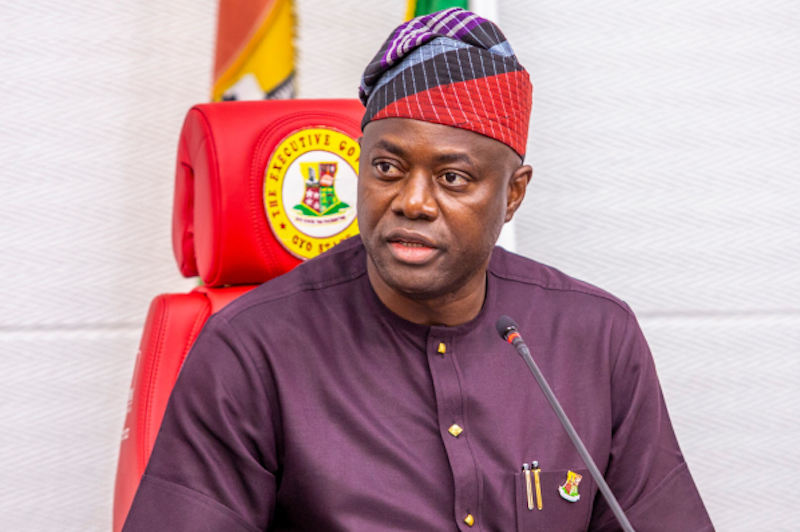
The Allied Peoples Movement (APM) presidential candidate, Seyi Makinde, on Thursday, criticised President Bola Tinubu’s “Emi Lokan” slogan ahead of the 2027 presidential election.
Makinde said Nigerians do not need “turn-by-turn nepotism”, arguing that voters should be free to decide who becomes the country’s next president in 2027.
The Oyo State governor spoke during the APM’s town hall meeting in Akure, Ondo State.
Makinde asked: “How can someone say ‘Eemi lokan’ in a country like Nigeria? You were given the opportunity. If you recall the 1999 presidential election, the South-West voted massively for Baba Olu Falae, but the rest of Nigerians voted for Baba Obasanjo. So, this is not an issue that only the South-West can resolve; it is an issue we must address collectively as Nigerians.
“We do not want ‘turn-by-turn nepotism’, nor do we want a situation where people say, ‘I will vote for projects because it is my turn’. You will not finish those projects, and when it becomes someone else’s turn, they will do the same thing. We will end up with a Nigeria where we cannot get value for the resources belonging to Nigerians.
“The Reset Nigeria agenda is about building a country where infrastructure development supports economic growth and addresses the concerns of young people and women.
“Once we fix our economy, no zone will be left behind, and no demographic group will be left behind.”
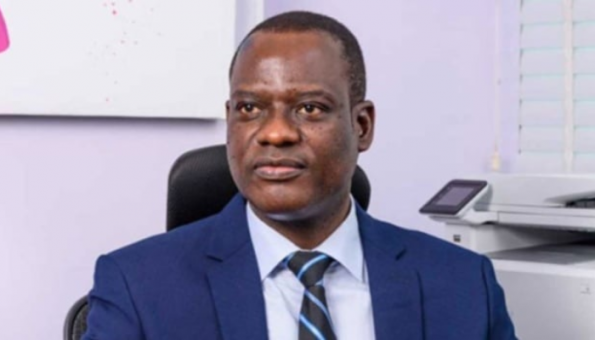
Minister of Finance and Coordinating Minister of the Economy, Taiwo Oyedele, has denied saying the Federal government will introduce a fuel tax when the economy stabilises and income levels improve.
In a post on X on Tuesday, Oyedele said his remarks during an interview with ARISE News was misrepresented, insisting that a “fuel tax is not on the table.”
However, during the interview with Rotus Odiri, ARISE News Business Correspondent, on the sidelines of the 2026 International Monetary Fund and World Bank annual meetings in Bangkok, Thailand, Oyedele said the tax would come when income levels improve enough for Nigerians to accommodate it.
He said taxes account for between 20 and 80 percent of pump prices in some countries, while many African countries impose between six and 10 different taxes on fuel products.
He said introducing fuel tax while petrol was still subsidised would have been counterproductive because government would effectively be paying the tax itself.
According to him, imposing the tax immediately after removal of petrol subsidy would be insensitive to Nigerians.
“The objective should be that instead of trying to suppress prices, which hasn’t worked for us, it hasn’t worked for any country in the world, not one. Instead of trying to suppress prices, think about how to grow income faster than prices rise,” Oyedele said.
“That’s how you bring prosperity and grow the middle class and that is exactly what we are doing as led by Mr. President himself.
“At the appropriate time, when the economy has stabilizes and income level will be able to accommodate it, those taxes will come. Not because we want to impose taxes,” he added.
In his Tuesday post, the minister reiterated that introducing a fuel tax at this time would be insensitive following removal of petrol subsidy, describing reports that government will introduce the levy when the economy stabilises as “fake news.”
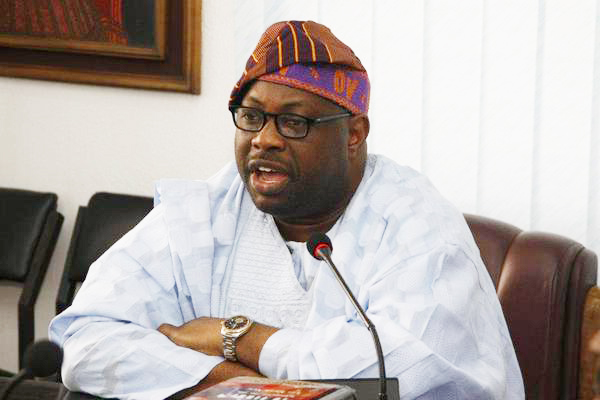
A chieftain of the African Democratic Congress (ADC), and Deputy Director of the Presidential Campaign Council, Chief Dele Momodu, has described former Vice-President Atiku Abubakar as the most nationally formidable and experienced among the leading contenders for the 2027 presidential election.
Momodu said Atiku’s experience at the national level distinguishes him from President Bola Tinubu and former Anambra State Governor, Peter Obi.
He stated this on Wednesday during an interview on Eagle 102.5 FM, Ilese-Ijebu, in Abeokuta.
“If you look at the antecedents of the three major candidates, between Atiku Abubakar and Peter Obi, you will see that Atiku is the most experienced. He has managed our country at the highest level,” he said.
Momodu traced Atiku’s political journey to the 1992 Social Democratic Party (SDP), presidential primary where he contested against late MKO Abiola and stepped down for him.
He said Atiku accepted the outcome without crisis even after he was not picked as Abiola’s running mate, describing it as a mark of true democratic temperament.
“He is the only one who started from around 1992, contested the SDP primary against Abiola and stepped down with uncommon equanimity. He did not make any noise,” Momodu said.
He noted that Atiku was among the founders of the Peoples Democratic Party, PDP, and served as Vice-President from 1999 to 2007.
Comparing Atiku with Obi, Momodu argued that while Obi’s best was demonstrated in Anambra, Atiku’s was at the presidency level managing the national economy.
“Peter Obi has tried his best in Anambra, while Atiku’s best is at the level of vice president controlling the economy of Nigeria. The difference is clear. He has matured in experience and exposure,” he said.
Momodu also said President Tinubu’s experience was largely limited to Lagos.
“What I’m trying to say is that Tinubu’s experience was limited to Lagos, and that is why when he became president, he thought Nigeria was Lagos. And he has found out now that Nigeria is not Lagos,” he said.
He argued that the current economic hardship under the present administration did not show prosperity, insisting Atiku remained better positioned to lead the country.
“Well, we are yet to see that prosperity, and if yesterday would determine today and tomorrow, it is obvious that Tinubu should retire now and let someone else do it,” Momodu added.
DailyPost


