
Headlines
FG vs Sowore: Court Admits As Exhibit Video of Reno Omokri Calling Tinubu ‘International Drug Baron’


- /home/rhoncare/pointblank.ng/wp-content/plugins/mvp-social-buttons/mvp-social-buttons.php on line 27
https://pointblank.ng/wp-content/uploads/2026/01/sowore1.jpg&description=FG vs Sowore: Court Admits As Exhibit Video of Reno Omokri Calling Tinubu ‘International Drug Baron’', 'pinterestShare', 'width=750,height=350'); return false;" title="Pin This Post">
- Share
- Tweet /home/rhoncare/pointblank.ng/wp-content/plugins/mvp-social-buttons/mvp-social-buttons.php on line 69
https://pointblank.ng/wp-content/uploads/2026/01/sowore1.jpg&description=FG vs Sowore: Court Admits As Exhibit Video of Reno Omokri Calling Tinubu ‘International Drug Baron’', 'pinterestShare', 'width=750,height=350'); return false;" title="Pin This Post">
Human rights activist and former presidential candidate Omoyele Sowore on Tuesday presented a video in the Federal High Court in Abuja showing former presidential aide Reno Omokri referring to President Bola Tinubu as an “international drug baron”. The move forms part of Sowore’s defence in his ongoing trial for alleged cyberstalking and online defamation against the Nigerian leader.
Sowore, who ran under the African Action Congress (AAC), is facing charges filed by the Department of State Services (DSS) over social media posts reportedly describing President Tinubu as a “criminal.” The case is being heard before Justice Mohammed Umar.
During proceedings, Sowore’s lawyer, Marshal Abubakar, resumed cross-examination of the prosecution’s first witness, DSS operative Cyril Nosike. Abubakar questioned Nosike on the agency’s practices, asking whether the DSS conducts background or security checks on nominees for sensitive government positions, such as ambassadors, ministers, and judges. Nosike admitted he was not aware if such procedures were carried out.
The defence also probed why the DSS cleared Reno Omokri for an ambassadorial appointment despite his public statement labeling President Tinubu an “international drug baron.” Nosike stated that he could not provide an explanation for the clearance.
Following this line of questioning, the defence sought court approval to tender two video clips as evidence: one featuring Omokri’s “international drug baron” remark and another showing President Tinubu affirming citizens’ right to freely critique him. Counsel for the DSS, Akinlolu Kehinde, SAN, objected, arguing that the videos were being “played to the gallery” and that the maker of the clips had not been listed as a witness.
After reviewing the submissions in line with the Evidence Act 2023, Justice Umar ruled that the video clips were relevant and admitted them as exhibits. The court adjourned the matter to February 4, 2026, for continuation of cross-examination.
Reno Omokri was among 64 ambassadorial nominees confirmed by the Senate in December 2025. The confirmation followed the adoption of a report from the Senate Committee on Foreign Affairs, which indicated that all nominees had been vetted and deemed suitable for appointment.


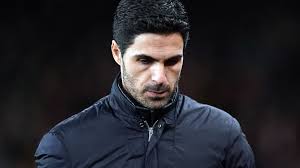
Arsenal left the Stadium of Light with another three points, but Mikel Arteta was far from satisfied with one of the major refereeing decisions in the champions’ 2-0 win over Sunderland.
The turning point came early in the second half when Sunderland were awarded a penalty following a physical battle between Arsenal’s Ezri Konsa and Dan Ballard.
Although VAR reviewed the incident, the original decision stood. Arteta strongly disagreed, insisting that the footage showed no offence worthy of a penalty and warning that such calls could have serious consequences in a Premier League title race.
Sunderland had a chance to capitalise, but Raya came to Arsenal’s rescue. The goalkeeper guessed correctly to keep out Le Fée’s penalty and turned the ball onto the post.
Arsenal needed only a short time to make the save count.
Guimarães, introduced at half-time, collected the ball outside the area and unleashed a curling strike that flew into the top corner. It was his first goal since joining Arsenal and gave the visitors the breakthrough they needed.
Sunderland refused to collapse and continued to test the visitors, but Arsenal’s defence survived the pressure. Saka then put the result beyond doubt from the spot in stoppage time after Reinildo was sent off for a second yellow card.
The victory means Arsenal have won all four of their Premier League matches this season, maintaining their flawless start and moving to 12 points.
For Arteta, however, the result did not erase his concerns about the penalty decision.
He argued that football’s extensive use of VAR should ensure such controversial calls are corrected, saying the incident was not acceptable at the highest level.
Arsenal ultimately had Raya’s heroics, Guimarães’ brilliance and a resilient defensive performance to thank for turning a potentially difficult night into another important victory.

Nigeria’s Tobi Amusan won the silver medal in the women’s 100m hurdles at the inaugural World Athletics Ultimate Championship in Budapest, Hungary, on Friday.
Amusan clocked 12.34 seconds to finish second behind United States Olympic champion Masai Russell, who won the title in 12.22 seconds.
Netherlands’ Nadine Visser completed the podium after finishing third in 12.39 seconds.
The result meant Amusan, a former world record holder in the event, was unable to reclaim the top spot from Russell, who broke the Nigerian’s world record with a time of 12.09 seconds at the Zurich Diamond League in August.
Russell entered the Budapest final as the favourite following her record-breaking performance in Zurich and maintained her impressive form to claim another victory.
The American also extended her unbeaten run in 2026, adding the Ultimate Championship title to the Diamond League Final crown she won in Brussels last week.
Reflecting on her performance after the race, Amusan said she went into the championship determined to give her best after a challenging period during the season.
“First, God is good,” Amusan said.
“What started off as an amazing season, you know, in between I had some nipping here and there. You know, I’m not a robot. You know, the body did shut down at a point.”
The 29-year-old hurdler said she gradually regained her momentum by taking each race as it came before arriving in Budapest with a determined mindset.
“Coming into this championship, my mindset going to the line was, ‘We die here.’ I just kept telling myself I have to give it my all,” she said.
Amusan said she was determined to put everything into the race regardless of the eventual outcome.
“All I knew was, look, I did it. That’s all I knew. And the second I saw the second-place finish, I was like, look, I can’t complain. God is good,” she said.
The silver medal came after a difficult period for Amusan, who finished third at the Commonwealth Games before Russell broke her 100m hurdles world record. She later finished fourth at the Diamond League Final.
Amusan admitted that the setbacks had been emotionally difficult but credited her family, mentor, coach and boyfriend with helping her regain her confidence.
“I’m not going to lie. It was very rough,” Amusan said.
“I mean, to my family, to my mentor, to my coach, to my boyfriend. That’s brought life back into me.”
She said the encouragement she received from those close to her helped her put the setbacks behind her and focus on the Budapest race.
“This morning it was all about put the past behind you and just go for it. And those few sentences that I got here and there got me to this finish line today,” she said.
Amusan said her second-place finish, alongside her Commonwealth medal, represented a positive response to the setbacks she had experienced.
“With the Commonwealth medal, it is a statement,” she said.
On the increasing competitiveness in the women’s 100m hurdles, Amusan described the event as becoming more difficult, warning that the battle among the leading hurdlers would intensify.
“Honestly, in that event, I think I would be the sleeping lion,” she said.
“I think the women’s hurdles is just getting scarier every damn year. Next year, I do not know what’s going to happen. But it’s going to be bloody.”
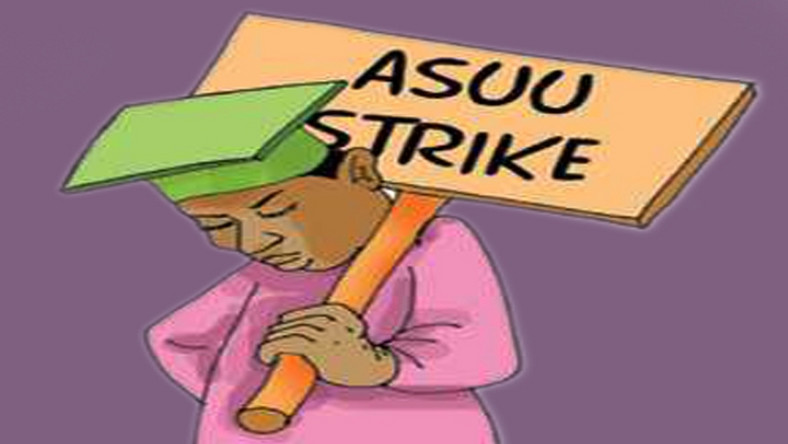
The Academic Staff Union of Universities (ASUU) has warned that Nigeria’s public universities could face another nationwide strike unless the Federal and State governments urgently address outstanding salary, welfare, and implementation issues affecting university lecturers.
The warning, it said, followed an emergency National Executive Council (NEC) meeting held at the union’s National Secretariat at the University of Abuja on September 5, 2026.
The union said that at the centre of the dispute are the non- or haphazard implementation of the December 2025 Federal Government-ASUU agreement, three-and-a-half months of withheld salaries dating from the previous administration, unremitted third-party deductions and concerns over university autonomy.
ASUU President, Christopher Piwuna, said the union would not accept responsibility for any disruption of academic activities if the outstanding issues were not resolved.
“Except for recent attempts by the Federal Ministry of Education to defray outstanding salaries for Federal Universities of Agriculture, there have been no concerted efforts to address our concerns and worries on a sustainable basis,” said the union.
“Each month, lecturers have been forced to be at daggers drawn with their vice-chancellors over uncertainty of when and what part of their salaries would be paid. This time, the union’s message to the nation is clear: Unless immediate and concrete steps are taken to FULLY and COMPREHENSIVELY address issues bordering the welfare and well-being of Nigerian academics, ASUU-NEC will not accept any blame for calling out its members on a nationwide strike action within the shortest time possible,” he stated.
The union said the unresolved issues are already creating industrial tensions in universities, with some state university branches moving towards strike action
ASUU commended states including Bauchi, Ekiti, Ogun, Benue, Yobe, Adamawa, Kebbi, Katsina and Borno, where implementation of the 2025 Agreement has commenced. It also noted pledges to begin implementation in Kano, Edo, Plateau, Taraba, Gombe and Bayelsa in September or October.
The union said universities concerned had been notified of the commencement of strike actions unless satisfactory progress was recorded.
There have been a series of industrial disputes in recent weeks.
ASUU chapters at the University of Medical Sciences, Ondo, and Plateau State University had declared indefinite strikes over unresolved demands, including implementation of the 2025 agreement and payment of arrears.
At Sule Lamido University, Kafin Hausa, the ASUU branch also announced a two-week warning strike beginning September 15 over unresolved issues with the Jigawa State Government, with a warning that the action could escalate into a total and indefinite strike.
ASUU stated that three-and-a-half months of the seven-and-a-half months of salaries withheld during the Buhari administration remain unpaid.
The union acknowledged that President Bola Tinubu’s government had paid four months but said the outstanding balance continued to impose financial and psychological hardship on lecturers.
It also said the value of the withheld income had fallen by more than 50 per cent since 2022.
“It will do this government a lot of good to restore the full confidence of lecturers in the nation-building project, for which Nigerian scholars are critical pillars and pivots. We state for the umpteenth time that the lecturers have done the work for which they are being punished.
“They did it at huge cost to their physical and psycho-social well-being. Some lost their lives in the process, and many are now managing life-threatening ailments. For healing and restoration in the Nigerian University System (NUS), we think the withheld salaries of lecturers should be released without further delay. As for us in ASUU, we shall not give up until our cries get an empathetic attention in the appropriate quarters,” its president stated.
The union further said pension contributions, cooperative society deductions and union check-off dues deducted from lecturers’ salaries, running into billions of naira, had not been appropriately remitted for several months.
ASUU said the issue of third-party deductions had produced only limited progress in its engagements with government and warned that it was prepared to call out its members if the matter was not resolved.
The warning comes even as the Federal Government announced steps towards implementing part of the 2025 agreement.
On September 9, the government said it had released funds for the full payment of the Consolidated Academic Tools Allowance to academic staff in federal universities, polytechnics and colleges of education for January to August 2026.
The Education Minister, Tunji Alausa, said the payment was being implemented in line with the 2025 FGN-ASUU Agreement.
ASUU, however, said other core elements of the agreement remained unresolved.
But the union warned that the situation could push more universities into industrial action and called on students, parents, labour leaders, the media and other Nigerians to intervene before the crisis escalates.
“In no mistaken terms, ASUU posits that the non- or haphazard implementation of the 2025 FGN-ASUU Agreement by federal and state governments is a recipe for industrial crisis in Nigeria’s public universities,” its president stated. “In the same vein, withholding the three-and-a-half months’ salaries and third-party deductions by the government is an ill wind for lasting peace on our campuses. We call on students, parents, media practitioners, labour leaders and other patriotic Nigerians to come into the brewing crisis before it gets out of hand.
“ASUU cannot guarantee an uninterrupted academic calendar at the expense of the existential needs of our members. We shall not watch helplessly while red-tapism incrementally frustrates and destroys what is left of the academic profession and universities in Nigeria.”
ASUU said its latest position is not an immediate declaration of a nationwide strike, but a warning that its suspended industrial action could be activated if the government fails to respond satisfactorily.
The union said its doors remained open to negotiations with the Federal and State governments, but maintained that the welfare of lecturers could not continue to be separated from the stability of Nigeria’s university system.


