
Business
Fidelity Bank Deepens Push for Non-oil Exports via FNITCC Business


- /home/rhoncare/pointblank.ng/wp-content/plugins/mvp-social-buttons/mvp-social-buttons.php on line 27
https://pointblank.ng/wp-content/uploads/2022/12/Fidelity-Bank-CEO-Mrs-Nneka-Onyeali-Ikpe-scaled-e1675317812921-1000x600.jpg&description=Fidelity Bank Deepens Push for Non-oil Exports via FNITCC Business', 'pinterestShare', 'width=750,height=350'); return false;" title="Pin This Post">
- Share
- Tweet /home/rhoncare/pointblank.ng/wp-content/plugins/mvp-social-buttons/mvp-social-buttons.php on line 69
https://pointblank.ng/wp-content/uploads/2022/12/Fidelity-Bank-CEO-Mrs-Nneka-Onyeali-Ikpe-scaled-e1675317812921-1000x600.jpg&description=Fidelity Bank Deepens Push for Non-oil Exports via FNITCC Business', 'pinterestShare', 'width=750,height=350'); return false;" title="Pin This Post">
Nigeria’s diversification drive has gathered momentum in recent years as government initiatives push to reduce dependence on crude oil and strengthen non-oil sectors as engines of growth. From the Central Bank of Nigeria’s RT200 programme to incentives offered by the Nigerian Export Promotion Council (NEPC), the country has implemented policies designed to encourage exporters, boost foreign exchange inflows, and integrate local enterprises into global value chains.
Complementing these efforts, Fidelity Bank Plc has steadily positioned itself as one of the private-sector leaders advancing the country’s non-oil export agenda. Through its flagship initiative—the Fidelity Nigeria International Trade & Creative Connect (FNITCC), the bank has built a global platform that links Nigerian exporters with international buyers, diaspora markets, and strategic investors.
For a country where oil revenues remain vulnerable to global shocks, FNITCC is more than a corporate innovation. It is a deliberate tool to help Nigeria unlock new streams of foreign exchange, strengthen small businesses, and showcase the creativity and resilience of its people to the world.
Beyond Commodities: A Broader Vision
The design of FNITCC reflects Fidelity Bank’s conviction that Nigeria’s future global competitiveness lies not only in raw commodities but also in value-added goods and services. The expo has created space for agriculture and consumer-packaged goods, but equally for sectors such as fashion, cosmetics, fintech, and the wider creative economy.
The federal government has also increasingly emphasised the need for value addition rather than the mere export of raw commodities. A recent policy directive on shea butter, for instance, underscores this shift by encouraging local processors to refine and package the product before it leaves Nigeria. The move aligns with broader industrialisation and job-creation objectives, while ensuring that the country captures more value across the production chain—a goal that platforms like FNITCC are now helping to actualise by connecting these upgraded products to international markets.
FNITCC events are immersive and deliberately multi-sectoral. They combine product exhibitions, breakout sessions, diaspora investment panels, curated workshops, art displays, and even theatrical and fashion performances. The aim is clear: to connect the breadth of Nigerian enterprise to global markets, while ensuring that exporters are able to meet international standards and access the finance required to scale.
In a statement announcing this year’s FNITCC, Fidelity Bank’s Managing Director and Chief Executive Officer, Dr. Nneka Onyeali-Ikpe, said: “Since 2022 when we hosted the maiden edition, FNITCC has evolved beyond a platform for promoting Nigeria’s non-oil exports to become a veritable showcase of the immense value Nigeria has to offer the global market.”
Showcasing Nigeria on the Global Stage
The FNITCC journey began in London in November 2022. Hosted at the Novotel London West, the inaugural event drew more than 100 exhibitors and 90 speakers, attracting over 1,000 daily attendees. It unlocked trade and investment deals worth about $250 million, validating the proposition that Nigerian businesses could compete abroad if given the right exposure and institutional support. A year later, the platform moved to Houston, Texas a city known for its energy base but also home to one of the largest Nigerian diaspora communities in the United States. FNITCC Houston, held in October 2023, attracted over 160 Nigerian and U.S.-based businesses across fintech, commodities, fashion, agriculture, and creative industries. The highlight was a landmark $40 million pre-export finance facility in favour of JohnVents Industries, one of Nigeria’s fast-rising cocoa exporters. The facility, arranged by Afreximbank with Fidelity Bank as the local administrative agent, demonstrated how trade promotion could be matched with access to finance to deliver real outcomes for exporters.
This month, September 18-20, 2025, FNITCC is heading to Atlanta, Georgia. The choice is deliberate: Atlanta has become a hub for black entrepreneurship, cultural exchange, and diaspora investment in the United States. Its large Nigerian and African diaspora population provides a ready market for ethnic and value-added products, while its robust chambers of commerce and international trade networks make it an attractive gateway for exporters. Fidelity is also partnering with Amplify Africa, the organizers of AFRICON, one of the largest African diaspora business and culture summits in the U.S., to amplify the reach of this edition.
By situating FNITCC in Atlanta, Fidelity Bank is tapping into a dynamic U.S. market and aligning with diaspora-led networks that can act as long-term anchors for trade and investment flows.
Onyeali-Ikpe added: “As part of our commitment to developing platforms that promote economic growth, creativity, and sustainable trade both within Nigeria and internationally, we are pleased to announce the third edition of FNITCC. Since 2022, when we hosted the inaugural edition, the FNITCC expo has been at the heart of driving global market access for local businesses, and I am delighted that this year we will be in the city of Atlanta, USA.”
Consolidating Success and Expanding Scope
Between the London and Houston editions, FNITCC generated a consolidated deal pipeline of over $500 million. For Nigeria, where non-oil exports are still under $5 billion annually, this is a significant achievement. It demonstrates the potential of structured, private-sector-led platforms to complement government diversification policies with measurable outcomes.
FNITCC Atlanta is expected to attract more than 3,000 participants—including exporters, U.S. buyers, policymakers, investors, multinational corporations, and development finance institutions. Programming highlights include B2B matchmaking sessions, policy dialogues, diaspora investment roundtables, and sector-specific workshops. Strategic sectors in focus will include agriculture, consumer goods, energy transition minerals, fashion, beauty, and creative services.
By positioning exporters side-by-side with financiers, regulators, and global buyers, FNITCC provides the missing ecosystem Nigerian businesses often lack when venturing into foreign markets.
Nigeria’s FX Outlook, Case for Diversification
The timing of Fidelity’s intervention could not be more strategic. The naira has shown greater stability in recent months, supported by a mix of policy reforms and improving inflows, helping to restore investor confidence in the broader economy. With global attention once again turning to Nigeria’s vast potential, this is an opportune moment to deepen non-oil export growth.
The long-term case remains clear: as the world transitions away from fossil fuels, Nigeria cannot afford to depend solely on crude oil revenues. Building new, resilient export pillars is essential to sustaining growth, creating jobs, and securing foreign exchange inflows that are less vulnerable to commodity price swings.
FNITCC sits at the heart of this shift. By showcasing value-added goods, creating structured access to global markets, and linking exporters to international buyers, the platform helps convert Nigeria’s comparative advantages into tangible competitiveness. In doing so, it strengthens the broader diversification drive while reinforcing the growing sense of economic optimism.
Shared Path to Diversification
Ultimately, what makes FNITCC unique is its ability to bring together policy, finance, and culture under a single umbrella. It complements government-led initiatives and continental frameworks like AfCFTA by giving exporters practical exposure to international markets. It also addresses the financing gap through partnerships with institutions such as Afreximbank, ensuring that deals struck at the expos are not just ceremonial but backed by capital. And by spotlighting Nigeria’s creative and service industries, fashion, fintech, music, and art, FNITCC underscores the country’s growing soft power as a source of foreign exchange in its own right.
In this way, FNITCC is more than an exhibition; it is a platform for national transformation. It embodies the collaboration between government policy and private initiative, while providing exporters the tools to compete on a global stage. From London to Houston and now Atlanta, it has grown into an institution that is helping Nigeria move closer to the long-held dream of economic diversification, reinforcing optimism that the non-oil sector can become the bedrock of a more resilient, export-led economy.
Written by Nume Ekeghe
Culled from ThisDay


Business
UBA Secures Court Order Against Vitol, Four Others in $242m Petroleum Products Diversion Claim
A Lagos State High Court, last Thursday, granted interim preservative orders of Mareva Injunction against Vitol SA – a Switzerland based Energy Trading company, and four other shipping companies in favour of United Bank for Africa Plc.
The bank alleged Vitol of wrongful release of cargoes of petroleum products which were consigned to the order of United Bank for Africa Plc in the Bills of Lading.
Addressing the Court, Bode Olanipekun, SAN, lead counsel for United Bank for Africa, urged the Court to grant the interim preservative orders against Vitol and the other shippers.
In a ruling on the application, the presiding judge, Honourable Justice K. A. Jose (Mrs.) granted three prayers in UBA’s application, including requests to restrain the dissipation of assets and dealings with funds up to the disputed amount by Vitol S.A.
“Prayers 1–3 are granted as prayed against the 2nd Respondent only,” the judge ruled.
The application was brought pursuant to Order 43 Rule 1 of the High Court of Lagos State (Civil Procedure) Rules 2019 and the Lagos State High Court Practice Direction No. 2 of 2019.
UBA is seeking to contend in the substantive proceedings that Vitol SA and the owners of the vessels, are liable for alleged conversion, misrepresentation and negligence arising from the non-delivery of the petroleum products.
UBA also cited 34 financial institutions and public agencies, including commercial banks, merchant banks, microfinance banks, the Nigerian Ports Authority and the Nigeria Customs Service, in connection with the application.
In an affidavit supporting the application, UBA’s Group Head of Recoveries and Remedial Management, Anthony Chilaka, stated that the bank issued a letter of credit for the benefit of Vitol SA to facilitate a petroleum products transactions.
UBA alleged that the cargo was transported to Nigeria and that the vessels’ masters issued several bills of lading.
The bank further alleged that Vitol subsequently endorsed the bills of lading “to the order of” UBA and handed over the original copies to it.
UBA maintained that the endorsement entitled it to take possession of the cargo upon completion of the voyage.
However, Chilaka stated that the bank had not received the gasoil despite the completion of the voyage.
“The applicant has not been given possession of the gasoil despite completion of the voyage,” the affidavit stated.
UBA alleged that the cargo was instead, applied to the use of another party, contending that the respondents’ failure to deliver it amounted to conversion and negligence.
The bank argued that the respondents had obligations arising from the transaction and the endorsement of the shipping documents, which it claimed were not fulfilled.
The bank alleged that the cargoes associated with those transactions were also diverted to the use of other parties after their voyages, rather than delivered to UBA.
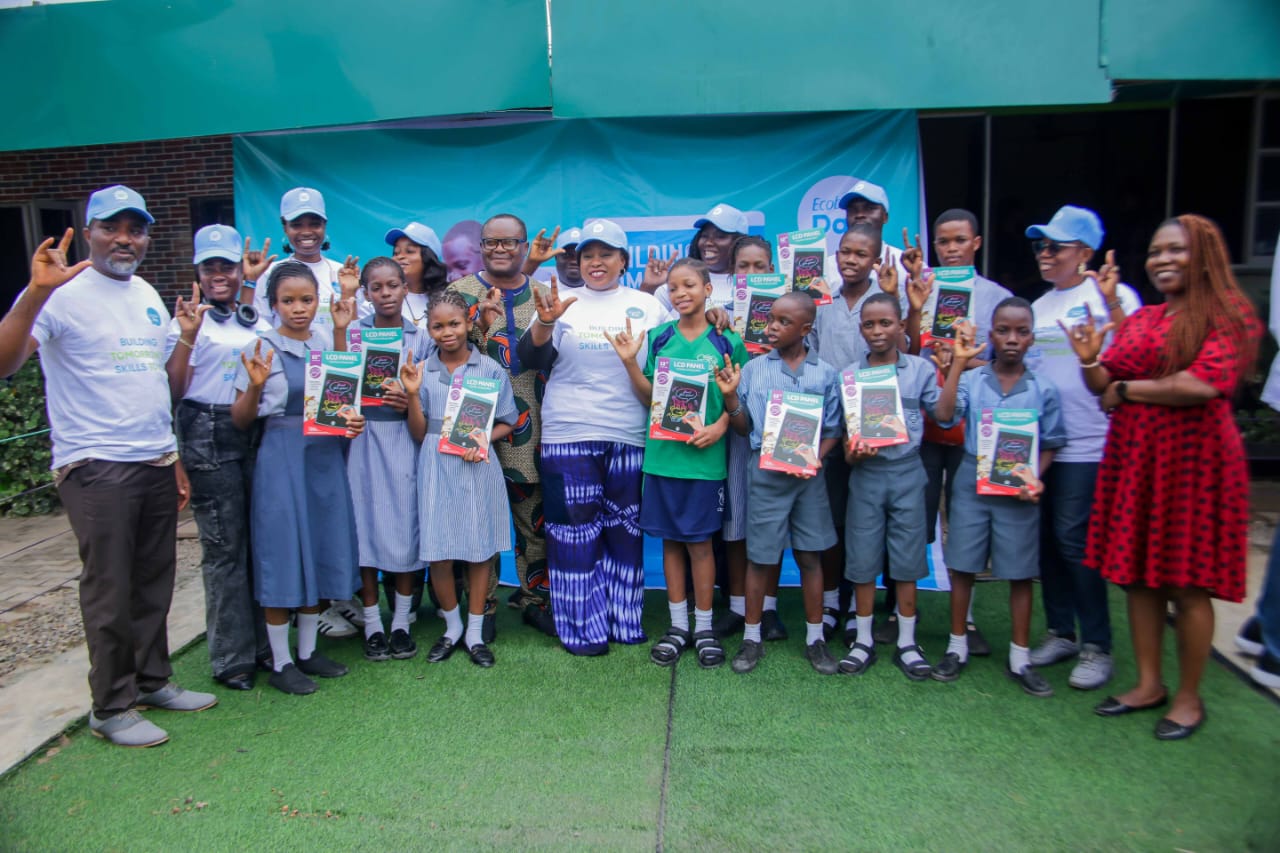
Ecobank Nigeria has commemorated the 14th edition of Ecobank Day, its flagship Group-wide Corporate Social Responsibility (CSR) initiative, across four regions of the country, reaffirming its commitment to empowering communities through education and digital inclusion.
The selected schools include: Hope Fountain Foundation for the Deaf, Agege, Lagos; Ibadan School for the Deaf, Ibadan; Special Secondary School for the Deaf, Odakpu, Onitsha, and Kaduna State Special Education School, Kaduna.
This year’s Ecobank Day was celebrated under the theme, “Digital Education,” with a focus on equipping persons with disabilities and young people with essential digital skills that can enhance their educational, personal, and career development in today’s technology-driven world.
The initiative underscores Ecobank’s commitment to extending its impact beyond banking by helping to equip Africa’s youth with the digital and artificial intelligence (AI) skills required to succeed in the future economy.
As part of the programme, Ecobank employees visited selected schools across the four regions, where they conducted digital literacy sessions and donated learning materials and educational resources to support students’ development and prepare them to thrive in an increasingly digital world.
Speaking during the commemoration, the Managing Director/Regional Executive, Ecobank Nigeria, Bolaji Lawal said: “It is a pleasure to join you today as we commemorate the 14th edition of Ecobank Day, our Group-wide Corporate Social Responsibility initiative dedicated to creating meaningful impact across the communities we serve. “Ecobank Day reflects our commitment to being more than a bank. It demonstrates our dedication to empowering people and contributing to sustainable development across Africa.”
Bolaji noted that digital education has become increasingly important in bridging knowledge gaps and creating opportunities for young people, particularly those living with disabilities, enabling them to participate fully in today’s digital economy.
School proprietors and administrators who participated in the programme commended Ecobank for the initiative, describing it as a timely intervention that will help broaden students’ access to digital knowledge and opportunities.
They expressed appreciation to the Bank for investing in the future of young people and supporting inclusive education within their communities.
For 14 years, Ecobank Day has served as an annual platform for Ecobank employees across Africa to give back to society through impactful volunteer activities that address critical social challenges.
The initiative continues to demonstrate the Bank’s dedication to fostering sustainable development and creating lasting positive change across the communities where it operates.
Fidelity Bank Plc has won two honours at the 2026 BusinessDay Banks and Other Financial Institutions (BAFI) Awards.
The bank’s Managing Director and Chief Executive Officer, Dr Nneka Onyeali-Ikpe, received the Award for Excellence in Banking Leadership, while Fidelity Bank was named Best Bank in Oil and Gas Financing.
The awards were presented at the 14th BAFI Awards held recently at the Civic Centre, Victoria Island, Lagos.
According to BusinessDay Media Limited, the leadership award recognises banking executives who have delivered institutional growth, strengthened shareholder value, promoted innovation and inclusion, and contributed to the development of Nigeria’s financial services sector.
Onyeali-Ikpe thanked the organisers and dedicated the award to Fidelity Bank’s customers, board, management and employees.
“I am deeply honoured to receive the Award for Excellence in Banking Leadership. I sincerely thank BusinessDay Media Limited for this recognition and dedicate it to our valued customers, whose trust and support have strengthened and inspired me throughout my career.
“The African philosophy of Ubuntu teaches us, ‘I am because we are.’ In that spirit, this honour also belongs to the board, management and staff of Fidelity Bank Plc, whose dedication and professionalism continue to drive our vision of a stronger, more innovative and customer-focused financial institution,” she said.
Onyeali-Ikpe has more than three decades of banking experience spanning retail, corporate and commercial banking, treasury and business development. Since becoming the Chief Executive Officer, she has led Fidelity Bank through sustained growth and an expansion of its international operations, including the acquisition of the former Union Bank UK, now FidBank UK Limited.
The Best Bank in Oil and Gas Financing award recognised Fidelity Bank’s support for projects across Nigeria’s energy value chain.
The bank financed the development of an onshore crude oil export terminal at the Otakikpo Marginal Field in Rivers State. It also supported the Pinnacle Oil and Gas Terminal in Lekki and part-financed a 23,000-cubic-metre liquefied petroleum gas carrier for Temile Development Company Limited.
Fidelity Bank also participated in the $3bn SNEPCo Contractor Finance Facility, which provides naira and dollar financing to indigenous contractors working on SNEPCo projects.
The projects are expected to strengthen local participation, petroleum product distribution, gas availability and critical energy infrastructure.
The two awards underscore Fidelity Bank’s growing profile in the financial services industry and its role in financing sectors critical to Nigeria’s economic development.


