
Business
FirstBank as Synonym for Growth of SMEs in Nigeria

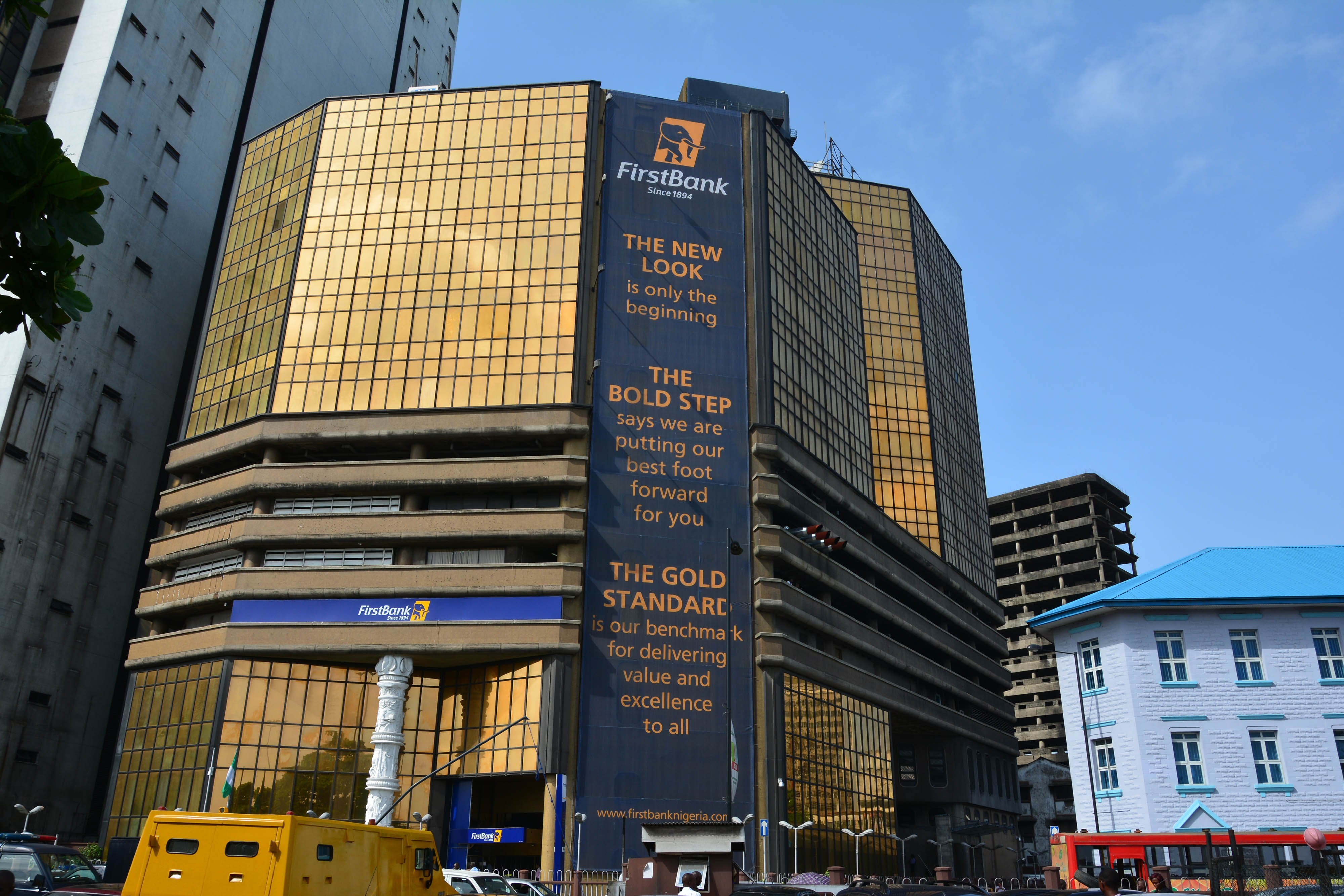
By Eric Elezuo
It is not by accident that banks need to be at the heart of the SME business, providing support, capital and innovative solutions to help small businesses prosper. It is also not accidental that most countries can boast of some quality banks that hold sway the prosperity of small and medium enterprises. In Nigeria, that bank is FirstBank Nigeria Plc, unarguably the best bank in the country going by its very many firsts, awards, honours and initiatives.
And in retaining their dominance, FirstBank has remained at the heart of the SME business, using technology to better understand the needs and context of the business.
As part of its efforts to further launch its specialized SME propositions to its customers, FirstBank cleverly designed a wide range of events and activities during its SMEs week, specifically targeted to and for the growth of SMEs operators. This includes the SME Masterclass with a mind boggling theme “Designing and Implementing a Growth Strategy for your Business”. There was also a specialized one on one sessions with renowned business coaches, culminating in the launch of seven unique pillars which make up the brand’s SME propositions. These and many more are available via SMEConnect – The FirstBank SME portal.
The SME portal is a platform through which SMEs can access FirstBank’s unique propositions specially tailored with the essential tools needed for the growth of their business. The SME portal, according to FirstBank, is also designed to help SMEs identify various gaps that hinder their business growth leveraging the brand’s innovative Business Diagnostics Tool, with a view to proffering tailored solutions and creating opportunities for business improvement, profitability and sustainability.
In addition, FirstBank through extensive research in the past years, has identified these seven strategic pillars to be essential for the sustainability and growth of the SMEs. These seven pillars are access to infrastructure, access to talent, capacity building, policy and regulation, access to resources, access to market as well as access to finance. The pillars, rightly named, have duly informed the bank’s strategy and propositions for SMEs.
To this end, FirstBank’s weeklong activity dedicated to operators of SMEs and held across six locations in Lagos, Abuja, Rivers, Oyo, Kano and Owerri in the month of August was practically centred on one on one coaching advisory sessions. The business owners came out of the sessions better equipped and prepared for the task ahead.
Buttressing FirstBank’s unalloyed leadership status in SME projection in Nigeria, the bank’s Deputy Managing Director, Gbenga Shobo, hinted thus:
“FirstBank has over the years, been at the forefront of supporting Businesses, especially the SMEs as we recognise that the SMEs are the engine of the economy. We are committed to ensuring that we leave no stone unturned as we connect with them in their continued contribution to national development in terms of the employment opportunities they create as well as their contribution to the nation’s GDP amongst many economic values.”
The event promoted the Bank’s SME proposition, and helped SMEs bolster their contribution to the growth and development of the economy.
Consequently, every SME operator can visit www.firstbanknigeria.com/SMEConnect/ to take the FirstBank SME Diagnostics test and get guidance for business improvement opportunities.
It must not be forgotten that in October, at the prestigious Oriental Hotel, Lagos, FirstBank celebrated some SME operators, better known as Firstmonie Agents, when it held the Agent Banking National award in an event themed Planting Community Heroes Nationwide. The Agent Banking Scheme was initiated in 2017, and ever since, has recorded giant strides at promoting financial inclusion across the nook and cranny of the country. There are about 40, 000 agents raised by FirstBank in the 774 local government areas of the nation. Through this medium, FirstBank is leading the effort at supporting the Federal government objectives to deepen access to financial services.
Summing it up, FirstBank’s Chief Executive Officer, Dr. Asesola Adeduntan noted “the unwavering efforts and remarkable contributions by our Firstmonie Agents at promoting financial inclusion in Nigeria, and indeed very much appreciated. Within the past two years, we have been able to create not only 40, 000 access points, but over 150, 000 indirect jobs. We remain committed to doing more, strengthening business activities, driving economic growth and development thereby reducing poverty.”
The CEO is of the opinion that FirstBank will never rest on its laurels as every individual’s contribution to national growth and development is important to the bank, and so will spiritedly continue to support the growth of SMEs.
Over the years, FirstBank has develop customer loyalty through development of a clear value proposition and strategy to partner with their SME customers, and offer them a broad range of solutions to run, control and grow their businesses. The following are some of the ways
- Helping SMEs connect with an ecosystem of suppliers, distributors and other SMEs
- Using their expertise across industries, channels and regions, to offer growth opportunities and insights
- Supporting business productivity by offering solutions, such as cash flow management, HR, talent and tax; and keeping their businesses safe through education on regulatory compliance.
With all these, FirstBank has got the basics right, and it is therefore not surprising that the bank has become a synonym for growth of SMEs in Nigeria.


West Africa’s premier financial institution and financial inclusion services provider, FirstBank, has officially announced its sponsorship of the Carnival Calabar & Festival 2025, unveiling a landmark addition set to redefine the carnival experience — the first-ever private premium seating area at the event.
The highlight of FirstBank’s participation is the construction of a 500-seater premium bleacher, designed to provide comfort, safety, and an elevated viewing experience for carnival enthusiasts.
Speaking on the sponsorship, the Acting Group Head Marketing and Corporate Communications, FirstBank, Olayinka Ijabiyi, noted that the carnival aligns with the Bank’s First@Arts initiative, a platform dedicated to supporting the creative arts value chain across Nigeria. He said, “We recognise the transformative power of the arts, including carnivals, in inspiring people and strengthening national unity. For more than 131 years, we have supported platforms that promote self-expression, social reflection and cultural exchange. Our investment in the Carnival Calabar & Festival demonstrates our commitment to preserving the nation’s rich cultural heritage through First@Arts.”
“As part of our sponsorship this year, we are introducing the first-ever private 500-seater premium bleacher to further elevate the carnival experience. This exclusive seating is designed to provide exceptional comfort and an unforgettable viewing experience for attendees,” Ijabiyi added.
The Chairman of the Cross River State Carnival Calabar Commission, Gabe Onah, also commented on FirstBank’s sponsorship. “FirstBank’s involvement is a strong demonstration of private-sector support for culture and tourism. This partnership not only enhances the overall quality of the carnival but also strengthens its global appeal,” he said.
The Carnival Calabar & Festival 2025 is officially marketed by Okhma Global Limited, the appointed Official Marketer responsible for brand partnerships, promotional engagements, and ticket sales. Okhma Global Limited has partnered with the Cross River State government in delivering Carnival Calabar & Festival for over ten years, playing a key role in strengthening the carnival’s commercial growth and global visibility.
Ecobank Nigeria, a member of Africa’s leading pan-African banking group, has assured customers of uninterrupted access to banking services throughout the year-end holiday period via its secure and robust digital platforms. The Bank also urged customers to remain vigilant against fraud and scams during the festive season.
Speaking on the development, Victor Yalokwu, Head, Products & Analytics, Consumer & Commercial Banking, Ecobank Nigeria, said the Bank’s digital channels — including the Ecobank Mobile App, Ecobank Business App, USSD *326#, Ecobank Online, OmniPlus, Omnilite, EcobankPay, RapidTransfer, Ecobank Cards, ATMs, PoS terminals, and over 35,000 Ecobank Xpress Point (Agent Banking) locations nationwide — will remain fully available to support customers throughout the yuletide and year-end holiday period.
He noted that customers will continue to enjoy a wide range of services during the period, including local and international funds transfers, bill payments and airtime top-ups, merchant payments, balance inquiries and account statements, as well as cardless cash withdrawals via ATMs.
According to Yalokwu, “Ecobank encourages customers to leverage these digital solutions for safe, fast, and efficient banking, especially during the festive season when convenience and reliability are essential. While physical branch operations may be subject to adjusted working hours in line with public holidays, customers can be assured that Ecobank’s digital platforms are designed to deliver uninterrupted service and enhanced security at all times. Ecobank remains committed to providing innovative financial solutions and exceptional customer service, and we wish all our customers a joyful festive season and a prosperous New Year.”
Yalokwu also cautioned customers to remain vigilant against fraudsters and scammers during the period. “Before you wrap up the year, tighten your security. December brings online sales, travel, and year-end distractions—this is exactly when scammers are most active. From fake festive deals to cloned merchant sites and suspicious messages, staying vigilant helps keep your money safe.”
He advised customers to shop only on trusted websites, never share their PINs, passwords, or one-time passwords (OTPs), avoid banking on public Wi-Fi networks, be cautious of urgent or emotionally charged messages, and regularly review their account activity.
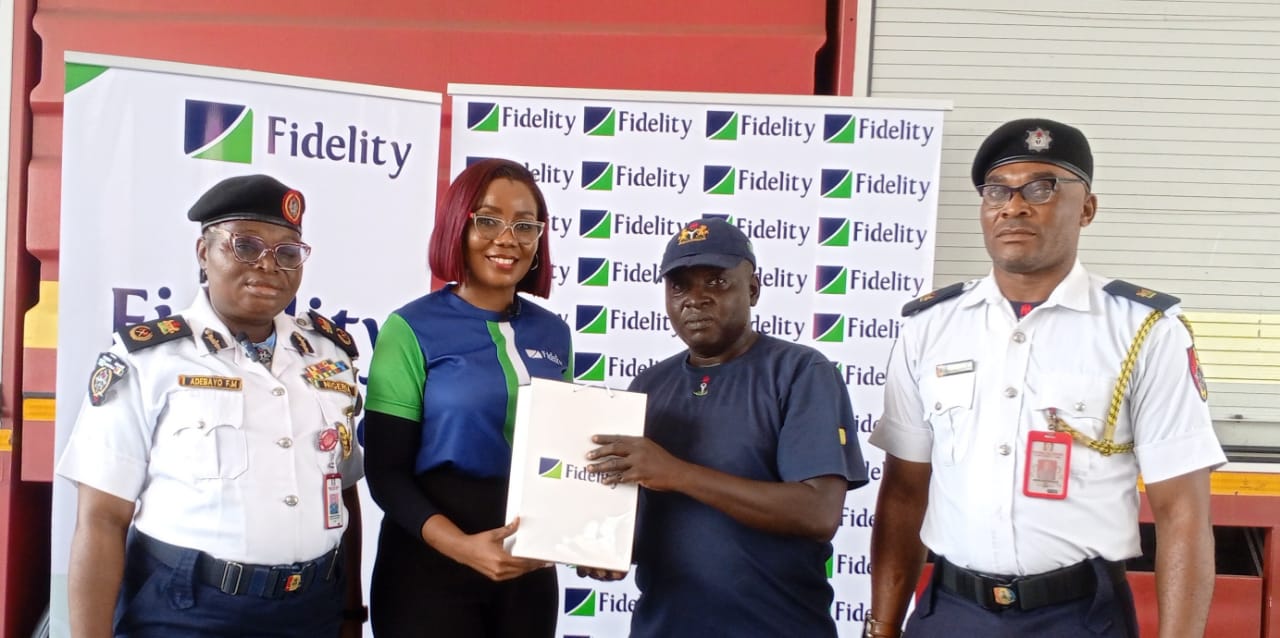
Fidelity Bank Plc has donated firefighting and preventive equipment, including hoses and gasoline-powered water pumps, to the Ikoyi Fire Service Station in Lagos, reinforcing efforts to improve emergency response and promote community safety.
The donation was executed under the Fidelity Helping Hands Programme (FHHP) by the bank’s True Serve team. Through the initiative, Fidelity Bank employees identify critical community needs, raise funds, and receive matching financial support from the bank to implement impact-driven projects.
Speaking on the initiative, Divisional Head, Brand and Communications Division at Fidelity Bank, Dr Meksley Nwagboh, said the intervention reflects the bank’s commitment to public safety, environmental protection, and sustainable community development.
“Community safety is a shared responsibility. Fidelity Bank remains committed to supporting initiatives that protect lives, property, and the environment,” Nwagboh said, adding that preventive measures remain more effective than emergency responses.
He noted that providing the right tools to first responders aligns with the bank’s broader goal of enabling people to live safe, meaningful, and empowered lives.
Lagos State Controller of the Federal Fire Service, Controller of Fire (CF) Funke Adebayo, commended Fidelity Bank for the timely support, particularly as the festive season approaches amid dry weather conditions that heighten fire risks.
She urged residents to remain vigilant and warned parents against allowing children to handle fireworks during celebrations, stressing that careless handling of fire could lead to avoidable disasters.
Adebayo also disclosed that the Fire Service has intensified sensitisation visits to corporate organisations to promote fire safety and discourage unsafe practices.
Also speaking, Area Commander, Onikan Fire Station, Chief Superintendent of Fire (CSF) Oswere Michael, expressed appreciation for the donation, noting that it would strengthen the station’s operational capacity.
He encouraged households, businesses, and community members to prioritise fire safety, describing collective responsibility as critical to preventing fire outbreaks.
Fidelity Bank Plc is a full-fledged commercial deposit money bank serving over 9.1 million customers through its digital platforms, 255 business offices across Nigeria, and its UK subsidiary, FidBank UK Limited. The bank has received multiple local and international awards in recognition of its performance in digital transformation, MSME banking, and innovative financial services.
Photo – L-R: Lagos State Controller, Federal Fire Service, CF (Controller of Fire), Adebayo Funke; Tolulope Rojaiye, Marketing Business Partner, Fidelity Bank Plc; Assistant Superintendent of Fire, Ishola Folorunsho Olufemi; and Station Commander, Onikan Fire Station, Lagos, Okeke Ferdinand; during the donation of firefighting equipment to the Federal Fire Service at Ikoyi, Lagos, recently.


