
Business
FirstBank Demystifying Financial Inclusion with XploreFirst


- /home/rhoncare/pointblank.ng/wp-content/plugins/mvp-social-buttons/mvp-social-buttons.php on line 27
https://pointblank.ng/wp-content/uploads/2019/05/Dr-Adesola-Adeduntan-FCA-CEO-First-Bank-of-Nigeria-Limited-1000x600.jpg&description=FirstBank Demystifying Financial Inclusion with XploreFirst', 'pinterestShare', 'width=750,height=350'); return false;" title="Pin This Post">
- Share
- Tweet /home/rhoncare/pointblank.ng/wp-content/plugins/mvp-social-buttons/mvp-social-buttons.php on line 69
https://pointblank.ng/wp-content/uploads/2019/05/Dr-Adesola-Adeduntan-FCA-CEO-First-Bank-of-Nigeria-Limited-1000x600.jpg&description=FirstBank Demystifying Financial Inclusion with XploreFirst', 'pinterestShare', 'width=750,height=350'); return false;" title="Pin This Post">
Worried by the increasing rate of the unbanked population, the Federal Government, through the Central Bank of Nigeria (CBN), kicked off a campaign in 2012 to achieve 80 per cent financial inclusion of adult population by 2020.
The CBN carried out the campaign through agency banking, mobile banking/mobile payments, linkage models and client empowerment, to reduce financially excluded adult Nigerians from 46.3 per cent in 2010 to 20 per cent in 2020.
According to the CBN, the overall goal of the strategy is to promote a financial system accessible to all Nigerian adults at an inclusion rate of 80 per cent (formal and informal).
However, the 2018 Access to Financial Services Survey findings, conducted by the Enhancing Financial Innovation and Access (EFInA) department of CBN, showed that 36.8 per cent Nigerian adults were still financially excluded.
This translates to a population of 36.6 million adult Nigerians who are excluded at the moment, with 44.1 per cent male and 55.9 per cent female.
The survey also disclosed that the country had a total adult population of 99.6 million, with 39.8 per cent as the banked population, which translates to 39.7 million.
In line with the apex bank’s strategy, some commercial banks have introduced products aimed at promoting financial inclusion, educational development and financial literacy to meet the 2020 target.
For instance, First Bank of Nigeria Limited has since launched a couple of innovative products such as FirstMobile, USSD, agent banking and FirstBillsPay to enhance banking efficiency.
The bank recently added a new scheme, FirstBank XploreFirst, a promotional campaign aimed at rewarding its youthful customers, in line with its financial inclusion and educational development drive.
Chuma Ezirim, FirstBank Group Executive, e-Business & Retail Products, said the six-month promo, which kicked off on October 1, 2018 and ends in May, was a FirstBank savings account variant designed specifically for students between 18 and 29 years.
He said a minimum of N1, 000 was required to open the account and account holders were required to maintain a minimum balance of N200.
To participate in the promo, Ezirim said XploreFirst customers were encouraged to save or maintain a minimum amount of N10, 000 in their accounts during the promo period to be eligible for the scholarship raffle draw, and that incremental deposits of N10, 000 in the account entitled the account holder to multiple tickets for the raffle draw.
To this end, a total of 198 winners emerged from the promo with 18 account holders (three from each of the six geopolitical zones) rewarded with scholarships of N150, 000 at the final raffle draw totaling N2.7 million.
The 18 account holders who won the N2.7 million scholarships were Chukwuebuka Ezugba, Oluwatunmise Olorunfemi and Michael Offiong for Lagos zone.
North-Central: Patrick Oginni, Aliyu Muhammad, Confidence Umeh; North-East West: Razaq Ibrahim, Habiba Ibrahim, Abdullahi Mannir; South-East: Victoria Umo, Armstrong Akoma and Deborah Fubara.
South-South winners were Woyingi Kunoun, Shulammite Onyigabor, Stephen Okolo; South-West: Adenike Adekale, Dorcas Agbakwuru and Oghogho Onoigboria.
Also, the bank rewarded 180 account holders with N5, 000 (N900, 000) airtime as consolation prizes, five from each of the six geopolitical zones.
Ezirim said the initiative was targeted at the youth, especially those in tertiary institutions and the informal sector to enhance savings culture and drive financial inclusion across the country.
He noted that the initiative would be sustained by the bank in the future in line with the CBN financial inclusion mandate.
Also speaking, Olufemi Odumuboni, the bank’s Head, Youth/Women Banking, said the promo dynamics were centred at making people to engage in financial discipline.
Odumuboni said winners were selected based on certain principles that made them eligible to qualify for the draw.
He explained that apart from the N2.7 million set aside for the yearly scholarships the bank had splashed about N900, 000 on customers that emerged winners at the various monthly draws for data purchase for their mobile phones.
To FBN Head, Retail Business & Community Banking, Mr Abiodun Famuyiwa, the bank embarked on the initiative due to its belief in nation’s building.
“We started this last year and the reason why FirstBank is driving this promo is because of our belief in nation’s building.
“We cannot build a nation without the population, youths populism consists of over 50 per cent of the population.
“And this population of youths we are targeting is those in the campuses, which are actually in need of some kind of support in their education, and this is one of the driving forces of the promo,” Famuyiwa said.
He also noted that the focus of the bank in organising the promo was to have more of the youths in the bank’s database, because traditionally, people associated FirstBank with old people. (NAN)


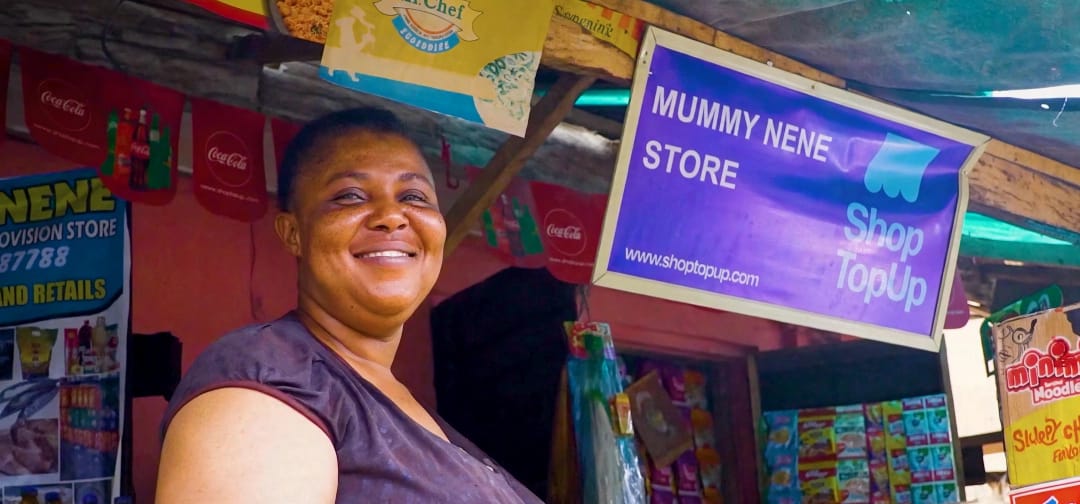
While conversations about the future of retail increasingly focus on supermarkets, shopping malls and online shopping platforms, millions of African consumers continue to rely on a more familiar and accessible business: the neighbourhood shop.
From small provision stores and corner shops to kiosks and informal retailers, these businesses remain an important part of everyday commerce, connecting communities to essential household products. However, behind their convenience lies a supply chain challenge that often limits their growth.
For many small retailers, sourcing products, managing inventory and securing enough working capital to keep their shelves stocked can be difficult. Fragmented distribution networks, multiple intermediaries and limited access to financing often make it harder for them to compete and expand.
Technology is beginning to offer a different possibility.
Digital platforms can simplify the way neighbourhood retailers purchase goods by connecting them more directly with manufacturers and distributors. They can streamline ordering, improve product availability and make inventory management more efficient.
Access to financial technology can further strengthen these businesses by helping eligible retailers secure the working capital required to replenish stock, respond to customer demand and grow sustainably.
One Nigerian technology company working to address these challenges is TradeDepot, which is using digital innovation to connect small retailers with manufacturers and distributors.
By making product sourcing and distribution more efficient, the company is helping to address some of the longstanding barriers facing small businesses in Africa’s retail sector.
However, scaling technology-driven solutions across a fragmented retail market requires more than innovation. It also demands significant investment.
This is where development finance and venture capital become important.
Through Boost Africa, the European Investment Bank (EIB) invested in Partech Africa Fund, a venture capital fund that subsequently backed TradeDepot. The investment illustrates how development finance can reach innovative African businesses through investment funds, providing capital to companies working to solve real economic challenges.
Boost Africa is a joint initiative of the European Investment Bank and the African Development Bank, with support from the European Union. The initiative supports African businesses and strengthens the continent’s entrepreneurial ecosystem by improving access to finance and opportunities for growth.
The wider significance of this investment goes beyond the technology platform itself. Strengthening neighbourhood retailers can contribute to more efficient supply chains, support small business growth and improve access to everyday consumer goods across communities.
For Africa, where small retailers remain central to local economies, the opportunity is substantial.
The future of retail may not necessarily involve replacing traditional neighbourhood shops with large supermarkets or online marketplaces. Instead, it could depend on equipping these existing businesses with better technology, stronger distribution networks and improved access to finance.
Ultimately, transforming retail may begin with something as familiar as the shop around the corner.
Boost Africa: From Capital to Impact.
Watch how TradeDepot is bringing commerce closer to communities through technology and investment
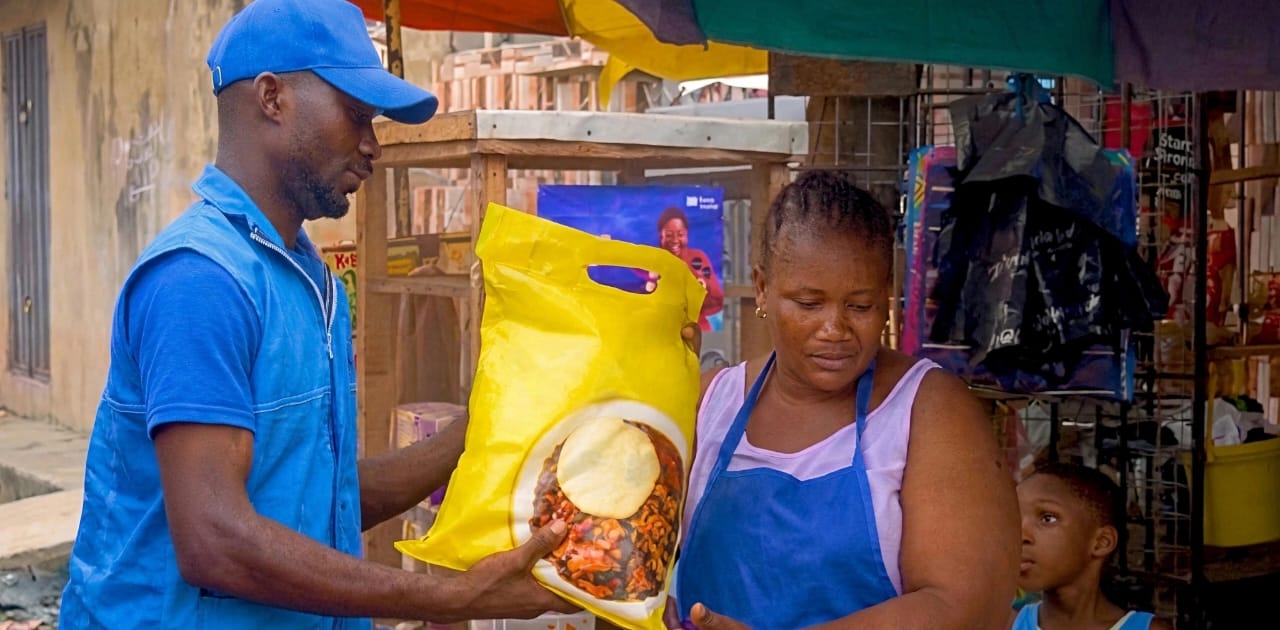
Ever wondered how the products on your neighbourhood shop shelves get there? Behind everyday purchases is a supply chain that can be costly, complex and inefficient, particularly for small retailers.
Nigerian technology company TradeDepot is changing this process by using technology to connect small retailers with manufacturers and distributors, making it easier for shop owners to order and receive the goods they need.
But transforming retail distribution takes more than an innovative idea. It requires investment to build, expand and scale.
Through Boost Africa, the European Investment Bank (EIB), alongside the African Development Bank and with support from the European Union, is helping strengthen the financing ecosystem for innovative African businesses.
One example is the EIB’s investment in Partech Africa Fund, which subsequently backed TradeDepot, helping channel capital into a Nigerian business working to improve how goods move from suppliers to neighbourhood shops.
The impact goes beyond technology. More efficient distribution can help small retailers access inventory, strengthen connections between manufacturers and suppliers, and bring commerce closer to the communities they serve.
Ultimately, TradeDepot’s story demonstrates how investment can go beyond funding to support stronger businesses, more efficient markets and opportunities for small retailers.
Boost Africa: From Capital to Impact.
Watch how TradeDepot is bringing commerce closer to communities.
▶ https://www.youtube.com/watch?v=zw9t2asF9Pc
Business
Beyond University Degrees: How ChipMango is Preparing African Engineers for Global Tech Industry

A university degree is a starting point, but practical industry experience can make all the difference.
Nigerian technology company ChipMango is bridging the gap through specialised semiconductor training and real-world chip design and verification projects, preparing African engineers for opportunities in the global technology industry.
Through Boost Africa, the EIB, AfDB and EU are strengthening the investment ecosystem supporting innovative African businesses.
Watch the video to discover how ChipMango is connecting engineering talent to real industry opportunities.
Watch the video:



