
Business
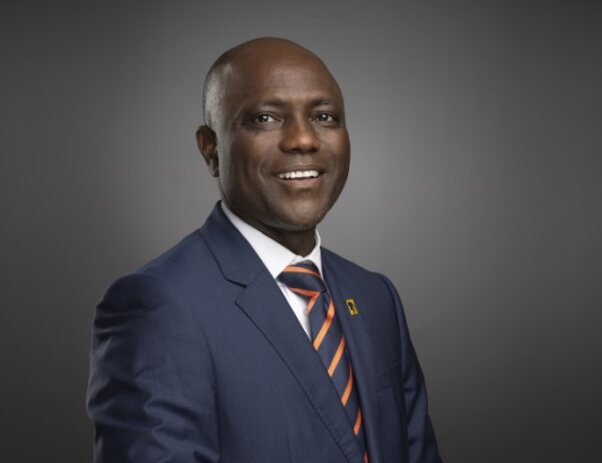
FirstBank Empowers Nigeria’s Digital Lending Charge with FirstCredit

- /home/rhoncare/pointblank.ng/wp-content/plugins/mvp-social-buttons/mvp-social-buttons.php on line 27
https://pointblank.ng/wp-content/uploads/2024/05/Segun-Alebiosu-Ag.-CEO-FirstBank-1.jpg&description=FirstBank Empowers Nigeria’s Digital Lending Charge with FirstCredit', 'pinterestShare', 'width=750,height=350'); return false;" title="Pin This Post">
- Share
- Tweet /home/rhoncare/pointblank.ng/wp-content/plugins/mvp-social-buttons/mvp-social-buttons.php on line 69
https://pointblank.ng/wp-content/uploads/2024/05/Segun-Alebiosu-Ag.-CEO-FirstBank-1.jpg&description=FirstBank Empowers Nigeria’s Digital Lending Charge with FirstCredit', 'pinterestShare', 'width=750,height=350'); return false;" title="Pin This Post">
In the fast-evolving world of digital banking, Nigeria stands on the brink of a financial revolution. As the global pandemic has accelerated digitalization, the need for accessible, efficient, and reliable financial services has never been more crucial. FirstCredit by FirstBank emerges as a groundbreaking digital lending solution designed to meet the demands of Nigerians where the need for quick cash is ticking ever northward.
The shift towards digital banking in Nigeria has been both rapid and transformative. With the increasing penetration of mobile phones and internet access, more Nigerians are embracing digital solutions for their financial needs. This trend has been further amplified by the COVID-19 pandemic, which necessitated minimal physical contact and prompted a surge in digital transactions.
Digital banking offers numerous advantages, including convenience, speed, and accessibility. For many Nigerians, especially those in remote areas, digital banking services have provided unprecedented access to financial tools and resources. However, despite these advancements, a significant gap remains in the availability of quick and hassle-free credit facilities. This is where FirstCredit steps in.
In a country where traditional lending processes are often bogged down by paperwork, collateral requirements, and lengthy approval times, FirstCredit emerges as a beacon of innovation. It addresses several critical needs, including:
Accessibility: Many Nigerians still lack access to traditional banking services. FirstCredit bridges this gap by offering loans that can be accessed from anywhere, anytime, using a mobile phone or tablet. There is no need to visit a bank, making it an ideal solution for those in remote or underserved areas. You do not need a smartphone to access FirstBank’s FirstCredit.
Speed: In a fast-paced economy, waiting weeks for loan approval is not feasible for many individuals and businesses. FirstCredit ensures that loan applications are processed swiftly, with funds disbursed immediately upon approval. This quick turnaround is crucial for addressing urgent financial needs.
Simplicity: Traditional loans often require extensive documentation and collateral, which can be a barrier for many. FirstCredit simplifies the process by eliminating these requirements. All that is needed is an active mobile number registered for USSD banking and a history of regular account transactions with FirstBank.
Flexibility: With a maximum loan amount of N300,000 and a flexible repayment tenor of up to 30 days, FirstCredit offers terms that are adaptable to the borrower’s needs. The flat interest rate of 8% and a 5% insurance fee per transaction are straightforward and transparent, ensuring borrowers are fully aware of the costs involved.
Features of FirstCredit
First Credit is designed with user convenience and financial inclusivity at its core. Here are some of its standout features:
Easy Access via USSD: Customers can apply for loans by simply dialing *894# and following a few straightforward steps. This USSD code is accessible on any mobile device, ensuring that even those without smartphones can benefit from the service.
No Documentation or Collateral: The absence of cumbersome paperwork and collateral requirements makes the application process smooth and accessible.
Immediate Disbursement: Once approved, the loan amount is credited to the borrower’s account immediately, providing instant financial relief.
Flexible Repayment: Borrowers have the option to repay the loan before the 30-day tenor, allowing for flexibility based on their financial situation.
Eligibility Criteria: To qualify, customers must have been in a relationship with FirstBank for at least six months, have a valid BVN, a good credit history, and use the mobile number registered for USSD banking. Regular account transactions further enhance eligibility.
The introduction of FirstCredit marks a significant milestone in Nigeria’s digital banking journey. As digital lending becomes more embedded in the financial ecosystem, it promises to unlock new opportunities for individuals and businesses alike.
For FirstBank, the move towards digital lending is not just a strategy for retaining market share but also a means to drive business growth and profitability. By leveraging technology, banks can offer personalized, efficient, and scalable financial services that meet the evolving needs of their customers, which FirstBank has leveraged on.
Moreover, the broader adoption of digital lending solutions like FirstCredit can have a transformative impact on Nigeria’s economy. It can empower small businesses with the capital they need to grow, support individuals in financial need, and foster a more inclusive economic environment.
FirstCredit is more than just a lending product; it is a visionary step towards a future where financial services are democratized and accessible to all Nigerians. As digital banking continues to evolve, solutions like FirstCredit will play a pivotal role in shaping Nigeria’s more inclusive and dynamic financial landscape.
Qualitative indicators suggest that FirstCredit has successfully addressed key financial needs in Nigeria. It’s design, focusing on accessibility, speed, and simplicity, aligns well with the demands of the Nigerian market. Continued success can be inferred from its widespread adoption and the broader positive trends in digital lending within the country. And Nigerians can trust that with FirstCredit, there is no ‘wayo’ because it is powered by West Africa premier financial institution and financial inclusion services provider, FirstBank.
Culled from NairaMetrics


Ecobank Nigeria has called on young Nigerians, particularly students, innovators, entrepreneurs, and creatives aged 16 to 25, to take advantage of the ongoing registration for InnovateX 2026, the Bank’s flagship youth innovation challenge offering ₦20 million in prizes, mentorship, business development support, and access to industry experts.
Powered by Blaze by Ecobank in partnership with Verve, InnovateX 2026 is designed to identify and support the next generation of innovators and creators developing solutions across inclusive finance, as well as the creative economy.
Beyond the financial support, participants will benefit from an intensive innovation journey featuring hybrid bootcamps, expert-led workshops, mentorship sessions, networking opportunities, and a grand finale pitch competition where finalists will showcase their ideas before a panel of industry leaders and investors.
The competition is open to young Nigerians working on innovative projects in technology, engineering, science, product design, content creation, digital media, entertainment, fashion, and other creative disciplines.
Encouraging young Nigerians to register, Victor Yalokwu, Head, Products & Analytics, Ecobank Nigeria, said: “Nigeria is blessed with an abundance of young talent, creativity, and entrepreneurial energy. Through InnovateX, we are providing a platform for young people to transform bold ideas into impactful solutions and sustainable businesses. We encourage students, innovators, tech enthusiasts, creators, and entrepreneurs across the country to seize this opportunity and take their ambitions to the next level.”
He added: “The future belongs to young people who are willing to innovate, solve problems, and create value. InnovateX is designed to equip participants with the knowledge, mentorship, exposure, and resources they need to succeed in today’s highly competitive and technology-driven world.”
Yalokwu further explained that InnovateX is not just about rewarding great ideas, but also about building confidence, nurturing talent, and connecting young people to opportunities that can help them grow personally and professionally. “Whether you are developing a tech solution, building a creative brand, or working on an innovation that can improve lives, InnovateX provides a valuable platform to showcase your potential and accelerate your journey towards success,” he said.
As part of its commitment to youth empowerment, Ecobank continues to provide innovative banking solutions through the Blaze Account, a youth-focused offering that gives customers access to exclusive opportunities, a uniquely designed debit card, free monthly transfers, and participation in initiatives such as InnovateX.
Young Nigerians interested in participating are encouraged to submit their applications through www.innovatex.africa before the registration deadline.
With ₦20 million up for grabs and a unique opportunity to gain mentorship, skills, exposure, and industry recognition, InnovateX 2026 is poised to become one of Nigeria’s most impactful youth innovation and entrepreneurship programmes.
New data from CFA Society Nigeria is reshaping how the country’s financial sector thinks about talent development, with Access emerging as the single largest source of CFA candidates in Nigeria, a distinction industry watchers say signals a deeper shift in how leading institutions are building investment expertise from within.
In its Where Nigeria’s Finance Professionals Work series, published in a national daily, CFA Society Nigeria placed Access first among employers of CFA candidates nationwide, with 82 candidates enrolled in the programme, more than double the 38 recorded at the next-placed institution and well ahead of every other bank or financial services firm on the list.
Access also ranked second among employers of CFA charterholders, with 11 professionals who have completed all three levels of the Programme and met its experience and ethics requirements.
For an industry that has long measured itself by balance sheet size and branch count, the rankings point to a different kind of competition: one over who is building the deepest bench of certified, globally credentialed talent. CFA Society Nigeria compiled the data from its Salesforce Membership Database as at June 2026, and described the exercise as a way of recognising employers whose people “bring rigour, integrity and global best practices into the workplace every day.”
Analysts following the sector say the outcome is notable less for the ranking itself than for what it suggests about talent strategy across Africa’s financial services industry. A single institution developing more aspiring charterholders than the rest of the market combined raises the floor for professional standards nationally, not just within one balance sheet. Every candidate who advances through the CFA Programme adds to a shared pool of ethics-trained, analytically rigorous professionals that Nigeria’s capital markets, pension funds and asset managers all eventually draw from.
Access Holdings Group Chief Executive Officer, Innocent C. Ike, commenting on the rankings, framed the achievement in terms of institution-building rather than recruitment: “Every candidate on that list represents our commitment to building institutions and professionals that endure.” The remark echoes a broader thesis increasingly voiced by market observers, that talent depth, not scale alone, is what will determine which African financial institutions earn lasting global credibility.
That distinction sits at the centre of Access’s stated ambition to become the World’s Most Respected African Financial Services Group. If the CFA numbers are any indication, the Group’s route to that goal runs less through square metres of branch network and more through the calibre of the people sitting inside it, a bet that Nigeria’s finance professionals, and the institutions that will one day hire them, are already placing alongside Access.

Africa’s Global Bank, United Bank for Africa (UBA) Plc, has partnered Mikano Motors to launch an auto financing scheme, themed: ‘Drive Your Dream Today’, specifically designed to ease the purchase of new vehicles by making them more accessible to Nigerians. The flexible Financing solutions Initiative, requires customers to make an initial payment of just 30 percent while the Bank finances the remaining 70 percent.
Unveiled at the Mikano Motors showroom in Victoria Island, Lagos, the scheme allows eligible customers to repay the financed amount in instalments over a period of 36 months at an interest rate of 23 percent.
The financing is available to a broad range of customers, including individuals who are not on a salaried income, providing entrepreneurs, and other eligible Nigerians with a structured pathway to vehicle ownership.
The process begins with a simple eligibility check. Interested customers can visit their nearest UBA branch or email consumerlending@ubagroup.com to confirm their eligibility. Once approved, customers can proceed to Mikano Motors to obtain a proforma invoice for their preferred vehicle and continue with the financing process.
Speaking at the launch, UBA’s Group Executive Director, designate, Personal and Business Banking, Chidi Okpala, said the partnership reflects the Bank’s commitment to making everyday aspirations more attainable while promoting a stronger credit culture and advancing financial inclusion.
“Owning a car should not be out of reach for hardworking Nigerians, and this partnership makes it far more achievable,” Okpala said. “A customer puts down 30 percent, we finance the rest, and they pay us back comfortably over a three years period. By removing the single biggest barrier to vehicle ownership where a customer just commits with an upfront cost, we are showing what customer-first banking looks like in practice, which is making their lives easier, by meeting our customers where they are and helping them get where they want to be.”
Also speaking, UBA’s Group Head, Consumer Lending, Frank Okoh, said the scheme was designed to make vehicle financing straightforward and accessible to both salaried and self-employed customers.
“We have kept the entry simple and the terms clear, whether you earn a salary or run your own business,” Okoh said. “A short eligibility check at any branch or by email is all it takes to begin, and our team guides the customer through every step to the moment they collect their keys.”
For Mikano Motors, the partnership provides an opportunity to extend its vehicle ownership proposition to a wider pool of Nigerians
The company’s General Manager, Tarek Mostafa, said the collaboration aligns with Mikano Motors’ vision of providing customers with a high-end ownership experience supported by reliable after-sales services.
“Mikano Motors was established to give Nigerians a high-end ownership experience, from the showroom to years down the road,” Mostafa said. “The backbone of any automotive business is not just the sale, but the after-sales service that follows. Every vehicle we sell is backed by genuine spare parts, reliable maintenance and quality service available anywhere in the country. Wherever you are we would come meet you at no extra cost”
“Partnering with UBA lets more customers enjoy that experience, and we are proud to build lasting relationships alongside a bank that shares our commitment to service,” he added.
Established in 2018 under Mikano International, Mikano Motors builds on more than 35 years of the group’s presence in Nigeria. The company offers a diversified portfolio of vehicles supported by nationwide sales and after-sales services.
The partnership further strengthens UBA’s consumer lending proposition, providing customers with structured financing solutions designed around accessibility, affordability and convenience. Through partnerships such as this, the Bank continues to expand access to credit while helping customers meet significant personal and lifestyle needs with ease.
United Bank for Africa is one of the largest employers in the financial sector on the African continent, with 25,000 employees group-wide and serving over 45 million customers globally. Operating in twenty African countries, the United Kingdom, the United States of America, France and the United Arab Emirates, UBA provides retail, commercial and institutional banking services, leading financial inclusion and implementing cutting-edge technology.


