Business
FirstBank Empowers Women Through FirstGem Online Community

- /home/rhoncare/pointblank.ng/wp-content/plugins/mvp-social-buttons/mvp-social-buttons.php on line 27
https://pointblank.ng/wp-content/uploads/2019/10/FirstBank_Logo-1-1000x511.jpg&description=FirstBank Empowers Women Through FirstGem Online Community', 'pinterestShare', 'width=750,height=350'); return false;" title="Pin This Post">
- Share
- Tweet /home/rhoncare/pointblank.ng/wp-content/plugins/mvp-social-buttons/mvp-social-buttons.php on line 69
https://pointblank.ng/wp-content/uploads/2019/10/FirstBank_Logo-1-1000x511.jpg&description=FirstBank Empowers Women Through FirstGem Online Community', 'pinterestShare', 'width=750,height=350'); return false;" title="Pin This Post">
First Bank of Nigeria Limited, Nigeria’s premier and leading financial inclusion services provider, has announced that its all-female online community www.firstgem.com.ng, offers mentoring, support and capacity building opportunities for all to create a new generation of financially literate women.
With the aim to increase its engagement and reach a wider audience, an online repository for its FirstGem product was created and designed to provide a virtual online community where like-minded women irrespective of where they are in Nigeria and abroad, gather to connect, grow and share knowledge on everything about lifestyle, parenting, career development, entrepreneurship, health, work and family. Financial empowerment and wealth creation ideas are shared to encourage women to play their part in providing financial support for their families.
The portal provides varied contents ranging from Blog stories to Vlogs, Newsletters, Chat rooms which are built on 6 pillars – Health, Wealth and Finance, Food and Recipes, Events, Entrepreneurship, Lifestyle and Beauty. The FirstGem online community presently has over 61,634 members drawn from all walks of life sharing ideas, insights and experiences.
According to Chuma Ezirim, Group Executive, e-Business & Retail Products, First Bank of Nigeria Limited, “FirstGem is suited for the Nigerian woman, and we are using this online community as the ideal opportunity to position the Bank’s gender initiatives to meet the required needs on a wide range of issues affecting women from lifestyle, skills acquisition, finances, wealth acquisition and management, business support, etc.
We encourage all women to join the community by signing up via this link https://firstgem.com.ng/community to enjoy this experience.
FirstGem is a gender specific account designed to meet the needs of women, aged 18 years and above. It is targeted at a broad spectrum of women, working professionals, entrepreneurs and MSMEs with a view to promoting growth via an array of benefits, from free business advisory services, regular information or insights on business opportunities in various sectors and industries, as well as mouth-watering discounts at partnered stores and outlets.
FirstGem has successfully empowered women in states across the geo-political zones in Nigeria and the UK.



A frustrating international money transfer experience has inspired Nigerian software engineer Tomiwa Lasebikan to co-found Daya, a fintech company developing solutions to simplify cross-border payments for African businesses.
In 2014, Lasebikan attempted to send money to his father in Nigeria but faced transaction charges of nearly 10 per cent, with the transfer taking two weeks to arrive. The experience exposed the inefficiencies of international payments and eventually influenced his decision to return to Nigeria to establish Daya with Paul Joe.
The company is building financial infrastructure that enables African businesses to move money across borders and access liquidity more efficiently.
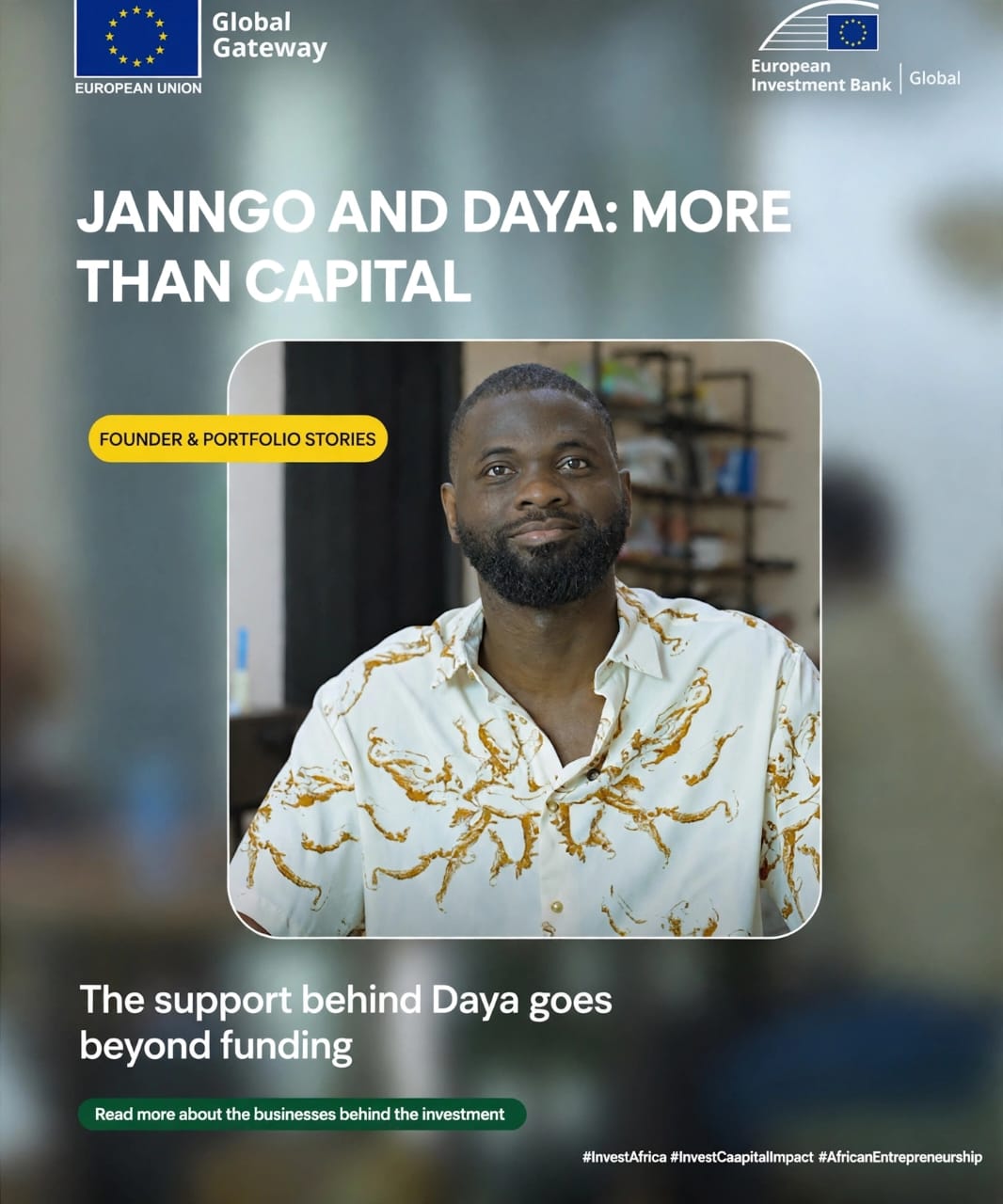
Daya received early investment backing from Janngo Capital, a venture capital fund supported by the European Investment Bank’s Boost Africa initiative. Beyond funding, the partnership provided access to mentorship, strategic guidance and business networks to support the company’s growth.
The investment highlights how venture capital can help emerging African businesses turn practical challenges into scalable financial solutions.
Read the full story of Daya and other Boost Africa-backed Nigerian companies in the EIB feamentorship: https://www.eib.org/en/stories/boost-africa-nigeria-venture-capital-eu
@all
Business
How Boost Africa-Backed Investment is Supporting Nigeria’s Cross-Border Payments Innovation
Cross-border payments remain a major challenge for African businesses engaged in international trade, with difficulties moving money and accessing liquidity creating barriers to global commerce.
For Nigerian entrepreneurs Tomiwa Lasebikan and Paul Joe, these challenges inspired the creation of Daya, a fintech company developing international payment and liquidity infrastructure powered by stablecoin-enabled technology.
However, building a solution to address these challenges requires more than an innovative idea. Access to funding, industry expertise and strategic networks is equally important.
Through its Boost Africa initiative, the European Investment Bank (EIB) provides catalytic capital and risk-sharing support to venture capital funds, including Janngo Capital. This model enables fund managers to invest in emerging businesses and support founders developing solutions to critical market challenges.
With backing from venture capital and access to relevant industry networks, Daya is working to improve how businesses move money across borders and manage international payments.
The company’s development highlights the role of investment partnerships in supporting African fintech innovation and connecting local businesses to the global economy.
The EIB’s feature story examines Daya alongside other venture capital-backed Nigerian startups and explores how investment support is helping entrepreneurs turn business challenges into technology-driven solutions.
https://www.eib.org/en/stories/boost-africa-nigeria-venture-capital-eu
Digital Solutions provider, Globacom, has explained how its cost-effective innovative telecommunications and digital services can help corporates, small and medium enterprises (SMEs) and public sector organisations drive business growth.
The company said in a statement released in Lagos on Tuesday that its Enterprise Business arm offers comprehensive information, communications and technology (ICT) and business solutions which help organizations connect better, operate smarter, optimize costs and grow faster.
It noted that Glo Enterprise is equipped to power public sector digitalization, and, therefore, the ideal partner for government ministries and state agencies which require large-scale broadband deployment for e-governance and smart city projects.
“Glo Enterprise improves business efficiency and productivity by providing reliable and integrated telecommunications solutions that enable organizations to communicate, collaborate and operate seamlessly. With dependable voice and data services, businesses can connect employees, offices, customers and business partners more effectively, reducing communication delays and ensuring that important decisions and transactions are carried out promptly.
“Its digital and cloud-enabled solutions also support remote work, secure data management and the smooth running of critical business operations”, the statement said.
Connectivity and cost optimization are other benefits Glo Enterprise offers customers such as banks, oil and gas firms, logistic firms and manufacturing companies. Globacom explained that it provides businesses with solutions designed to meet their different communication and data requirements, helping them stay connected without incurring unnecessary expenses.
According to the statement, Glo Enterprise also facilitates banking operations through dedicated Internet, Leased Lines, and Data Centre solutions, enabling reliable connectivity between branches, supporting digital banking operations and improves customer service.
In addition to this, Glo Enterprise is the go-to partner in the oil and gas industry, where operations are often spread across offices, remote locations and production facilities, providing dependable connectivity and communication solutions that help them coordinate their activities effectively.
In the logistics sector, Glo Enterprise helps in fleet management, vehicle tracking, and coordination of delivery. It helps manufacturers, through stable connectivity, to coordinate production, inventory, suppliers, distribution networks, and liaison between factory and warehouses.