Business
FirstBank Partners CDC/BII to Support Women, Small Business Owners with a US$100m Credit Facility

- /home/rhoncare/pointblank.ng/wp-content/plugins/mvp-social-buttons/mvp-social-buttons.php on line 27
https://pointblank.ng/wp-content/uploads/2019/10/FirstBank_Logo-1-1000x511.jpg&description=FirstBank Partners CDC/BII to Support Women, Small Business Owners with a US$100m Credit Facility', 'pinterestShare', 'width=750,height=350'); return false;" title="Pin This Post">
- Share
- Tweet /home/rhoncare/pointblank.ng/wp-content/plugins/mvp-social-buttons/mvp-social-buttons.php on line 69
https://pointblank.ng/wp-content/uploads/2019/10/FirstBank_Logo-1-1000x511.jpg&description=FirstBank Partners CDC/BII to Support Women, Small Business Owners with a US$100m Credit Facility', 'pinterestShare', 'width=750,height=350'); return false;" title="Pin This Post">
First Bank of Nigeria Limited, Nigeria’s premier and leading financial inclusion services provider, has announced its partnership with CDC Group, the UK Government’s development finance institution on a US$100 million finance facility to FirstBank. This new facility will direct funding to women-owned and led businesses as well as to local small and medium-sized enterprises (SMEs) in Nigeria.
The deal will support FirstBank to deliver financial solutions that help to address the challenge of limited access to capital faced by underbanked and underserved groups in the country. As part of the new facility, a minimum of US$30 million will be allocated in the form of credit lines to women entrepreneurs. The facility will also support FirstBank’s ‘FirstGem’ gender-focused services offering, which takes steps to promote gender inclusion by improving lending and support to female entrepreneurs.
The new partnership between CDC, which will be renamed British International Investment in April, and FirstBank demonstrates a shared mission to spur sustainable, productive and inclusive growth in Nigeria.
CDC’s commitment will facilitate an expanded offer by FirstBank to its clientele, which will accelerate financial inclusion and increase opportunities for marginalised groups, including an estimated 59 million unbanked Nigerians, to participate in the country’s formal economy. As such, the partnership will capitalise on the FirstBank’s expansive network of over 700 branches and 150,000+ agents, leveraging its market leading expertise to scale financial solutions to underbanked entrepreneurs and populations.
In addition, CDC/BII will support FirstBank with a technical assistance programme which will build on the Bank’s knowledge base of the women-led and women-owned businesses in its portfolio, strengthening the Bank’s technical capabilities and ability to reinforce its commitment to gender-based initiatives. This will enable the Bank to further leverage the facility to provide vital funding to scale business growth across Nigeria’s market – increasing job creation and improving livelihoods throughout the country.
The facility’s target to increase financial inclusion and opportunities for women, qualifies this facility under the 2x Challenge – a commitment by the development finance institutions (DFIs) of the G7 to mobilise capital to support increased economic empowerment for women in emerging economies. Moreover, the US$100 million commitment aligns with the UN’s Sustainable Development Goal 5 Gender Equality and Goal 8 Decent Work and Economic Growth.
Nick O’Donohoe, Chief Executive of CDC Group, said: “Promoting financial inclusion is a key component for advancing sweeping productive and sustainable growth across both rural and urban areas in Nigeria. This facility will channel CDC’s flexible and long-term capital toward expanding the financial solutions made available to women entrepreneurs, who are often the drivers of small business ideas and services to their communities.
“Our commitment demonstrates a deepening of British partnership with Nigeria’s businesses, as we collaborate to unlock the potential for entrepreneurial success and economic growth across the country.”
Adesola Adeduntan, Managing Director / Chief Executive Officer, FirstBank said: “Beyond the mutual benefits this partnership offers to both organisations, this transaction offers yet, another occasion for FirstBank to contribute immensely, to the United Nation Sustainable Development Goals.
“Enabling financial inclusion for SMEs has been a strategic priority for FirstBank over the last 128 years. Similarly, FirstBank has been at the forefront of financially empowering women-owned and women-led businesses on the continent. This partnership with CDC/BII offers a fantastic opportunity to accelerate the momentum.
“At FirstBank, we remain ever committed to fostering financial inclusion, creating wealth for the underserved, enhancing access to quality education and health care, improving lives and empowering women.”


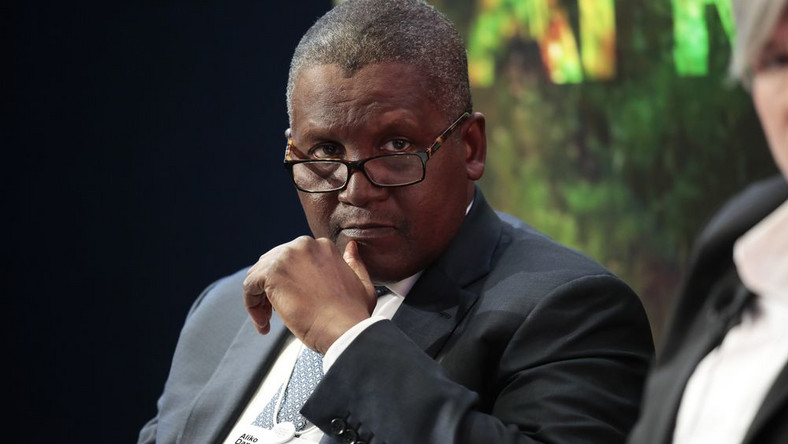
Ugandan President, Yoweri Museveni, has met with Nigerian billionaire Aliko Dangote at State House, Entebbe, to discuss investment opportunities in energy, petroleum, agriculture, and mining. A key area of interest was the fertilizer industry, aimed at enhancing regional food security.
According to Museveni, the meeting highlighted progress on Uganda’s crude oil refinery project, a joint venture with Alpha MBM from the United Arab Emirates, with an initial capacity of 60,000 barrels per day.
This meeting follows Dangote’s recent launch of the multi-billion-dollar Dangote East Africa Petroleum Refinery in Lamu County, Kenya.
Museveni, who attended the occasion, welcomed the development, emphasising Africa’s shift from exporting raw materials to local processing.
Museveni welcomed the development, noting that Africa is gradually moving away from decades of exporting raw materials instead of processing them locally.
“I am happy to see Africa waking up and moving away from the 70-year betrayal of exporting raw materials,” President Museveni said. “Dangote, who started as an importer and has become a national and continental asset, is a good example of the transformation we need.”
Addressing regional energy infrastructure needs, Museveni clarified that Kenya’s new mega-refinery would not conflict with Uganda’s own downstream ambitions or existing cross-border partnerships.
“Uganda’s refinery will be built, and our cooperation with Tanzania on Tanga stands. There is no harm in having more refineries in the region. What Africa needs is value addition, industrialisation and bigger integrated markets,” Museveni noted, adding: “East African political integration must ultimately be treated as a matter of strategic survival.”
Africa’s informal retail sector presents a major opportunity for economic growth, as technology companies explore ways to improve how small businesses source products, manage supplies and serve consumers.
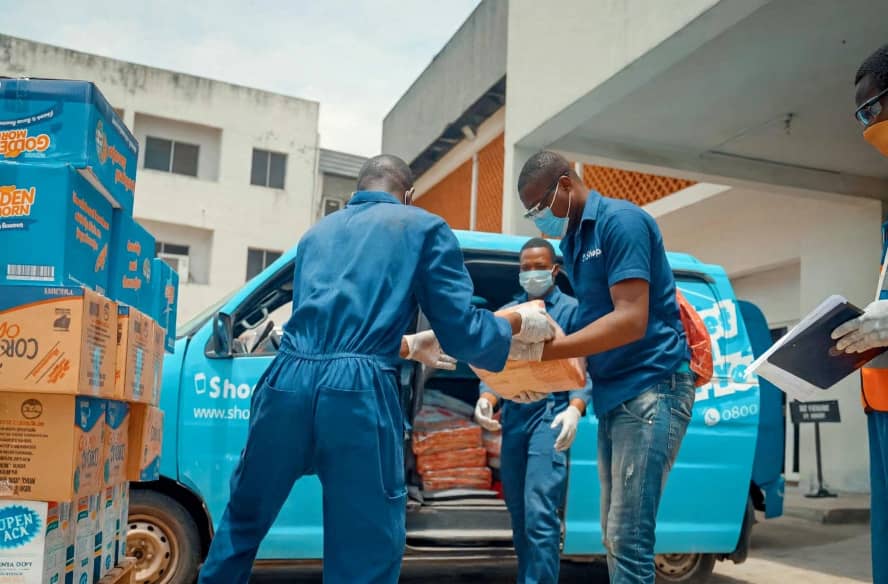
Nigerian technology company TradeDepot is addressing the challenge by connecting neighbourhood shops, kiosks, market stalls and small provision stores with manufacturers and distributors through digital solutions.
The initiative targets a largely underserved segment of Africa’s retail industry, where many small businesses face difficulties accessing reliable suppliers, efficient distribution networks and appropriate financial services.
By improving access to products and simplifying procurement, TradeDepot aims to help retailers reduce supply-chain challenges and focus more on serving customers.
The impact could extend beyond individual businesses to manufacturers and distributors through improved market access, more efficient product distribution and stronger connections with local communities.
The company’s growth has also received institutional investment support. Through its Boost Africa initiative, the European Investment Bank (EIB) invested €10 million in Partech Africa Fund, which subsequently backed TradeDepot.
Boost Africa, a partnership supporting innovative African businesses, demonstrates how investment capital can help technology companies develop solutions for underserved markets.
As Africa’s retail landscape evolves, the informal sector is increasingly attracting attention as a major driver of commerce, employment and enterprise development.
TradeDepot’s approach highlights the potential of using technology and investment to strengthen the small businesses already supplying everyday goods to millions of African consumers.
Watch the video: https://www.youtube.com/watch?v=zw9t2asF9Pc

From manufacturers and distributors to neighbourhood retailers, technology and investment are reshaping the systems that move products across African markets.
When a customer walks into a neighbourhood shop and finds exactly what they need, the transaction may appear simple. But behind that everyday purchase is a complex network of businesses, people and systems working together to make it happen.
Manufacturers produce the goods, distributors move them through supply channels, logistics providers handle transportation, and retailers ensure products reach consumers. Payment systems and financing also play important roles in keeping this commercial ecosystem running.
However, across many African markets, the infrastructure connecting these players remains fragmented, creating challenges that affect how businesses operate and how efficiently products reach consumers.
For small retailers, sourcing products can involve dealing with multiple intermediaries, navigating inefficient distribution networks and managing unpredictable supplies. Limited access to working capital can further complicate inventory management, making it difficult to keep essential products consistently available.
These challenges point to a bigger issue: the future of commerce is not just about selling more products or creating new shopping experiences. It is also about strengthening the infrastructure that makes buying, selling and distribution possible.
Technology is increasingly becoming part of the solution.
Digital platforms can connect retailers with manufacturers and distributors, simplify ordering processes and improve visibility across supply networks. When combined with efficient logistics and access to financing, these innovations can help businesses manage inventory, improve distribution and build stronger commercial relationships.
This is the space in which TradeDepot, a Nigerian technology company, is making its contribution. By using technology to connect small retailers with manufacturers and distributors, the company is helping address some of the structural challenges within traditional retail supply chains.
Its approach reflects a broader opportunity in Africa’s digital transformation: moving beyond solutions that simply improve the customer experience to innovations that strengthen the underlying systems supporting businesses, distribution networks and economic activity.
Investment also plays a critical role in making this transformation possible.
Through Boost Africa, the European Investment Bank (EIB) invested €10 million in Partech Africa Fund, which subsequently backed TradeDepot. The investment demonstrates how development finance and venture capital can support African technology companies working to address fundamental market challenges.
Beyond supporting individual businesses, such investments can contribute to the development of stronger commercial networks, improved infrastructure and innovative solutions that make entire economic value chains more efficient.
Ultimately, a thriving retail sector needs more than shops and customers. It needs reliable supply chains, efficient distribution networks, accessible financing and technology that connects every part of the journey.
Because the future of commerce will not be determined only by what businesses sell, but also by how effectively the systems behind those transactions work.
Boost Africa: From Capital to Impact.
Watch how TradeDepot is bringing commerce closer to communities through technology and the Boost Africa initiative: