
Headlines
FirstBank’s FINTECH 5.0 Summit: Unleashing Possibilities for Operators, Customers

- /home/rhoncare/pointblank.ng/wp-content/plugins/mvp-social-buttons/mvp-social-buttons.php on line 27
https://pointblank.ng/wp-content/uploads/2020/03/Dr.-Adesola-Adeduntan-FirstBank-CEO-1000x600.jpg&description=FirstBank’s FINTECH 5.0 Summit: Unleashing Possibilities for Operators, Customers', 'pinterestShare', 'width=750,height=350'); return false;" title="Pin This Post">
- Share
- Tweet /home/rhoncare/pointblank.ng/wp-content/plugins/mvp-social-buttons/mvp-social-buttons.php on line 69
https://pointblank.ng/wp-content/uploads/2020/03/Dr.-Adesola-Adeduntan-FirstBank-CEO-1000x600.jpg&description=FirstBank’s FINTECH 5.0 Summit: Unleashing Possibilities for Operators, Customers', 'pinterestShare', 'width=750,height=350'); return false;" title="Pin This Post">
By Eric Elezuo
The FirstBank FINTECH Summit 5.0 held with total fulfilment of the promises made and expectations of the financial public, who waited with bated breath to experience the feeling and satisfaction only the financial giant can offer.
The event, which was in its fifth year/edition, and held via virtual, was as usual opened to the general public, who were privileged to register via https://firstbanknigeria.zoom.us/webinar/register/WN_NmkYfeckQqu4vjTWy5lr5w
Literally a financial technology hub, and themed “Open Banking and its Derivative Opportunities for the Financial Ecosystem”, the well attended summit was addressed by notable professionals, experts, policy influencers, regulatory officials as well as key and leading players from across the globe, with special emphasis to the Nigerian financial, banking and technology climate.
Among the discussants, who presented veritable papers were Prof Ndubuisi Ekekwe, the Lead Faculty of Tekedia Institute with a PhD in Engineering from John Hopkins University, USA, who led the discussion as the Keynote speaker and Ankit Sharma of Strategy&.
Other members of the panel were the Director at Strategy&, a part of the PwC network, based out of Mexico, Ankit Sharma; CEO (Chief Plumber) at One Pipe, Ope Adeoye; Aminu Maida, Executive Director, Technology & Operations at Nigeria Inter-Bank Settlement System Plc (NIBSS); Deputy Director, Payment Systems, Central Bank of Nigeria, Musa Jimoh; and Head, Corporate Transformation, FirstBank, Olayinka Situ, who completed the list of highly influential discussants.
Anchored by Rotus Odire, the free flowing interactive forum dealt on the importance of open banking system in Nigeria, noting that it goes beyond ‘convenience to its game-changing impact in transforming value creation, product conceptualization and closing the financially excluded gap’.
Leveraging on the CBN’s declaration that FINTECH has raked in over $500, 000, 000 to the Nigerin economy this year alone, FirstBank therefore, has positioned itself as the leading financial institution in the country, and with intimating presence in about six African countries, to initiate a conversation to continually increase earnings for the economy and provide veritable entrepreneurial opportunities for the Nigerian public. It is worthy that testimonies abound of how much FirstBank FINTECH initiative has changed lives.
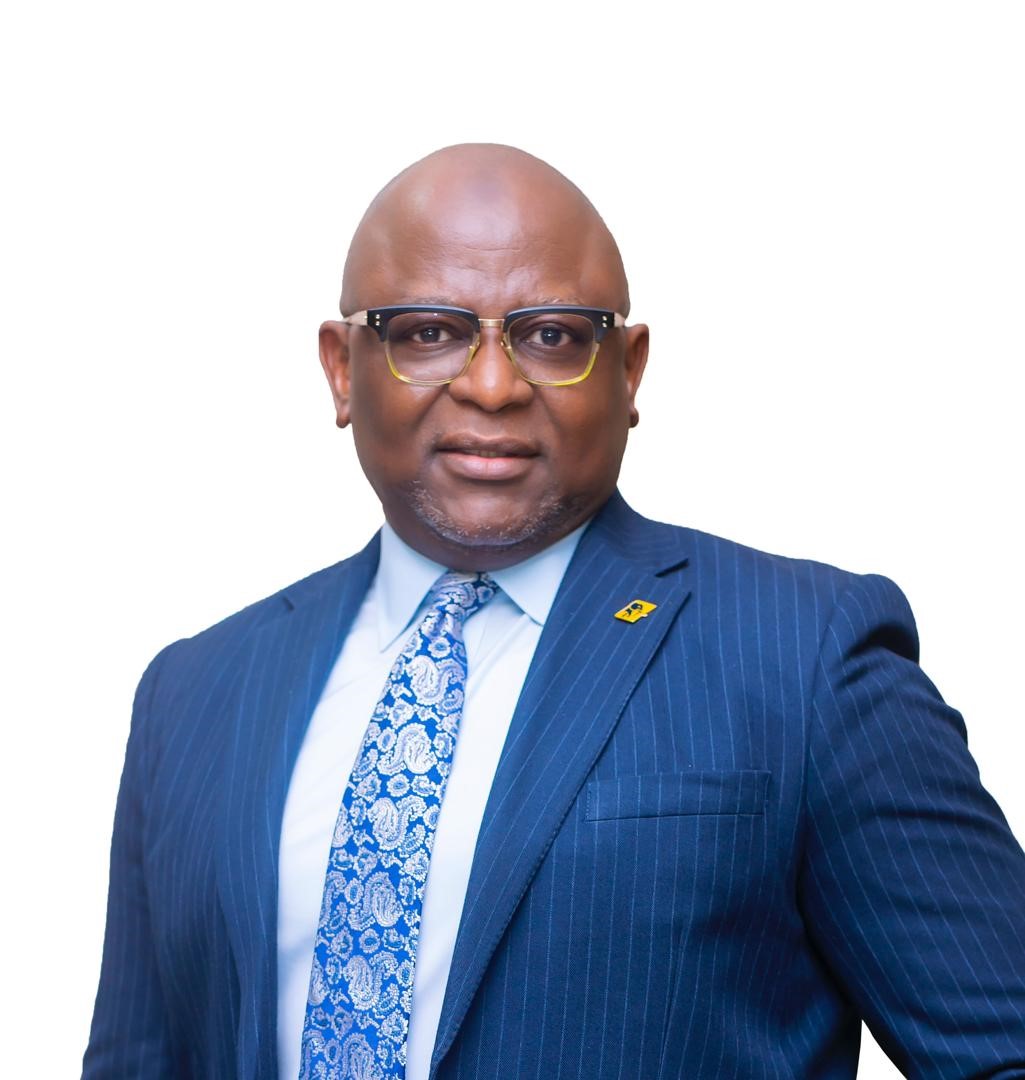
Kick starting the summit, the ever performing Chief Executive Officer of First Bank of Nigeria Ltd & Subsidiaries and the event’s Chief Host, Dr. Adesola Adeduntan, CEO, delivered a stunning opening speech, which captured the vision and mission of the five years old financial conversation.
Acknowledging the pioneering efforts of FirstBank as Africa’s financial inclusion and innovation pacesetter, Dr Adeduntan noted that while the event was primarily to create a global platform for conversations around the future of innovation in the financial technology space of which objective is to contribute to the evolution of banking and finance service delivery, “this years edition themed “Open Banking and its Derivative Opportunities in the Financial Ecosystem promises to be exciting and engaging with a line-up of local and international thought leaders ready to spur the conversation around the prospects for open banking. The theme recognizes the increasing pervasive role open data, cloud technology and artificial intelligence play in the financial ecosystem.” And surely, with incisive and juicy presentations from the team on ground, the event lived up to its billing.
Open banking today demonstrates the practical fusion of these variables, presenting remarkable potentials that can redefine product development, customer experience and overall value creation; with multiplier effects for both players and consumers.
It is worthy of note that FirstBank has generously taken advantage of the the Regulatory Framework for Open Banking in Nigeria as issued by the Central Bank of Nigeria on the rules and premises under which financial data sharing can take place across the financial ecosystem and the National Information Technology Development Agency’s (NITDA) Nigerian Data Protection Regulation (NDPR) 2019. These, according to Adeduntan, are demonstrations of the future of regulations around Open Banking.
In its 127 years of existence, FirstBank has traversed series of regulatory transformation over the years, and is constantly keeping to promise of continuing to play its role in furthering conversations to refine regulatory frameworks and shape thoughts on industry and societal developments as was witnessed at the 5.0 summit.
He concluded: “We will also continue to demonstrate our support for start-ups and innovators in the fintech space by providing them the relevant data support and infrastructure to enable them scale appropriately.
“Every step we take continues to be geared towards strategically positioning us as the bridgehead and reference point for fintech and financial services providers across the African continent, as we will continue to lead the charge towards realizing the future of banking.”
Leading the lecture, a man described as the doctor of innovations, who doubled as one of the 60 great Nigerians listed as making Nigerians lives matter during the nation’s 60th anniversary, Professor Ndubuisi Ekekwe, took the audience on a classic tour of Mechanics of Market System, majoring on a sub-theme, Open Banking: The Grand Unification Application and Utility Age. In his dissection, Professor took the audience down memory lane, resuscitating Pythagoras theory of the world as consisting of numbers, invariably stating that human existence is a product of numbers. He proffered incredible and practical ideas to banking and application utility.
“If you understand the numbers of your customers, you will be a better bank… If you understand the numbers around anything you do on earth, you have a possibility of doing that thing better,” he said.
He itemised perceptions, expectations and needs as the major ways of setting the basis for competition, describing open banking as actually open financial services. He mentioned that across the length and breadth of the nation, the quest for open banking is actually the quest for prosperity.
Following in quick succession was the Director at Strategy&, Ankit Sharma, who spoke on Global Perceptions of Open Banking.
“In the world of open banking, there is a collaboration model that allows you to share data and services through APIs, and this collaboration is not only between financial services fund, but even with non-financial services fun,” Sharma enlightened.
He further itemised personal finance manager, credit scoring and payments as avenues to explore in the world of open banking.
A governing council member of the FINTECH Association of Nigeria and Director of Information System, Dr. Olayinka David West was next on line, as the anchor for the well endowed panel discussion. After a brief expose on the activities of open banking as it relates to fintech, she went ahead to introduce members of the panel including a representative of Central Bank of Nigeria, Director of Payment Systems Management Department, Mr. Musa Atope Jimoh, represented by Olubukola Akinwunmi, Aminu Maida, Ope Adeoye and Olayinka Situ.
All the panelists agreed that FINTECH has come to stay, and bring about the great transformation that everybody is talking about in terms of providing the derivatives of open banking and giving the operators and customers a great leverage in the world of finance.
FirstBank’s FINTECH Summit has remained a regular dish in the menu of financial inclusion in the last five years, and has assisted both operators and customers to operator seamless banking operation in the open – anywhere other than the banking hall.
The bank has through standardized and accessible open API technologies, availed innovators and product developers a wealth of big data and attendant insights. This is in addition to the potential to completely redefine standards for product conceptualization, customer satisfaction and service delivery across Africa’s largest economy.
As Dr Adesola Adeduntan says: “our annual FinTech Summit in the past four years has been a platform of leading conversations and practices that have impacted the financial technology and electronic banking eco-system which has been integral to bridging the gap and digital divide of modern banking in today’s global village. Participants at our summits have been enlightened on ways to optimally carry out their digital transactions and business activities in safe and seamless ways.”
The 2021 5.0 edition was no different.
The next edition of FINTECH Summit to be known as 6.0 is due for 2022.


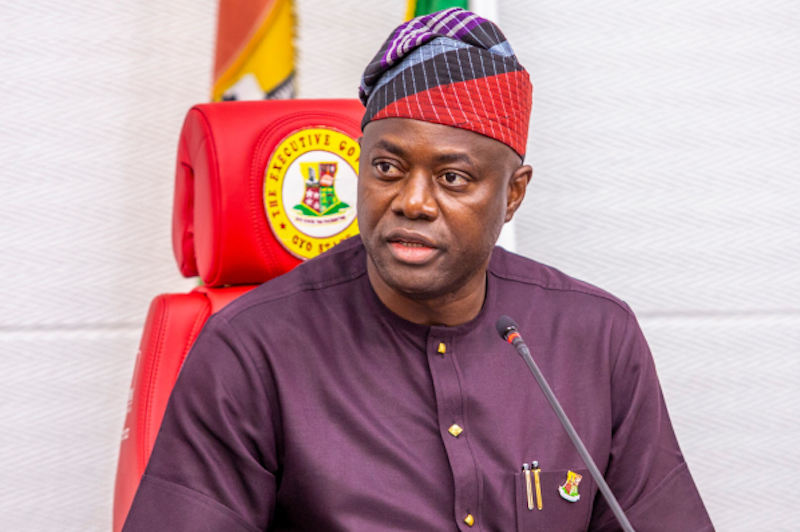
The Allied Peoples Movement (APM) presidential candidate, Seyi Makinde, on Thursday, criticised President Bola Tinubu’s “Emi Lokan” slogan ahead of the 2027 presidential election.
Makinde said Nigerians do not need “turn-by-turn nepotism”, arguing that voters should be free to decide who becomes the country’s next president in 2027.
The Oyo State governor spoke during the APM’s town hall meeting in Akure, Ondo State.
Makinde asked: “How can someone say ‘Eemi lokan’ in a country like Nigeria? You were given the opportunity. If you recall the 1999 presidential election, the South-West voted massively for Baba Olu Falae, but the rest of Nigerians voted for Baba Obasanjo. So, this is not an issue that only the South-West can resolve; it is an issue we must address collectively as Nigerians.
“We do not want ‘turn-by-turn nepotism’, nor do we want a situation where people say, ‘I will vote for projects because it is my turn’. You will not finish those projects, and when it becomes someone else’s turn, they will do the same thing. We will end up with a Nigeria where we cannot get value for the resources belonging to Nigerians.
“The Reset Nigeria agenda is about building a country where infrastructure development supports economic growth and addresses the concerns of young people and women.
“Once we fix our economy, no zone will be left behind, and no demographic group will be left behind.”
Minister of Finance and Coordinating Minister of the Economy, Taiwo Oyedele, has denied saying the Federal government will introduce a fuel tax when the economy stabilises and income levels improve.
In a post on X on Tuesday, Oyedele said his remarks during an interview with ARISE News was misrepresented, insisting that a “fuel tax is not on the table.”
However, during the interview with Rotus Odiri, ARISE News Business Correspondent, on the sidelines of the 2026 International Monetary Fund and World Bank annual meetings in Bangkok, Thailand, Oyedele said the tax would come when income levels improve enough for Nigerians to accommodate it.
He said taxes account for between 20 and 80 percent of pump prices in some countries, while many African countries impose between six and 10 different taxes on fuel products.
He said introducing fuel tax while petrol was still subsidised would have been counterproductive because government would effectively be paying the tax itself.
According to him, imposing the tax immediately after removal of petrol subsidy would be insensitive to Nigerians.
“The objective should be that instead of trying to suppress prices, which hasn’t worked for us, it hasn’t worked for any country in the world, not one. Instead of trying to suppress prices, think about how to grow income faster than prices rise,” Oyedele said.
“That’s how you bring prosperity and grow the middle class and that is exactly what we are doing as led by Mr. President himself.
“At the appropriate time, when the economy has stabilizes and income level will be able to accommodate it, those taxes will come. Not because we want to impose taxes,” he added.
In his Tuesday post, the minister reiterated that introducing a fuel tax at this time would be insensitive following removal of petrol subsidy, describing reports that government will introduce the levy when the economy stabilises as “fake news.”
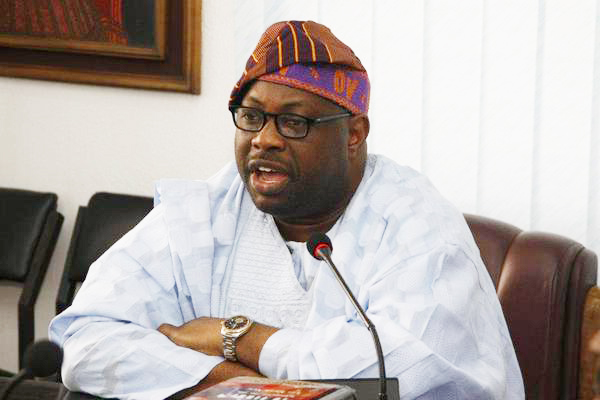
A chieftain of the African Democratic Congress (ADC), and Deputy Director of the Presidential Campaign Council, Chief Dele Momodu, has described former Vice-President Atiku Abubakar as the most nationally formidable and experienced among the leading contenders for the 2027 presidential election.
Momodu said Atiku’s experience at the national level distinguishes him from President Bola Tinubu and former Anambra State Governor, Peter Obi.
He stated this on Wednesday during an interview on Eagle 102.5 FM, Ilese-Ijebu, in Abeokuta.
“If you look at the antecedents of the three major candidates, between Atiku Abubakar and Peter Obi, you will see that Atiku is the most experienced. He has managed our country at the highest level,” he said.
Momodu traced Atiku’s political journey to the 1992 Social Democratic Party (SDP), presidential primary where he contested against late MKO Abiola and stepped down for him.
He said Atiku accepted the outcome without crisis even after he was not picked as Abiola’s running mate, describing it as a mark of true democratic temperament.
“He is the only one who started from around 1992, contested the SDP primary against Abiola and stepped down with uncommon equanimity. He did not make any noise,” Momodu said.
He noted that Atiku was among the founders of the Peoples Democratic Party, PDP, and served as Vice-President from 1999 to 2007.
Comparing Atiku with Obi, Momodu argued that while Obi’s best was demonstrated in Anambra, Atiku’s was at the presidency level managing the national economy.
“Peter Obi has tried his best in Anambra, while Atiku’s best is at the level of vice president controlling the economy of Nigeria. The difference is clear. He has matured in experience and exposure,” he said.
Momodu also said President Tinubu’s experience was largely limited to Lagos.
“What I’m trying to say is that Tinubu’s experience was limited to Lagos, and that is why when he became president, he thought Nigeria was Lagos. And he has found out now that Nigeria is not Lagos,” he said.
He argued that the current economic hardship under the present administration did not show prosperity, insisting Atiku remained better positioned to lead the country.
“Well, we are yet to see that prosperity, and if yesterday would determine today and tomorrow, it is obvious that Tinubu should retire now and let someone else do it,” Momodu added.
DailyPost


