
Metro
Food for Living: Choose Your Name Wisely

- Share
- Tweet /home/rhoncare/pointblank.ng/wp-content/plugins/mvp-social-buttons/mvp-social-buttons.php on line 69
https://pointblank.ng/wp-content/uploads/2019/04/download.jpeg&description=Food for Living: Choose Your Name Wisely', 'pinterestShare', 'width=750,height=350'); return false;" title="Pin This Post">
By Henry Ukazu
Greetings Dear Friends,
We all have names which our parents, godfather/mother, or even good relatives and friends gave to us at birth, and we always like to be addressed rightly and with respect before we respond. Just to let you know how powerful your name can be, if you are called a name that is not yours, there’s every tendency you won’t respond, nor matter how nice it may sound. Even if you are called the right name but with the wrong pronunciation, you might also feel slighted to respond, and even if you respond, you’ll react in a way as to offer correction. This is because names are very symbolic, and according to the platinum rule, people are treated the way they wish to be addressed.
Names are very powerful and they have deep meanings, and as a result, must be chosen wisely. Names are regarded as trademarks/logos and come in different shapes and sizes. Some people even have nicknames which have defined them in different ways. Even in business; the name you choose has an impact on people’s perception, especially your potential clients. Therefore, it is imperatively and critically important for you to consider whatever name you will like to be associated with.
A name is an identity. It is a descriptor that allows people to make quick judgments and assumptions about us. When a particular name is mentioned, a lot of questions normally come to mind. We can even assume what it is likely to be. Our names and identities are regarded as the first impressions people have about us. For example, how we dress, the way we wear our hair, how we behave, and even where we go; all begin with our identity and what we call ourselves. Whether it is religion, sexuality or gender, it is part of an identity that can influence how you present yourself to the world, and how you interact with the world. Depending on the situation and circumstance, what we call ourselves may change. That is why it is important for you to consider the name, group or network you are associated with.
The big question we have to answer is what name do I respond to? As human beings, some of us are very sensitive, some are conservative while others tend to have a liberal attitude towards life. Depending on which category you belong to, you can decide to be the game-changer in whatever situation you are into. You may have been called a dull person, lazy being, slow, ugly, fat, etc., but how you respond is actually what makes the ultimate difference. As you may know, life is not what happens to you, but how you react to it. It should be noted that you can’t stop people calling you negative names, but you can decide to choose what you answer to. As a an advice, don’t answer names you are called, when they call you hello depressed, short, unattractive, unqualified, sick, orphan, just calmly respond, ‘sorry there’s no one by that name around here, I guess you may have gotten the wrong address’. In a rhetoric way, you can also respond, do you mean positive, tall, smart, healthy, blessed, beautiful, handsome, extraordinary, talented, skillful, etc.
Studies suggest that liking your own name is predictive of well-being and happiness, and it also positively affects your self-esteem. But does your name affect how other people treat you? According to Dale Carnegie.
“A person’s name is to him or her the sweetest and most important sound in any language.” Why then is it so important to call people their true names? A person’s name is the greatest connection to their own identity and individuality. Some might say it is the most important word in the world to that person. This is because it is one of the fastest and easiest ways to get someone’s attention especially when they are teased or praised.
Here are some tips on how you can use your name to influence your brand.
Make it a commitment:
Make a commitment to answer whatever uplifts and support your vision. Once you are subconsciously aware of what happens around you, do yourself a favor to international change the narrative by changing the negative news or information that surrounds you or your business. For example, you can work on your self, business, brand, organization, etc; to the extent, people will recognize you as an excellent or reliable person/brand as opposed to the different labels that bring negative vibes to you. As you may know, the world is governed by perception.
Practice:
Practicing whatever name brand you want to be associated with is a great way to bring change to not only your personal life but your business or brand. You can do this by calling yourself names of interest that appeal to you. You may be surprised to know it will come back to you. Don’t be concerned about the negative voices you may be hearing from friends or even family members, just continue to work on your craft. There have been testimonies of people who dreamt of being a governor, president, leader of an industry, etc. despite not having what it takes to be the person in the picture. They were able to act it in addition to calling themselves the names and guess what, it’s it came to pass. In one of my articles I published five years ago titled: Dreams Come True, I opined that your dreams are valid and it will come true if you work hard, believe in yourself and have the God factor around you.
Ignore the name tag:
As mentioned earlier, it is up to you to respond to whatever name you decide to answer. Names don’t matter anything unless you give it the needed power/energy it needs to feed on. Names are like dead woods, but you can activate life into it when you speak life into it. Names work with our minds, when you decide to call yourself love, love will automatically follow you.
Furthermore, Ignore the nay-sayers and give your attention to what brings you life, and when you do, the desired transformation will begin to rear up. Personally, I was called names because of my horrible writing skills, but I have been able to author a book by the special grace of God which my detractors have not been able to accomplish. The secret is simple, I never answered the negative names I was called.
Creating Opportunity:
Knowing how to relate with people is a powerful skill that is in high demand. A good personal relation skill will create opportunities for you. It’s like a charm that can disarm even the most hardened person to respond to stimuli. As popularly opined in some social parlance, if a man can make a lady to smile, he’s halfway into her heart. It is important to note that people want to be treated as human beings, not objects. Using their name is the fastest and most reliable way of building rapport and creating a good first impression. Everyone has a name — use it to better connect to them, especially if you work in the customer service position. You will notice a difference in your relationships.
In conclusion, what is your name?
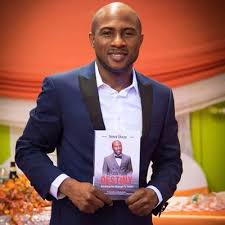
Henry Ukazu writes from New York. He works with the New York City Department of Correction as the Legal Coordinator. He’s the author of the acclaimed book Design Your Destiny – Actualizing Your Birthright To Success. He can be reached via henrous@gmail.com


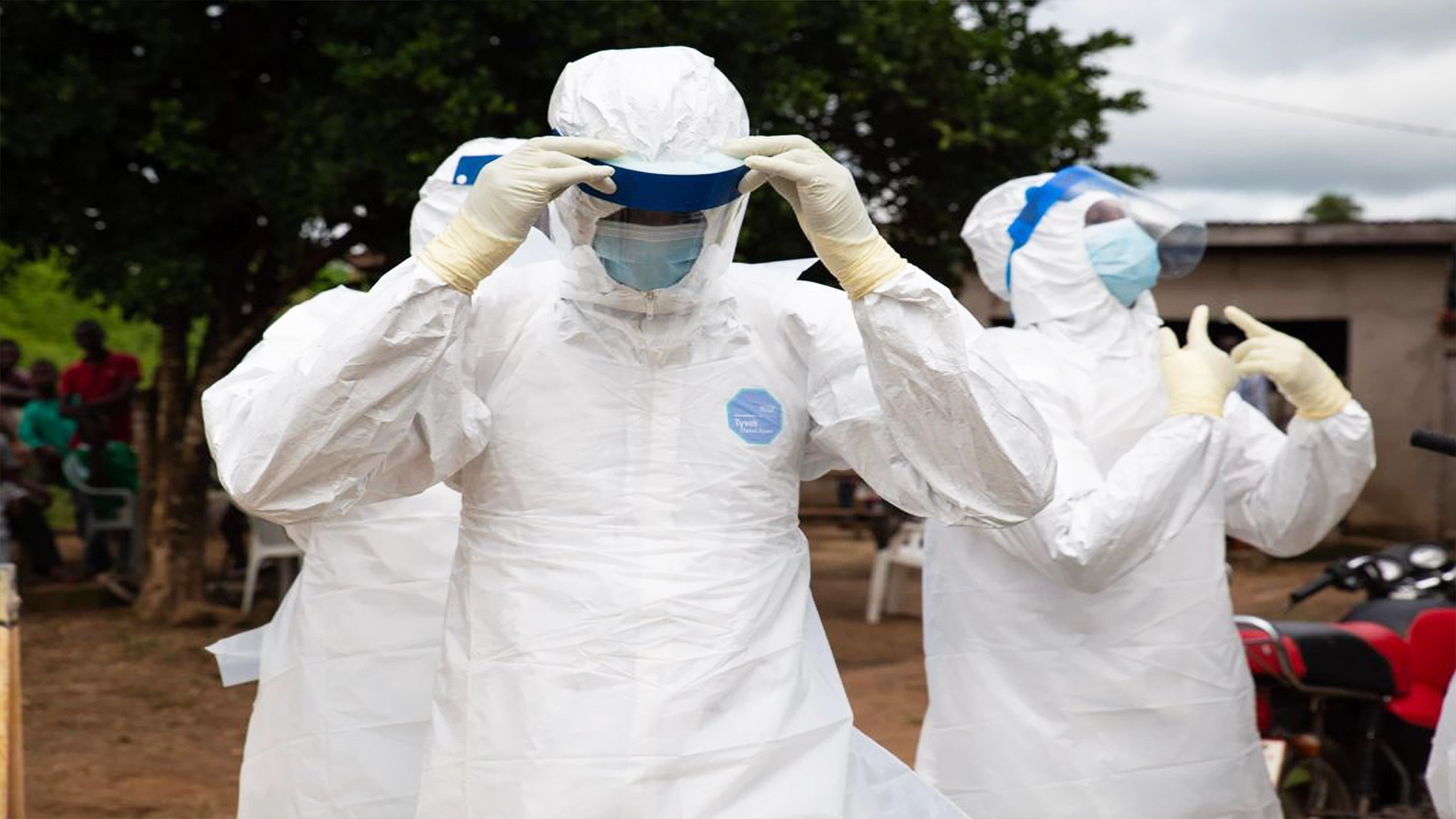
The Federal government has confirmed one case of Ebola Virus Disease (EVD) in the Federal Capital Territory (FCT).
The case was laboratory-confirmed on Tuesday, October 20, 2026, after a woman who recently arrived in Nigeria on an international flight from Uganda was admitted to a private hospital in the FCT.
The patient, who had received care at the hospital for several days, is currently isolated and receiving treatment.
The Coordinating Minister of Health and Social Welfare, Prof. Muhammad Ali Pate, said contact tracing has commenced, with 44 close contacts identified so far, including healthcare workers, patients, caregivers and travel contacts.
Reports said the Nigeria Centre for Disease Control and Prevention (NCDC) is working with FCT health authorities to contain the infection and prevent further spread.
Authorities have urged Nigerians to remain calm but vigilant, practice regular hand hygiene and report suspected exposures or symptoms to public health authorities.
The NCDC toll-free call centre is available 24 hours daily on 6232 for information and suspected case reporting.

The Department of State Services (DSS) has arraigned five suspects allegedly linked to the abduction of 20 prospective National Youth Service Corps (NYSC) members and a civilian along the Owerri–Onitsha Expressway in Imo State.
The suspects were brought before the Justice Oputa State High Court in Owerri following their arrest during intelligence-led operations in Rivers and Abia states.
The victims were abducted by gunmen near Umunoha in Mbaitoli Local Government Area on October 1, 2026, while travelling from Ibadan, Oyo State, to their assigned NYSC orientation camps in Abia and Akwa Ibom states.
The abduction sparked a security operation to locate the victims and apprehend those responsible.
On October 7, the 20 prospective corps members and the civilian were rescued from the Amakohia-Ubi forest in Owerri West Local Government Area. They subsequently received medical attention at the DSS hospital in Owerri.
The DSS later arrested five suspects in intelligence-led operations conducted between October 10 and 14 in Port Harcourt, Rivers State, and Aba, Abia State.
The operations involved a joint security team led by the DSS, working with the military, police and other security operatives.
Three other suspects reportedly escaped with gunshot wounds, prompting a manhunt for them and other fleeing members of the suspected kidnapping syndicate.
The arraignment marks a further step in the investigation into the abduction, as the prosecution of the five arrested suspects gets underway.

By Tolulope A. Adegoke
“The cradle of humankind is also its destiny, and Africa, I dare say, is the future of the world.” — William Ruto, President of Kenya
The proposition that Africa’s destiny will be determined by Africans who understand that destiny is not a slogan of convenience. It is a demographic, ecological, and strategic reality that the twenty-first century is already forcing into view. With a population projected to rise from roughly 1.4 billion today to as many as 2.5 billion by mid-century, Africa will hold an unprecedented concentration of young talent: an estimated 830 million people aged 15 to 35 . By 2050, Africans will constitute approximately one-third of the global labor force. These figures are frequently recited, but their implications are rarely confronted with the seriousness they demand. A world that is aging in Europe, East Asia, and North America cannot indefinitely rely on a shrinking base of workers to sustain production, innovation, and care. The future of the global economy, the future of food, and the future of medicine are being shaped, whether the world acknowledges it or not, by what happens on the African continent. But the direction of that shaping is not predetermined. The destiny of the world may lie in Africa; whether it is a destiny of shared prosperity or of deepening fragility will be decided in Africa by Africans.
The Agricultural Imperative: Potential Unrealized, Provision Deferred
Africa’s agricultural endowment is without parallel. The continent holds more than 60 percent of the world’s uncultivated arable land, a reserve of productive capacity that no other region can match. Yet this abundance coexists with a paradox that should unsettle any serious observer: Africa imports nearly $115 billion worth of food products annually. The continent irrigates only about 6 percent of its arable land, leaving the vast majority of its productive potential dependent on rainfall that climate change is making increasingly erratic. This is not a story of natural scarcity. It is a story of underinvestment, inadequate infrastructure, and policy frameworks that have too often treated agriculture as a residual sector rather than as the foundation of sovereignty.
The transformation required is both technical and institutional, and the continent’s own institutions have begun to articulate it with clarity. The Kampala CAADP Declaration, adopted by the African Union in January 2025, commits member states to increasing agri-food output by 45 percent by 2035, reducing post-harvest losses by 50 percent, tripling intra-African trade in agri-food products, and raising the share of locally processed food to 35 percent of agri-food GDP. The declaration also sets a financing target of $100 billion in public and private investment in African agri-food systems by 2035. These are not modest ambitions. They require the strengthening of seed systems, soil health management, water infrastructure, and agricultural research and extension services—the unglamorous foundations upon which productivity rests. They require the integration of emerging technologies, including biotechnology, artificial intelligence, digital platforms, and precision agriculture, into farming systems that have too often been left behind by the global technological frontier. And they require a deliberate effort to integrate smallholder farmers, women, and youth into value chains and regional markets, not as passive beneficiaries but as participants with equitable claims on the returns.
The stakes extend beyond Africa’s borders. Global food demand is projected to rise substantially as the world’s population approaches 9.8 billion by 2050, and the consequences of failing to meet that demand will not be confined to any single region. Africa’s capacity to transform its potential into production is therefore a matter of global stability, not merely continental development. Yet the transformation will not occur through the passive operation of market forces. It will occur only if African governments, entrepreneurs, and communities make deliberate choices to invest in the continent’s own productive capacity rather than relying on imports that drain foreign exchange and leave populations vulnerable to price shocks they did not create.
Medicine and the Wealth of Indigenous Knowledge
Africa’s contribution to global medicine has been systematically undervalued, in part because the continent’s pharmacopoeia has been treated as folklore rather than as a scientific resource. The botanical wealth of sub-Saharan Africa is extraordinary: over 50,000 distinct plant species are known to occur in the region, and more than a quarter of these have been used for centuries in traditional medicine. This is not a curiosity of ethnographic interest. It is a repository of therapeutic knowledge that modern pharmacology has barely begun to investigate with the rigor it deserves.
The evidence of commercial and clinical significance is already substantial. Prunus africana, harvested from the bark of a tree native to African highlands, is used in the treatment of prostate gland hypertrophy and has been exported in quantities valued at millions of dollars annually, with the pharmaceutical industry capturing the overwhelming share of the final product’s value. Voacanga africana, whose seeds are rich in the alkaloid tabersonine, has been used as a central nervous system depressant in geriatric patients. Rauvolfia vomitoria yields reserpine and yohimbine, compounds with established applications in the management of hypertension and related conditions. These are not isolated examples. They are indicative of a broader pattern in which African biological resources are extracted, processed elsewhere, and returned to the continent—if they return at all—as expensive finished products.
The challenge is not merely scientific but political and ethical. Transforming traditional knowledge into validated therapeutics without exploiting the communities that preserved that knowledge requires robust intellectual property protections, equitable benefit-sharing mechanisms, and genuine collaboration among traditional healers, ethno-botanists, pharmacologists, and regulators. Africa must move from being a supplier of raw materials for global pharmaceutical research to an innovator in its own right, with the infrastructure, funding, and political will to conduct research, develop products, and retain a fair share of the value created. The continent’s biodiversity is not a resource to be exported in its raw state. It is a foundation upon which to build scientific capacity that serves African patients first.
Beyond Agriculture and Medicine: The Strategic Resources of the Future
The destiny of the world is increasingly tied to the minerals that power clean energy, digital infrastructure, and advanced manufacturing. Africa holds approximately 30 percent of global critical mineral reserves, including cobalt, lithium, manganese, and copper. The Democratic Republic of Congo alone supplies 72 percent of globally mined cobalt. These minerals are indispensable to the technologies that will define the coming decades: electric vehicles, energy storage systems, defense technologies, medical devices, and the hardware upon which artificial intelligence depends.
Yet Africa’s share of global revenues from these minerals stands at just 10 percent. The continent captures a fraction of the value that its resources create, while the processing and refining that generate the highest returns occur elsewhere. China controls 87 percent of global refined rare earth production, and the infrastructure gaps in African power, logistics, and refining make the cost of mining on the continent approximately 250 percent higher than the global average. Revenue leakage through tax avoidance costs African nations between $470 million and $730 million annually. These are not inevitable features of the resource economy. They are the consequences of negotiating positions, contractual arrangements, and industrial policies that have favored extraction over transformation.
The African Union’s Agenda 2063 recognizes this imbalance through its African Commodities Strategy, which aims to enable African countries to add value, extract higher rents, integrate into global value chains, and promote diversification anchored in local content development. The strategy’s stated purpose is to transform Africa from a raw materials supplier for the rest of the world into a continent that actively uses its own resources for the economic development of Africans. This is the correct ambition, but its realization depends on collective action. The formation of an association of critical mineral-producing countries, referenced in the African Union’s own progress assessments, represents a potential mechanism for coordinating bargaining positions and capturing a fairer share of resource rents. The alternative—continued fragmentation, bilateral deals negotiated from positions of weakness, and the export of unprocessed materials—will perpetuate a pattern that has benefited others for more than a century.
The Destiny Decided by Africans
The recurring theme across agriculture, medicine, and mineral resources is agency. Africa’s future will not be determined by the goodwill of external partners, however constructive their intentions. It will be determined by the choices that Africans make about how to use the assets they possess. The continent’s young population is not merely a demographic fact; it is a responsibility. Sub-Saharan Africa needs to integrate approximately 20 million new labor market entrants annually, yet only about 25 percent of these entrants secure formal employment. The remainder find work in low-paid, insecure informal jobs that offer little prospect of advancement. A demographic dividend is not automatic. It is earned through investment in health, education, skills, and the creation of economies dynamic enough to absorb the energies of a generation.
The African Continental Free Trade Area, with its vision of a single market of 1.3 billion people and a combined GDP of approximately $3.4 trillion, represents one of the most significant institutional expressions of this agency. Its full implementation could boost intra-African trade by more than 50 percent and fundamentally reshape industrialization and regional value chains. But the AfCFTA is a framework, not an outcome. Its benefits will materialize only if governments remove non-tariff barriers, invest in the infrastructure that connects producers to markets, and resist the temptation to treat regional integration as a rhetorical commitment rather than a practical one.
The destiny of the world may indeed lie in Africa. The continent’s land, its biodiversity, its minerals, and above all its people are indispensable to a sustainable and stable global future. But the world’s hope in Africa is not a sentiment of charity. It is a recognition of interdependence. A continent that feeds itself, heals its people through both modern and indigenous knowledge, and manages its resources for the benefit of its citizens is a continent that stabilizes the world. That outcome will not arrive through the passage of time or the operation of impersonal forces. It will be decided in Africa, by Africans who understand that their destiny is not something to be received but something to be built—and who act accordingly, with urgency and with the confidence that comes from knowing that the future belongs to those who prepare for it.
Dr. Tolulope A. Adegoke, AMBP-UN, is a globally recognized scholar-practitioner and thought leader at the nexus of security, governance, and strategic leadership. His mission is dedicated to advancing ethical governance, strategic human capital development, resilient nation-building, and global peace. He bridges the worlds of academic rigor and practical application, contributing to leadership discourse at the highest levels of policy and practice. He can be reached via: tolulopeadegoke01@gmail.com, globalstageimpacts@gmail.com


