
Metro
Food for Living: Dare To Succeed

- Share
- Tweet /home/rhoncare/pointblank.ng/wp-content/plugins/mvp-social-buttons/mvp-social-buttons.php on line 69
https://pointblank.ng/wp-content/uploads/2019/04/download.jpeg&description=Food for Living: Dare To Succeed', 'pinterestShare', 'width=750,height=350'); return false;" title="Pin This Post">
By Henry Ukazu
Greetings Friends,
The dream of every progressive mentor or parent is for the mentee or child to be greater than him or her. Anybody who wants to be greater than whoever succeeds him/her doesn’t have the interest of the successor at heart. One of the best ways to access the performance of an out-going leader is to look at who succeeds him or her. If you’ll agree with me success brings joy and fulfillment in life. However, succeeding in life requires a lot of work namely: sacrifice, handwork, patience, connections, God factor, persistence/consistency, determination, and knowledge amongst other attributes which you can add.
We all want to succeed, but the question you need to ask yourself is, are you willing to do the work? If you really want to succeed in life you have to dare to succeed. By daring to succeed, you must be courageous. It takes courage to succeed in life. Nor matter what you are doing in life, it takes courage to succeed. This is because you must get many no’s and a few yes, but all you need is one yes to succeed. For you to truly succeed, it takes courage. It takes courage to be exceptional, rich, knowledgeable, and truthful in the society in which we live.
While in High schools and College we always have the desire to study a particular major in addition to working in a particular industry. While working in a particular industry most times we have a plan of where we want to be in five and ten year’s time. After college, we step into the labor market to get our dream job, sometimes we don’t even get the desired job we need, even at that, we have plans of getting the desired job of interest that will be fulfilling. When these plans don’t go as planned, some of us do give up, while some still forge ahead with determination to get to the peak of our career and passion in life.
In order to succeed, we need to be persistent and consistent because persistency comes from consistency, you need to continuous practice, you need to be focused and you need to learn something new every day. Your determination to succeed must always supersede your fear of failure. Daring to succeed requires risk, you don’t have to wait to see the clear picture before you hit the ground moving. If you are truly hungry for success, you must seek to stand out, you don’t have to conform to the ordinary standard of docile people who sometimes have an entitlement mentality, you must seek to leave your conform zone.
One of the strongest advice I have always given to friends and clients is considering those who have believed in you by sacrificing and supporting them and also looking at those who want to see them fail. You can’t afford to fail your mentors, parents, friends and even your children and mentees who are strongly looking up to you. When you give up, you give cause to people to question your ability to succeed.
Be informed, you didn’t come into this world to conform, neither did you come in to fit in. You must have the courage to go after your dream. The courage to succeed in life can be challenging when you have many obstacles and competition, however, there’s always a room if you strongly believe you are called to be in that industry. Speaking about courage, this is an uncommon inner strength to thread in strange lands. Just like Thomas Dexter Jakes Sr. aka TD Jakes said in one of this messages I recently listened to, “It doesn’t matter how saturated the room is, if God has God called you, there’s room for you.
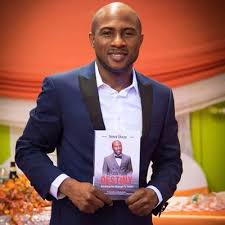
In my first published book, Design Your Destiny – Actualizing Your Birthright To Success, the cardinal message inherent in the book is you hold the keys to your success. Let me share some insights on how you can dare to succeed in life from Lahcen Haddad, a former Minister of Tourism from the Government of Morocco
1. Don’t be afraid to fail The fear of failure is a hidden fear of success. Take big strides, jump higher, and dare to challenge conventional wisdom and common sense. If you don’t risk anything, you won’t gain anything. As Jack Canfield said, “Everything you want is on the other side of fear.” Mandela spent 27 years in jail but refused to give up the struggle against apartheid, when presented with a fudged compromise. He was not afraid to say no and remain in jail, knowing that behind the indomitable image of fear and failure lies the bright picture of success.
2. Great success is built on great failures Robert Kennedy once said that “only those who dare to fail greatly can ever achieve greatly.” If you want humans to get to Mars or Venus, you need to be prepared to get space missions to fail, shuttles to never reach destinations, technological devices to explode in the wide space, and obstacles to emerge by the hour, if not by the minute. Because your dream is big, so are your failures to achieve it. See your big failures as great lessons to learn. The Jamaican Usain Bolt, the greatest sprinter of all time, once said, “I don’t think limits,” meaning that his dream to be a hero doesn’t know limits, but only open vistas, limitless horizons. If you think limits, you create psychological hurdles to success. Dream big, fail big and enjoy huge successes all through.
3. Failure is the mother of inventiveness Thomas Edison said that he had not failed, but had found thousands of ways what he had invented did not work. Experimenting and failing, again and again, is common to the great inventors who have changed our lives forever. Electricity in every home, thousands of planes buzzing in our skies on a daily basis, comfortable cars making far places within our reach in a few hours, smartphones making the world available to us through small screens that we gently tap with one finger, sophisticated machines that scan our bodies for malfunctions or illnesses, and a million other inventions- all of these would not have been possible if the inventors did not accept the rule that “if you don’t fail and learn, you cannot succeed.”
4. Failure is success suspended, until the moment is ripe Sometimes we fail because we are ahead of our time, or because we are getting there but we need to think harder, work harder, and be more persistent. As Denis Waitley said, “Failure is a delay, not defeat.” It is a matter of finding the right solution for the right problem and selling it to the right people, in the right conditions. The recipe to success takes special ingredients, and every minute and detailed dosage when it comes to seasoning. Failure can be intrinsic to the solution itself, but it may be also a problem of packaging, marketing, and communication. Therefore, failure is a matter of time- finding the right recipe to make the solution attractive and sellable in a timely fashion. Timing is key. Try again later but never give up.
5. You can know success only if you have experienced failure The best perspective on success is through failure. “Its failure that gives you the proper perspective on success,” as Ellen DeGeneres said. Success is built on held assumptions and found solutions. Some assumptions work and others don’t. Therefore, every failed attempt gives you a sense of what doesn’t work and what should work. Failure gives you perspective, it helps you focus and hone in on the right obstacles and the right solutions- things you could not have seen, had you not failed, had you not made assumptions that did not work.
6. it’s okay to make mistakes, it’s NOT okay not to learn from them Mistakes are the imperfections that push us to aspire to perfection. In fact, they are not mistakes. They are our life lessons about what works and what does not work. That is why it is imperative to study our falls and our mistakes carefully to learn from them, to understand what could be key to success. As Henry Ford said, “The only real mistake is the one from which we learn nothing.” Study carefully what does not work: therein lie the seeds that make you successful. The secret to achievement is made up of failures understood as warm-up exercises designed to help you learn to jump higher, aim better and get it right.
Success is a dream. But the road to success is paved with bold moves and brave acts. You have to risk something if you want to get something. In so doing, you are more vulnerable because you are exposed to danger, factoring in failure in a key characteristics of the bold entrepreneurs. Yes, they are afraid; but they know that overcoming fear can only happen when they espouse it and own it; if they fall, their fear does not grow; on the contrary, they become bolder, braver; they are vulnerable to bigger falls but also to greater achievements. Success is a thousand failures turned into a thousand lessons that allow you to overcome fear and catch the dream as it flies by you in a dark night. Don’t be afraid to fail; be ready to succeed.
How do you dare to succeed: Let’s see what Madanmohan Rad have to say:
Dare
Dreaming is essential to make meaning of life, find your inner voice, truly grow up, and show the next generation how to dream. “Dreaming is an inalienable right,” says Johnson. Though difficulties and challenges may take us off course in life, it is important to make meaning of these challenges by daring to dream again.
Dream
You must boldly follow your dreams as well: become the hero of your story; make space and time for your dreams; map and track your competencies; know your beliefs; build on your strengths; and fine-tune your dreams as you align them with current circumstances.
Reflecting on childhood experiences and happiness is a good way to begin understanding your dreams. Through the twists and turns of life, it is necessary to embrace one’s constraints and even tap ‘fortunate frustrations’ by downsizing, re-directing or deferring dreams.
Introspection helps reveal your own innate talents, accumulated competencies, beliefs and identities. Some deeply-held beliefs put boundaries on dreams, others are scaffolding. For people of many faiths, their religion is a source of drive and values.
Do
Having fleshed out your dreams, you need to embrace discovery, explore your domain, create your dream team, bootstrap your dream, and ‘date’ or dabble with your dreams. Making dreams come true calls for support from mentors, experts, fellow dreamers, and cheerleaders. Dreams can also change via serendipitous un-anticipated events
In conclusion, if I ask you, what is the one thing you cannot fail in life, what will be your response? Again, what is the one thing you have always wished to do in life? I encourage you to, therefore, take the bold step and dare to succeed in any dream, vision and mission you strongly believed you cannot fail it.
Henry Ukazu writes from New York. He works with New York City Department of Correction as the Legal Coordinator. He’s the author of the acclaimed book Design Your Destiny – Actualizing Your Birthright To Success.



Several persons have so far been missing after a wooden boat carrying more than 70 mourners and over 30 motorcycles overturned while crossing the River Katsina-Ala in Buruku Local Government Area of Benue State.
The incident reportedly occurred around 11am on Saturday, October 3, 2026, at the Buruku River crossing point.
The passengers, most of whom were said to be from Mbayon in Gboko Local Government Area, were returning after attending the burial of a relative on the opposite side of the river when the boat capsized.
Several occupants were reportedly rescued from the water, while search and rescue personnel continued efforts to locate those who remained unaccounted for as of Saturday afternoon.
Reports said the wooden boat was severely overloaded with passengers and motorcycles before its engine reportedly developed a fault during the journey.
“The boat was overloaded with many people and over 30 motorcycles, and they were coming from the Logo LGA side of the River at about 11am when the incident happened.
“Many persons have been rescued, but as we speak, I cannot tell you the actual number of persons that have not been seen or rescued from the river because the search is still ongoing. But many persons have not been seen as we speak,” an eyewitness said.
The Chairman of Buruku Local Government Area, Raymond Zege, confirmed the mishap, explaining that the passengers were mourners from Gboko who had travelled across the river for a burial ceremony.
Zege said the boat was carrying more than 70 people when its engine stopped working in the middle of the return trip, causing panic among those on board.
“The victims were mourners from Gboko who went for a burial on the other side of the river.
“They boarded a boat which was overloaded with over 70 persons. In the middle of the journey the engine of the boat failed, and they became panicky.
“And they also ran into a heavy wave, and the boat capsized before the boat that was sent to rescue them got to them,” he said.
The council chairman said authorities had yet to determine the precise number of missing persons, although more than 60 passengers had reportedly been rescued.
“At the time we speak, we do not know the number of persons missing. So far we have not seen about six persons, but we have rescued over 60. Search and rescue operations are ongoing,” he said.
Zege urged passengers using the waterway to observe maritime safety guidelines, particularly by wearing life jackets during crossings.
He disclosed that the local government had supplied life jackets for people using the route, but said enforcement had sometimes been difficult because some commuters declined to use the safety equipment.
“People can be very difficult. There is a law, and we have provided life jackets for every commuter crossing that route. When they come and the maritime workers try to enforce the law, some commuters complain that they have health issues or that they do not want to share life jackets used by other people.
“We have provided the jackets, and the state government is also supporting efforts to ensure that maritime safety regulations are enforced,” he said.
The chairman further said maritime officials regularly conduct enforcement operations and urged commuters to cooperate with them.
“Sometimes the maritime officials come for enforcement, including at night. People should cooperate with them because the safety measures are meant to protect lives,” he said.
Meanwhile, the Benue State Commissioner for Marine and Blue Economy, Denis Iyaghigba, also confirmed the incident in a statement issued on Saturday.
Iyaghigba said his ministry had received preliminary information about the accident and appealed to relatives of the passengers and members of the public to remain calm while rescue teams worked to establish the number of people involved.
“I have received preliminary reports of an unfortunate boat mishap at the Buruku crossing point this morning, Saturday, 3rd October, 2026,” Iyaghigba said.
“I wish to assure members of the public, particularly families of those who may have been aboard the boat, to remain calm and await verified information from the appropriate authorities. No effort will be spared to ensure their safety.”
The commissioner said he had instructed boat operators and their union downstream to join the ongoing rescue operation.
“I have directed the boat operators and their union downstream to mobilise and assist in the ongoing search and rescue operation,” he said.
He assured that “further details will be communicated as the rescue operation progresses.”
As of the time of filing this report, rescue operations were still underway, with authorities yet to provide a final account of the total number of people aboard the boat or the confirmed number of those still missing.

By Tolulope A. Adegoke
“Sixty-six lanterns lit, and not one flame asked permission of the wind. That is the arithmetic of this land—where the storm arrives first and the light arrives anyway. We were not handed a smooth road; we were handed feet, and feet have always been enough. What others call odds, we call the weight that gives our stride its meaning. So let the doubter keep his ledger of our failures; we keep a different record—one written in the stubborn grammar of a people who wake up, try again, and refuse to hand their tomorrow to anyone else. This soil does not owe a blessing to the mouth that curses it. Speak well of her, then, not because she is finished, but because she is still becoming—and becoming is the holiest thing a nation can do. We rise. We shine. Not after the storm—inside it.” – Tolulope A. Adegoke, PhD
Introduction: The Audacity of a Nation’s Hope
There is a peculiar kind of strength that is born not in the absence of hardship, but in the furnace of it. It is the strength that refuses to be extinguished by the storms of adversity, the strength that looks at towering mountains and dares to imagine a path over them. This is the strength that defines Nigeria. As we mark sixty-six years of nationhood, we do not gather merely to recount the ease of our journey, for the road has been anything but smooth. Rather, we gather to celebrate a profound and unyielding resolve: the decision to rise, and in rising, to shine.
The story of Nigeria is not a fairy tale of uninterrupted triumph. It is a complex, textured narrative of a people learning to govern themselves, of a federation of over two hundred and fifty ethnic nationalities striving to forge a common destiny. It is a story punctuated by growing pains, by moments of national introspection, and by challenges that have tested the very fabric of our unity. Yet, it is precisely within this crucible that the Nigerian spirit has been refined. We rise, not because we are oblivious to our challenges, but because we have made a conscious, collective decision to be resilient—to confront our difficulties head-on and to overcome them.
The Anatomy of Nigerian Resilience
Resilience is a word often used lightly, but in the Nigerian context, it is a lived reality. It is the trader in Onitsha who, despite economic fluctuations, opens her stall at dawn with a smile and a prayer. It is the tech entrepreneur in Yaba who, against the backdrop of infrastructural deficits, codes the next solution for a global market. It is the teacher in a rural community who, with limited resources, inspires a generation to dream beyond their immediate horizons. It is the farmer in the Middle Belt who, season after season, plants seeds of hope in a land that has known both bounty and bloodshed.
This resilience is not a passive endurance; it is an active, creative force. It is the ingenuity that birthed the mobile money revolution, the Afrobeats genre that has taken the world by storm, and the Nollywood industry that tells our stories to a global audience. It is the intellectual prowess of our scholars, the indomitable spirit of our athletes, and the creative genius of our artists. When we say “We Rise,” we are acknowledging this irrepressible energy. We are affirming that no challenge—be it economic recession, security concerns, or social unrest—can permanently dim the light of a people determined to succeed.
The Certainty of Our Arrival
We are a nation in a hurry, yet we must also be a nation with the patience of a farmer. The journey to national greatness is not a sprint; it is a marathon. We may stumble. We may take a wrong turn. We may even, at times, feel like we are moving in circles. But the crucial thing is that we are moving. We are learning. We are evolving. The mistakes of yesterday become the lessons that inform the policies of today and the vision of tomorrow.
It may take a while, but it is certain that we will get it right. This certainty is not borne of arrogance, but of an unshakeable faith in the Nigerian project. It is rooted in the knowledge that a nation of such immense human and natural potential cannot be permanently held back. Our youth, our greatest asset, are increasingly innovative, globally connected, and fiercely patriotic. They are not waiting for a perfect Nigeria; they are actively building it, one startup, one social movement, one creative work at a time. The trajectory may be zigzag, but the destination—a prosperous, united, and equitable Nigeria—is non-negotiable.
Nigeria Shines Against All Odds
To shine against all odds is the quintessential Nigerian story. It is to excel on the global stage when the home front is fraught with difficulties. It is the Nigerian doctor performing groundbreaking surgeries abroad, the Nigerian professor leading research at top universities, the Nigerian artist headlining international festivals. These individual and collective successes are not anomalies; they are reflections of a national character that is intrinsically brilliant.
The Nigerian diaspora is a testament to this. From Houston to London, from Toronto to Dubai, Nigerians are making their mark, contributing to economies, cultures, and knowledge systems. They are not just surviving; they are thriving. And in their success, they carry a piece of home with them—a resilience, a vibrancy, a hustler’s spirit that is uniquely Nigerian. This is the light that shines, a beacon of what is possible when the Nigerian spirit is given room to flourish.
A Word on Cursing the Land
There is an ancient wisdom that is deeply relevant to our national conversation: the land that you curse may not be empowered or capable enough to bless you in return. To constantly disparage one’s country, to speak of it only in terms of its failures and to ignore its immense potential, is to poison the well from which one must drink. Patriotism is not blind allegiance; it is loyal, constructive criticism married to a deep and abiding love. It is the difference between a prophet of doom and a partner in progress.
We must be careful with our words. Our words shape our reality. If we speak of Nigeria only as a cursed land, we sow the seeds of despair in our own hearts and in the hearts of the next generation. Instead, we must speak of a land of promise, a land of resilient people, a land that is worthy of our best efforts and our most profound hopes. The same land that some dismiss is the land that has produced some of the world’s most remarkable minds and most vibrant cultures. To bless Nigeria is to bless ourselves, for our fate is inextricably linked to that of the nation.
Sixty-Six Years: A Commemoration of Hope
Sixty-six years is a significant milestone. It is a period that allows for reflection on how far we have come from the hopeful dawn of independence in 1960. We have weathered civil war, military dictatorships, and the turbulent transition to democracy. We have seen our economy rise and fall with the vagaries of oil prices. We have faced the scourge of terrorism and the challenges of internal security. Through it all, the Nigerian state has remained, and the Nigerian spirit has endured.
As we celebrate, we are not celebrating a finished product. We are celebrating a work in progress. We are celebrating the audacity of a people who, despite their differences, have chosen to remain together. We are celebrating the promise of a future that we can build together. We are celebrating the fact that, in the words of our national anthem, “the labours of our heroes past shall never be in vain.”
Conclusion: A Blessing for the Journey Ahead
God bless Nigeria. This is not just a phrase; it is a prayer. It is a petition for divine guidance, wisdom, and protection over our land and our leaders. It is a prayer for the healing of our divisions and the strengthening of our unity. It is a prayer that we may be wise stewards of the resources and talents with which we have been so abundantly endowed.
As we step into the next chapter of our national story, let us recommit ourselves to the principles of resilience, hope, and hard work. Let us be a generation that builds bridges rather than walls, that plants trees under whose shade we may never sit, and that speaks life into our nation rather than death.
We rise because we must. We shine because our light is too bright to be hidden. We overcome because our collective will is stronger than any challenge. It may take a while, but the destination is sure.
God bless the Federal Republic of Nigeria.
Happy 66th Independence Anniversary!
Dr. Tolulope A. Adegoke, AMBP-UN, is a globally recognized scholar-practitioner and thought leader at the nexus of security, governance, and strategic leadership. His mission is dedicated to advancing ethical governance, strategic human capital development, resilient nation-building, and global peace. He bridges the worlds of academic rigor and practical application, contributing to leadership discourse at the highest levels of policy and practice. He can be reached via: tolulopeadegoke01@gmail.com, globalstageimpacts@gmail.com

The Edo State Special Criminal Court has sentenced four men to death for their involvement in the kidnapping of a woman at the Vegetable Market along Airport Road in Benin City.
Justice Aigbona Momodu handed down the sentences after finding the defendants guilty on multiple counts connected to the kidnapping case.
The convicts are Marvellous Isaac, Wisdom Michael, Rufus Emete Michael and Gift Raphael.
Isaac and Michael were sentenced to death on counts two through nine. They also received separate prison terms on other counts, including seven years on count one, while Isaac was sentenced to 10 years on count 10 and life imprisonment on count 11.
Rufus Emete Michael was sentenced to death on counts two, three, four, six and seven, in addition to a seven-year prison term on count one.
The fourth defendant, Gift Raphael, was sentenced to death on counts two, four, six and eight and received seven years imprisonment on count one.
Delivering the sentences, Justice Momodu ordered that the death sentences be carried out by hanging or lethal injection, in accordance with the court’s judgment.
The court also ordered the forfeiture of a JoJef pump-action firearm and ammunition tendered as exhibits during the trial.
The firearm, identified as Exhibit M, along with two unused cartridges and two spent cartridges listed as Exhibits E and E1, was ordered to be handed over to the Edo State Police Armourer at the State Criminal Investigation Department for destruction.
Justice Momodu directed that the exhibits be transferred to the police through the Deputy Director of the Criminal Division and destroyed within 30 days.
The convictions bring to an end the trial arising from the abduction of the woman at the Vegetable Market along Airport Road, an incident that added to concerns over kidnapping and armed crime in Benin City.


