
News
Food for Living: #EndSARS in Nigeria


By Henry Ukazu
Dear Destiny Friends,
It is with heavy pain and burden in my heart I write this article. I didn’t plan to write about the #EndSARS movement currently trending in Nigeria and internationally, but I couldn’t help crying when I saw videos on social media on how the Special Anti-Robbery Squad (SARS) were killing, molesting, and extorting helpless Nigerians in the name of elimination crime.
It is pertinent to give a brief introduction about the origin of Special Anti-Robbery Squad (SARS). The Special Anti-Robbery Squad was a Nigerian Police Force unit created in late 1992 to deal with crimes associated with robbery, motor-vehicle theft, kidnapping, cattle rustling, and firearms. It was part of the Force Criminal Investigation and Intelligence Department (FCIID), which was headed by Deputy Inspector General of Police Anthony Ogbizi.
According to sources familiar with the major reason SARS was formed was when Col. Rindam of the Nigerian Army was killed by police officers at a checkpoint in Lagos in September 1992. When the information reached the army, soldiers were dispatched into the streets of Lagos in search of any police officer. The Nigerian police withdrew from checkpoints, security areas, and other points of interest for criminals. Some police officers were said to have resigned while others fled for their lives. Due to the absence of Police men for two weeks, the crime rate increased, and SARS was formed with only 15 officers operating in the shadows without knowledge of the army while monitoring police radio chatters.
However, SARS has not lived up to expectations according to Nigerians. Instead of protecting and fighting crimes, they have resorted to going after peace-loving Nigerians who they perceive as fraudsters when they see the citizen with expensive phone, car or living a flashy lifestyle, they immediately believe he or she is a fraudster.
This menace has continued for years and the citizens were crying helplessly for help to the government of the day and to those who cared to listen, but it’s unfortunate to note that their cries fell on deaf ears.
As you may know, when people are pushed to the wall, they are bound to react. You cannot beat a child and expect him or her not to cry. That’s the state of the Nigerian youths.
Let’s be clear on this, Nigerians are clamoring for the reform of the Nigerian Police Force. The #endsars movement is a call to end police oppression and brutality in Nigeria. Looking at the internet, you’ll see Nigerians have shared both painful and heartbreaking stories and video evidence of how members of SARS engaged in kidnapping, murder, theft, rape, torture, unlawful arrest high-handedness, humiliation, unlawful detention, extrajudicial killings, and extortion
On Saturday 3 October 2020, a video started trending on social media showing a SARS police officer shot a young Nigerian in front of Wetland Hotel, Ughelli, Delta State. It was alleged that the police officers took away the young man’s vehicle – a Lexus SUV. The trending video caused a public outcry on social media, especially on Twitter, with the #ENDSARS hashtag attending.
According to Martin Luther King Jnr. “Injustice anywhere is a threat to justice everywhere. Nigerians felt enough is enough and started to react against the system.
This made the Nigerian youths to request five-point agenda from the Federal Government of Nigeria on October 11, 2020. The demands which were signed by ‘A Nigerian Youth’ ask for the immediate release of all arrested during the protests as well as justice and compensation for all who died through police brutality in Nigeria. They also demanded that an independent body be set up within 10 days to investigate and prosecute all reports of police misconduct. The protestors also asked for psychological evaluation and retraining of SARS operatives before they are deployed to any other police unit. Lastly, they asked for adequate remuneration for Nigerian police.
The Inspector-General of Police M.A Adamu said that a new unit, the Special Weapons, and Tactics (SWAT) would replace the SARS, but Nigerians reacted negatively saying no, it’s just a change of name, the culprits are still there.
It’s sad to note Nigerians were more scared of SARS who was supposed to protect them from criminals.
In December 2017, Segun Awosanya took up an online advocacy campaign to demand the end of SARS brutality in the country. The campaign started as a social media campaign originally started from a hashtag created by a Twitter @Letter_to_jack (tagged #EndSARS) to demand Nigeria’s government to scrap and end the deployment of SARS. The public responded well to the hashtag with people all over Nigeria posting their experiences with SARS. The campaign was reported on by international media. By mid-December, the campaign took to streets with protests occurring in Abuja, and today, the movement has grown beyond the founders.
Nigerians globally have taken advantage of the #endsars to demand good governance and accountability. Many Nigerian youths who are tired of the system, they see no plan or hope from the government. Many of them have no jobs and are tired of poor governance. They, therefore, resort to using the #endsars movement to request for a total overhaul of the system and reconstruct Nigeria especially as it relates to hiking in petrol, hike in Power Holding Corporation of Nigeran, provision of infrastructural facilities, reform in Independence National Electoral Commission, education, healthcare, security, tax, immigration. In fact, all we are asking is accountability.
As a journalist in Washington Post, Karen Attiah put it “ A country that allows state security agents to kill and abuse people with impunity is not a mature democracy.
It’s interesting to note that, Nigerians have never been united like this before. Their unity, love, purpose, and energy is so endearing. They have no clear leader. According to Professor P.L.O Lumubake, Director of Kenya School of Law “The day Nigerian wakes up, Africa will never remain the same again”. Truly, Nigerians have woken up from their slumber to possess their possession.
It’s sad to note that despite the peaceful protest by Nigerians, the police force has been seen to shoot the protesters and, in some States killed some citizens. Despite losing lives, Nigerian youths still forge ahead with the slogan, we move! They have truly shown their leaders, they are accountable to them, they are literally saying enough is enough, we say no to corruption and bad leadership, they have shown our leaders that they can no longer be neglected, treated as a second class citizens, and as such, they have forced the government of the day to dialogue with them. There have been cases of sponsored thugs who tried to disrupt the peaceful protest, but protesters were able to unite and fight back. They sent a strong message “we know our rights and can’t’ be taken for granted”.
In conclusion, I call all lovers of peace, good governance, and youths to join the #endsars movement because “Injustice anywhere is a threat to justice everywhere.
Henry Ukazu writes from New York. He works with the New York City Department of Correction as the Legal Coordinator. He’s the author of the acclaimed book Design Your Destiny – Actualizing Your Birthright To Success and President of gloemi.com. He can be reached via info@gloemi.com


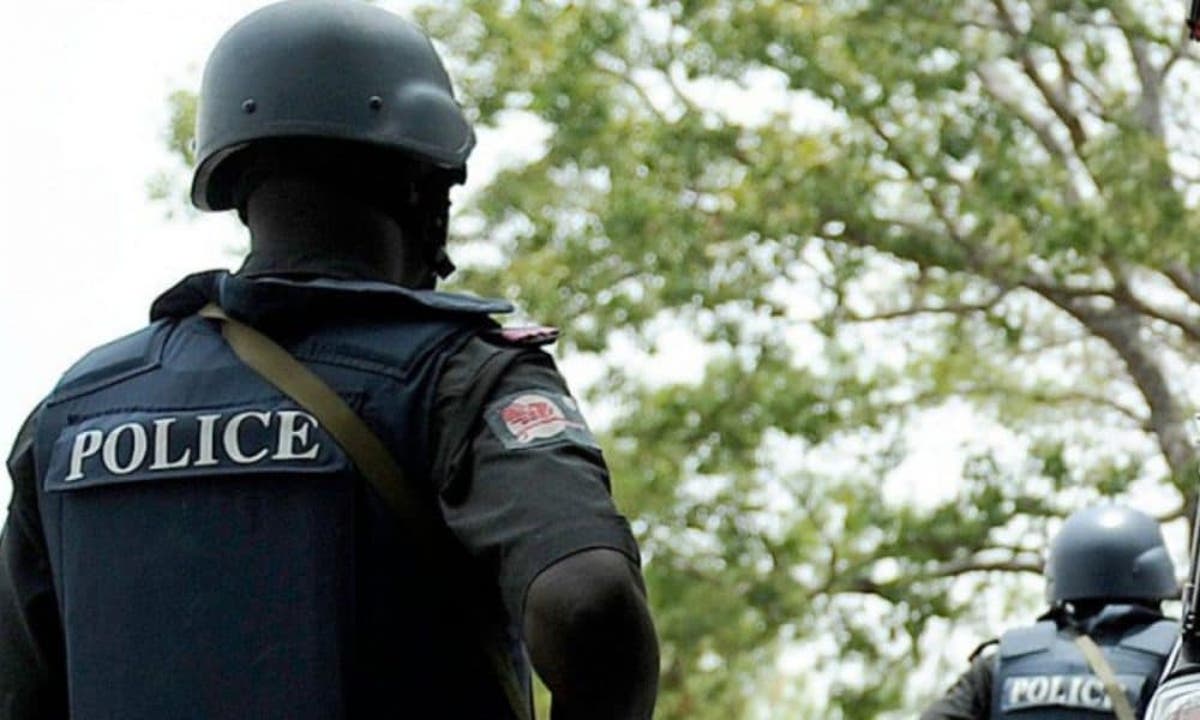
Fresh facts have emerged over the abduction of school pupils and the killing of two teachers alongside an okada rider in Ahoro-Esiele, Oriire Local Government Area of Oyo State, as investigators uncovered how suspected informants allegedly maintained communication with the abductors through telephone conversations.
The Oyo State Police Command disclosed that investigators tracked the suspects through calls believed to have been exchanged with the bandits during and after the operation.
According to the police, the conversations allegedly contained details on how the criminals could successfully navigate routes within the National Park to hidden locations used as safe havens.
The breakthrough led to the arrest of no fewer than six suspects, who are currently in police custody and assisting security agencies with ongoing investigations into the gruesome incident.
Confirming the development on Tuesday morning, the State Police Public Relations Officer, CSP Olayinka Ayanlade, said the suspects were apprehended during coordinated security operations across different locations in the State.
“We have six suspects in custody and they are assisting the investigation,” Ayanlade said.
He added that preliminary investigations revealed that the suspects allegedly served as informants to the bandits responsible for the abduction and killings.
“Our findings showed that some of the suspects were in contact with the abductors through telephone conversations and investigators are analysing those communications as part of efforts to uncover the full network behind the crime,” he stated.
Ayanlade further disclosed that security agencies uncovered discussions allegedly centred on routes through the National Park and locations believed to have been used by the criminals as hideouts.
“The conversations contained information on how the abductors could move through the National Park undetected and reach safe locations,” he added.
The police spokesman explained that the suspects were arrested during joint operations involving the Nigerian Army, the Nigeria Police Force, the Western Nigeria Security Network codenamed Amotekun, the Nigeria Security and Civil Defence Corps (NSCDC), and Agro-Rangers.
“The arrests were made possible through intelligence-driven operations carried out by joint security operatives working collaboratively to dismantle the criminal network,” Ayanlade said.
He assured residents that security agencies were intensifying efforts to apprehend other fleeing members of the syndicate linked to the attack.
“We are committed to ensuring that every individual connected to this criminal act is identified, arrested and brought to justice. Investigations are still ongoing,” he said.
The incident, which claimed the lives of two teachers and an Okada rider while school pupils were abducted last Friday, has continued to generate concern among residents of the affected communities and neighbouring areas in Oyo State.

Governor of Oyo State, Seyi Makinde, has confirmed that one of the teachers abducted during the recent terrorist attack on schools in Oriire LGA of the state, has been killed in captivity.
Speaking on Sunday during a press briefing on the incident, Makinde described the situation as “difficult and challenging”, saying the state government is intensifying efforts to rescue the remaining victims.
On Friday, gunmen riding motorcycles invaded communities within the Ahoro-Esiele/Yawota axis of Oriire, Ogbomoso, and abducted students and staff members of Community High School, Ahoro-Esiele, L.A. Primary School, Esiele, and Yawota Baptist Nursery and Primary School.
The attack left an assistant headmaster, identified as Joel Adesiyan, and a commercial motorcyclist dead.
According to Makinde, a video received by the state government confirmed the killing of one of the abductees identified as a mathematics teacher.
“What we know is that seven teachers in all were abducted and unfortunately, we got a video this morning that one of the teachers, the maths teacher, was killed by the terrorists this morning,” Makinde said.
Authorities have yet to confirm the exact number of schoolchildren abducted.
In the aftermath of the incident, videos recorded from captivity began circulating on social media, showing abducted teachers pleading with the government and Nigerians for urgent intervention.
One of the viral videos featured Rachael Alamu, principal of Community High School, Esiele, appealing to the government to help secure the release of the victims before they are killed.
Makinde detailed that six persons had been arrested within the affected locality over alleged links to the attackers, and that another three “persons of interest” were also arrested in connection with the attack.
“The information available from the Commissioner of Police is that six individuals have been arrested within the locality. Some of them were believed to perhaps be informants to people running logistics for the terrorists,” he said.
Following the attack, the Oyo Police Command announced the commencement of an intensive manhunt and rescue operation involving multiple security agencies.
Makinde said personnel of the police, military, the Western Nigeria Security Network codenamed Amotekun, and local hunters were mobilised immediately to pursue the attackers.
The governor said, however, some Amotekun operatives sustained injuries after encountering improvised explosive devices planted by the terrorists during the operation.
“After the incident, Amotekun, the police, military and hunters were mobilised to go after the terrorists and it was along that line that they ran into IEDs and some of the Amotekun operatives were wounded,” he said.
Sources told TheCable that the terrorists had initially opened fire on the security operatives who were approaching the Old Oyo national park on motorcycles, causing them to flee.
“When the shooting subsided, the operatives decided to go for their motorbikes. Unfortunately, a dynamite exploded against one Amotekun corps member and he was wounded. He has been taken to the hospital for medical attention,” a source said.
“Apart from air raid, the Old Oyo National Park Area can’t be easily accessed through infantry. It’s a long distance from the Oowe River which forms a natural landmark boundary for the park. Motorcycles would have to be used for the journey, but the noise of the approaching motorcycles alerted the terrorists.”
Makinde linked the attack to increasing pressure being mounted on terrorist groups in the north-east, warning that fleeing armed groups are moving into other parts of the country, including the south-west.
“With the pressure on the terrorists in the north-east theatre, they will keep moving southwards. Today, the governor of Kwara state has spoken to me. But the problem we have is that when you have pressure in one place, we must be prepared on this side to either repel or neutralise any terrorists fleeing the pressure,” he said.
The governor harped on the need for sustained government and security presence in vulnerable communities, warning that temporary military operations without long-term security measures could leave residents exposed to future attacks.
“If all we can do is clearance operations for a week or two and leave that place, the terrorists will come back and the people will become vulnerable,” he said.
He assured residents that the state government would be deploying military and non-military strategies to secure the release of the abducted victims and tackle the growing security threat.
“We have decided that we will adopt not just the kinetic approach. We have not taken this lightly,” he added.
Makinde also appealed for calm and patience from residents, acknowledging the complexity of the operation.
“I want to appeal to everyone that we are doing everything within our power to ensure that this would be resolved quickly and we bring our children back safely, but it is a very difficult and challenging situation so there may not be quick fixes,” he added.
Source: TheCable

By Henry Ukazu
Dear Destiny Friends,
Complaining is part of human nature. We complain about our health, school, family, friends, work, finances, government, and life in general. Human beings literally complain about everything and anything.
Over time, I have come to discover something about life: complaining doesn’t solve a problem; it adds to it. According to the Book of Life, why worry when you can pray? The moral of this statement is that instead of worrying, why not look for solutions? When you worry, it only accumulates the problems, but when you explore avenues to solve a problem, you’re literally praying.
Complaining is like having a problem and apportioning blame to another person instead of fixing it. One of the hallmarks of great minds is the ability to solve problems, while little minds complain.
In the world of visionary leaders, they don’t complain; rather, they see complaints as challenges of life, while lesser minds see complaints as problems of life. Again, while great leaders see problems as a gateway to make money and succeed by proffering solutions, little minds see problems as obstacles limiting their growth to succeed. Same action but different results and consequences.
As human beings, we tend to focus on what we don’t have instead of focusing on what we have. It’s only when we appreciate what we have that we give room for opportunities and favors to come to us. It’s unfortunate some of fucus on what we are going through instead of what we are becoming.
It’s instructive to note that complaints don’t lead us anywhere, rather it hinders our progress. Nobody likes complainers; complainers are usually seen as energy suckers because all they do is take without giving. Instead of complaining, why not practice gratitude? Gratitude helps to draw and attract opportunities.
In the world of human relations, the ability to manage people is an uncommon skill. One must learn to nurture relationships. Human beings can be difficult to manage. While some exhibit meekness, gratitude, cheerfulness, and loyalty, some exhibit bitterness, frustration, depression, sadness, and sorrow. What most people don’t know is that we have the ability to change how we manage our lives and how we react to what life throws at us through our attitude.
Don’t get me wrong, I’m not insinuating that complaining is wrong; rather, I’m insinuating it’s not healthy for our mental health. The only time we can complain about something is when we are proffering a solution; by so doing, we have highlighted the problems and proffered the solution.
Complaints make us blind to see the good in others. As a word of advice, if you focus exclusively on the shortcomings of the people with whom you have to relate and forget that they have a good point, it will be difficult to see the good in them.
According to Yomi Garnett, focus on the good side of people and be intentional in learning about their mindset and inquire what made them who they are. Also, focusing on the good side of people despite their bad or weak side makes them feel valuable as human beings, and by so doing, we show our empathic personality.
In conclusion, resolve today to stop complaining and start appreciating the challenges of life with gratitude.
Henry Ukazu writes from New York. He works with the New York City Department of Correction as the Legal Coordinator. He’s the founder of Gloemi. He’s a Transformative Human Capacity and Mindset coach. He is also a public speaker, youth advocate, creative writer and author of Design Your Destiny Design and Unleash Your Destiny . He can be reached via info@gloemi.com


