
News
Food for Living: Harnessing the Fine Art of Silence and Patience

- /home/rhoncare/pointblank.ng/wp-content/plugins/mvp-social-buttons/mvp-social-buttons.php on line 27
https://pointblank.ng/wp-content/uploads/2019/04/download.jpeg&description=Food for Living: Harnessing the Fine Art of Silence and Patience', 'pinterestShare', 'width=750,height=350'); return false;" title="Pin This Post">
- Share
- Tweet /home/rhoncare/pointblank.ng/wp-content/plugins/mvp-social-buttons/mvp-social-buttons.php on line 69
https://pointblank.ng/wp-content/uploads/2019/04/download.jpeg&description=Food for Living: Harnessing the Fine Art of Silence and Patience', 'pinterestShare', 'width=750,height=350'); return false;" title="Pin This Post">
By Henry Ukazu
Dear Destiny Friends,
There are many components that contribute to the success of a progressive mind. Some of them are silence and patience. These two are relatively connected in terms of success and human development. It is noteworthy that if one is not patient enough, it might be difficult for such a person to reap the benefits of their labour.
Imagine a farmer, who has planted crops; he would have to water it, add manure/fertilizer, remove the weeds before he will be able to harvest. If the farmer does not exercise patience in nurturing the plants by applying the steps above, the tendency of the crops not coming good will be high.
In the same way, a progressive being will have to practice the art of patience and silence when they are building an institution or project. Silence will enable you to observe people and scenarios critically, while patience will allow you to tolerate people.
In recent times, I have learnt to be patient, and not to be hard on myself. I have also learnt to be patient with people in addition to listening and observing people critically.
What is silence, therefore? Silence is not merely the absence of sound; it is a state of tranquility and peace, an opportunity to disconnect from the cacophony of daily life.
The role of silence and patience cannot be over emphasized. Whether you are an entrepreneur, parent, student, professor or clergy, you need to practice the art of silence and patience for you to have clarity about life. In marriage, one will have to listen to their partner to understand their point. Parents will have to be patient with their children; students need patience to study and understand their course work while clergymen need to master active listening skills to hear from God. The list is literally endless.
Without patience and silence, one will have a major challenge in marriage, academics, learning a trader/skill, or working in the corporate field. In human relationships, one needs to utilize listening skills and patience to work with others. My late mother once said to me that human beings are the most difficult beings on earth, without patience you can’t work with them.
In the same vein, one needs to understand how silence works. Silence is a skill that needs to be understudied, and many are yet to understand how silence works, especially in the workplace. Silence means several things for several people. Silence can be ambiguous; it can mean approval, rejection, in difference, among a whole lot. Silence can also be used in a deceitful way. In communication, sometimes, what’s important is not what is being said, but what is not being said.
Even as Christians, we were taught about the importance of silence when one is seeking the face of God. When we want to talk to God, we pray, but when God wants to talk to us, we meditate and through silence can hear him. One needs attentive listening to hear God. For instance, for not granting your request can mean He’s communicating a different message to you. One needs to exercise patience and silence to hear from God.
Let me share a practical example of how patience and silence work. Imagine praying to God or asking your benefactor for a favour, and there seems to be a delay. Did you know the reason might simply be because you have not earned the capacity to receive it. The reason God or your benefactor is delaying in answering you might be because they might still be working on you knowing that you might not be able to process or handle it if granted at once.
Sometimes in life, one will have to be mentally, socially, financially, and academically prepared for an opportunity, otherwise, disaster might meet you at the other side of the aisle. Just like marriage, one needs to be spiritually, mentally, and financially stable to dabble into it, or those involved have just inadvertently created a recipe for failure. That said, it is obvious that one needs silence to increase and grow in wisdom, strength, and learning sustain.
It’s also important to state that patience is not a sign of weakness or passivity, but rather a strength that can bring tremendous benefits to both our personal and professional lives.
Patience is a key ingredient in fostering healthy and meaningful relationships. It encourages us to listen attentively, empathize, and understand others’ perspectives. By giving people the time they need to express themselves, we cultivate trust, build rapport, and foster stronger connections.
On the other hand, patience helps you to control your emotions and respond objectively to certain situations when things don’t meet your expectations. Managing emotions is a skill that needs to be understudied.
To understand how patience and silence work, one needs a discerning spirit because patience us needed to listen and hear well.
Consider the case of Joseph in the Bible, who was thrown into the pit by his brothers; he was sold to merchant travelers and imprisoned by Pharaoh. In all these, he was patient. He never queried anyone. Does that mean he doesn’t have an option? No, I would think, sometimes in life, there are situations that are beyond one.
One might be thinking the universe has conspired to work against him, but that’s not the case, because the universe is working to bless him. Even when he was in prison for an unjust cause, he didn’t cause a scene. The moral here is that Joseph practiced silence in addition to being patient enough to know what life and God has in stock for him especially since he knows his hands are clean.
We all experience the same misfortune in life, your detractors might be setting you up for failure, but, in reality, they are setting you up for success.
To master the art of active silence; say nothing when you have nothing to say; only speak when you need to clarify or solidify you point; when it’s better to say nothing or left unsaid; when you don’t have a receptive or active listener; when you don’t want your feelings to be known; when you have the power to change something; when an opportunity comes your way, or when your opinion is requested.
Do you know a study by journal hearts that found that two minutes of silence can be more relaxing than listening to music? According to medical philosophers, new brain cells are regenerated because of silence. Practicing silence comes with numerous benefits, among which are: relieving stress and tension. It makes one a great thinker. Indeed, silence is golden and people who know how to be quiet tend to learn so much more.
In conclusion, patiently work hard in silence, and let your success make the noise. Silence encourages you to focus on your efforts, remain humble, and let the fruits of your endeavors be the evidence of your hard work. It discourages boastful behavior and instead, promotes modesty and quiet confidence.
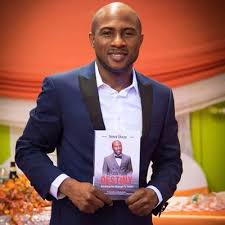
Henry Ukazu writes from New York. He works with the New York City Department of Correction as the Legal Coordinator. He’s the founder of Gloemi. He’s a Transformative Human Capacity and Mindset coach. He is also a public speaker, youth advocate, creative writer and author of Design Your Destiny and Unleash Your Destiny. He can be reached via info@gloemi.com


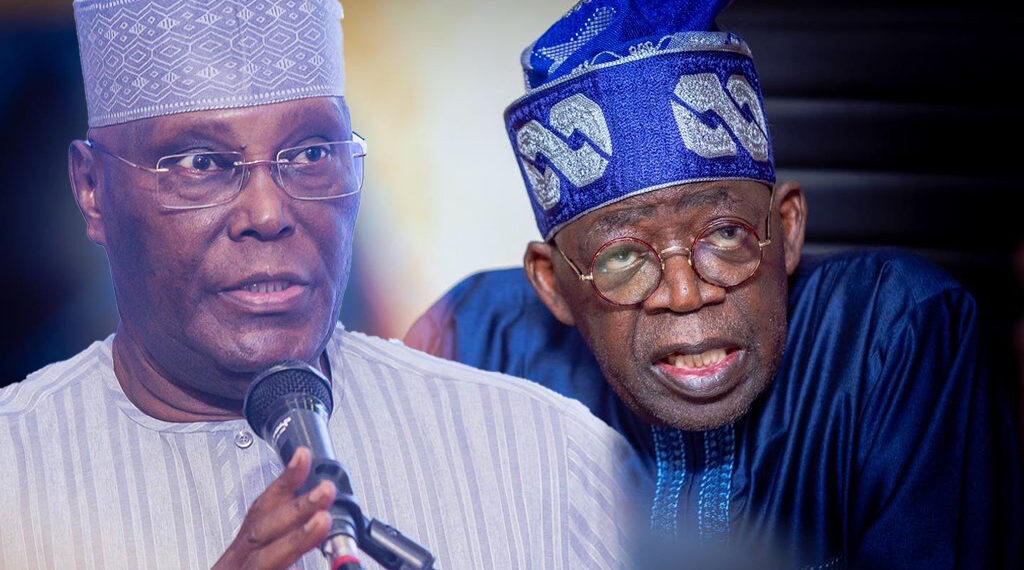
Former Vice President Atiku Abubakar has urged President Bola Tinubu to take immediate steps to reduce the cost of petrol, saying Nigerians are struggling with the combined impact of high energy, transportation and food prices.
Atiku made the call on Friday in Abuja during a press briefing on fuel prices, palliatives and the rising cost of living. His comments came amid renewed concerns over the effect of higher petrol prices on households and businesses.
The African Democratic Congress (ADC) presidential candidate said the removal of petrol subsidy in May 2023 placed additional pressure on families, workers, farmers and businesses.
He said the effect of higher petrol prices was not limited to motorists, as increased transportation and logistics costs had also pushed up the prices of food and other essential goods.
“When government makes energy expensive, it makes life expensive,” Atiku said.
The former vice president recalled that he had previously called for government intervention to reduce petrol prices, but said Tinubu had dismissed the proposal as showing “serious ignorance” of governance and the economy.
Atiku questioned whether the Nigeria Labour Congress (NLC), petroleum marketers, manufacturers and ordinary Nigerians who had raised concerns about rising costs could all be described as ignorant.
“When workers, producers, marketers and ordinary families are all raising the alarm, government must listen,” he said.
He said the government should be prepared to review its policies when their consequences become difficult for citizens to bear, adding that rising production costs were putting further pressure on manufacturers while families were finding it harder to afford basic goods.
Atiku also argued that government revenue and GDP figures did not necessarily reflect the economic reality facing ordinary Nigerians.
“If government receives more Naira while the citizen’s naira buys less food, less fuel, less electricity and less transportation, then bigger government revenues mean little to the family struggling to survive,” he said.
The ADC candidate urged Tinubu to use the remaining eight months of his first term to reduce the burden on Nigerians and consider any measure capable of lowering petrol prices, even if the proposal came from a political opponent.
“What matters to me is that Nigerians pay less,” Atiku said. “A sensible idea does not become a bad idea because it came from your opponent.”
He also offered to make his policy framework available to the Tinubu administration, saying Nigerians should not have to wait for a new government before benefiting from policies that could provide relief.
“If you need the framework, I will provide it. Implement it under your government. Give it whatever name you choose. Take the credit,” he said.
“I ask for only one thing: Let Nigerians breathe.”
By Henry Ukazu
Dear Destiny Friends,
Passion and purpose are among the most debated topics in the human development space. It’s a grey area that has attracted a lot of attention. While some schools of thought believe it’s better to focus on passion, other schools of thought believe that it’s profitable for one to focus on a job that pays the bills.
According to the latter school of thought, passion doesn’t pay the bills. Well, depending on the schools of thought one subscribes to, I personally believe it pays more for one to pursue passion than profit, and I will explain in a minute.
I strongly believe passion is stronger than power because when one loves what one is doing, there’s an inherent strength that comes with it, but if one doesn’t like what they are doing, they’ll lack the moral strength to forge on.
Let me share a practical example with you. My late dad encouraged me to study Taxation Law at New York Law School, a major I didn’t like. He had the mindset that money rules the world, which I tend to believe because when money talks, the world “generally” seems to move around. That mindset and principle is relatable; however, it’s not applicable in other cases because there are some people or situations where money doesn’t move around.
My late dad believed it makes no sense for me to read a major and remain unemployable or poor. So, when I arrived in the United States, the economy was experiencing a recession, and there were no jobs at the time. So, while I was passionate about studying International Relations, Energy Law, or Communications Law, my late dad sat me down and said, based on the information he was receiving from his friends, these are great courses, but when I graduate, it will be hard to find a job because most people in those firms are laying off employees.
According to my late dad, his friends suggested that since I have a legal background, tax law is the only major I can study and be guaranteed a job because people and corporations will always file their tax returns. I initially objected to this advice because my brain is not wired for numbers. I really struggled to accept this advice because I hated numbers with passion.
My late dad would later tell me, you know we are from a humble background, and so we need money. My late dad would always say, “You wouldn’t want to study international law or communication, and the only thing you can do very well is speak English while remaining poor. One fact about my late dad was that he liked money to a stupor. According to him, after God, the most important thing in the world is money.
After much hesitation, I decided to study the major to make my late dad happy because I saw how happy he would be when I studied tax law. If truth be told, I wasn’t happy studying the major. I really struggled with the major. I managed to get a scholarship and graduated with a decent grade, but getting a job was challenging because employers could see that I didn’t like the major each time I went for an interview.
At the end of the day, I managed to get a job as a Case Manager for a private organization and later as the Legal Coordinator for the New York City Department of Correction. An important point to note here is that, after I left the tax firm, I was intentional about applying for jobs I was passionate about. Money to me was a secondary concern because I strongly believe that when you love what you do and you are good at it, money will surely find you.
I had to share this practical experience to give an insight into the importance of focusing on passion. Don’t get me wrong, money is good, but I personally feel there are more valuable things than money, and a perfect example is marrying a kind man as opposed to marrying a man with money, or marrying a lady with good character as opposed to marrying a lady with a good physique.
It’s instructive to note that when I began to focus on what I love to do, I had to spend time on honing my skills, developing myself by attending relevant training sessions and taking courses that would distinguish me from my contemporaries. It didn’t take long for me to receive recognition for my work. I was celebrated for being a trailblazing author of three books on television; I was interviewed by The New York Times in addition to meeting resourceful global leaders. In all sincerity, I doubt if I would have received accolades assuming I focused on taxation or doing what would give me money.
The moral of this analysis is that while profit is good, passion is much better because it will give one the necessary satisfaction and fulfilment they deserve. To understand how this works, one might make good money in a job but won’t be happy, but someone else might make little money and be happy in what they are doing. If research is done on what makes one happy, most people will likely say it is their passion or what they love to do that makes them happy as opposed to the job they do. It’s only a fragment of people who will attribute their happiness to the job they do, and that’s simply because they have truly figured out who they are or are probably happy and passionate about the work they do.
Let me explain a little: your profession is what you are trained to do as a doctor, lawyer, accountant, or engineer. Your vocation is what you are trained to do as a skilled worker or one with a 9-to-5 job, but your ministry is your calling, and that’s why you find your talent or gift and passion. So, one’s passion can be found in what they love to do.
When one’s profession is aligned with one’s vocation and ministry, then success is bound to be present because passion is at play.
It’s instructive to note that most of the great people I know in the world have become famous because they were doing what they love to do. I recently attended an award ceremony where my alma mater, Baruch College, celebrated alumni who have distinguished themselves. One of the award recipients, Ms. Doris Gonzalez, stated in her speech, “Of all the jobs I have had in my life, this is my best job. I really love my job”. I strongly believe there is a form of spiritual blessing and success that comes when one is happy doing what one is passionate about.
In conclusion, if one is desirous of succeeding in life, please endeavor to focus on your passion; if you can’t find it, explore what makes you happy. When you find what makes you happy, develop and monetize it, and in no distant time, opportunities and recognition will begin to triple in.
Henry Ukazu writes from New York. He works with the New York City Department of Correction as the Legal Coordinator. He’s the founder of Gloemi. He’s a Transformative Human Capacity and Mindset coach. He is also a public speaker, youth advocate, creative writer, and author of Design Your Destiny- Actualizing Your Birthright to Success, Unleash Your Destiny and The Six Pillars of Success. He can be reached via info@gloemi.com

The Nigeria Democratic Congress (NDC) presidential candidate, Peter Obi, has released his handover document to counter the Anambra State Government’s claims that his administration left behind loans and other financial liabilities.
Obi’s challenge followed the release of his handover note, which showed the financial position of the State at the end of his administration.
The Interim National Coordinator of the Obedient Movement, Dr. Yinusa Tanko, published the handover document dated March 17, 2024, on Wednesday.
The document contained a summary of Anambra State’s financial position as of the close of business that day and showed a net positive balance of over N86 billion.
Tribune Online had earlier reported that the Anambra State Government said it is still repaying loans obtained by previous administrations, including those of former governors Peter Obi and Willie Obiano.
The Commissioner for Finance, Izuchukwu Okafor, disclosed this on Sunday while speaking on the Ndi Anambra podcast released by the government’s New Media team.
Okafor said the inherited loans remained part of the financial commitments of the current administration, despite the Soludo government’s decision not to obtain fresh commercial bank loans since taking office.
Obi, however, rejected the claim and asked the Soludo administration to provide evidence to support its position. He also said he would end his campaign for the 2027 presidency if the allegation could be proven.
The Anambra State Government later disputed Obi’s claim that he left office without outstanding debts or other unpaid financial obligations.
The government maintained that its records showed that some liabilities incurred during Obi’s administration, as well as obligations inherited by it, remained unpaid.
In a statement titled; “Gov Peter Obi and Record of Public Debt in Anambra: Facts Beyond Propaganda and Lies,” the Commissioner for Information and Value Reorientation, Law Mefor, described Obi’s position on the State’s debt profile as false.
Mefor said eight external loans connected to projects implemented during Obi’s administration, or inherited by it, were still outstanding.
According to him, the loans had a combined balance of $92.35 million, which the State government said was equivalent to N127.37 billion as of June 30, 2026.


