
News
Food for Living: Of Fear and Faith

- Share
- Tweet /home/rhoncare/pointblank.ng/wp-content/plugins/mvp-social-buttons/mvp-social-buttons.php on line 69
https://pointblank.ng/wp-content/uploads/2019/04/download.jpeg&description=Food for Living: Of Fear and Faith', 'pinterestShare', 'width=750,height=350'); return false;" title="Pin This Post">
By Henry Ukazu
Dear Destiny Friends,
Fear and faith are two great rivals in the affairs of man. Where one is found, the other takes a leave. They can either make or mar any progressive being, and anybody who truly wants to succeed must know how to activate and control the inherent powers of these two great forces.
According to Dr. Yomi Garnett, “viewed from a spiritual perspective, fear and faith can be said to be opposites…and what each of them brings to our life is also opposites. Fear can lead to failure, while faith will lead to conquest”.
Question: Do you want to live in fear, or would you like to be associated with a conquered fellow?
One of the major killers of vision is fear, and one of the enablers of life is faith. When one is possessed with the spirit of fear, it will be difficult for that person to achieve their heart desires, but when one’s spirit is activated with the right amount of faith, even the highest fear will fade out.
One may be wondering, how fear and faith can be positively activated to attract success, ab at the same time be the destruction of man, if not properly managed.
What actually inspires a success-oriented mind? Obviously, several things activate one’s mind. To a lot of people, their greatest fears in life is poverty. These sets of people abhor being poor can mitigate their success in life, and as such they put in all their efforts to succeed.
To some, their greatest fear in life is failure. They can’t imagine the shame and defeat that come with failure, and as such they put in their best in whatever productive work they engage in.
Wen fear becomes extrem, it turns to phobia and dreaded. It’s instructive to note that some people have the phobia of height and flying. Some others have the phobia of pregnancy, traveling on water, approaching, or talking to people due to rejection, making mistakes, threading on new ground, among others.
To conquer this fear however, one needs to activate the inherent power of faith. Faith is the belief in what is not seen but hoped for. Any creative mind that wants to succeed in life must have faith not only in themselves, but in their businesses, academics, personal and professional developmental endeavours.
No great person has ever succeeded in life without faith. They believed in the possibility of their business even when there’s little or no hope of survival. They dared to succeed.
In contrast, fear has been th singular reason for most of the failures men have recorded. Some people even give up before they begin their project because of lack confidence and hope.
In some cases, this fear is projected by friends, family members, mentors or even trusted persons who don’t really know or understand what the person is working on. They just simply believe the project is bound to fail based on the prevailing circumstances or challenges surrounding the person or business.
This is how to activate and stimulate the subconscious and inherent power of faith. Imagine as a young man, you have interest in a lady, but you are wondering how to approach her considering her perceived response. It is not out of place to have a perception of the kind of respinse expected, but then, nothing ventured, nothing gained.
One of the best things the guy can do is to dare to succeed by reaching out to the lady. In the worst-case scenario, the lady might say no. In that case, the man will be satisfied he tried his best because the worst feelings to have in life is the feeling of regret.
Alternatively, the lady might like the guy and just play to the gallery just to gauge the man’s intent and seriousness. If the latter is true, the man is deemed lucky for daring to ask.
As a student, business owner, parent, teacher, government official, or pastor just to name a few; if you have a project or task in mind, don’t allow the fear of failure, disappointment or obstacles to weigh you down, look into the future with bold eyes, and with the mindset of faith in the impossible.
In conclusion, fear and faith are two necessary criteria needed in the journey of life. The ability to nurture both will go a long way in shaping not only our personal lives, but also our professional lives.
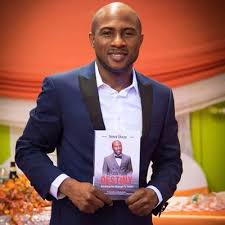
Henry Ukazu writes from New York. He works with the New York City Department of Correction as the Legal Coordinator. He’s the founder of Gloemi. He’s a Transformative Human Capacity and Mindset coach. He is also a public speaker, youth advocate, creative writer and author of Design Your Destiny and Unleash Your Destiny. He can be reached via info@gloemi.com



Former Vice President and African Democratic Congress presidential candidate Atiku Abubakar has accused President Bola Tinubu of presiding over a grotesque spectacle of executive excess: the reported distribution of 2026 model luxury SUVs, each worth more than ₦150 million, to APC youth leaders while millions of Nigerians are crushed by hunger and soaring costs.
Atiku said it was a brazen insult to ask Nigerians to endure hardship while party loyalists receive vehicles worth a fortune. He demanded an immediate public explanation from President Tinubu and the Presidency: who is paying for these SUVs, and why is such lavish political spending taking place while ordinary families struggle to afford food and transport?
In a statement issued by Phrank Shaibu, Director of Strategic Communication of the ADC Presidential Campaign Council, Atiku said:
“The APC National Youth Leader says these vehicles were donated by First Lady Oluremi Tinubu. Nigerians deserve to know where the money came from to buy and distribute so many 2026 model SUVs, each worth more than ₦150 million, for political mobilisation.
“The First Lady holds no elected or executive office.She is only a domestic appendage of the office of President. Were these vehicles bought with her personal funds, donations or public resources? Who paid for them? What was the total cost? The Presidency must provide a clear account. Nigerians cannot be expected to accept a fleet of extraordinarily expensive vehicles for party loyalists without knowing who financed them.
“At a time families cannot afford food, transport and other basic necessities, these gifts are a brazen insult to the people. The government has found a way to provide luxury SUVs for APC youth leaders, yet millions of Nigerians are still waiting for meaningful relief from the cost of living crisis. This is not merely a question of misplaced priorities. It is one of the most outlandish displays of executive recklessness in our history.
“First, APC women leaders reportedly received luxury vehicles. Now, according to the National Youth Leader, APC youth leaders are receiving SUVs from the First Lady. The earlier gifts came on the eve of the abduction of schoolchildren in Oyo State. Now another lavish round of political giving is taking place while Nigerians face hunger, insecurity and hardship.
“While Nigerians continue to ask where the savings from subsidy removal have gone, the Presidency must explain how such costly gifts are being funded. If the vehicles were paid for privately, the source of the funds should be disclosed. If public resources were used, the government must identify who authorised the spending and under what legal authority.
“The scale of these gifts raises grave questions about whether our collective patrimony is being diverted to buy political loyalty. Nigeria cannot be run as a captured state, where wealth and influence serve the powerful while ordinary citizens are left to struggle.
“The same youth leader who made the gifts public is reportedly travelling by private jet. That image of extraordinary privilege stands in jarring contrast to the hardship facing ordinary Nigerians. The Presidency must stop treating questions about wealth and spending as an inconvenience. Nigerians have a right to ask where the money came from.
“Nor is this culture of privilege confined to party officials; it reaches the very household of the President. His own son, Mr Seyi Tinubu, has been pictured, in widely circulated images, wearing a Richard Mille RM 67-02 Sébastien Ogier, a timepiece that sells for close to half a million dollars ($500k), while the same government asks ordinary Nigerians to endure hardship, tighten their belts and wait patiently for relief that never seems to arrive.
“A worker on the national minimum wage would need several lifetimes to earn what the President’s son wears on one wrist. When the household of the President and the youth leader of his party flaunt such wealth in a season of hunger, insecurity and joblessness, they are not merely displaying poor taste; they are telling Nigerians, in the plainest possible terms, how little their suffering registers in the corridors of power.
“Why is Bola inflicting such pain on Nigerians while those closest to his government enjoy such lavish privilege? Nigerians need answers, not another display of wealth for political mobilisation.
“When I am sworn in as President, every naira found to have been spent illegally will be thoroughly investigated, and everyone found culpable will be brought to justice.
“Tinubu made life difficult. I will make life affordable again.”

The African Democratic Congress Presidential Campaign Council (ADC-PCC) has described the All Progressives Congress (APC) Northwest zonal flag-off rally in Kaduna as a monumental disappointment, accusing the ruling party of relying on rented crowds, empty seats and recycled promises.
Reacting to the rally held at the Kaduna Township Stadium, the Director of Media and Publicity of the ADC-PCC, Kola Ologbondiyan, said an event intended to demonstrate the APC’s political strength across the Northwest had instead exposed what he described as the party’s declining public acceptance.
Ologbondiyan alleged that the APC mobilised people from the seven states of the Northwest and beyond, with payments reportedly ranging from ₦50,000 to ₦100,000 per person, yet the stadium, which he put at a capacity of 5,000, remained sparsely occupied.
“For a rally billed as the Northwest zonal flag-off, what we witnessed was a shameful spectacle. Despite the alleged mobilisation of crowds from across the zone and beyond, the stadium remained scantily filled, with empty seats everywhere,” he said.
He added that the turnout, which he described as disappointing, was compounded by what he called the unenthusiastic reception given to the speeches and messages of APC leaders.
The ADC-PCC Director also criticised President Bola Ahmed Tinubu’s reported commissioning of road projects at the event, describing the exercise as troubling and questioning the administration’s claims of performance.
Ologbondiyan further alleged that some attendees expressed dissatisfaction with the ruling party after leaving the stadium, chanting the Hausa phrase “Ba mu yi,” which he interpreted as a rejection of the APC and its policies.
“You can rent a crowd, but you cannot rent acceptance. Even if people attend a rally, that does not mean they have surrendered their convictions. The real test of public support is what Nigerians will decide at the ballot box,” he said.
The ADC-PCC accused the APC of returning to Kaduna with promises similar to those made during the 2015, 2019 and 2023 election cycles, arguing that the ruling party had failed to adequately account for its years in power.
It also faulted President Tinubu for, according to the council, shifting responsibility for the hardship facing Nigerians to opposition leaders rather than addressing the economic consequences of his administration’s policies.
Ologbondiyan particularly criticised the President’s position on fuel subsidy removal, which the ADC-PCC maintains has intensified the economic burden on households already struggling with rising living costs.
The council urged the APC to stop what it described as wasteful political jamborees, apologise to Nigerians over the prevailing economic difficulties and begin to prepare for an orderly transfer of power in 2027.
It maintained that the ADC represents a credible alternative for Nigerians seeking a change in leadership, promising that the electorate would use the next general election to express its dissatisfaction with the ruling party.
“The message from Kaduna is loud and clear: Nigerians are saying ‘Ba mu yi’ to the APC and Tinubu. Come 2027, they will speak even louder with their votes,” Ologbondiyan declared.
By Henry Ukazu
Dear Destiny Friends,
If you are asked, what’s your calling, what will be your response? If you are asked what your purpose on earth is, what will be your response? If you are asked who you are, what would be your response? These, no doubt, are interesting questions to decipher one’s calling.
Finding one’s calling is the best thing that can happen to anyone. According to one of my most cherished mentors, Dr. Yomi Garnett, the day you find your purpose is the day you become a millionaire. I couldn’t agree more with this saying because it is nothing but the gospel truth. This is because the best thing that can happen to anyone is knowing their calling.
According to Mark Twain, “The two most important days in your life are the day you are born, and the day you find out why. This is a fact. It’s quite unfortunate that many people are just existing as opposed to living. We were not created to exist, we were created to fill a vacuum, and we can only make an impact if we are intentionally answering our call.
Let’s circle back to the question I asked at the beginning of this article, what’s your calling? To answer this question, I would like you to approach it from a spiritual perspective. At creation, God called us to be something in the world, that’s why he gave us gifts and talents and told us to be fruitful and multiply.
Just like we all have names that our parents, friends, children, mentors, etc. call us. These names are reflections of what we mean to them or how they perceive us. Names are symbolic and have deep meanings if we apply reasoning to them. So, if we can answer the names we are called to earth, how about answering the name God called us at birth. I believe that’s the most important call or name we need to answer as human beings. When we answer the name God gave to us, the world will begin to respond to what we say because we have answered the mother’s call.
Why do I say this? Your purpose was made in heaven, but your calling is meant to be fulfilled on earth. It’s sad to see people answering different names they are not called. When God created you, there’s something he had in mind for you to accomplish or solve on earth, but it’s unfortunate that, due to life’s vicissitudes, some of us derail from the path God destined for us, and hence that’s the reason many of struggle because we are not working in the direction and pathway God designed for us to tread.
It should be known that your calling was not a conference call; the call was personal. If God wanted anyone to know your calling or purpose, he would have revealed it to anyone he wants, but he chose to reveal it to you, so the onus is on you to focus on it, follow it religiously and ultimately fulfill it because that’s the only way you can get fulfillment.
I also asked, what’s your purpose? Your purpose is the reason why you do whatever you are doing. In this context, your purpose is your why. According to Dr. Myles Munroe, “When the purpose of a thing is not known, abuse is inevitable.” Your purpose is the reason why you applied for a job, married your partner, started an NGO, a business, relocated/travelled, started school, or even wrote a book. There’s always a reason why we do something. That reason is the inspiration and motivation we need to forge when everything else fails.
Again, I ask you what’s your purpose? If you can’t figure out your purpose, I will strongly advise you to go to your creator (God) and ask him, what’s your purpose because he’s the person that created you. When people desire different interests in different majors, skills, profession, vocation, etc., it’s simply because someone puts the desire and interest inside them.
To understand how purpose works, there’s no problem on earth without a solution. The only problem without a solution is the problem the person with the solution hasn’t arrived.
Let me share a practical example on purpose. There was a story of an old man whose car (Ford) broke down in the middle of the road, all efforts to fix the car proved abortive. An old man was passing by and saw this man struggling to fix the car, he asked him, “What’s the problem?” The old man said, well, my car has refused to start. The stranger told the man to give a minute. The man initially refused saying who is this old man to fix what I have been working on for hours.
On second thought, he said, what will I lose if I give him a chance. He decided to listen to the old man who told him to give me a minute to check out the car. This stranger didn’t do much, he just touched a particular side of the engine and told the old man to start the car, and immediately the car cranked back to her life. The man was surprised and asked him, who are you? ” The stranger said, “I am Henry Ford, the owner of Ford Motors.
The moral of this story is, Henry Ford, the founder of Ford motors, knows his car more than everyone. So, if a mere mortal can know much, how much about the creator who will not know about our purpose?
When you find your purpose, you find your why, but when you find your why you must find your purpose.
The final question I asked: “Who are you? To answer these questions, I need you to focus on the inmate quality you are blessed with as opposed to what people think about you. What people think about you is your reputation, but who you are is your character. Some people associate titles to who they are. I think that’s the wrong interpretation. One might be a doctor, lawyer, Chief Operating Officer, professor, or even the governor or president, but that doesn’t make them good people with good traits, qualities, values and charismatic inmate abilities.
To lead one must have empathy, compassion, and heart of service. It is through these traits; one can see who a person really is and not the cloth of title they are showing the world.
So, to find one’s calling, here’s my sample suggestion: ask your creator (God), inquire what makes you happy, what you love to do, what do people compliment you on, what do you do with relative ease if you are woken from sleep? What is one thing you can do for free?
In conclusion, finding one’s calling is the best thing that can happen to anyone. The day you find your calling is the day you will begin to live your best life because you will begin to bless the world with your calling.
Henry Ukazu writes from New York. He works with the New York City Department of Correction as the Legal Coordinator. He’s the founder of Gloemi. He’s a Transformative Human Capacity and Mindset coach. He is also a public speaker, youth advocate, creative writer, and author of Design Your Destiny- Actualizing Your Birthright to Success, Unleash Your Destiny, and The Six Pillars of Success. He can be reached via info@gloemi.com


