News
Food for Living: Pursue Passion More Than Profit (Pt. 2)

- /home/rhoncare/pointblank.ng/wp-content/plugins/mvp-social-buttons/mvp-social-buttons.php on line 27
https://pointblank.ng/wp-content/uploads/2019/04/download.jpeg&description=Food for Living: Pursue Passion More Than Profit (Pt. 2)', 'pinterestShare', 'width=750,height=350'); return false;" title="Pin This Post">
- Share
- Tweet /home/rhoncare/pointblank.ng/wp-content/plugins/mvp-social-buttons/mvp-social-buttons.php on line 69
https://pointblank.ng/wp-content/uploads/2019/04/download.jpeg&description=Food for Living: Pursue Passion More Than Profit (Pt. 2)', 'pinterestShare', 'width=750,height=350'); return false;" title="Pin This Post">
By Henry Ukazu
Dear Destiny Friends,
Last week, we began discussing a grey and near-controversial topic, “pursue passion more than profit”. The topic cannot be exhaustive. Depending on who one is speaking to, different answers and understanding will be received because different things work for different people, and as they say, ‘different strokes for different people’.
It I worthy of note that a family man who is passionate about teaching or working in the non-profit space will be tempted to engage in business to feed his family. But someone with a stable financial background can afford to follow his passion and work as a teacher or in the non-profit space where the pay is not lucrative.
From a practical perspective, I currently work for the New York City Department of Correction as the Legal Coordinator. This is an agency that pays a good salary to the uniformed officers after they work for 51/2 years. In addition to the money they receive, there are countless hours of overtime, which doubles their income depending on how many hours they work. Some call it blood money because they can hardly get the same money in other institutions.
Why am I sharing this information? According to most of the officers; they basically work in the agency because of the money. Most of the officers are of the opinion that they can hardly make such money working in other private or public enterprises. The majority of these officers are not passionate about the job; they are just there to take care of their pressing bills. Some of them even have a timeline: they can work and then resign to start up their business or work in their areas of interest. This goes to tell you that they are trading their passion for profit, which is kind of work if looked at from a particular point of view, but then they are trading their joy and peace.
Let me share another example. In Nigeria, a popular artist, David Adeleke, aka Davido, is one man who followed his passion. This young man came from a wealthy background. He literally left generational wealth to sing. Many thought he was crazy. Davido’s father, billionaire businessman Adedeji Adeleke, initially opposed his music career, but he eventually became fully supportive. Davido’s father went as far as having police shut down shows or arresting people involved when Davido left school in the US to pursue music in Nigeria. Due to his passion for singing, Davido had to fund his early career secretly and rebel against his family’s wishes before breaking through.
Once Davido achieved massive success and proved he could be successful in the industry, his father accepted his path and gave him his blessing. Davido once stated that despite making his own fortune, his billionaire father still surprises him with huge financial gifts, such as wiring him $300,000 after a major performance at the State Farm Arena in Atlanta.
I doubt that Davido would have become this famous if he didn’t follow his passion. Davido can be described as a man whose passion is stronger than power.
I had to share these two perspectives to give clarity on the relativity of passion and profit.
Let’s analyze the concept of passion and profit. If I may ask you, what is passion? What is profit? And what does passion and profit mean to you? According to Cambridge University, passion was defined as a very strong feeling, emotion, or deep enthusiasm for a person, activity, or cause. For example, someone can have a strong emotion or a powerful state of feeling like intense love, excitement, anger, or hatred for something or somebody.
Passion can also be a deep interest or hobby which gives someone a strong liking or enthusiasm for an activity, such as cooking, music, or sports. In romantic cases, it can be a romantic or sexual desire: An intense physical or emotional attraction toward someone. In the spiritual context, it can be understood as the Sufferings of Jesus: Historically and in a religious context, it refers to the suffering and death of Jesus Christ between the Last Supper and the crucifixion (the Passion of Christ).
Profit, on the other hand, is the financial gain that remains when total revenue from an activity or business exceeds the total expenses and costs incurred, according to Investopedia. There are different types of profit:
- Gross Profit: Revenue minus the direct cost of producing goods or services (COGS).
- Operating Profit: Gross profit minus day-to-day operating expenses, excluding interest and taxes.
- Net Profit: The final “bottom line” earnings left after all expenses, taxes, and interest are deducted.
Having given an overview of what passion and profit entail, let’s take a minute to understand the thin line between passion and profit. Just like authority is respected more than power, passion has more influence and is generally respected more than profit. No doubt, it’s good to make a profit in business, but in this context, I am referring to the human resource space or human capacity development
On the surface, people may respect someone for the money one has, but they will value a person who is more passionate about a cause than one who has money but does not believe in the message they are preaching. There’s a saying: human beings are more than money. Just like, it’s better to have a good name than to have money.
People generally follow a leader or someone who they can relate to rather than someone who gives them money but is careless about their feelings. One message I heard countless times from one of my revered mentors regarding my career was to pursue passion over profits. According to him, passion is stronger than power. He likened passion to a scenario where a woman loves a man who has less money compared to a man who has money but does not have the values and vision she represents. According to these sets of ladies, money is good, but love conquers everything because if tomorrow the money travels, the marriage is bound to hit a rock, compared to a scene where a lady loves a man for who he is and what he represents. Even when the money is out, the friendship will still thrive.
According to the opposing schools of thought, while passion is good, it is they also believe that hard work beats talent, especially when talent is not put to good use. So, even if one is passionate about a cause or has a talent that is yet to be developed, if one does not intentionally develop it, it will lie fallow. So, invariably, even if one is passionate about a cause, if they don’t have the strength to work on their passion, it’s advisable for them to focus on making money.
Here is my opinion: even though I subscribe to the position of focusing on or working for passion rather than for money, one must apply wisdom in navigating this tough terrain. One can decide to work for money and gather enough money to fund their passion because, at the end of the day, we all want to be happy, because happiness and fulfilment mean everything
In summary, while it is good to do what works for one and what is readily available, it’s imperatively important for one to strive for excellence and perfection, which can be found in passion.
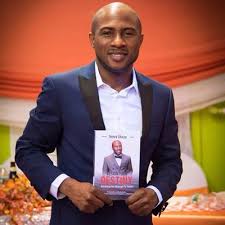
Henry Ukazu writes from New York. He works with the New York City Department of Correction as the Legal Coordinator. He’s the founder of Gloemi. He’s a Transformative Human Capacity and Mindset coach. He is also a public speaker, youth advocate, creative writer and author of Design Your Destiny- Actualizing Your Birthright to Success, Unleash Your Destiny and The Six Pillars of Success . He can be reached via info@gloemi.com


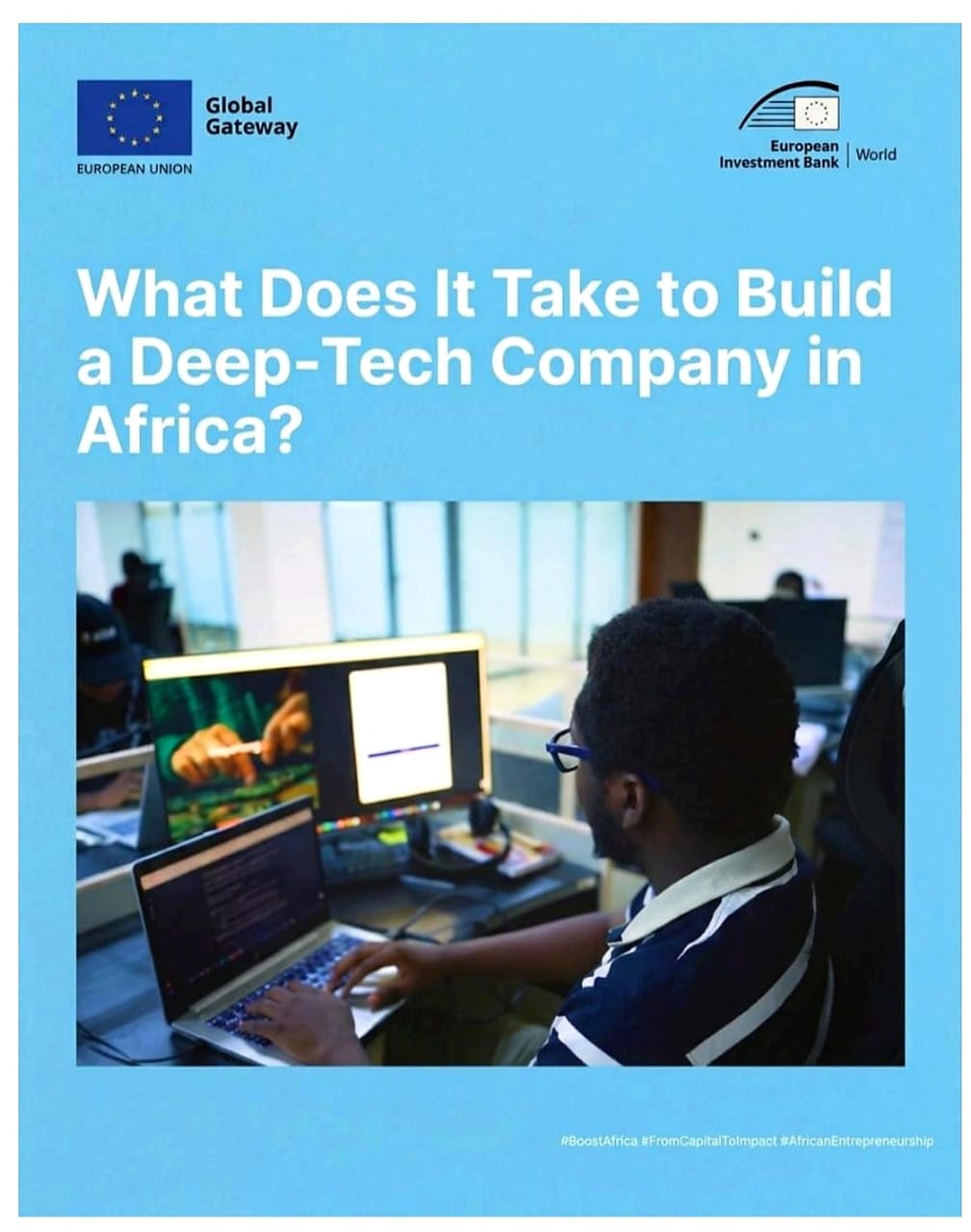
The semiconductor industry requires
highly specialised engineering knowledge.
For African engineers, gaining access to
professional tools, industry experience
and international opportunities can open important doors.
ChipMango is working at the intersection
of talent development and commercial
engineering, creating pathways for African
expertise to contribute to a global industry.
The growth of businesses like ChipMango also highlights the importance of
investment in Africa’s innovation ecosystem. Through Boost Africa, a joint
initiative of the EIB and African Development Bank, supported by the
European Union, the European Investment Bank helps mobilise financing through venture capital funds for innovative African businesses. Watch the video to hear the story behind ChipMango.
Watch the video:

The Presidential Campaign Council of the African Democratic Congress (ADC) has condemned what it described as the distribution of cash, gifts and food at campaign rallies for President Bola Tinubu.
In a statement signed by its Director of Strategic Communication, Phrank Shaibu, on 11th November, 2026, the Council said that at a time when Nigerians are struggling to afford food, transport, and basic necessities, the display of cash at political gatherings raises concerns.
It said: “The pattern is becoming impossible to ignore. From reports of luxury vehicles presented to APC women leaders to cash and cooked food distributed by the president’s son through the City Boy Movement and now videos circulating of an APC woman leader handing out money and fabrics, the ruling party appears to be treating political support as something that can be bought.
“The same authorities that have pursued ordinary Nigerians over alleged abuse of the Naira must explain why apparent cash distribution by political operatives at campaign events should be treated differently. The EFCC and INEC must investigate these incidents and take appropriate action wherever electoral or currency laws have been breached.”
The Council said after three and a half years of economic hardship, rising insecurity and mounting public debt, the APC has little to show Nigerians.
It added that cash, gifts and displays cannot conceal a record of failure, noting that the administration has pushed millions into poverty while Nigerians continue to demand answers about the scale, terms and use of government borrowing.
“No amount of money can compel Nigerians to endorse a government that has made life harder for them. The people’s votes are not for sale, and no crowd can substitute for their verdict at the ballot box,” it said.
The ADC PCC called on the EFCC and INEC to examine the reported distributions and publicly state what steps they will take, adding that political parties must not be permitted to use cash or gifts to induce support.

The African Democratic Congress Presidential Campaign Council (ADC-PCC) has warned Nigerians against waiting for President Bola Tinubu to fulfil his campaign promise of providing reliable electricity.
The Council challenged the President to explain why millions of Nigerians continue to experience poor power supply despite his pledge that voters should not re-elect him if he fails to deliver electricity.
In a statement by its Director of Media and Publicity, Kola Ologbondiyan, the ADC-PCC accused Tinubu of making fresh promises during his recent campaign outings in Kaduna, Rivers and Jigawa states instead of presenting a clear account of his administration’s achievements.
Recalling the President’s campaign promise, the Council quoted him as saying: “If I don’t give you electricity, don’t vote for me for a second term.”
“Tinubu is only repeating his old electricity promise in Jigawa, while Nigerians are still waiting for answers on why reliable power supply remains out of reach,” the Council said.
The Council also questioned the whereabouts and impact of 2,000 tractors reportedly imported from Brazil under the administration’s mechanised farming programme.
It further accused Tinubu of taking credit for projects started by his predecessor, Muhammadu Buhari, while failing to show enough achievements of his own.