
Metro
Food for Living: Right Timing, Critical for Success

- /home/rhoncare/pointblank.ng/wp-content/plugins/mvp-social-buttons/mvp-social-buttons.php on line 27
https://pointblank.ng/wp-content/uploads/2019/04/download.jpeg&description=Food for Living: Right Timing, Critical for Success', 'pinterestShare', 'width=750,height=350'); return false;" title="Pin This Post">
- Share
- Tweet /home/rhoncare/pointblank.ng/wp-content/plugins/mvp-social-buttons/mvp-social-buttons.php on line 69
https://pointblank.ng/wp-content/uploads/2019/04/download.jpeg&description=Food for Living: Right Timing, Critical for Success', 'pinterestShare', 'width=750,height=350'); return false;" title="Pin This Post">
By Henry Ukazu
Dear Destiny Friends,
The Bible records that there’s time for everything under the heavens; a time to sow, a time to reap, a time to laugh, a time to mourn; a time to read, a time to sleep, a time to work, a time to pray, and a time for leisure. The list is endless. When one therefore, apportions the wrong time for the wrong thing, they will surely get the wrong result.
It’s noteworthy that the mistake most people make is spending major time on minor things and spend minor time on major things.
It’s also important to note that application of right timing in the guise of being at the right place and at the right time is critical to success. When one does things at the right time, there’s the tendency that the right results will be achieved.
It’s instructive to note however, that time is the greatest asset available to man. Another of the major mistakes people make in the affairs of life is inability to maximize available time. Nite that if one loses money, they can get them back, if they lose health, they can get it back; if they lose friends, they can get them back, but once time is lost, the possibility of getting it back is close to zero.
When it comes to succeeding in life, there’s a lot of dynamics that comes to play. But what is more significant is the timing of your success. But many people fail to understand that before one can succeed in any craft, they must develop capacity and competence in certain fields of life.
When you have done the needful, it will be easy for people to assist you. It’s sad to see people looking for opportunity, but haven’t developed the capacity to thrive when given the opportunity.
What most people fail to understand is that there’s time for everything. No matter how hard you work, if your time has not come, you’ll not get the desired opportunity. So, pending when your time comes, continue to add value to your life by reading, acquiring new skills, taking certification classes, and attending to your personal and professional development.
When you have truly added value to your life, it will be easy for people to identify with you. On a personal note, there are resourceful people I have tried to connect with for opportunities in the past; they didn’t respond to me. But when I added value to my life, they began to associate with me.
Let me share a practical example. After I published my first book, I was marketing it like a desperate hustler because I had no paid job at the time. As a result, most people perceived my book and personality as low value, but when I got a professional job, same people began to see me as a resourceful person, who is not depending on his book for survival.
Furthermore, when I reached out to some of my benefactors for opportunity. They technically didn’t respond favorably, but when I developed capacity, they began to give me attention. A case at hand was when I was introduced to the late Chief Operating Officer of Access Bank, Hebert Wigwe, the potential meeting was cut short due to his death. The interesting thing is that I have reached out to the same person three times in the space of 10 years, but the response wasn’t favourable. But here I am being introduced via capacity.
The moral is that not only is the timing right because the late Hebert Wigwe had a strong passion for mentoring youths, he’s also passionate about education with his pet project, Wigwe University. Again, I developed the capacity to fit into the work he’s doing.
Just like there’s time for everything, there’s also a right time for everybody. Imagine planting a crop at the wrong time, imagine putting the cart before the horse, imagine responding without understanding, imagine putting the wrong ingredients without the right timing, etc. what do you think will happen? You won’t get the desired results. That’s simply how timing works.
No matter how hard you work, invest, read, or do the needful, if your time has not come, forget about it. You might even be the best for a position, but if your time has not come, the universe will conspire to work against you. For example during an election, a candidate might possess the right qualities to win an election, but if the pulse of the nation favors a particular locality, or if the pulse of the nation favors a particular ideology or policy, the citizens might vote another candidate with a lesser pedigree.
To show you how important time is; when it’s time to pass your exam, nothing can stop you, when it’s time to get pregnant, nothing can stop you from conceiving; when it’s time to give birth, nobody can stop you.
When you understand the inherent power of timing, your labour will never be in vain. But if you don’t understand the dynamics of timing, you are bound to labour in vain. When you have done the needful, and still fail, be rest assured that it’s either not for you or it it’s not your time.
To reap the benefits of the right timing, one will have to be patient. A pregnant woman will have to wait for nine months before she is delivered of her baby; a person desirous of marriage will have to wait for the right time to see for his life partner to come.
In conclusion, understand that right timing is not laziness or idleness, so while looking out for the right time, endeavor to do and believe in the best, because by so doing, the universe will connect you to the right network.
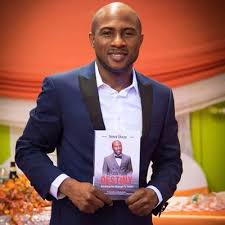
Henry Ukazu writes from New York. He works with the New York City Department of Correction as the Legal Coordinator. He’s the founder of Gloemi. He’s a Transformative Human Capacity and Mindset coach. He is also a public speaker, youth advocate, creative writer and author of Design Your Destiny Design Your and Unleash Your Destiny . He can be reached via info@gloemi.com



MILO Nigeria, in partnership with former Nigerian national team captain and MILO Brand Ambassador Ahmed Musa, has concluded the inaugural MILO × Ahmed Musa Sports Clinic and Tournament in Kano, providing 2,500 young footballers with professional coaching, mentorship and competitive football experience.
Over two weeks, participants took part in 10 coaching sessions and competed in matches under the guidance of Ahmed Musa and experienced coaches. The programme combined practical football training with lessons in teamwork, discipline, resilience and confidence, equipping participants with skills and values that extend beyond the pitch.
The initiative culminated in a tournament at the Ahmed Musa Sports Complex in Kano, where Khamis Football Academy emerged as champions of the inaugural edition. Participants also received cash prizes, certificates and football equipment.
Speaking on the initiative, Gilbert Tweneboah-Koduah, Category Lead, MILO, said: “At MILO, we believe sport is a powerful platform for young people to discover their abilities, build confidence and develop values that extend beyond the field of play. Our partnership with Ahmed Musa brings together MILO’s longstanding commitment to sports development and the experience of an athlete whose journey from grassroots football to the highest level of the game can inspire the next generation. By combining his experience with structured coaching and competition, this programme has given young footballers in Kano an opportunity to develop their skills, learn from experienced professionals and better understand the commitment required to pursue their aspirations.”
For the participants, the clinic offered an opportunity to learn from an athlete whose football journey began in northern Nigeria and progressed to the highest levels of the sport, making his experience a source of inspiration for aspiring players.
Commenting on the partnership, Ahmed Musa said: “Nigeria has incredible football talent, but talent alone is not enough. Young players need good coaching, regular competition and people who will guide them. I am proud to partner with MILO and share some of what football has taught me. My message to these players is simple: keep training, listen to your coaches and work hard every day to improve.”
Musa also called for greater investment in grassroots football, emphasizing the importance of giving young players access to quality coaching, structured development and regular competitive opportunities.
The MILO × Ahmed Musa Sports Clinic and Tournament builds on MILO’s longstanding commitment to youth development through sports in Nigeria. Through its school-based and grassroots sporting initiatives, MILO continues to create opportunities for young people to participate in sports, develop their abilities and embrace values that can support them both on and off the pitch.

The Federal government has confirmed one case of Ebola Virus Disease (EVD) in the Federal Capital Territory (FCT).
The case was laboratory-confirmed on Tuesday, October 20, 2026, after a woman who recently arrived in Nigeria on an international flight from Uganda was admitted to a private hospital in the FCT.
The patient, who had received care at the hospital for several days, is currently isolated and receiving treatment.
The Coordinating Minister of Health and Social Welfare, Prof. Muhammad Ali Pate, said contact tracing has commenced, with 44 close contacts identified so far, including healthcare workers, patients, caregivers and travel contacts.
Reports said the Nigeria Centre for Disease Control and Prevention (NCDC) is working with FCT health authorities to contain the infection and prevent further spread.
Authorities have urged Nigerians to remain calm but vigilant, practice regular hand hygiene and report suspected exposures or symptoms to public health authorities.
The NCDC toll-free call centre is available 24 hours daily on 6232 for information and suspected case reporting.

The Department of State Services (DSS) has arraigned five suspects allegedly linked to the abduction of 20 prospective National Youth Service Corps (NYSC) members and a civilian along the Owerri–Onitsha Expressway in Imo State.
The suspects were brought before the Justice Oputa State High Court in Owerri following their arrest during intelligence-led operations in Rivers and Abia states.
The victims were abducted by gunmen near Umunoha in Mbaitoli Local Government Area on October 1, 2026, while travelling from Ibadan, Oyo State, to their assigned NYSC orientation camps in Abia and Akwa Ibom states.
The abduction sparked a security operation to locate the victims and apprehend those responsible.
On October 7, the 20 prospective corps members and the civilian were rescued from the Amakohia-Ubi forest in Owerri West Local Government Area. They subsequently received medical attention at the DSS hospital in Owerri.
The DSS later arrested five suspects in intelligence-led operations conducted between October 10 and 14 in Port Harcourt, Rivers State, and Aba, Abia State.
The operations involved a joint security team led by the DSS, working with the military, police and other security operatives.
Three other suspects reportedly escaped with gunshot wounds, prompting a manhunt for them and other fleeing members of the suspected kidnapping syndicate.
The arraignment marks a further step in the investigation into the abduction, as the prosecution of the five arrested suspects gets underway.


