
News
Food for Living: Stress and the Path to Success

- /home/rhoncare/pointblank.ng/wp-content/plugins/mvp-social-buttons/mvp-social-buttons.php on line 27
https://pointblank.ng/wp-content/uploads/2019/04/download.jpeg&description=Food for Living: Stress and the Path to Success', 'pinterestShare', 'width=750,height=350'); return false;" title="Pin This Post">
- Share
- Tweet /home/rhoncare/pointblank.ng/wp-content/plugins/mvp-social-buttons/mvp-social-buttons.php on line 69
https://pointblank.ng/wp-content/uploads/2019/04/download.jpeg&description=Food for Living: Stress and the Path to Success', 'pinterestShare', 'width=750,height=350'); return false;" title="Pin This Post">
By Henry Ukazu
Greetings Destiny Friends,
Nobody who is immune to stress. It’s a phenomenon that affects everyone. While some work perfectly under stress, some are allergic to stress. It is a component of life everyone will have to deal irrespective of status or circumstance. It can’t be avoided. I personally equate stress like ladies; it is the “necessary evil” one can’t avoid.
According to the American Institute of Stress, job stress costs U.S. businesses over $300 billion annually due to absenteeism, reduced productivity, medical bills, and employee turnover. Beyond the numbers are real people, who otherwise are talented and capable, but running empty.
Psychologists define stress as the gap between demand and capacity.
When life’s demands exceed your internal capacity, stress multiplies. And prolonged stress leads to burnout, which is an emotional and psychological collapse characterized by fatigue, cynicism, and reduced performance.
But stress itself is not inherently harmful. In fact, manageable levels of stress can sharpen focus, strengthen problem-solving, and increase motivation. What destroys us is chronic, unmanaged stress, the kind that slowly kills focus, health, and happiness.
The American Psychological Association warns that chronic stress weakens immunity, disturbs sleep cycles, raises blood pressure, disrupts hormones, and accelerates aging. In the emotional realm, it heightens irritability, confusion, forgetfulness, and reactivity.
Stress comes to us in different ways, it can come from work, school, family, personal, spiritual or even psychological. This stress can come either directly or indirectly.
Stress is not as bad as people perceive it to be. We all experience stress, but the ultimate difference is how we process and manage it. Stress can be positive or negative. When stress is positive, it prepares one for the future, but when it is negative, it affects one’s mental health and drains one.
When we talk of stress of success, in literal terms, it means the process and the associated journey of failures, disappointments, betrayals, challenges, setbacks, frustrations, etc. that one must undergo to succeed. Most times, some people just think it is easier to succeed just because one has a good product or service, life doesn’t really work that way, sometimes, one might do all he/she is supposed to do and still fail.
From personal experience, I have literally failed more than I have succeeded. Most times, people just see one result of success and don’t see hundreds of rejections and failures. Well, is it true that nobody rewards effort, rather people rewards results.
Before anyone attains a particular level of success, the person must have done a lot of work; sometimes, it will pay off, sometimes, it will serve as a learning tool or experience. In all, one will have to undergo stress.
As an author of three books, I know what it means to research and write enriching information that can shape the lives of people. The stress is not for the light mind. As a matter of fact, the stress of publishing a book is no joke. If one is not detailed and patient enough, one might lose their mind.
Also, as a business owner, I know what it means to manage people and resources. My late mother will always say human beings are the most difficult people to manage. Human beings can be stressful to relate with, sometimes, one will have to imagine they are reasoning like normal human beings, or they need some form of support.
As an author and business owner, I understood quite early the importance of human relationships and networking. I know fully well, one can’t do it alone, and as such, one need people to succeed. That singular knowledge and insight made me invest, build and nurture a solid relationship which has grown over a period.
When most people see me and the impacts of my work, some think I’m lucky, blessed or have access to the rich and mighty, but what they fail understand how many times I have failed, neither also will they understand how much I have invested in the relationship either through their family, family, advisors, assistants, or domestic staff.
I recently shared a post on social media where I informed my tribe about a statement from one of my most revered mentors. He said to me, “Henry, you give to us, more than we give to you”. What that statement entails in a lay man’s knowledge is that I have stressed myself both financially and morally for their benefit. You can imagine if tomorrow one of them decides to stretch his hand to give me an opportunity either as a referral or appointment, someone will think, I’m lucky, but they won’t know I have stressed and invested so much in building my self to get that opportunity.
The big question now is, how does one manage the stress of life?
Managing stress requires practical and intentional effort. Some strategies include:
1. Emotional Self-Awareness
Emotional regulation starts with recognition. Naming what you feel, whether it’s anger, sadness, frustration or fear, restores your control. Psychiatrist Dr. Dan Siegel calls this the “name it to tame it” principle.
2. Setting Boundaries
Setting boundaries is an act of self-respect. Boundaries define what you can allow without breaking yourself. You cannot pour from an empty vessel, and you cannot be available to everyone without eventually losing yourself. Boundaries safeguard your energy and preserve your emotional balance.
3. Intentional Rest
Rest is a strategy that is as important as work itself. Burnout rarely comes from working too hard; it comes from working too long without recovery.
4. Monitor What You Consume
Your emotional diet shapes your mental state. Toxic conversations, constant bad news, cynical media, and negative environments trigger anxiety and fear. On the other hand, a steady diet of inspiration, learning, uplifting conversations, and emotional support strengthens resilience.
5. Seek Support Early
There’s nothing wrong in seeking professional help when you feel overwhelmed. In fact, talking with a professional or a trusted figure is a courageous acknowledgment that the mind deserves care. Even therapists sometimes have their own therapists.
Taking Control of Your Emotions
One of the greatest marks of emotional maturity is understanding that your emotions are yours to govern. This principle of emotional responsibility is common in psychology and spiritual disciplines.
Too often, people allow other people’s actions to dictate their emotions and attitude to life. Someone’s rudeness, delay or negativity may ruin their day. But emotional stability begins when you reclaim the remote control of your inner life. As Eleanor Roosevelt rightly observed, “No one can make you feel inferior without your consent.”
Weed Out Worry
Worry is one of the subtle ways we harm ourselves emotionally. It may seem like we’re being responsible, like we’re “thinking things through,” but in reality, worry saps the very energy we need to handle life.
When worry becomes a habit, it slowly affects every part of one’s life. It increases anxiety and makes it harder to focus. It twists our view of reality and exaggerates problems, making small issues feel overwhelming. Most of all, worry steals joy from the present moment. Your body may be here, but your mind is drowned in tomorrow’s fears or yesterday’s regrets.
Jesus asked a powerful question: “Which of you by worrying can add one cubit unto his stature?” (Matthew 6:27). In other words, what has worry ever improved? Modern psychology agrees with this wisdom. Studies show that constant worrying keeps the brain in a state of alarm, raising stress levels and shutting down clear thinking. Instead of helping you solve problems, worry makes you feel stuck and powerless.
A helpful way to think about worry is to see it as mental garbage. Just as cities must clear rubbish daily to remain healthy, the mind also needs regular clearing. When fears, negative thoughts, and imagined disasters pile up in our minds, they destroy our peace and willpower.
Let me suggest this. At the end of each day, imagine placing your worries into an “inner trash can.” Picture yourself letting go of unfinished tasks, painful thoughts, and fears about tomorrow. You are not ignoring them; you are choosing rest. Research shows that this kind of intentional mental release calms the brain and reduces stress.
Conquer Anxiety with Faith and Inner Stability
Anxiety is your mind worrying about what might happen, and your body reacting as if it’s happening right now. It can come from loss, grief, money problems, broken relationships, loneliness, or painful experiences. But anxiety also grows strongest where faith is weak or missing. As Dr. Yomi Garnett once said, “When faith ends, anxiety begins.”
Interestingly, psychology supports this idea. Many mental health approaches agree that what we believe affects how we feel. Our thoughts influence our emotions. The way we explain events to ourselves affects our stress levels. Faith offers a healthier way to interpret life; it replaces hopelessness with expectation and fear with trust.
In summary, the earlier we learn to manage stress, the better we’ll succeed in life.
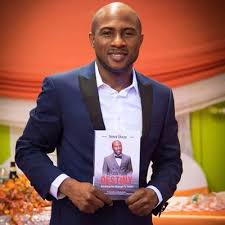
Henry Ukazu writes from New York. He works with the New York City Department of Correction as the Legal Coordinator. He’s the founder of Gloemi. He’s a Transformative Human Capacity and Mindset coach. He is also a public speaker, youth advocate, creative writer and author of Design Your Destiny Design and Unleash Your Destiny . He can be reached via info@gloemi.com


By Henry Ukazu
Dear Destiny Friends,
If you are asked, what’s your calling, what will be your response? If you are asked what your purpose on earth is, what will be your response? If you are asked who you are, what would be your response? These, no doubt, are interesting questions to decipher one’s calling.
Finding one’s calling is the best thing that can happen to anyone. According to one of my most cherished mentors, Dr. Yomi Garnett, the day you find your purpose is the day you become a millionaire. I couldn’t agree more with this saying because it is nothing but the gospel truth. This is because the best thing that can happen to anyone is knowing their calling.
According to Mark Twain, “The two most important days in your life are the day you are born, and the day you find out why. This is a fact. It’s quite unfortunate that many people are just existing as opposed to living. We were not created to exist, we were created to fill a vacuum, and we can only make an impact if we are intentionally answering our call.
Let’s circle back to the question I asked at the beginning of this article, what’s your calling? To answer this question, I would like you to approach it from a spiritual perspective. At creation, God called us to be something in the world, that’s why he gave us gifts and talents and told us to be fruitful and multiply.
Just like we all have names that our parents, friends, children, mentors, etc. call us. These names are reflections of what we mean to them or how they perceive us. Names are symbolic and have deep meanings if we apply reasoning to them. So, if we can answer the names we are called to earth, how about answering the name God called us at birth. I believe that’s the most important call or name we need to answer as human beings. When we answer the name God gave to us, the world will begin to respond to what we say because we have answered the mother’s call.
Why do I say this? Your purpose was made in heaven, but your calling is meant to be fulfilled on earth. It’s sad to see people answering different names they are not called. When God created you, there’s something he had in mind for you to accomplish or solve on earth, but it’s unfortunate that, due to life’s vicissitudes, some of us derail from the path God destined for us, and hence that’s the reason many of struggle because we are not working in the direction and pathway God designed for us to tread.
It should be known that your calling was not a conference call; the call was personal. If God wanted anyone to know your calling or purpose, he would have revealed it to anyone he wants, but he chose to reveal it to you, so the onus is on you to focus on it, follow it religiously and ultimately fulfill it because that’s the only way you can get fulfillment.
I also asked, what’s your purpose? Your purpose is the reason why you do whatever you are doing. In this context, your purpose is your why. According to Dr. Myles Munroe, “When the purpose of a thing is not known, abuse is inevitable.” Your purpose is the reason why you applied for a job, married your partner, started an NGO, a business, relocated/travelled, started school, or even wrote a book. There’s always a reason why we do something. That reason is the inspiration and motivation we need to forge when everything else fails.
Again, I ask you what’s your purpose? If you can’t figure out your purpose, I will strongly advise you to go to your creator (God) and ask him, what’s your purpose because he’s the person that created you. When people desire different interests in different majors, skills, profession, vocation, etc., it’s simply because someone puts the desire and interest inside them.
To understand how purpose works, there’s no problem on earth without a solution. The only problem without a solution is the problem the person with the solution hasn’t arrived.
Let me share a practical example on purpose. There was a story of an old man whose car (Ford) broke down in the middle of the road, all efforts to fix the car proved abortive. An old man was passing by and saw this man struggling to fix the car, he asked him, “What’s the problem?” The old man said, well, my car has refused to start. The stranger told the man to give a minute. The man initially refused saying who is this old man to fix what I have been working on for hours.
On second thought, he said, what will I lose if I give him a chance. He decided to listen to the old man who told him to give me a minute to check out the car. This stranger didn’t do much, he just touched a particular side of the engine and told the old man to start the car, and immediately the car cranked back to her life. The man was surprised and asked him, who are you? ” The stranger said, “I am Henry Ford, the owner of Ford Motors.
The moral of this story is, Henry Ford, the founder of Ford motors, knows his car more than everyone. So, if a mere mortal can know much, how much about the creator who will not know about our purpose?
When you find your purpose, you find your why, but when you find your why you must find your purpose.
The final question I asked: “Who are you? To answer these questions, I need you to focus on the inmate quality you are blessed with as opposed to what people think about you. What people think about you is your reputation, but who you are is your character. Some people associate titles to who they are. I think that’s the wrong interpretation. One might be a doctor, lawyer, Chief Operating Officer, professor, or even the governor or president, but that doesn’t make them good people with good traits, qualities, values and charismatic inmate abilities.
To lead one must have empathy, compassion, and heart of service. It is through these traits; one can see who a person really is and not the cloth of title they are showing the world.
So, to find one’s calling, here’s my sample suggestion: ask your creator (God), inquire what makes you happy, what you love to do, what do people compliment you on, what do you do with relative ease if you are woken from sleep? What is one thing you can do for free?
In conclusion, finding one’s calling is the best thing that can happen to anyone. The day you find your calling is the day you will begin to live your best life because you will begin to bless the world with your calling.
Henry Ukazu writes from New York. He works with the New York City Department of Correction as the Legal Coordinator. He’s the founder of Gloemi. He’s a Transformative Human Capacity and Mindset coach. He is also a public speaker, youth advocate, creative writer, and author of Design Your Destiny- Actualizing Your Birthright to Success, Unleash Your Destiny, and The Six Pillars of Success. He can be reached via info@gloemi.com

A chieftain of the African Democratic Congress (ADC), Chief Dele Momodu, has said no political permutation will save President Bola Tinubu in the 2027 presidential election, insisting that widespread hunger and hardship will determine the outcome.
Momodu stated this on Thursday during an appearance on Channels Television’s Politics Today, anchored by Seun Okinbaloye.
According to him, Nigerians across all regions and ethnic lines are united by economic hardship, which no amount of money or political calculation can overcome.
“The common factor now is the hunger in the land. No permutation can beat hunger. The Yorubas are suffering, the Hausas are suffering, the Igbos are suffering, everybody is suffering,” he said.
He argued that President Tinubu cannot buy the entire country, even if he was able to deploy money effectively in Lagos State politics in the past.
“Tinubu believes he can buy the whole of Nigeria, but my personal belief is that if he could buy the whole of Lagos, I doubt if he can use money to buy the whole of Nigeria,” Momodu stated.
The Ovation Publisher said Nigerians had become wiser and would collect any money offered to them during elections but still vote according to their conscience.
He cited the Osun State governorship election as a case study, noting that, despite the huge funds allegedly deployed, the people voted for Governor Ademola Adeleke.
“And a lot of people will take the money like they took it in Osun State. People’s eyes are wide open now. They brought a lot of money to Osun State, but they still lost the election to Ademola Adeleke,” he said.
Momodu also recalled that Tinubu lost Lagos State to Mr Peter Obi of the Labour Party in the 2023 presidential election, which he said proves that incumbency and financial muscle do not guarantee victory.
He maintained that President Tinubu would not win in 2027, claiming that many Nigerians could not imagine a second term for the administration.
“If you ask an average Nigerian today, do you trust Tinubu to conduct a free and fair election? 90 per cent will say no. Nobody trusts Tinubu, including his own supporters,” Momodu said.
On the detention of former Kaduna State Governor, Mallam Nasir El-Rufai, Momodu described him as a “prisoner of conscience” who is being persecuted because of his political influence.
“Nasir El-Rufai is a lion. They caged him because he is a lion. Even when a lion is caged, it is still a lion. They want him locked up until after 2027 because they fear his influence,” he said.
He disclosed that El-Rufai’s appointment as Deputy Chairman of the Atiku Abubakar Presidential Campaign Council was in honour of his sacrifice and resilience.
“It is a way of honouring his sacrifice because his travails are quite political in nature. That is why Nasir has become a prisoner of conscience. He is in the hands of a government that he helped to midwife,” Momodu added.
He said the 2027 election would be a referendum on hunger, hardship and governance, and not on political permutations.
Meanwhile, the Senior Special Assistant to the President on Digital Communications, Engagement and New Media Strategy, O’tega Ogra, has faulted Momodu’s comments.
Reacting to the interview, Ogra accused the opposition of embracing “perpetual negativity” and opposing government policies without objective assessment.
He said Momodu’s assertion ignored ongoing reforms and improvements recorded in key economic indicators, including foreign reserves, power generation and inflation management.
Ogra urged opposition figures to offer constructive criticism rather than painting a picture of total failure, stressing that President Tinubu would ultimately be judged by his reforms and track record.
The Tribune

The Nigeria Democratic Congress (NDC) presidential candidate, Peter Obi, has denied asking Nigerians living in the United Kingdom to abandon relatives who depend on them for financial support, saying his message about hardship in Nigeria was distorted by political opponents.
Obi said he appreciates Nigerians in the Diaspora who make sacrifices to support their families at home, stressing that his concern is the country’s dependence on remittances to meet basic needs.
In a statement titled; “My Message Has Been Twisted”, posted on X on Tuesday, the former Governor of Anambra State clarified that he never asked Nigerians abroad to stop supporting their loved ones.
“I deeply appreciate Nigerians in the diaspora who work tirelessly and make enormous sacrifices to support their families back home,” he said.
“Their remittances pay for school fees, hospital bills, rent, and feeding expenses. Their patriotism and sacrifices deserve our profound respect. I never asked them to abandon their loved ones.”
Obi said his message was aimed at drawing attention to the economic conditions forcing millions of Nigerians to rely on relatives abroad for their survival.
“My concern is that Nigeria should not remain a country where millions depend on relatives abroad for basic survival,” he said.
“Our goal must be to build a nation that provides jobs, affordable healthcare, quality education, and economic opportunities for its citizens.”
He accused political opponents of misrepresenting his comments, insisting that his position is about addressing the causes of hardship rather than discouraging financial assistance to families.
“Political opponents may twist my message, but the truth remains clear: I am not asking Nigerians abroad to abandon their families. I am advocating for a Nigeria that will no longer abandon its own people,” he said.
The clarification followed backlash over comments Obi made during a town hall meeting with Diaspora supporters in Manchester on Sunday.
In a video that went viral, Obi urged Nigerians in the UK to think twice before giving money to relatives and others at home who ask them for financial assistance, arguing that such support could ease hardship without addressing its underlying causes.
“You have people at home in Nigeria today who are begging you for money. Tell them no!” he said.
Obi attributed the country’s economic difficulties to poor leadership, urging Nigerians abroad to encourage their relatives and friends at home to vote for leaders who would prioritise productivity and economic opportunities.


