
News
Food for Living: The Success of Failing in Life


- /home/rhoncare/pointblank.ng/wp-content/plugins/mvp-social-buttons/mvp-social-buttons.php on line 27
https://pointblank.ng/wp-content/uploads/2020/05/Henry.jpeg&description=Food for Living: The Success of Failing in Life', 'pinterestShare', 'width=750,height=350'); return false;" title="Pin This Post">
- Share
- Tweet /home/rhoncare/pointblank.ng/wp-content/plugins/mvp-social-buttons/mvp-social-buttons.php on line 69
https://pointblank.ng/wp-content/uploads/2020/05/Henry.jpeg&description=Food for Living: The Success of Failing in Life', 'pinterestShare', 'width=750,height=350'); return false;" title="Pin This Post">
By Henry Ukazu
Dear Destiny Friends
It is no secret that everyone wants to be a success. No one wants to be a failure. But the irony of life is that in order to succeed in life, you must fail. Success and failure are terms used to describe how we did at a particular event in our life events, not people, not how we are in totality.
Failure comes in different stages of life. Though some people might say they passed their exams on the first attempt, accomplished success in their first year of business or even made great impacts due to their great advisors and mentors, and research they did, great minds only know too well that in the journey of life, failure is a necessary component of success.
Failure and success mean different people to different people and they react differently. Some people take failure personally; these set of people see it as a permanent situation and give up, and there are people who use it as a lesson; they do not take it personally but as a temporary setback.
Just like you won’t value a good man/woman until you lose him/ her to another woman/man, the same way, you can never appreciate success unless you have failed. Failure humbles you.
We have all failed in several capacities in life. While some people fail and wail, other rational minds will fail and pick up the lessons. Failures come in different shapes and sizes of life. Failure can come to you in your early or late years of marriage, business, careers, and life. It’s quite unfortunate to know that many people don’t know that failure can prevent disaster in their life. For instance, won’t you prefer leaving an abusive marriage than dying in the marriage? Wouldn’t you like to experience betrayal or fraud from a friend than to lose a fortune that will cost you all you have labored in life? That goes to tell you some failures are a blessing in disguise.
As human beings, we are scared of failure. These failures arise as a result of phobia or the fear of the unknown. We fail to understand that when we embrace of face our fear, there’s a probability of succeeding. Imagine having the fear of talking to a lady you like just because you are scared she might turn you down, imagine having fear of starting a project just because you feel you are not prepared for the task, you fail to think out the box, you fail to realise that nobody has ever gotten it 100% right before they embarked on their project.
According to Dr. Yomi Garnett a Life Coach “it’s impossible to evolve into your full potential unless you face adversity and learn from t. Life’s great victories come from overcoming defeats and setbacks. May your own road be rough enough for you to profit from the portholes and narrow bridges.
The sad part of life is that many people don’t recover from their failure, they allow their failure to define them, and they blame it on circumstances. The good thing about failure is that you can turn your mess into a message, you can make your fate your faith, you turn your pain into pleasure, and your disappointment into an appointment if only you are able to think out of the box.
The advantages of failure
Failure is life’s greatest teacher
You are probably familiar with the saying. Experience is the best teacher. This is because the wise man learns from his mistakes, but the wiser man learns from other people’s mistakes. Failure will humble you. According to Ralph Heath “The quickest road to success is to possess an attitude toward failure of ‘no fear’ Failure will teach you a life lesson you won’t forget in a haste.” –, When you fail well, life will show you the reality of life. One key lesson in failure is that it shows the kind of person you are. That’s why it is always said “never let success get to your head, and never let failure get to your heart.
Just to understand the practical nature of failure and success. Imagine a newborn baby. When a baby is first learning to walk, he/she is going to fall down many times. This, in fact, is a failure, but as time goes time the baby’s leg will be strong and he/she will be able to work well without staggering.
Why It is Necessary to Fail
Knowledge
The knowledge you will gain from failure can be harnessed in the future to overcome that very failure that inflicted so much pain in the first place. Nothing can replace the knowledge gained from failure. When Thomas Edison famously failed nearly 10,000 times to create a commercially viable electric lightbulb, with each failure, he gained the knowledge of just one more avenue that didn’t work. It was the accumulated knowledge developed from nearly 10,000 failed attempts that ultimately led to his success.
Resilience
One of the true test of failure is resilience. This is because resilience goes a long way to show how passionate and eager a progressive is eager to push. In order to achieve great success, we must be resilient. Because, if we think that we’re going to succeed on the first try or even the first few tries, then we’re sure to set ourselves up for a far more painful failure.
Growth
According to Marilyn Monroe “Just because you fail once, doesn’t mean you’re gonna fail at everything. Keep trying, hold on, and always, always, always believe in yourself, because if you don’t, then who will, sweetie?”
Failure helps us to grow in life. When you fail at a particular task, the knowledge and experience you will gain will make you strategic in planning. The good thing about this type of failure is that it makes you grow. When we see successful people celebrating their business, marriage, academic achievement, or event career, it will be good to ask them about their failures and how they were able to come this fear. When we fail, we grow and mature as human beings. We reach deeper meanings and understandings about our lives and why we’re doing the things that we’re doing.
Value
Do you know failure can be an asset? Imagine a divorcee, politician, or businessman sharing their mistakes with the world. Many people will pay to listen to them because they have practical insight based on their experience. The value lies at the heart of success and a lack of value is a fundamental pillar to failure. To appreciate value, write out what you failed at and why you failed? What could you have done differently? How will you tackle those failures in the future when you’re faced with them? How will you learn from the past to help shape a bigger and brighter future?
How to Recover from Failure
1. Ignore the Naysayers
When you fail, surely there will be the people telling you, “I told you so,” Ignore those people. Ignore the naysayers. Be glad you showed up and learned one of two things.
2. Understand that it’s Okay to Fail
One mistake we do in life is to assume that it’s not okay to fail. It’s okay to fail. But it’s not okay to give up when you fail.
3. Leverage your failures
Each failure is simply feedback on how to perfect your craft. Know that nothing works unless you act. According to Arthur Jones, you can’t teach anybody anything, success comes from good judgments. Good judgment comes from experience. Experience comes from bad judgment”.
In conclusion, as you go through the journey of life, fall and stand gallantly because that’s one sure way of succeeding in life.
Henry Ukazu writes from New York. He’s a mindset coach and public speaker. He works with the New York City Department of Correction as the Legal Coordinator. He’s the author of the acclaimed book Design Your Destiny – Actualizing Your Birthright To Success and President of gloemi.com. He can be reached via info@gloemi.com



Nepal said Sunday it had begun burying some of the hundreds of bodies recovered after devastating floods, after taking DNA samples and marking them so families can later retrieve them.
The dead are traditionally cremated on funeral pyres in Hindu-majority Nepal, so the burials are viewed as long-term storage until families can retrieve them.
Foreign Secretary Amrit Bahadur Rai told reporters that all those buried were carefully recorded, but also appealed for international support, saying Nepal needed “more than a thousand” freezer units to store bodies.
The announcement of the burials came as Nepal’s disaster ministry increased its toll again on Sunday to 752 bodies recovered and 2,502 people missing.
That list includes 589 foreigners unaccounted for.
Chinese state media earlier confirmed 16 dead in Tibet and 546 people missing following Wednesday’s disaster, taking the overall toll to 768 dead and 3,048 unaccounted for.
“Following standard and accepted protocols, such as those of ICRC (Red Cross), the mortal remains of the dead, especially those not recognisable… have been temporarily buried,” Rai told reporters.
“Medical teams took DNA samples from every victim prior to the burial so that families can match-reference later, and would be allowed to exhume for necessary rituals.”
Nepal has called for freezer storage units and DNA testing kits, as it is overwhelmed with the number of bodies to store safely.
“We have requested different countries for freezers; we will need more than a thousand,” Rai added.
“Many dead bodies have been collected, and they have started decomposing. To preserve public health, we had to bury the decomposing bodies,” he added.
AFP
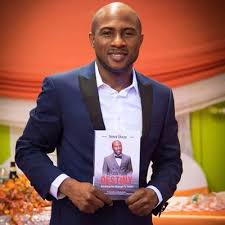
By Henry Ukazu
Dear Destiny Friends,
Everyone loves influence. Everyone wants to be a person of influence. Everyone wants to be relevant. Everyone wants to be celebrated. Everyone likes attention, appreciation, approval, and admiration. All these are products of influence.
The question I need you to ask yourself is, are you a person of influence? Are you influencing anyone? Do you have a positive or negative influence on your children, spouse, friends, mentors/mentee, or even strangers? Take a minute to listen to yourself.
When we talk about influence, uninformed minds just think influence is only about money, power, authority, or even being a mentor. Influence is far from it. We are all influencers in one way or another. Many people have influenced us in different ways, some positive, some negative. Similarly, we have also influenced many people in good and bad ways.
But today, I’m here to share with you what influence is about and the positive ways one can be a person of influence. Influence comes in different ways: as a politician, you are influencing people; as a leader, you are influencing policy; as a youth advocate, mentor, teacher, pastor, and employee, you are influencing somebody in one way or the other.
Do you know you can influence someone with your lifestyle? Yes, the way you talk, write, lead, dress, eat, exercise, preach the word of God, do your job, serve people, train your children, etc., are all part of influence. Influence is powerful. It has a way of permeating someone without them knowing. I believe that’s why my late mother would always say, if you are hanging out with a friend, only take the good part and leave the bad part.
We currently live in the 21st century, where the internet leads. The internet is regarded as the fifth estate for a reason, because it empowers networked individuals and alternative media to hold traditional institutions, governments, and mainstream media accountable. Everyone and almost everything is on the internet; however, sometimes, the information we get on the internet is regarded as fake because it’s unverified.
In some quarters, the internet has been regarded as a bad influence on the younger generation because of the limited restrictions and the negative information it has exposed their minds to think in a particular way. Some other schools of thought have opined that the internet has done more good than harm due to the knowledge it has exposed their minds to, as opposed to the information being peddled by some other schools of thought. Regardless of the aisle one belongs to, the internet truly has its pros and cons, especially as it relates to influence.
The big question one needs to answer is what influence is. According to Nosakhare Tune Oni – A Pan-African Strategist, leadership and business coach, “influence is when people trust your judgment enough to act on it. It is when someone calls you before making an important decision. When your recommendation opens a door. When your name carries weight in a room, you’re not even in. When people are willing to put their reputation behind yours. That’s influence.
Let’s take a minute to dwell on those lines again. Has anyone played any of such roles in your life? If yes, that’s the best definition of influence in a nutshell. Influence is not about quantity, but quality. The quality of people in your life is more valuable than the quantity of people one’s life. Do you know we don’t really need battalions of friends, whether online or in person, but just one person of influence can be a game-changer. According to Les Brown, a leadership coach, we need only quality people.
Do you know we are everywhere and nowhere at the same time? Do you also know that we can be everywhere and still have very little influence? Influence is about knowing your value and the right people who appreciate the value you bring. Do you know one can be a person of value to the wrong person or audience?
Influence is about having followers who believe and follow your teaching. We can have visibility with little or no influence. One may have 100,000 followers. We may trend on Facebook, Instagram, X, TikTok, LinkedIn, or even WhatsApp. Your name is a household name. That is visibility.
Let me give you a practical example. If you have a large crowd of people following you online or in person. The critical question one must ask oneself is: why are they following me? Are they following me because of my ideology, my talent/gift, academic process, position, profession, vocation, skill, or jokes? If they follow you because of the ideology you represent, you are a person of influence. If they are following you because of your jokes, you may be a content creator or comedian with little or no value in influencing them to do or not do certain things. Real influence provokes action.
According to Nosakhare Tune Oni, influence is built differently from attention. Attention can be bought. Influence must be earned. You can manufacture visibility with advertising, controversy, or constant posting. But you cannot manufacture trust that easily. It comes from consistently being useful. Keeping your word. Knowing what you’re talking about. Showing up when it matters. Building relationships before you need them.
And creating value for people without constantly asking, “What’s in it for me?”
Do you know a person with 1,000 followers and deep trust within a particular industry may have more real influence than someone with 100,000 followers who nobody listens to. So, I don’t think the goal should simply be: “How many people know me?” A better question is: “How much does my presence actually change things?” Because visibility gets you noticed. Value gets you remembered. Trust gets you listened to, but influence is what happens when people trust your value enough to move.
As I prepare to conclude, please take a minute to ask yourself: are you a person of influence? Do you have influence? What positive influence have you had on people or anyone? Today, I want you to be a man/lady of influence like Martin Luther King Jnr, Mother Theresea, Evangelist Ebuka Obi, President Nelson Mandela, Elon Musk, Bill Gates, Mark Zuckerberg, Dr. Kola Adesina, Dr. Joe Abah, Dr. Dele Momodu, Barr. Henry Ukazu and Miss Ginika Dike.
Henry Ukazu writes from New York. He works with the New York City Department of Correction as the Legal Coordinator. He’s the founder of Gloemi. He’s a Transformative Human Capacity and Mindset coach. He is also a public speaker, youth advocate, creative writer, and author of Design Your Destiny- Actualizing Your Birthright to Success, Unleash Your Destiny, and The Six Pillars of Success. He can be reached via info@gloemi.com

The Director-General (D-G) of World Trade Organisation (WTO), Dr. Ngozi Okonjo-Iweala, has commended Governor Alex Otti for the reforms she said are strengthening Abia State’s financial sustainability and driving economic transformation.
Okonjo-Iweala, who spoke in a virtual goodwill message at the 35th anniversary lecture marking the creation of Abia State, also urged the government to develop the “Made in Aba” label into a globally recognised brand.
The anniversary lecture under the theme, “The Rise of a New Abia,” was held on Wednesday at the International Conference Centre, Umuahia.
The WTO D-G said the Otti administration has increased internally generated revenue (IGR), reduced the State’s dependence on Federation Account allocations and prioritised capital expenditure.
She also noted the State’s investments in infrastructure and improved electricity supply, as well as the settlement of inherited salary and pension arrears and reduction of its debt burden.
While acknowledging that more work remains to be done, Okonjo-Iweala expressed optimism that Abia could harness its potential to create jobs, prosperity and dignity for its people.
She said improved infrastructure, supportive policies and strategic investments in high-potential sectors could position the state within national, regional and global value chains.
Okonjo-Iweala specifically urged the government to build “Made in Aba” into a globally recognised brand while strengthening Umuahia as a light manufacturing and administrative centre.
Also speaking, the keynote speaker and former Minister of Aviation, Chief Osita Chidoka, said there was visible evidence of development in Abia since Otti assumed office in 2023.
Chidoka, however, said the ultimate test of the administration would be whether it could move Abia from having a capable governor to building a capable and sustainable state.
He said Otti’s emphasis on education is consistent with convictions he had expressed long before becoming governor, particularly in his 2014 book, Saving the Future.
Chidoka commended the consistent appropriation of 20 per cent of the State’s annual budget to education and expressed optimism that Abia could eventually become a reference point for good governance.
Meanwhile, Otti apologised to the Abia State University, Uturu (ABSU), community over the delayed implementation of approved demands by the Academic Staff Union of Universities (ASUU), which resulted in the union’s recent strike.
The governor described the strike as avoidable and warned that “heads will roll” if such bureaucratic lapses recur.
Otti said the demands presented by ASUU-ABSU were legitimate and had been approved by him months earlier, but expressed concern that the approval had not been implemented.
“ASUU went on strike about a week or two ago in Abia State University, Uturu. Their requests came to me. I looked at those requests, and they were legitimate requests, and I approved them.
“But months later, I’m not saying weeks, months later, I was to be told that, yes, you have approved. But it had not been implemented.
“So, I want to, on this podium, apologise to Abia State University as well. That strike was avoidable. And I’ve told my people, if it happens again, heads will roll,” Otti said.
The governor congratulated Abians on the state’s 35th anniversary, stressing that governance was not about an individual but about building sustainable institutions and improving on existing foundations.
He reiterated his commitment to education, explaining that his administration’s decision to abolish school fees, including in the state’s smart schools, was driven by his long-standing belief in the transformative power of education.
In a vote of thanks, the Commissioner for Information, Prince Okey Kanu, called for the cooperation and support of Abians in sustaining what he described as the “rise of a New Abia.”
The event attracted members of the National Assembly, members of the State Executive Council, traditional rulers, members of the clergy and other dignitaries.


