
Headlines
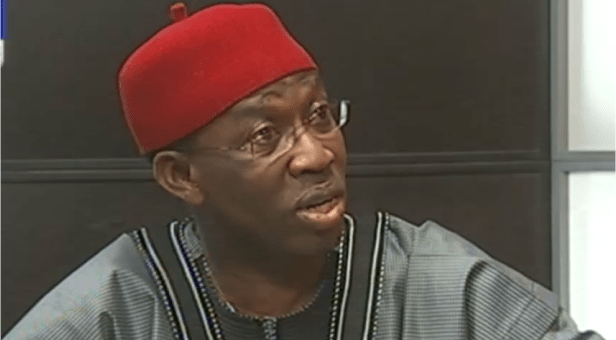
Former Delta Gov, Ifeanyi Okowa, Defects to APC
- /home/rhoncare/pointblank.ng/wp-content/plugins/mvp-social-buttons/mvp-social-buttons.php on line 27
https://pointblank.ng/wp-content/uploads/2019/05/Okowa.png&description=Former Delta Gov, Ifeanyi Okowa, Defects to APC', 'pinterestShare', 'width=750,height=350'); return false;" title="Pin This Post">
- Share
- Tweet /home/rhoncare/pointblank.ng/wp-content/plugins/mvp-social-buttons/mvp-social-buttons.php on line 69
https://pointblank.ng/wp-content/uploads/2019/05/Okowa.png&description=Former Delta Gov, Ifeanyi Okowa, Defects to APC', 'pinterestShare', 'width=750,height=350'); return false;" title="Pin This Post">
Former Governor of Delta State, Peoples Democratic Party (PDP) presidential running mate in the 2023 election, Senator Ifeanyi Okowa, has dumped the PDP for the All Progressives Congress (APC).
Okowa confirmed the news of his defection to ARISE NEWS on Wednesday following the announcement of the current governor of Delta State, Sheriff Oborevwori, who also defected from the PDP to the APC on Wednesday.
The development was disclosed by Senator James Manager after a six-hour meeting at Government House, Asaba.
“All PDP members in the state, including the governor, former Governor Okowa, the Speaker, the state party chairman, all the local government chairmen and others, have agreed to move to the APC,” Manager stated. “We cannot continue to be in a sinking boat.”
Delta State Commissioner for Information, Mr Aniagwu Charles, officially confirmed the sweeping political shift, attributing the decision to the need for renewed direction and enhanced governance in the state.
“There is a need for us to adjust our drinking patterns. And in adjusting that drinking pattern, we needed to make a decision that would further help to cement the development in our state,” he said.
Aniagwu added that the move aimed to sustain progress in law, security, and welfare, likening the PDP to a “palm wine whose taste has changed,” necessitating a change in “drinking party”.
He further indicated that the defection was unanimously agreed upon by key PDP leaders and stakeholders in the state, with a formal public declaration expected on Monday.
“By the grace of God, on Monday next week, we will be able to make a very big statement confirming that we are moving into the APC,” he said.
The mass defection represents a dramatic realignment in Delta State’s political landscape and could significantly alter party dynamics in the broader South-South region, historically a PDP stronghold.
Okowa will be received on Monday by Vice President Kashim Shettima alongside Governor Oborevwori.
AriseNews
Headlines
Hardship: Nigeria Won’t Survive Fallout of Bad Leadership, Obasanjo Warns
Former President Olusegun Obasanjo has fired his most direct warning yet to Nigeria’s political class: the country will not survive another generation of leadership failure.
Speaking during the 2026 Leadership Empowerment International Conference in Abeokuta at the weekend, Obasanjo declared that Nigeria’s crisis is no longer about identifying bad leadership — it is about the danger of tolerating it.
The two-day conference, themed “The Gravity of Leadership Failure & Correction Methodologies”, was organized by the Perspective Leadership Development Institute in collaboration with the Olusegun Obasanjo Leadership Institute. It holds in over 50 countries and is the brainchild of PLDI Founder, Prof. Olusesi Obateye.
But in Nigeria, Obasanjo turned it into a national diagnosis.
Without mentioning President Bola Ahmed Tinubu by name, the former President’s remarks landed squarely in the present. His target: an administration pushing controversial economic reforms amid widespread hardship, rising insecurity, and collapsing public trust.
Obasanjo’s core argument was blunt: Nigerians can no longer be sold promises while they pay with pain.
“A government may present itself as reformist, transformational or determined to rescue the country,” he said. “But if its decisions ultimately deepen hardship, weaken institutions, erode trust or leave citizens more vulnerable, the consequences become the more important measure of leadership.”
He took a swipe at governments that measure success by policies announced, projects commissioned, or reforms introduced— without accounting for what ordinary Nigerians feel in their pockets.
“Leadership failure in the ongoing circumstance should be judged by its consequences rather than by the intentions proclaimed at the beginning of tenure,” he stated.
The ex-President zeroed in on the human cost of current policies.
“The immediate effects of reforms and policies introduced by government have imposed considerable pressure on households and businesses,” Obasanjo noted, in an apparent reference to fuel subsidy removal, floating of the naira, and inflation.
He added: “And when the leader continues to say that hunger and hardship has been there before he was born, then that tells you clearly that there is leadership failure.”
For Obasanjo, that line is not an excuse. It is evidence.
He reminded current leaders that they will be judged not by what they inherited, but by what they leave behind.
“While it is admissible that governments frequently inherit serious problems from their predecessors, they also leave behind new consequences of their own decisions,” he said.
“The argument, therefore, is not merely about who created Nigeria’s problems. Good leadership is about who is responsible for solving them now.”
He warned that economic hardship, insecurity, institutional decay, and loss of hope are not abstract concepts. They are the direct bill paid by citizens for bad decisions at the top.
“Nigerian citizens cannot be asked indefinitely to endure pain on the promise of a better future,” Obasanjo declared. “This is where good leadership becomes critical.”
Obasanjo has long maintained that Nigeria does not lack resources or potential.
Its problem, he reiterated in Abeokuta, is the failure of those entrusted with power to convert possibilities into development.
“The fundamental danger is not merely that leaders can make mistakes,” he warned. “It is that leadership failure, when left unchecked, can impose consequences on an entire generation.”
Delivered in his hometown and at an institute bearing his name, Obasanjo’s message was both personal and national.
Nigeria’s problem, he said, has moved past diagnosis.
The question now is: Will we correct it before the consequences become irreversible?
As delegates from 50 countries watched, the elder statesman left no doubt where he stands: leadership is not about occupying office. It is about the capacity and willingness to use power responsibly, make difficult decisions in the public interest, and accept the consequences.
Anything less, he warned, and Nigeria may not survive it.
Headlines
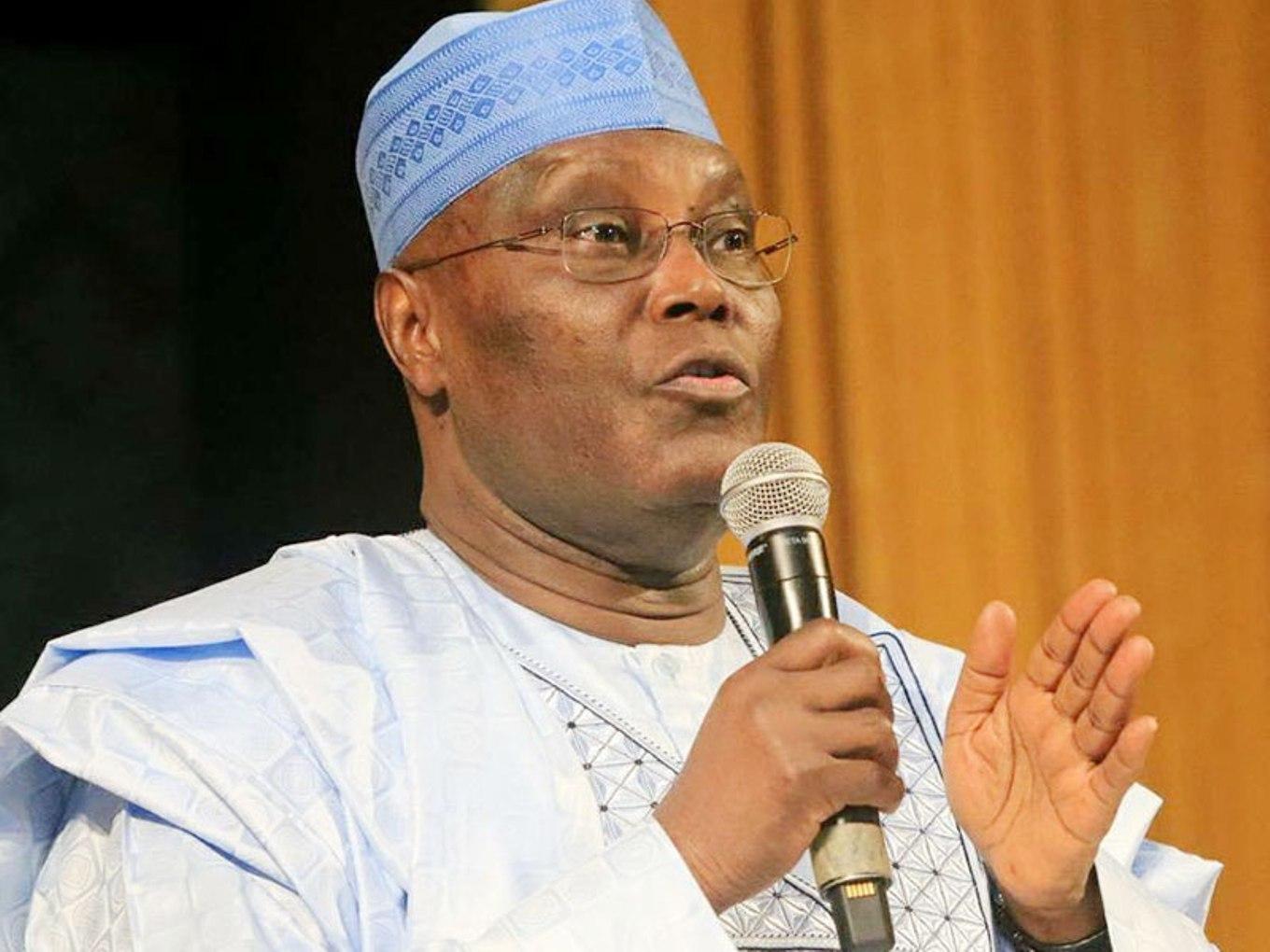
Atiku, Obi Salute Adeleke on Re-election As Osun Gov
Former Vice President Atiku Abubakar, and a former Governor of Anambra State, Peter Obi, have congratulated Governor Ademola Adeleke on his re-election in the Osun State governorship election.
The two opposition figures separately reacted to Adeleke’s victory in posts on their X accounts on Sunday, commending Osun voters and highlighting the significance of the election to Nigeria’s democracy.
Atiku described Adeleke’s victory as a reflection of the choice made by the people of Osun at the ballot box.
“I congratulate Governor Ademola Adeleke, @AAdeleke_01, on his re-election as Governor of Osun State. His victory demonstrates the choice of the people of Osun as expressed at the ballot box,” Atiku said.
He also commended the electorate for what he described as their passion and peaceful participation in the election, while wishing Adeleke success in his second term.
“I commend the people for their passion and peaceful participation. I wish Governor Adeleke continued success as he continues to serve them,” he added.
Obi, in his reaction, titled “Osun: When the People Stand, Democracy Wins,” also congratulated Adeleke and the people of the state.
He said the election had demonstrated the power of citizens to determine their leaders, adding that Adeleke’s performance and commitment to the people had earned him renewed confidence from the electorate.
Obi particularly praised young voters in Osun for what he described as their vigilance in protecting their democratic mandate.
“The lesson from Osun is clear: democracy is strongest when citizens are alert, conscious of their civic responsibility, and determined to ensure that their votes count,” he said.
The former presidential candidate also used the occasion to urge Nigerians to remain actively involved in the democratic process ahead of the 2027 general elections.
He called on citizens to register, vote and protect their ballots, arguing that Nigerians experiencing hardship, insecurity and deprivation possess the power to demand change through the ballot box.
Obi further urged political actors to prioritise the interests of Nigerians and embrace peace and the rule of law.
“Elections should never be battles of violence, but contests of ideas, competence, character, and service,” he said.
INEC declared Adeleke the winner of the Osun governorship election after he polled 511, 067 votes to defeat his closest challenger, Bola Oyebamiji of the All Progressives Congress, who secured 444, 815 votes.
Headlines
Adeleke Wins Reelection As Osun Governor
By Eric Elezuo
Governor Ademola Adeleke of Osun State has won state’s governorship election. The result was announced by the Returning Officer of the Osun State governorship election, Prof Joshua Olalekan Ogunwale.
The governor polled a total of 511, 067 votes to defeat his closest rival, Bola Oyebamiji of the All Progressives Congress (APC), who score 444, 815 votes. The African Democratic Congress (ADC), Salaam Najid (Iwaloye), came a distant third with 17, 180 votes
Adeleke took an early lead as results uploaded by the Independent National Electoral Commission (INEC) showed him establishing a commanding lead over his closest challenger, and sustained the lead till the final counting
As at 2.06 a.m. on Sunday, INEC had uploaded results from 3,612 polling units, representing 95.99 per cent of the 3,763 polling units in the state, to its Result Viewing Portal (IReV).
With results from only 151 polling units yet to be uploaded, Adeleke, candidate of the Accord Party, had polled 509,057 votes, representing 51.7 per cent of the votes available on IReV.
The emerging outcome came despite a formidable APC campaign effort that drew about 10 governors and leading figures of the ruling party to Osun to canvass support for Oyebamiji.
Eecall that the Senate President Godswill Akpabio and Speaker of the House of Representatives Tajudeen Abbas were among senior APC figures who stormed Osun, and campaigned for the party’s candidate.
Governors who joined the campaign included Hope Uzodimma of Imo State, Monday Okpebholo of Edo State, Usman Ododo of Kogi State, AbdulRahman AbdulRazaq of Kwara State, Babajide Sanwo-Olu of Lagos State, Biodun Oyebanji of Ekiti State, Dapo Abiodun of Ogun State, Mai Mala Buni of Yobe State and Lucky Aiyedatiwa of Ondo State. Delta State Governor Sheriff Oborevwori was represented by his deputy, Monday Onyeme.
By this victory, Adeleke is expected to pilot the affairs of the state for the next four years, till 2031.


