
Featured
Four Years After, Diezani’s Alleged $20bn Theft Case Still in Coma


By Dele Momodu

“I DID NOT STEAL NIGERIA’S MONEY” – Former Minister, Diezani Cries Out
By Dele Momodu
What you are about to read is probably the most anticipated story of the year birthed in the long awaited authoritative investigative newspaper of the future. This pregnant saga fell into labour last week in the pre-natal wing of Pendulum ward of Thisday clinic and it has now given birth to a big bouncing baby christened The Boss.
This is an apt metaphor for the melodramatic scoop which is the cover of the first edition of what I believe will be a catalyst for unbiased investigative reporting in Nigeria. The Boss had long been conceptualised as a Leadership newspaper to occupy the void created by lack of true and credible investigative journalism in some traditional and online media. The original plan was to launch in December or early January.
But the Diezani Alison Madueke story changed all that. It was too compelling to restrict to the Pendulum column alone. And here we are with what promises to be an exciting addition to the media landscape in Nigeria and beyond featuring an enthralling cover story that will educate and entertain the readers.
After that effervescent introduction in Thisday, in which Nigeria’s most influential newspaper published the meeting between this reporter and the embattled former Minister of Petroleum Resources, Mrs Diezani Alison-Madueke, everyone requested for details of the encounter. Some unbelieving Thomases even suggested the story was pure fiction, or at the very best “faction” to borrow Kole Omotoso’s coinage.
They wondered why a more comprehensive interview could not be published, garnished with clear crispy pictures of Madame Diezani. It was obvious many had read the story in a hurry and did not assimilate the carefully worded tale of a woman in deep pain and anguish for variety of reasons. Of course there were insinuations that it was a public relations stunt but mercifully most readers thought it was a well-balanced story. It even went viral.
At any rate, those who took their time would have noticed that I had to settle for such gripping monologue because it was virtually impossible to extract more information from a cancer patient who had spent her day with her medical team in a private London hospital. Our protagonist had also probably taken the risk of meeting this reporter in order to check if he was going to play the quintessential antagonist or do his job professionally and dispassionately.
That meeting obviously impacted on her decision to open up eventually, two days after episode one. A call came through on Friday November 6, 2015, from a female aide of Mrs Alison-Madueke to request for a meeting the following day at 2.30pm at a location yet to be determined.
The appointment was immediately approved. Later in the evening, this ubiquitous aide made yet another call shifting the appointment forward by a few hours to 11am the same Saturday. My response again was yes. The pot that would eat pepper must endure some heat, says a Yoruba proverb. The Diezani story was worth all the sacrifice in the world. In other climes, journalists would have shown more than cursory in chasing that super exclusive chat. Her copyrighted picture would have fetched a few million dollars, probably. Anyway…

A text message flew into my phone very early Saturday morning. It contained the address and full postcode of a new venue different from the one of two days earlier. Not to worry. My wife offered to chauffeur me again but without her sister this time around. While on our way, the female aide called to ask if we were going to make the 11 o’clock time pronto or arrive late. I replied we would arrive earlier rather than later. I would soon understand the import of her question. Madam Diezani was apparently on her way and I was expected to be comfortably seated prior to her arrival. Presumably, so I would not know how and from what direction she had come. There was no sign this time of any overbearing or anxious security man. Mrs Alison-Madueke had laughingly dismissed as funny my James Bond imagination of Thursday, in any event. Since the meeting was supposed to be strictly one-on-one, my wife had to wait in the car while I was away. The venue turned out to be a popular restaurant near Regent’s Park, famous for its breakfast.

I was a bit surprised and disappointed at the choice of location. I was hoping she was going to give me access to her now famous apartment which was said to have been bought at a most staggering amount, or the new multi-billion dollar home that was rumoured to have triggered the alarm leading to her arrest, claims she would dismiss as tales by moonlight.
I called the mobile number I had been given as I approached the doorway of the restaurant, and her female aide emerged from the bowel of the restaurant to lead me to a somewhat secluded corner where a table has been reserved. I was seated facing the entrance, and hoping I could catch her glimpse whenever she arrives.
After waiting for about 20 minutes or so, I heard some footsteps and the once most powerful woman in Nigeria surfaced. She looked slightly better than at our last meeting and I sprang to my feet as we exchanged pleasantries. I mentioned to her that she looks better and she said she’s been resting and gaining strength in preparation for her radiotherapy. She ordered full English breakfast while I settled only for cappuccino. But when the meal arrived she didn’t eat it because she has lost appetite for food generally and was more on fluids. She then asked for American coffee, water and fresh lime instead. She also ordered for tea at some point. Most of the time we spent talking, she coughed intermittently into a napkin and dabbed her mouth with it but she was clearly determined to pour out her obviously heavy mind despite the discomfort I could notice she was struggling to endure.

Let me reiterate for the sake of those who missed the first part of this story that our two meetings took place on Thursday, November 5 and Saturday, November 7, 2015 at different locations. The first was in a private apartment while the second was in this restaurant. Unlike the first which lasted less than half an hour, we were able to spend more time together this time. Indeed, we were at it for for over a total of just over four hours, and I believe she spoke from the heart, I believe, but the reader is always the judge.
There were several off-the-record interludes. More than anything we were both careful not to discuss in detail matters which might impact on the cases and legal problems now bedevilling her.
I did not expect otherwise. Mrs. Alison-Madueke is a smart and intelligent woman and had recently benefitted from being advised by lawyers both in UK and Nigeria in connection with her arrest in the UK and the search of her Abuja home.
Getting and persuading her to talk in detail about a lot of issues was therefore very difficult. There were other reasons. First, was her obvious paranoia of the Nigerian press. She’s been bruised, battered and blistered, especially in print and on social media. She’s been scandalised, summarily tried and precipitously convicted by the media, according to her. She did not expect anyone to lend her an ear or listen to her now muffled voice.
On top of her problems, she’s having a running battle with the most dreaded form of cancer of the breast and she’s had to undergo surgeries to remove the lumps and later some chunky tissue. The treatments have not been that successful and it’s been a ding-dong affair for this once ebullient and elegant lady.
We had to give assurances of not sensationalising her story if granted access. Of course it has never been our practice to do so and thus this was not a problem. We promised not to embellish her stories in any way or reveal off-the-record discussions which were truly personal and confidential and had nothing to do with her travails. There was a strict proviso that no form of recording would be allowed and we had to adopt the novelistic style. The result of that covenant is what you’re reading today.
We must note that we were highly restricted and encumbered by strings of events as well as existing litigation and other possible future developments. We could not get as much revelations as we expected but the little we managed to get provided enough insight into a woman who had achieved so much and enjoyed substantial accolades before the sad turn of events. Had she remained in Shell, where she became the first and only female Director, and shunned the murky water of Nigerian politics, maybe she would have savoured the klieglights forever.
We knew it was going to be very difficult getting pictures in her present not too genial or glamorous condition. That was practically tough on our first meeting as she was just returning from her hospital rounds and looked totally exhausted. We however succeeded in getting a few pictures this time some of which we are revealing for the first time today.
The Diezani Alison-Madueke story is a classic study in the intrigues of power-play. Barely months ago, she was at the pinnacle of the temple as Minister of one of the biggest oil-producing nations on earth. She was elected the President of the powerful Organisation of Petroleum Exporting Countries (OPEC). And the world was at her feet. The cancer issue had crept in, like a thief in the night, but was being treated and managed by the best doctors available in England. There was that optimism that all shall be well at the end until everything that could go wrong started going wrong, like in Murphy’s Law.
Madame Diezani confirmed that she she and the government she served loyally and passionately never thought for one second that Nigerian general elections could turn out the way it did or that they would suffer the crushing and devastating defeat that they did. The first and major casualty would be the woman who controlled the destiny of Nigerians as Petroleum Resources Minister. Under her care, a whopping $20 billion was alleged to have vamoosed into thin air. Till this day, no one has come forward to authenticate the veracity or otherwise of such mind-boggling claims. Instead we’ve received conflicting figures on the supposed infractions.

This is a story like no other and it cannot be told like any other. It is a tale from the super highway of power and the fast lane of confusion. Nothing is sweeter than power and money, in no particular order, as long as you have both you are in the rarefied company of national decision-makers. And nothing is sadder than having both and falling from grace to grass or from fame to infamy. Mrs Alison-Madueke had the world not just at her feet but firmly in her palm. She could apparently turn a certified pauper into a certificated billionaire within the twinkle of an eye. In short, she could make and unmake. Diezani was the subject of many fables. And this is the crux of the matter. Her closeness to President Jonathan and the influence she wielded on him was never a hidden matter. This lent credence to the mystical power over the Nigerian economy that it was claimed she possessed. I fired my first shot from that direction and it was as if she expected it:
“Is it true that a sister of yours has a kid or kids for President Jonathan?” I asked. “That is totally untrue as I don’t have any such sister or relative!” she said. She wondered how people could fabricate such blatant lies.
I soon followed with what I regarded as an upper-cut: “It was said that you and the former First Lady, Dame Patience Jonathan were in permanent conflict; why was it so?” She responded that their relationship was cordial enough and she gave the former First Lady the respect she should give the wife of her boss. She went further to say that “What people don’t know is that we’ve been family friends for long. My mum, Mrs Beatrice Agama, has always played the role of a godmother in the Niger Delta and all the militants love and respect her. I come from a royal and privileged background and lacked nothing.”
She said she was not unaware of certain insinuations about an intimate relationship with the former President but she never bothered her head about them because some people had made up their minds to spread those ugly tales about her. “If you are in the corridor of power, you must expect anything, including mud and even bricks being thrown at you.”
Now wait for the next shot! “You’ve been linked to so many young guys who made so much money from you and later absconded or turned against you… What was between you and Chris Aire, Kola Aluko, Jide Omokore, Tonye Cole, Dapo Abiodun, Wale Tinubu, Igho Sanomi and others?” I queried her.
Madame Diezani’s response was calm and unruffled: “I vehemently deny any intimacy or liaison with any of these gentlemen.” She noted that she is happily married like most of them are happily married and asserted that she is not the Scarlet Lady that people paint her to be. She sees those rumours as insults on accomplished women who cannot be seen in sensitive positions without running riotous with some men. She said it was important to put in context how she met most of them:
“I was the Chairman of the Nigerian Content Development & Monitoring Board and I did my job to the best of ability and intentions. My boss and I were determined to empower Nigerians, especially the young ones, who had the brains and guts to dare.” She pointed out that her firm belief and desire to empower Nigerians stemmed from the manner that she and her parents and siblings were unceremoniously dumped out of Shell Camp where her father worked and lived while she was young.
The memory was apparently traumatic as I could notice her wiping her eyes with another handkerchief. She said “I remember that day vividly. It was definitely one of the worst days of my life. We were not even allowed to finish eating before they hurriedly packed our belongings, threw them into trucks and drove us into an uncertain, unknown future.”
She continued “I was determined that what my father fought for, which was to ensure that Nigerians had a greater say in the scheme of things in Shell and thus in the petroleum industry would be championed and achieved by me in Government.”
She noted that in every government, some people must land the big jobs which every human being would love to have. She said “I chose to empower mostly Nigerians and took the power away from foreigners who used to dominate the sector. That was why we pushed for the Nigerian Content Bill, which mercifully we got through. So you cannot expect some forces not to hate me but I was shocked that Nigerians themselves were ready to crucify me mostly on rumours and not verifiable facts. Most leaders before me have suffered a similar fate so I take some comfort from that experience.”
She added that people seem to forget that she is happily married to Rear Admiral Alison Madueke and would not do anything to jeopardise her marriage or smear herself in the eyes of her husband, children and family. She also said that some of these men were unknown to her until she became a Minister and that although, in some cases, they later enjoyed a cordial relationship with her, it was no more than the kind of relationship she enjoyed with other successful Nigerian businessmen who respected and admired her for the way she was bringing Nigerians to the forefront of the industry:
“It is unfortunate that things didn’t work perfectly all the time as expected and as a leader I take the blame for those imperfections, but I’m certainly not a demon as being portrayed. I have no doubt that I served my nation well, the reason my colleagues at OPEC supported me despite the opposition from my own people. I still maintain that level of relationship with my former colleagues despite not being in government.“
I then asked why is she so controversial?“Controversy has nothing to do with your qualifications or performance. As a matter of fact, people often hate you for knowing so much and for being efficient and confident which they mistake for arrogance. We had to confront so many challenges, including oil theft and general insecurity but we did very well even if we did not succeed 100 percent. I must say that some of our own people delivered responsibly while a few of them breached the faith and wasted the opportunities handed to them by my boss, President Jonathan. Unfortunately, no one ever remembers the things that went right but everyone remembers and tends to emphasise the things that went wrong…”
We soon moved the discussion to the many allegations of financial impropriety under her tenure, especially the alleged disappearance of $20billion and other wasteful spending authorised by her. She observed that she could not go into any real details because of the criminal investigations in Nigeria and England as well as the civil case here. However, she told me she would try and provide general details about these matters because it was important to shed some light on her own involvement from the vantage point of someone actually in Government who believes these things simply cannot happen.
She was visibly angry at the mention of the $20billion: “If there is one issue I must pursue in this world it is the biggest lie of this money. How can $20billion disappear just like that? Where did it disappear to? Is it possible that such an amount would not be traceable? This is more painful coming from someone I considered a good friend who should appreciate the gravity of such allegation. I challenge anyone to come forward with facts showing that I stole government or public money. I’ve never stolen Nigeria’s money…”
“Rather I worked hard to halt the rampant business of round-tripping. When I brought in Reginald Stanley to clean up the place, I requested for a list of the defaulters. There were about 92 of them and I made sure we sanctioned them. You can imagine the threat to my life but I was ready to defend the economic interests of my country. In fact, we were able to reduce the oil subsidy by about half. No one has applauded our effort.
“There were those who said the then Governor of Central Bank must have been angry at me because of the way the Presidency treated him. In all honesty, he was being blocked from seeing the President by some of Oga’s people (presidential aides) but it had nothing to do with me. I was the one who even told Oga about the development and Oga said he would meet him in London on one of his trips. Unfortunately my boss fell ill and was rushed to King Edward Hospital and the meeting was aborted.”
“Sanusi and I had been friends. There was no way I would have done anything bad to him. He even came to my house to inform me about his interest in heading the African Development Bank and we discussed for about two hours. I promised to support him and I spoke to Oga about it. We were together on the Reconciliation Committee that looked into the accounts of NNPC. Yes there were gaps but not on the alarming scale being circulated. Markafi (former Governor of Kaduna State) did a thorough job. You know he is a very sound accountant.”
What about the allegations that she owns choice properties everywhere? “It is so sad that anyone could say such about me. Let me say something to you, I live with my husband in the same house we’ve lived since we married in 1999. Ask anyone who knows us. Our house in Abuja was bought in 2007 by my husband and as an architect and lover of interior décor I did it up to our own taste. It is not over the top because I have good taste and appreciate bargains. I shop in regular shops like B & Q to do up all the places where I live. Anyone who tells you I have houses anywhere should feel free to publish them. That was how they said I bought an expensive property in Vienna. I went to court and I won the case. I never saw the house before except in picture. The house I stay in London is rented. As a woman I love to look good. Some of my dresses and jewelleries are often dumped on me by those I buy from and I pay them when I can…”
She went on to explain that virtually all the transactions in respect of which allegations of corruption are being levelled against her went through due process and that the Group Managing Director of NNPC was actively involved in ensuring that the best international practices were maintained. She added that her involvement in the conclusion of these transactions was limited and that some of the contracts had been executed before she became Minister of Petroleum Resources. In some other cases she only got details after the contracts had been concluded when approached by some businessmen who complained about the terms. She usually admonished them to forego the contracts if they felt they were not profitable and seek other ventures within the industry.
But she emphasised that her boss neither discriminated against nor favoured anyone. She claimed some of those who benefited the most were even in opposition and mentioned how a renowned opposition leader and vocal critic of the Government at the time met her on about three occasions to discuss his interests in the business of oil.
“My boss didn’t want Nigerians to suffer because of politics so we agreed to offer certain support to a company we knew was owned by the opposition once we were satisfied they controlled the market substantially and have what it takes to deliver the goods nationwide. We were that tolerant…”
Culled from TheBoss Newspapers


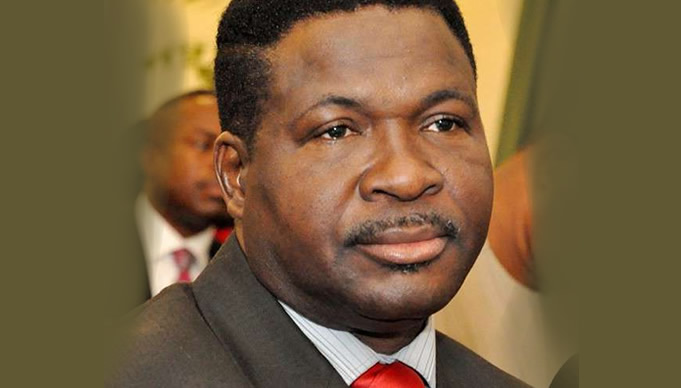
By Prof Mike Ozekhome SAN
INTRODUCTION
The last installment of this series continued from where the inaugural one stopped: the analogy of each corpse buried without justice being a clause in the Constitution buried in effigy. It then explained how inequality breeds violence, before moving onto how systemic lapses in law enforcement is the hidden engine of insecurity and erosion of rights. Later, it examined the contrast between constitutional mandate and institutional reality, followed by the politicization and weaponization of law enforcement; corruption as operational culture; and finally operational weaknesses and structural management. The week, we shall continue with same theme, after which we shall delve into the failure of internal accountability; collusion with criminal networks; erosion of civil liberties through enforcement practices; the cycle of impunity; abuse of judicial power and executive lawlessness targeted at the Bench. Thereafter, we shall consider various pathways and recommendations for addressing insecurity, rights protection and institutional weakness. Enjoy.
OPERATIONAL WEAKNESSES AND STRUCTURAL MISMANAGEMENT
Nigeria’s police-to-population ratio remains alarmingly low. With about 371,800 officers serving a population of over 236 million people, the country is well below the United Nations’ recommended benchmark of 222 officers per 100,000 people. This manpower gap severely hampers the Force’s capacity to tackle crime, especially in volatile areas plagued by insurgency and communal violence. To make matters worse, many of the limited officers available are deployed to safeguard high-profile politicians and elites rather than serving the broader public. In rural communities, especially in conflict-affected northern states, residents report waiting hours, sometimes days, for police to respond to distress calls, if they ever respond at all.
Compounding this problem is inadequate training. Many recruits receive minimal exposure to forensic methods, human rights protocols, or community policing principles. As a result, investigative work relies heavily on confessions, which are frequently extracted through coercion or torture. This not only violates constitutional guarantees against inhuman treatment but also produces unreliable evidence that weakens prosecutions.
Logistical deficits are equally damaging. Many police divisions operate without functioning patrol vehicles, secure communication equipment, or modern crime labs. The Inspector General of Police has acknowledged that, outside of Lagos, forensic capability is virtually non-existent. Without scientific investigation, crimes are either left unsolved or result in wrongful arrests, further undermining public trust
FAILURE OF INTERNAL ACCOUNTABILITY
In a functioning democracy, law enforcement personnel are subject to robust oversight, both internally and through independent bodies. In Nigeria, oversight mechanisms exist in name but not in consistent practice. The Police Service Commission (PSC), which is meant to handle recruitment, promotion, and discipline, is itself politically influenced and suffers from inadequate funding. Complaints of misconduct often disappear into opaque disciplinary processes, and there is little transparency about the outcomes.
When abuses are too public to ignore, as with the October 2020 End SARS protests, Commissions of Inquiry are established, testimonies are heard, and reports are submitted. Yet, implementation of recommendations remains rare. In Lagos, for example, despite the panel’s findings implicating specific officers in excessive force and unlawful killings, few have been prosecuted. Instead, many have returned quietly to duty. This pattern sends a dangerous message to the rank-and-file officers: violations carry reputational risk but rarely legal consequence.
COLLUSION WITH CRIMINAL NETWORKS
Perhaps the most alarming dimension of enforcement failure is the documented collusion between security personnel and criminal actors. In the Niger Delta, security forces have been implicated in illegal oil bunkering, the very crime they are deployed to prevent. In parts of the North-West, reports from Amnesty International and local media allege that bandit groups pay “protection fees” to avoid military or police raids.
Such collusion transforms law enforcement from an adversary of crime into a stakeholder in it. This is not merely passive negligence; it is active participation in the shadow economy of insecurity. In these areas, communities quickly learn that reporting crimes may not only be futile but dangerous, as information shared with authorities can be leaked to perpetrators.
EROSION OF CIVIL LIBERTIES THROUGH ENFORCEMENT PRACTICES
The systemic lapses in law enforcement also directly erode civil liberties. Arbitrary arrests, prolonged detentions without trial, suppression of lawful assembly, and harassment of journalists are not isolated acts but part of an entrenched enforcement culture. The constitutional right to personal liberty under Section 35 is regularly violated under the guise of maintaining public order.
Protesters face preemptive crackdowns, often justified by vague references to national security. During the #Revolution Now protests in 2019, dozens of demonstrators were detained, some for weeks, without formal charges. In many cases, court orders for their release were ignored by security agencies, underscoring the absence of legal consequence for disobedience of judicial authority.
This disregard for civil liberties creates a chilling effect on political participation and civic engagement. Citizens learn that speaking out carries personal risk, and self-censorship becomes a survival strategy. Over time, this quietens public dissent, enabling further abuses by both government and non-state actors.
THE CYCLE OF IMPUNITY
The combination of politicization, corruption, operational weakness, and lack of accountability feeds into a self-reinforcing cycle of impunity. Officers learn that their actions are judged not by legality but by political expediency. Politicians, in turn, see law enforcement as a tool to protect themselves and punish adversaries. Criminal networks exploit these gaps, securing protection through bribery or political patronage.
Once entrenched, this cycle is difficult to break. Each unpunished violation becomes a precedent, normalizing the idea that power grants immunity from the law. This normalization spreads beyond law enforcement to other institutions, eroding the very foundations of democratic governance.
THE ABUSE OF JUDICIAL POWER AND EXECUTIVE LAWLESSNESS AGAINST THE BENCH
In a functioning democracy, the judiciary serves as the impartial referee between the powerful and the powerless. It is the last line of defence for the citizen and the final hope for justice. But what happens when that sacred institution itself becomes the object of aggression? What happens when the enforcers of state power turn their weapons not on criminals, but on the judges who interpret the law? Nigeria confronted these very questions in October 2016, when the homes of senior judges across the country were invaded by heavily armed operatives of the Department of State Services under the cover of night.
These raids, carried out in Abuja, Gombe, and Port Harcourt, targeted some of the most senior members of the judiciary, including Justices Walter Onnoghen and Sylvester Ngwuta of the Supreme Court, and Federal High Court judges Adeniyi Ademola and Nnamdi Dimgba. The DSS claimed they were investigating corruption, yet their conduct betrayed a more sinister motive. Homes were stormed in Gestapo fashion, judges were treated like fugitives, and search warrants reportedly carried incorrect names or were not presented at all. The judiciary was under siege. In Rivers State, Governor Nyesom Wike arrived at the residence of one of the judges to intervene and was reportedly shoved, injured, and threatened by DSS operatives. It was not an arrest. It was a constitutional assault.
I spoke firmly and publicly against this invasion. I said then what I still affirm now: the DSS acted outside the bounds of the law. As I told journalists and as reported by Premium Times, the operation was not only illegal and unconstitutional but a dangerous desecration of the rule of law. No agency of government, including the DSS, has the authority to arrest or search the premises of serving judicial officers without going through the National Judicial Council, which is constitutionally empowered to discipline judges. If there are allegations of corruption, there is a process. That process was willfully ignored. What we saw instead was a show of force meant to intimidate and humiliate. It was executive lawlessness under the guise of anti-corruption.
The greatest tragedy, however, was not merely that these events occurred. It was the manner in which they were received. The Bar, which ought to have risen as a united force, was sluggish in its response. Statements were issued, but no real action followed. There were no mass protests, no urgent court filings to challenge the illegality. The judiciary itself offered little more than murmurs of disapproval. That silence was deafening. It spoke to a larger issue: the slow death of institutional courage. When judges are raided in their homes and lawyers look away, then the entire legal profession stands indicted. If we cannot defend our own, how then can we defend the people?
This unfortunate episode also calls into question the internal health of the judiciary. The Nigerian Law Society recently criticized the widespread abuse of power within judicial institutions, pointing to opaque appointments, poor welfare, and inconsistent rulings. According to their statement reported by the Guardian, the lower courts remain underpaid and under-respected, leaving many judicial officers vulnerable to compromise. It is undeniable that some within the judiciary have failed in their duties, and that corruption has indeed crept into its chambers. However, even in the face of that, the remedy is never brute force. It is lawful accountability, constitutional procedure, and institutional reform. The rule of law must never be sacrificed on the altar of expediency.
When security agents raid the homes of judges without due process, they are not upholding the law, they are undermining it. And when the legal community reacts with silence or justification, it invites a repeat. What began with judges will not end there. Such violations set a precedent that can easily extend to journalists, lawmakers, academics, and eventually, ordinary citizens. Today it is the gavel. Tomorrow it will be the pen, the vote, the voice. That is how authoritarianism begins not always with a declaration, but often with silence.
It is not too late to reset the balance. But we must remember that a judiciary that submits to fear is no judiciary at all. A legal profession that only whispers in the face of injustice is unworthy of its robes. We must return to our roots, as defenders of liberty and protectors of due process. Let the judiciary regain its independence, and let the Bar reclaim its courage. Only then can we begin to restore the broken faith between the Nigerian people and the system that was meant to serve them.
PATHWAYS AND RECOMMENDATIONS FOR ADDRESSING SECURITY, RIGHTS PROTECTION, AND INSTITUTIONAL WEAKNESS IN NIGERIA
The challenges outlined in this paper reveal a complex web of governance failures, enforcement gaps and systemic disregard for constitutional rights. Addressing these issues requires deliberate and sustained action across multiple fronts. The following ten pathways provide a practical blueprint for reform.
Reform of Law Enforcement Institutions
The Nigerian Police Force, the Department of State Services, and related agencies need deep structural reforms. Recruitment should be based on merit and integrity rather than political patronage. Training should include human rights education, forensic investigation, and conflict-sensitive community policing. The practice of diverting a large proportion of officers to serve political elites must be stopped so that policing resources are redirected toward public safety.
Creation of Independent Oversight and Accountability Mechanisms
A civilian-led oversight authority should be established with the power to investigate and prosecute cases of misconduct by law enforcement officials. This body must have full access to records, the ability to compel testimony, and legal safeguards for whistleblowers. Its findings should be made public to ensure transparency and build trust. (To be continued).
THOUGHT FOR THE WEEK
“Money and corruption are ruining the land, crooked politicians betray the working man, pocketing the profits and treating us like sheep, and we’re tired of hearing promises that we know they’ll never keep”. (Ray Davies).

Women of Substance, founded by renowned media consultant Chief Ify Onyegbule (Ada Di Ora Mma), is set to host the maiden edition of the “Sisters’ Hangout”, a strategic networking and empowerment gathering for women across diverse sectors, designed to foster collaboration, visibility, personal growth, and impactful partnerships.
Scheduled as an exclusive lunch-table conversation for Women, by Women, and powered by Women, the Sisters’ Hangout brings together established and emerging voices in journalism, business, education, media, fintech, philanthropy, data science, food services, and grassroots development.
The Hangout has already confirmed an extraordinary lineup of accomplished women, each bringing unique perspectives and deep industry insights.
1. Petra Akinti Onyegbule — Corporate Communications Strategist
Petra is an authority in leadership communication, storytelling, and brand clarity. She will lead conversations on how to keep a brand alive, relevant, and competitive in a saturated marketplace.
2. Theresa Moses — Journalist, Humanitarian & Media Leader
Theresa Moses, Convener of Pad Me A Girl Initiative, Head of Gatmash Media, Chairperson of Nigeria Online Media Alliance (NOMA), and CEO of Vita Baites Foods (makers of premium Kuli-Kuli), will share how she successfully combines media leadership with running a fast-growing FMCG brand.
3. Anthonia Ojenagbon — Founder, Silton African Kitchen
A food service expert specializing in large-scale catering, Anthonia will discuss navigating the pressures of cooking for large events and remaining excellent outside one’s comfort zone.
4. Chioma Iroabuchi — Digital Transformation Leader
Chioma, a driver of fintech-enabled process optimization, will break down the beginner steps into opportunities in the fintech sector, especially for women exploring tech.
5. Oluwatomisin Adebukola — Award-Winning Broadcast Journalist
A leadership coach and community development advocate, she will highlight realities of working in grassroots spaces, and how passion-driven initiatives bring hope to underserved communities.
6. Olayinka Mayaki-Yusuf — General Manager, Shipshape Cleaners Limited
Olayinka will share the business of professional cleaning, project management, and what it takes to thrive in a highly competitive service industry.
7. Temitayo Oluwatobi Adetoba — Data Scientist & Girls’ Education Advocate
Tayo will educate attendees on how data shapes decision-making and why women must tap into the booming data ecosystem.
8. Cordy Nachi Opara — Educator & Relationship Coach
Cordy will shed light on nurturing children with different personalities, and how mothers can be intentional leaders in the home.
9. Chief Yinka Kenny — Broadcast Journalist & Gender Champion
Yinka brings decades of media experience and will reveal the behind-the-scenes challenges faced by women in media, along with strategies for thriving in the industry.
10. Ijeoma Uzozie Mark-Abii — Estate Surveyor & Travel Expert
Ijeoma will demystify the business of tourism and hospitality, sharing what most people are never told about the travel industry.
11. Anusiem DO (Nwachukwu Delphine Onyinye) — Author & Humanitarian
The visionary behind Brisa Women Foundation will highlight stories of women impacted through empowerment programs and the importance of community-driven action.
12. Wemimo Adebiyi — Therapist & Child Mental Health Advocate
UK-trained therapist and educator, Wemimo will engage women on child mental health, school systems, and the power of effective communication at home.
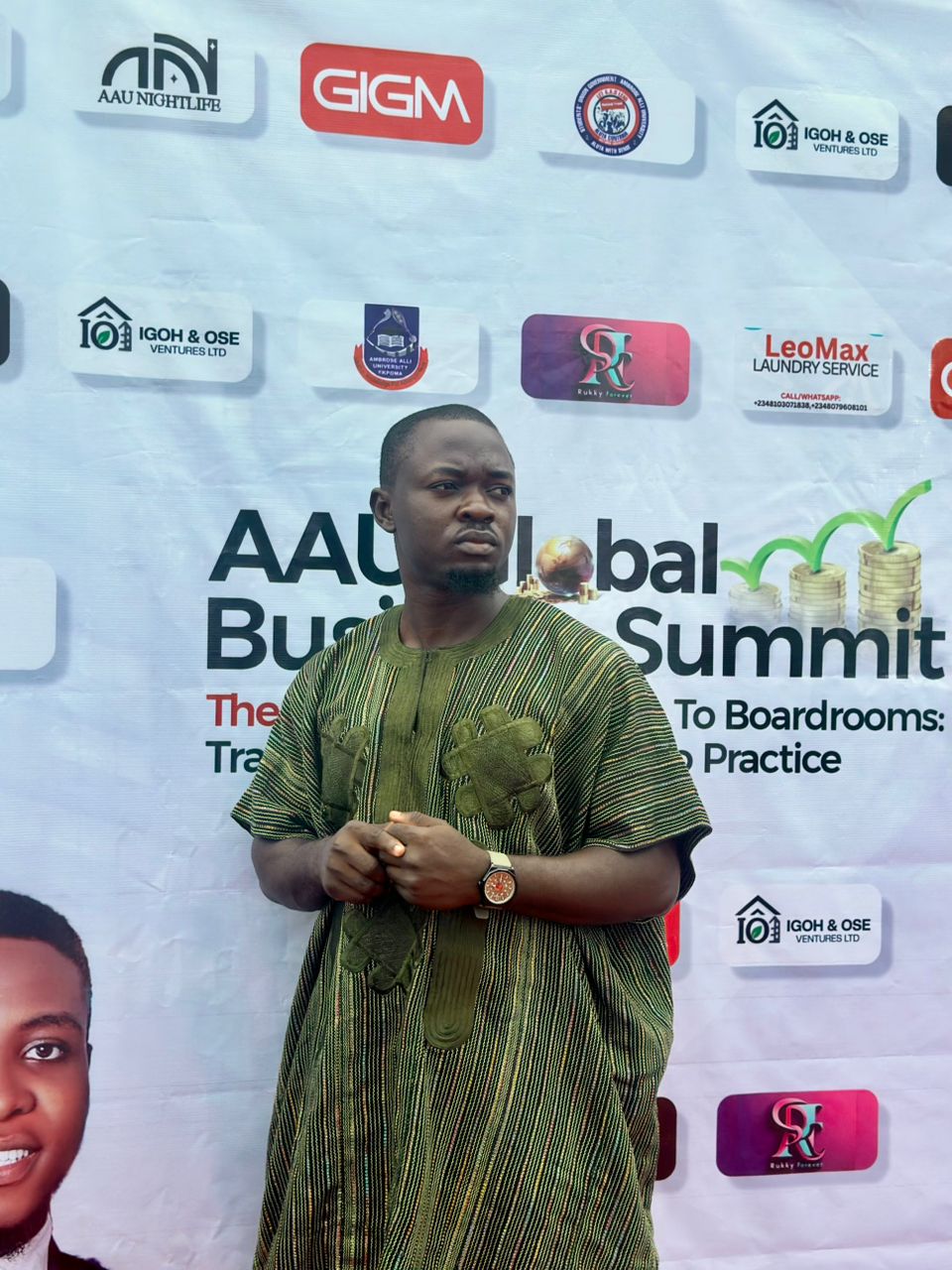
By Ayo Oyoze Baje
“Our goal is to bring the experience of home-cooked Nigerian food to more people, one community at a time. By this, we are celebrating culture and culinary excellence” – Olorunsomo Smart Adeola, aka Alamalla
In a vibrant celebration of culture, food, and community spirit, Amala Spot with Adeola Alamala recently hosted the much-anticipated Amala Day 2025, followed closely by the grand opening of its brand-new AAU Campus Outlet in Ekpoma. The events, held on Friday, 31st October, and Saturday, 1st November 2025, with the outlet officially opening on Monday, 10th November 2025, marked a major milestone for the fast-growing local food brand known for its authentic Nigerian dishes and warm customer experience.
Amala Day 2025 wasn’t just another food event it was a festival of culture, taste, and togetherness. For two full days, from 12 PM to 8 PM, the atmosphere at Amala Spot on Sec School Road, Ujemen, Ekpoma, was filled with excitement, laughter, and the irresistible aroma of freshly served Amala, Ewedu, and Gbegiri.
Customers trooped in large numbers, eager to partake in the special 20% discount offered throughout the event. From students to working professionals and local food lovers, everyone came together to celebrate the timeless Nigerian delicacy that unites people across generations.
Olorunsomo Smart Adeola, popularly known as Adeola Alamala, is a graduate of Ambrose Alli University, Ekpoma, Edo State, from the Department of Medical Laboratory Science. Long before his university days, he had already been actively involved in the food industry, where he developed a strong passion for culinary excellence and customer satisfaction.
Adeola Alamala, the passionate founder and face behind Amala Spot, described the event as “a moment to celebrate our roots, appreciate our customers, and introduce new faces to the real taste of Amala done right.”
Guests were treated to well-prepared meals featuring the perfect blend of soft Amala, rich Ewedu soup, and the flavorful Gbegiri option. Many attendees commended the brand for maintaining high food standards and consistency while creating an environment that felt like home.
Beyond the delicious food, Amala Day was also about community connection. Adeola and the team interacted directly with customers, creating a friendly, family-like atmosphere. There were light games, cheerful moments, and even spontaneous dance sessions that kept the energy alive throughout the event.
What truly stood out was the spirit of togetherness Amala Spot successfully turned an ordinary weekend into a memory-filled culinary celebration. Patrons expressed their satisfaction, with many sharing positive feedback on social media and promising to return with friends.
One student attendee commented, “Amala Spot isn’t just a food place anymore; it’s a vibe. Adeola and the team made everyone feel special.”
The two-day festival didn’t just end with satisfied customers it also built momentum for something bigger: the expansion of Amala Spot into new territory.
The Launch of Amala Spot AAU Campus Outlet
Barely a week after the successful Amala Day, Amala Spot with Adeola Alamala took another bold step by launching its AAU Campus Outlet on Monday, 10th November 2025, at 2:00 PM, located before Igbinedion Hostel, AAU Campus, Ekpoma.
This new branch, designed as a “Take-Out Only” outlet, represents the brand’s innovative approach to convenience and accessibility for students and staff within the Ambrose Alli University community. The opening day featured a 10% discount on all take-out orders, drawing a crowd of enthusiastic customers eager to be among the first to experience the new spot.
Adeola Alamala expressed gratitude for the overwhelming support and explained that the AAU Campus branch was inspired by high demand from university students who wanted easier access to their favorite meals. “We realized many of our loyal customers are students who love our Amala but find it difficult to leave campus often. This new outlet brings Amala closer to them,” he said.
The new outlet is a reflection of Adeola Alamala’s long-term vision to make Amala Spot not just a local eatery, but a recognizable food brand across multiple campuses and cities in Nigeria. The Ekpoma expansion shows the brand’s commitment to growth while maintaining its strong focus on taste, quality, and customer satisfaction.
According to Adeola, the success of the Amala Day celebration reaffirmed the community’s love for authentic Nigerian meals and reinforced the need to spread that joy beyond one location. “Our goal is to bring the experience of home-cooked Nigerian food to more people, one community at a time,” he said proudly.
Both the Amala Day event and the new outlet launch demonstrate the brand’s unique philosophy combining culinary excellence with cultural pride. Amala Spot is not just about serving food; it’s about sharing a cultural experience that connects people emotionally to their roots.
By offering discounts, engaging directly with customers, and expanding thoughtfully, Adeola Alamala continues to redefine what a modern local food brand can achieve. The emphasis on trust, transparency, and consistency has earned Amala Spot a loyal following and positioned it as a leading destination for traditional meals in Edo state.
As Amala Spot with Adeola Alamala looks to the future, the brand’s mission remains clear: to celebrate Nigerian cuisine, promote food entrepreneurship, and create spaces where food, friendship, and culture meet beautifully.
The success of the 2025 Amala Day and the launch of the AAU Campus outlet are only the beginning. With the love and support of its growing community, Amala Spot is well on its way to becoming a household name one bowl of Amala at a time.
Kudos to Alamala for his patriotic efforts to bring a local delicacy, such as Amala to the global stage.


