
Headlines
Fuel Subsidy is Back, Marketers Insist, Counter FG

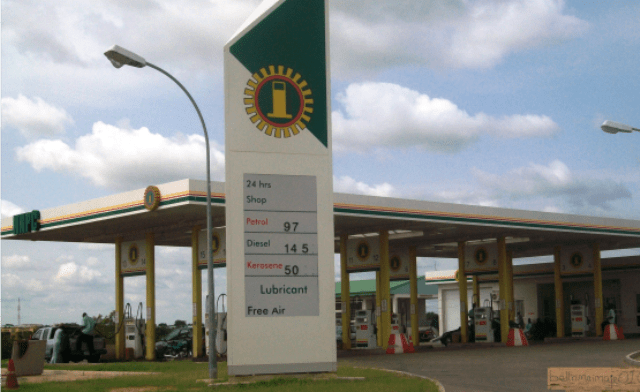
Oil marketers has countered the position of the Federal Government, as they insist that the current pump price of Premium Motor Spirit, popularly called petrol, should not be less than N800/litre if there was no subsidy on the commodity.
Petrol currently sells at between N580/litre and N617/litre depending on the area of purchase, as the Federal Government, through its Nigerian National Petroleum Company Limited, had denied reintroducing PMS subsidy.
On Monday, the Group Chief Executive Officer, NNPCL, Mele Kyari, denied the reintroduction of petrol subsidy and claimed that the pockets of queues by motorists observed in petrol stations across the country stemmed from hiccups in products’ distribution from the South to the North and not a lack of supply.
“No subsidy whatsoever. We are recovering our full cost from the products that we import. We sell to the market, and we understand why the marketers are unable to import. We hope that they do it very quickly and these are some of the interventions the government is doing. There is no subsidy,” Kyari had stated.
He had made the claim barely 48 hours after the Petroleum and Natural Gas Senior Staff Association of Nigeria confirmed the return of fuel subsidy.
Also, oil marketers had earlier stated repeatedly that fuel subsidy had returned, as they explained that the landing cost of petrol as of last week was N720/litre.
On Tuesday, they lambasted the NNPCL boss for coming out to state that the government was not subsidising PMS, as they explained why subsidy on PMS had returned.
“I don’t know why the government keeps peddling lies. When they removed the PMS subsidy, a dollar was about N700 and they made us believe that the removal of subsidy would make the supply of products play according to the dictates of demand and supply, looking at forex as the benchmark.
“Now, this is just simple arithmetic, if you removed the subsidy when a dollar was about N700 and today the dollar is more than N1,000, and you are still supplying and giving products at almost the same rate, what is the magic? They are subsidising products as we speak.
“They are spending billions of naira to subsidise products, and because they know that this country may go on fire if Nigerians buy products at about N1, 000/litre, they keep twisting facts. Why can’t they come out and tell the world the truth?” the National Secretary, Independent Petroleum Marketers Association of Nigeria, Chief John Kekeocha, stated.
He said the government went ahead to remove the subsidy without looking at the nitty gritty involved before implementing the decision.
“You cannot wake up overnight and remove subsidy without considering the pros and cons, only for you to wake up again and start putting back the subsidy into play secretly, and you think Nigerians will not know,” he stated.
Asked to state the implications of these concerns in the downstream sector, Kekeocha replied, “I am telling you that in a very short time there will be no product anywhere in this country, apart from the tank farms that have access to diesel.
“This is because many marketers cannot even function well with the cost of diesel. Check the cost of diesel and the cost of supply and distribution. How many marketers can do it and sell at about N600/litre? The cost of landing PMS is over N700/litre.”
Explaining the effect of the cost of diesel on the operations of filling stations, the IPMAN official stated that “when you compute the cost of bringing PMS from Warri to Abuja or other Northern states by an independent marketer, it will land here (North) at more than N700/litre.
“The cost of diesel is now very high and many marketers can’t afford it, and still sell to compete with the tank farm owners who sell at about N617/litre. Consumers cannot see where the product is sold cheap and go to where it is costly.”
Kekeocha, however, noted that tank farm owners involved in retailing of petrol were few, stressing that such category of dealers were very limited when compared to independent marketers.
Independent marketers control about 80 per cent of filling stations across the country, as a reduction in their operations is going to lead to scarcity in many locations, particularly areas that lack major operators that have tank farms.
“So independent marketers cannot compete right now due to the high cost of diesel and the inability to import due to forex issue, which is why you see that the number of functional filling stations nationwide have been reducing on a daily basis,” the IPMAN official stated.
On whether stabilising forex would help the situation, Kekeocha replied, “The government cannot address forex because it is not within their control. If the government has to address forex, it means it still has to make it clear that they have decided to bring back subsidy.
“It is only subsidy that can keep the price of fuel at the rate that it is now at about N600 plus. Otherwise any moment from now, the cost of a litre of fuel will be about N800/litre or more. The government didn’t do what they are supposed to do ab-initio.”
Asked to state what the government should have done earlier, he said, “There is nothing we can do now than to do what we would have done before – make the refineries work. If refineries are working and they are producing at Warri and Port Harcourt, it will reduce the pressure on importation.
“This is also going to reduce the cost of the product locally, because the cost of fuel and diesel at this moment is due to the fact that we have to import them and this is at the current forex rate. You cannot manipulate forex. So we didn’t do what we ought to have done initially.”
On claims by NNPCL that it had enough product, the IPMAN secretary said this was not entirely correct.
“The situation in the downstream oil sector is very painful. How can Kyari go to the open and be telling people that he is not subsidising the product? He also said they have billions of litres of fuel and that nothing is going to happen, let him come out and watch what is happening in town right now.
“You can’t get taxis because most of them cannot get fuel, and their cost is now very high. Many people have packed their vehicles. How many stations are selling? For the few ones that are selling, the queues are endless here in Abuja.”
On his part, the National President, Natural Oil and Gas Suppliers Association of Nigeria, Benneth Korie, said filling stations were closing, as he insisted that fuel subsidy had been gradually reintroduced.
“NOGASA is seriously worried, between now and December this year, there is need for urgent government intervention to stop the shutting down of our filling stations and parking of our petroleum tankers, all due to the high cost of importation, distribution of products, etc,” he stated.
Korie also stated that the high cost of diesel was killing businesses in the downstream oil sector, stressing that concerns around subsidy on PMS had not helped matters lately.
“Among our recommendations to the government include the declaration of a state of emergency on our refineries, provision of palliatives to marketers for importation of diesel for 120 days before the commencement of operations by the refineries, since the government said refineries will start in December,” he declared.
Earlier, another dealer explained that the last private marketer, PETROCAM, that imported petrol into Nigeria recently, could not sell it due to the reintroduction of subsidy on PMS and the insistence of NNPCL not to raise its pump price.
The marketer stated that before the last one month, whenever they (marketers) brought in products, they would convince the NNPCL to raise the price in accordance with the landing cost.
“The depots are dried up. That’s a statement of fact. For more than a month now no other importer has brought in product except NNPC,” the oil dealer, who spoke on condition of anonymity due to lack of authorisation, stated.
“Since over a month now, I don’t think marketers have been able to influence NNPC to change its price. So that is why you hear that the landing cost currently is about N720/litre, but NNPC is still selling at between N580 to N617, depending on your location.”
The source explained that the current price of petrol had lingered because the government was subsidising the commodity.
“It (government) has said the price should not be more than that amount. So since over a month no marketer has brought in product due to the reintroduction of subsidy.”
On whether NNPC has enough products to keep the country wet, since marketers have stopped PMS imports, the source replied, “NNPC also has its challenges too
“The NNPC you have now is different from the one of before. If it was before, even if they bring in 10 million litres, they can give close to seven million litres to other marketers and use the rest.
“But now, even some of their retail outlets don’t have products because they are so much currently. So you cannot bring in products and be supplying third parties, leaving your own.”
Subsidy gulps N4.8tn annually
Meanwhile, the government through the Nigerian Midstream and Downstream Petroleum Regulatory Authority, stated on Tuesday that fuel subsidy was gulping about N4.8tn from its purse.
The Chief Executive Officer, NMDPRA, Farouk Ahmed, disclosed this at the ongoing Energy and Labour Summit organised by PENGASSAN in Abuja.
“The financial implication of PMS subsidy rose to over N400bn monthly which translates to over N4.8tn ($6bn) annually, making it unsustainable in the short to medium term.
“Subsidy on PMS hugely impacted government revenues available to all tiers of government leading to inability of the government to meet their obligations.
“Last year alone, Nigeria imported a total of about 23.5 billion litres of PMS. Our average daily truck out over a period of eight years stood at over 55 million litres per day, with a peak of 66.7 million litres recorded for the year 2022.
“In the year 2022, Nigerian government expended more than N4tn on PMS subsidy. This amounted to about 20 per cent of fiscal budget for the year, presented a strain on the fiscal viability of the government, and became a major obstacle to inclusive participation in downstream petroleum sector,” Ahmed stated.
He pointed out that fuel subsidies had been in Nigeria since the 1970s when government routinely sold petrol to Nigerians at below cost, but stressed that it had to be stopped.
The Punch


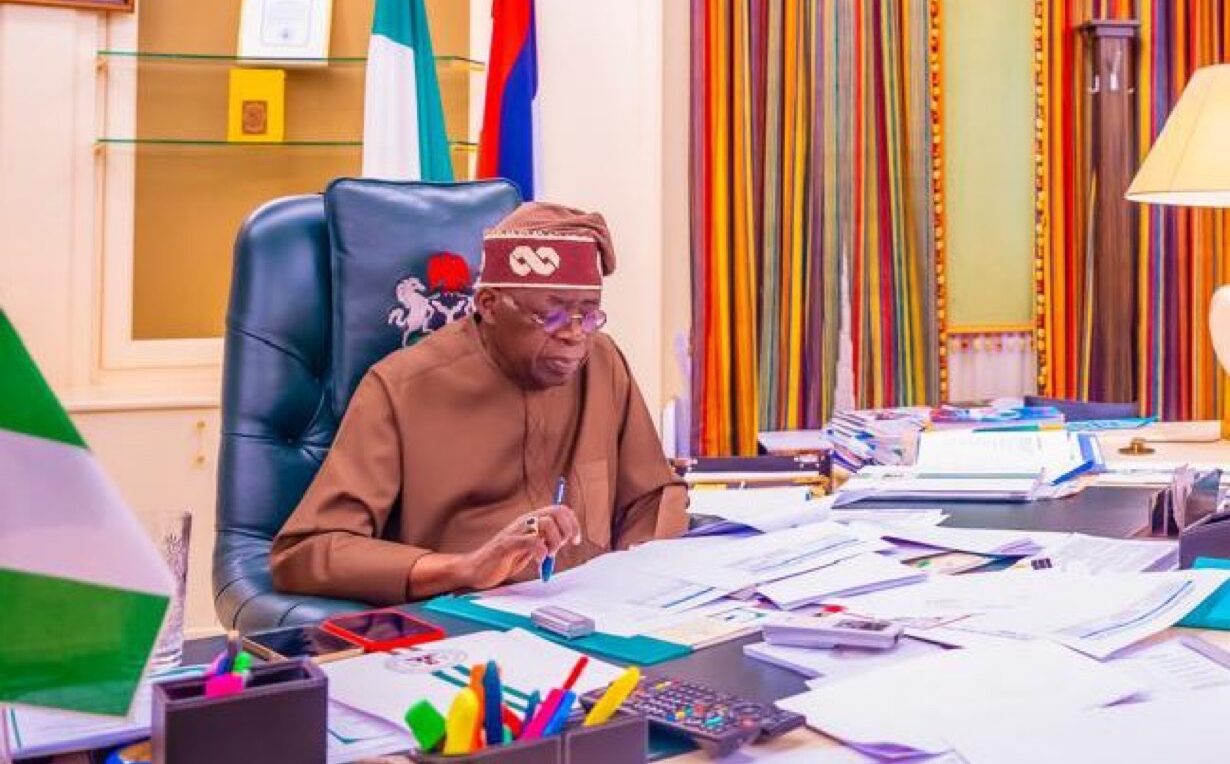
An Abuja High Court has cleared the way for the implementation of Nigeria’s new tax regime scheduled to commence on January 1, 2026, dismissing a suit seeking to halt the programme.
The ruling gives the Federal government, the Federal Inland Revenue Service (FIRS) and the National Assembly full legal backing to proceed with the take-off of the new tax laws.
The suit was filed by the Incorporated Trustees of African Initiative for Abuse of Public Trustees, which dragged the Federal Republic of Nigeria, the President, the Attorney-General of the Federation, the President of the Senate, Speaker of the House of Representatives and the National Assembly before the court over alleged discrepancies in the recently enacted tax laws.
In an ex-parte motion, the plaintiff sought an interim injunction restraining the Federal Government, FIRS, the National Assembly and related agencies from implementing or enforcing the provisions of the Nigeria Tax Act, 2025; Nigeria Tax Administration Act, 2025; Nigeria Revenue Service (Establishment) Act, 2025; and the Joint Revenue Board of Nigeria (Establishment) Act, 2025, pending the determination of the substantive suit.
The group also asked the court to restrain the President from implementing the laws in any part of the federation pending the hearing of its motion on notice.
However, in a ruling delivered on Tuesday, Justice Kawu struck out the application, holding that it lacked merit and failed to establish sufficient legal grounds to warrant the grant of the reliefs sought.
The court ruled that the plaintiffs did not demonstrate how the implementation of the new tax laws would occasion irreparable harm or violate any provision of the Constitution, stressing that matters of fiscal policy and economic reforms fall squarely within the powers of government.
Justice Kawu further held that once a law has been duly enacted and gazetted, any alleged errors or controversies can only be addressed through legislative amendment or a substantive court order, noting that disagreements over tax laws cannot stop the implementation of an existing law.
Consequently, the court affirmed that there was no legal impediment to the commencement of the new tax regime and directed that implementation should proceed as scheduled from January 1, 2026.
The new tax regime is anchored on four landmark tax reform bills signed into law in 2025 as part of the Federal Government’s broader fiscal and economic reform agenda aimed at boosting revenue, simplifying the tax system and reducing leakages.
The laws — the Nigeria Tax Act, 2025, Nigeria Tax Administration Act, 2025, Nigeria Revenue Service (Establishment) Act, 2025, and the Joint Revenue Board of Nigeria (Establishment) Act, 2025 — consolidate and replace several existing tax statutes, including laws governing companies income tax, personal income tax, value added tax, capital gains tax and stamp duties.
Key elements of the reforms include the harmonisation of multiple taxes into a more streamlined framework, expansion of the tax base, protection for low-income earners and small businesses, and the introduction of modern, technology-driven tax administration systems such as digital filing and electronic compliance monitoring.
The reforms also provide for the restructuring of federal tax administration, including the creation of the Nigeria Revenue Service, to strengthen efficiency, coordination and revenue collection across government levels.
While the Federal government has described the reforms as critical to stabilising public finances and funding infrastructure and social services, the laws have generated intense public debate, with some civil society groups and political actors alleging discrepancies between the versions passed by the National Assembly and those later gazetted.
These concerns sparked calls for suspension, re-gazetting and legal action, culminating in the suit dismissed by the Abuja High Court.
Reacting to the judgment, stakeholders described the ruling as a major boost for the reforms, saying it has removed all legal obstacles that could have delayed the implementation of the new tax framework.
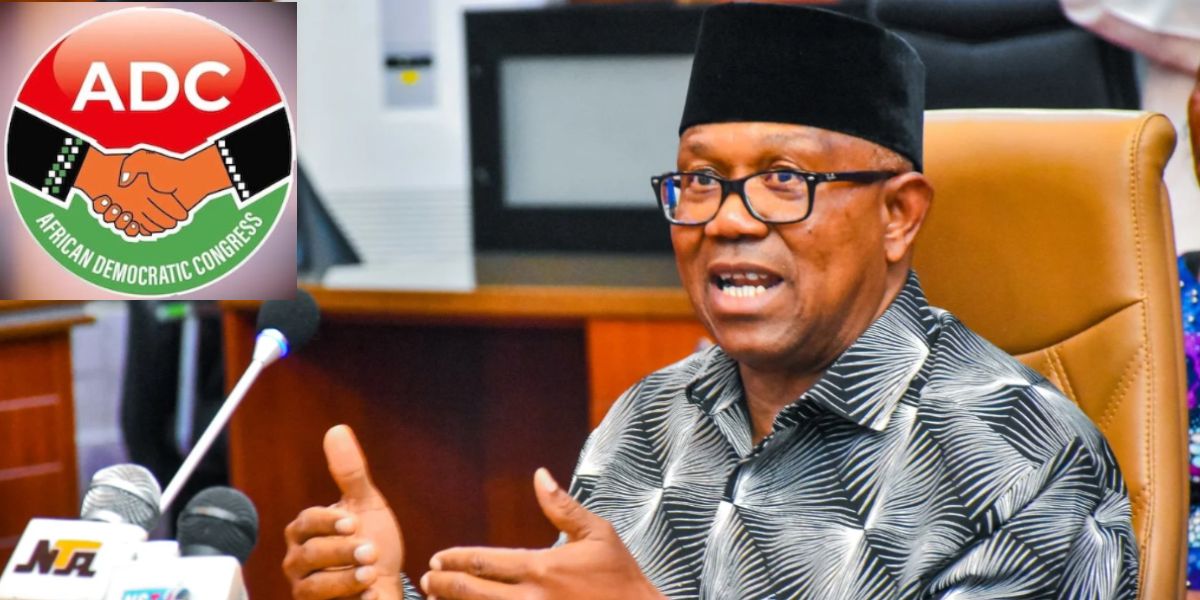
Former governor of Anambra State, presidential candidate of the Labour Party (LP) in the 2023 election, Mr. Peter Obi, has officially defected to the coalition-backed African Democratic Congress (ADC).
Obi announced the decision on Tuesday at an event held at the Nike Lake Resort, Enugu.
“We are ending this year with the hope that in 2026 we will begin a rescue journey,” Obi said.
The National Chairman of the ADC, David Mark, was among the attendees.

United States Representative Riley Moors has said further military strikes against Islamic State-linked militants in Nigeria could follow recent operations ordered by President Donald Trump, describing the actions as aimed at improving security and protecting Christian communities facing violence.
Moore made the remarks during a televised interview in which he addressed U.S. military strikes carried out on Christmas Day against militant targets in North-west Nigeria.
The strikes were conducted in coordination with the Nigerian government, according to U.S. and Nigerian officials.
“President Trump is not trying to bring war to Nigeria, he’s bringing peace and security to Nigeria and to the thousands of Christians who face horrific violence and death,” Moore said.
He said the Christmas Day strikes against Islamic State affiliates had provided hope to Christians in Nigeria, particularly in areas affected by repeated attacks during past festive periods.
According to U.S. authorities, the strikes targeted camps used by Islamic State-linked groups operating in parts of north-west Nigeria.
Nigerian officials confirmed that the operation was carried out with intelligence support from Nigerian security agencies as part of ongoing counter-terrorism cooperation between both countries.
The United States Africa Command said the operation was intended to degrade the operational capacity of extremist groups responsible for attacks on civilians and security forces.
Nigerian authorities have described the targeted groups as a threat to national security, noting their involvement in killings, kidnappings and raids on rural communities.
Moore said the strikes marked a shift from previous years in which attacks were carried out against civilians during the Christmas period. He said the U.S. administration was focused on preventing further violence by targeting militant groups before they could launch attacks.
U.S. officials have said the military action was carried out with the consent of the Nigerian government and formed part of broader security cooperation between the two countries. Nigeria has received intelligence, training and logistical support from international partners as it seeks to contain militant activity.
Moore had previously called for stronger international attention to attacks on Christian communities in Nigeria and has urged continued U.S. engagement in addressing extremist violence. He said further action would depend on developments on the ground and continued coordination with Nigerian authorities.
Nigerian officials have maintained that counter-terrorism operations are directed at armed groups threatening civilians, regardless of religion, and have reiterated their commitment to restoring security across affected regions.


