
Headlines
Full Text of Buhari’s Independence Day


- /home/rhoncare/pointblank.ng/wp-content/plugins/mvp-social-buttons/mvp-social-buttons.php on line 27
https://pointblank.ng/wp-content/uploads/2019/04/Buhari-1-1000x576.jpeg&description=Full Text of Buhari’s Independence Day', 'pinterestShare', 'width=750,height=350'); return false;" title="Pin This Post">
- Share
- Tweet /home/rhoncare/pointblank.ng/wp-content/plugins/mvp-social-buttons/mvp-social-buttons.php on line 69
https://pointblank.ng/wp-content/uploads/2019/04/Buhari-1-1000x576.jpeg&description=Full Text of Buhari’s Independence Day', 'pinterestShare', 'width=750,height=350'); return false;" title="Pin This Post">
INDEPENDENCE DAY ADDRESS BY HIS EXCELLENCY, MUHAMMADU BUHARI, PRESIDENT OF THE FEDERAL REPUBLIC OF NIGERIA ON THE OCCASION OF NIGERIA’S SIXTIETH INDEPENDENCE ANNIVERSARY, THURSDAY 1ST OCTOBER 2020
Fellow Nigerians
I speak to you today as your President and fellow citizen on this epoch occasion of our country’s 60th independence Anniversary. As President, I wish to renew my appreciation to Nigerians for entrusting me with your hopes and aspirations for a better and greater Nigeria.
2. Today, it is my unique privilege to re-commit myself to the service of this great country of great people with profound diversities and opportunities. We are bound by destiny to be the largest and greatest black nation on earth.
3. At this stage in our nationhood it is important that we reflect how we got here to enable us work TOGETHER to get to where we aspire to be as a strong indivisible nation, united in hope and equal in opportunity.
4. On October 1st 1960 when Prime Minister Alhaji Abubakar Tafawa Balewa received the constitutional instruments symbolizing Nigeria’s independence, he expressed his wish that having acquired our rightful status as an independent sovereign nation, history would record that the building of our nation proceeded at the wisest pace.
5. This optimism was anchored on the peaceful planning, full and open consultation and harmonious cooperation with the different groups which culminated in Nigeria emerging as a country without bitterness and bloodshed.
6. Our founding fathers understood the imperative of structuring a National identity using the power of the state and worked towards unification of Nigerians in a politically stable and viable entity.
7. That philosophy guided the foundation that was laid for our young nation of 45 million people with an urban population of approximately 7million occupying an area of 910,768 square kilometers. These demographics led to development challenges for which major efforts were made to overcome.
8. Today, we grapple with multiple challenges with a population exceeding 200million occupying the same land mass but 52% residing in urban areas.
9. Sixty years of nationhood provides an opportunity to ask ourselves questions on the extent to which we have sustained the aspirations of our founding fathers. Where did we do the right things? Are we on course? If not where did we stray and how can we remedy and retrace our steps?
10. Upon attaining independence, Nigeria’s growth trajectory was anchored on policies and programmes that positively impacted on all sectors of the economy. However, this journey was cut short by the 30-months of civil war.
11. We came out of the civil war with a focus on reconstruction, rehabilitation and reconciliation that enabled the country to put in place world class development structures and a strengthened public service that well served the government. This positive trajectory continued with a return to democratic government which was truncated by another round of military rule.
12. For a cumulative 29 of our 60 years existence as a nation, we have been under military rule.
13. My summary of our journey so far as a nation is necessary to appropriately chart where we need to go and how to get there TOGETHER.
14. Today, I am aware that our economy along with every single economy in the world is in crisis. We still face security challenges in parts of the country, while our society suffers from a high loss of moral rectitude which is driven by unbridled craving for political control.
15. An underlying cause of most of the problems we have faced as a nation is our consistent harping on artificially contrived fault-lines that we have harboured and allowed unnecessarily to fester.
16. In addition, institutions such as civil service, police, the judiciary, the military all suffered from a general decline.
17. We need to begin a sincere process of national healing and this anniversary presents a genuine opportunity to eliminate old and outworn perceptions that are always put to test in the lie they always are.
18. The stereotype of thinking of ourselves as coming from one part of the country before seeing ourselves as Nigerians is a key starting point to project us on the road to our deserved nation’s evolution and integration.
19. To start this healing process, we are already blessed with the most important asset any nation requires for such – OUR PEOPLE – and this has manifested globally in the exploits of Nigerians in many fields.
20. It has been demonstrated time and time again that Nigerians in the diaspora frequently excel in science, technology, medicine, sports, arts and many other fields.
21. Similarly, the creativity, ingenuity and resourcefulness of the Nigerian at home have resulted in globally recognized endeavours.
22. I am convinced that if we pursue our aspirations TOGETHER we would be able to achieve whatever we desire. That informed our adopting the theme TOGETHER to mark this epochal event.
23. Together we can change our condition for the better and more importantly, together we can do much more for ourselves and for our country.
24. I chose the path of self-reflection because this is what I do on a daily basis and I must confess that at most times, I always felt the need for a collective reflection as I know that the foundation for a solid future which this administration is laying can only be sustainable if there is a collective commitment by Nigerians.
25. Nigeria is not a country for Mr. President, any ruling or opposition party but a country for all of us and we must play our part, irrespective of challenges we face, to make this country what we desire.
26. To achieve this, we must focus our minds, TOGETHER as a people, on ways of resolving the identified critical challenges that underlie our present state. These include:
a. Evolving and sustaining a democratic culture that leaves power in the hands of the people;
b. Supporting the enthronement of the rule of law, demanding accountability of elected representatives and contributing to good governance;
c. Increasing our commitment to peaceful co-existence in a peaceful, secure and united Nigeria;
d. Harnessing and Optimizing our tremendous human and natural resources to attain our goal of being in the top twenty economies of the world and in the process;
e. Lifting 100 million Nigerians out of poverty in 10 years;
f. Strengthening institutions to make them stronger in protecting National Interests; and
g. Imbibing tolerance in diversity.
27. I am a firm believer in transparent, free, fair and credible elections as has been demonstrated during my period as a democratically elected President.
28. The recent build-up and eventual outcome of the Edo State elections should encourage Nigerians that it is my commitment to bequeath to this country processes and procedures that would guarantee that the people’s votes count.
29. The problems with our electoral process are mainly human induced as desperate desire for power leads to desperate attempts to gain power and office.
30. Democracy, the world over and as I am pursuing in Nigeria, recognizes the power of the people. However, if some constituencies choose to bargain off their power, they should be prepared for denial of their rights.
31. This call is made more urgent if we realise that even after a transparent, free, fair and credible election, desperation leads to compromising the judiciary to upturn legitimate decisions of the people.
32. It is necessary to, therefore support the enthronement of the rule of law by avoiding actions which compromise the judiciary.
33. Fellow Nigerians, our history has shown that we are a people that have the capacity to live peacefully with one another.
34. As a government, we remain committed to our constitutional oath of securing the lives and properties of the citizenry. I, however, call on the citizenry to also support government by providing the necessary community level intelligence in addressing these challenges.
35. In moving forward together, it is important to strengthen our economy to provide sustainable means of livelihood for as many Nigerians as possible so as to eradicate absolute poverty from our midst.
36. I want to re-emphasize my dedication and commitment, a dedication and commitment that propelled my public service career and informed my quest to continually seek for an opportunity to improve the lives of Nigerians, set the country on the path of prosperity and lead the country to a better future.
37. This administration has been focused on rebuilding and laying the foundations for a sustainable Nigeria. Of course, we have met and are still meeting the challenges inherent in any rebuilding initiative – more so that of a nation like Nigeria that has undergone avoidable levels of deprivation – but can be surmounted if we all work together.
38. I wish to re-iterate that our people and our spirit of excellence remains our most important asset.
39. In this wise, the need to return to our age-old ethical and high moral values would be necessary and this informed my launching of the National Ethics and Integrity Policy on Monday 28th September, 2020.
40. The policy would not implement itself and the first contact of the visibility of its implementation is the Public Service whose on-going reforms would be expected to be sustainable and give a radical re-direction in providing services to all Nigerians.
41. Fellow Nigerians, in addition to public health challenges of working to contain the spread of the Coronavirus, we have suffered a significant drop in our foreign exchange earnings and internal revenues due to 40 per cent drop in oil prices and steep drop in economic activities, leading to a 60 per cent drop in government revenue.
42. Our government is grappling with the dual challenge of saving lives and livelihoods in face of drastically reduced resources.
43. In this regard, sustaining the level of petroleum prices is no longer possible. The government, since coming into office has recognized the economic argument for adjusting the price of petroleum. But the social argument about the knock-on effect of any adjustment weighed heavily with the government.
44. Accordingly, in the last three years, we have introduced unprecedented measures in support of the economy and to the weakest members of our society in the shape of:
a. Tradermoni
b. Farmermoni
c. School Feeding Programme
d. Job creation efforts
e. Agricultural intervention programmes
45. No government in the past did what we are doing with such scarce resources. We have managed to keep things going in spite of the disproportionate spending on security. Those in the previous Governments from 1999 – 2015 who presided over the near destruction of the country have now the impudence to attempt to criticize our efforts.
46. In the circumstances, a responsible government must face realities and take tough decisions.
47. Petroleum prices in Nigeria are to be adjusted. We sell now at N161 per litre. A comparison with our neighbours will illustrate the point;
a. Chad which is an oil producing country charges N362 per litre
b. Niger, also an oil producing country sells 1 litre at N346.
c. In Ghana, another oil producing country, petroleum pump price is N326 per litre.
48. Further afield, Egypt charges N211 per litre. Saudi Arabia charges N168 per litre. It makes no sense for oil to be cheaper in Nigeria than in Saudi Arabia.
49. Fellow Nigerians, to achieve the great country we desire, we need to solidify our strength, increase our commitment and encourage ourselves to do that which is right and proper even when no one is watching.
50. Fellow Nigerians, let us collectively resolve to continue our journey beyond the sixty years on the clear understanding that as a nation we are greater together than being smaller units of nationalities. By the special grace of God we shall come through any transient challenges.
51. It is my sincere hope that by the end of this anniversary on September 30th 2021, we will all be proud of taking this individual and collective self-assessment for the progress of our great Nation.
Long Live the Federal Republic of Nigeria.
God Bless us all. Thank you.


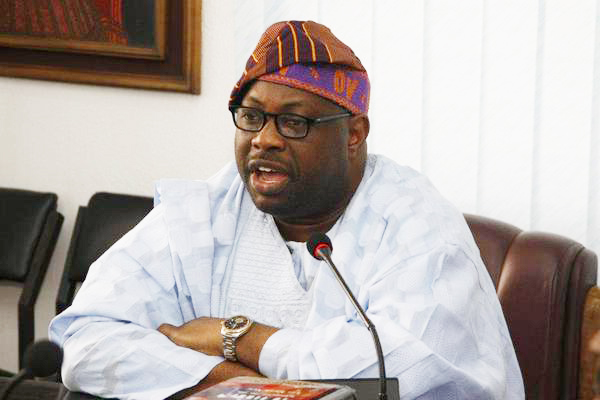
A chieftain of the African Democratic Congress (ADC), and Deputy Director of the Presidential Campaign Council, Chief Dele Momodu, has described former Vice-President Atiku Abubakar as the most nationally formidable and experienced among the leading contenders for the 2027 presidential election.
Momodu said Atiku’s experience at the national level distinguishes him from President Bola Tinubu and former Anambra State Governor, Peter Obi.
He stated this on Wednesday during an interview on Eagle 102.5 FM, Ilese-Ijebu, in Abeokuta.
“If you look at the antecedents of the three major candidates, between Atiku Abubakar and Peter Obi, you will see that Atiku is the most experienced. He has managed our country at the highest level,” he said.
Momodu traced Atiku’s political journey to the 1992 Social Democratic Party (SDP), presidential primary where he contested against late MKO Abiola and stepped down for him.
He said Atiku accepted the outcome without crisis even after he was not picked as Abiola’s running mate, describing it as a mark of true democratic temperament.
“He is the only one who started from around 1992, contested the SDP primary against Abiola and stepped down with uncommon equanimity. He did not make any noise,” Momodu said.
He noted that Atiku was among the founders of the Peoples Democratic Party, PDP, and served as Vice-President from 1999 to 2007.
Comparing Atiku with Obi, Momodu argued that while Obi’s best was demonstrated in Anambra, Atiku’s was at the presidency level managing the national economy.
“Peter Obi has tried his best in Anambra, while Atiku’s best is at the level of vice president controlling the economy of Nigeria. The difference is clear. He has matured in experience and exposure,” he said.
Momodu also said President Tinubu’s experience was largely limited to Lagos.
“What I’m trying to say is that Tinubu’s experience was limited to Lagos, and that is why when he became president, he thought Nigeria was Lagos. And he has found out now that Nigeria is not Lagos,” he said.
He argued that the current economic hardship under the present administration did not show prosperity, insisting Atiku remained better positioned to lead the country.
“Well, we are yet to see that prosperity, and if yesterday would determine today and tomorrow, it is obvious that Tinubu should retire now and let someone else do it,” Momodu added.
DailyPost
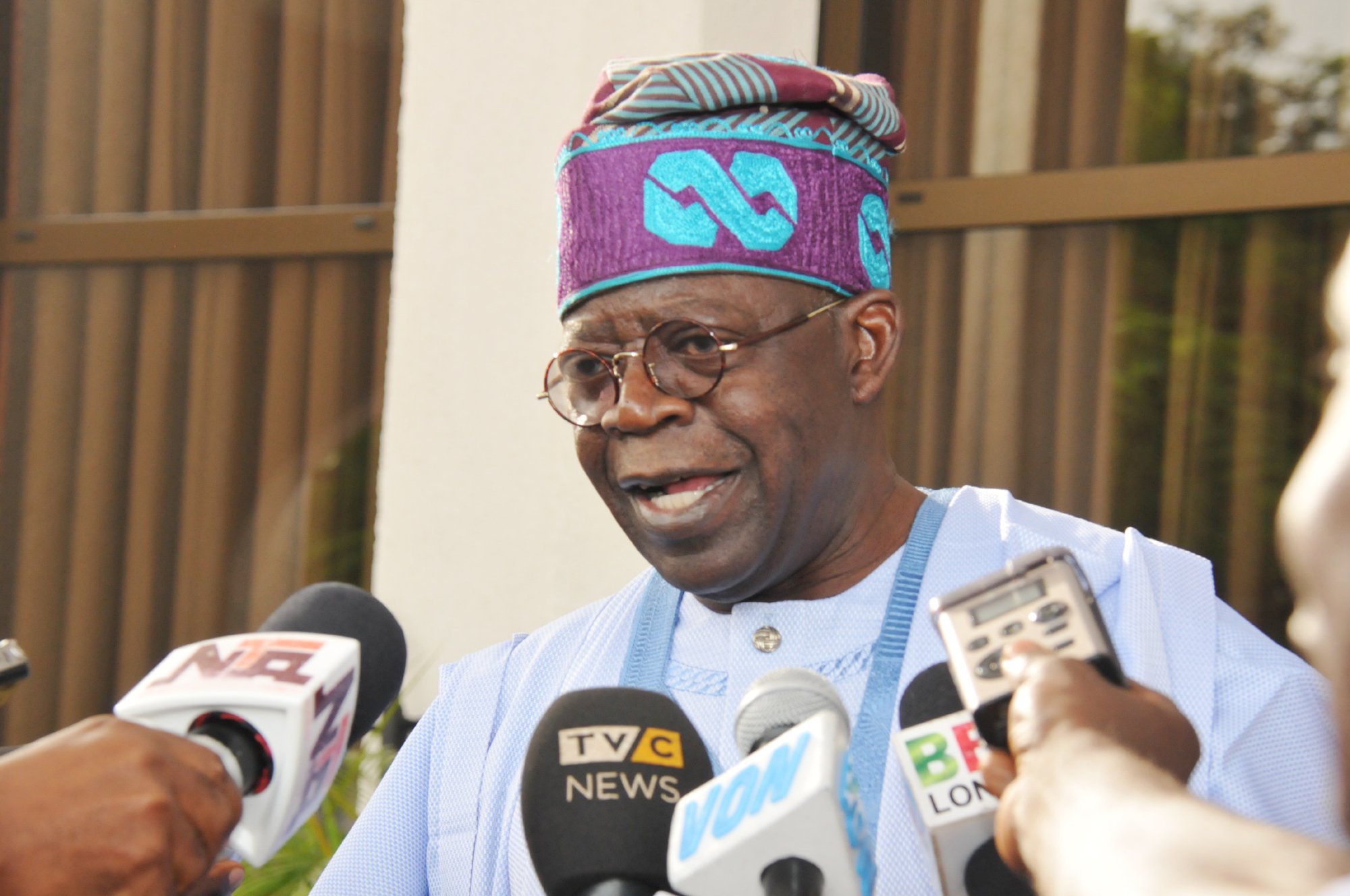
President Bola Tinubu says he has no regrets over the removal of petrol subsidy and other economic reforms introduced by his administration, insisting that Nigeria could not borrow its way to greatness.
Meanwhile, Minister of Finance and Coordinating Minister of the Economy, Taiwo Oyedele, has warned Nigerians against returning to petrol subsidy. He said the backtrack could trigger capital flight, undermining investor confidence and pushing the Naira to N3,000, N3,500 or even N4,000 per dollar.
But the Director of Media and Publicity of the African Democratic Congress (ADC) Presidential Campaign Council (PCC), Kola Ologbondiyan, challenged Oyedele to publish the economic model behind his warning that a return to fuel subsidy could push the naira to N4,000 per dollar.
The President spoke on Monday during the City Boys Movement retreat in Abuja, where he charged members of the group to mobilise support for his administration ahead of the 2027 general elections, insisting that the country’s future mattered more than the ambition of any individual candidate.
“No regrets,” Tinubu said, insisting that his administration would not be pushed back from its reform agenda.
He took a swipe at his political opponents, promising to restore the petrol subsidy, saying Nigeria could no longer afford to pay the fuel subsidy, and warning that reversing the policy would take the country back to an unsustainable economic path.
Defending his decision to remove the subsidy on his first day in office, Tinubu said the country was on the verge of financial collapse and could no longer afford the policy’s cost.
Tinubu also sought to reassure Nigerians about the direction of the economy, arguing that growth was steady and that the sacrifices associated with his reforms would ultimately offer citizens a future worth believing in.
Oyedele disclosed during a press briefing of the International Monetary Fund (IMF) and World Bank Annual Meetings in Bangkok, Thailand, yesterday, that investors had repeatedly questioned whether the government would abandon its reforms ahead of the next election cycle.
Ruling out the reversal of the government’s economic reforms, he maintained that any signal that Tinubu’s administration was contemplating or reinstating the subsidy would immediately affect financial markets, raise borrowing costs and worsen economic pressures on households.
“In all the meetings I have had, I came to a conclusion that the markets, including the domestic market, which you can read from the capital market, and the international market, have largely written off the opposition in Nigeria as unserious.
“If, for any reason, the President were to say we are merely considering the return of fuel subsidy, capital would react immediately, airfares would struggle, the naira would come under severe pressure, potentially moving towards 3,000, 3,500 or even 4,000.
The very fuel people want subsidised would become far more expensive in Naira terms,” Oyedele warned.
However, Ologbondiyan accused the Federal government of using fear to discourage debate on fuel subsidy, insisting that Nigerians deserve evidence, not alarming projections, on the potential economic consequences of restoring the policy.
Speaking to journalists, he described the minister’s warning as scaremongering and demanded that the government explain how it arrived at the projected exchange rate.
“The Minister of Finance is merely scaremongering. He cannot claim that a return to fuel subsidy will cause the naira to depreciate to N4,000 to the dollar without showing Nigerians the model behind that projection,” he said.
He questioned the reliance on investors’ concerns to oppose a subsidy’s return, challenging the government to identify the sources of the projections and disclose their calculations.
President Bola Tinubu has expressed sadness over the death of Ambassador Patrick Dele Cole, describing him as a distinguished diplomat, journalist, politician and public servant.
Cole died at 86.
In a statement on Saturday, Tinubu said Cole devoted his life to national service and brought distinction to his work in diplomacy, journalism and politics.
“His career reflected the enduring value of dialogue, tact, mutual respect and the pursuit of shared interests in advancing national development and international cooperation,” the President said.
Tinubu noted Cole’s contributions to Nigeria’s media landscape, particularly as Managing Director of the Daily Times, where he upheld the role of the press in holding public officials accountable, speaking truth to power and strengthening democratic governance.
“His legacy in journalism and public life remains an enduring part of our national story,” he said.
The President said at 86, Cole witnessed defining moments in Nigeria’s history and contributed to national development, adding that his life stands as a testament to experience, principled engagement and commitment to public good.
Tinubu extended condolences to Cole’s family, friends, professional associates and all whose lives he touched, praying that memories of his remarkable life will bring comfort and strength.
“May Almighty God grant Ambassador Cole eternal rest and give his family and all who mourn him the fortitude to bear this profound loss,” he said.


