
Headlines
Full Text of President Buhari’s Independence Day Speech


- /home/rhoncare/pointblank.ng/wp-content/plugins/mvp-social-buttons/mvp-social-buttons.php on line 27
https://pointblank.ng/wp-content/uploads/2019/04/Buhari-1-1000x576.jpeg&description=Full Text of President Buhari’s Independence Day Speech', 'pinterestShare', 'width=750,height=350'); return false;" title="Pin This Post">
- Share
- Tweet /home/rhoncare/pointblank.ng/wp-content/plugins/mvp-social-buttons/mvp-social-buttons.php on line 69
https://pointblank.ng/wp-content/uploads/2019/04/Buhari-1-1000x576.jpeg&description=Full Text of President Buhari’s Independence Day Speech', 'pinterestShare', 'width=750,height=350'); return false;" title="Pin This Post">
INDEPENDENCE DAY SPEECH BY HIS EXCELLENCY MUHAMMADU BUHARI PRESIDENT OF THE FEDERAL REPUBLIC OF NIGERIA ON THE OCCASION OF THE 59TH INDEPENDENCE ANNIVERSARY 1st OCTOBER, 2019
Dear Compatriots,
1st October each year is an opportunity for us to reflect and thank God for his endless blessings on our country.
- It is also a time for us, collectively, to:
- Remember the sacrifices made by our Founders and great leaders past; by soldiers, by distinguished public servants; by traditional leaders, by our workers —- sacrifices on which Nigeria has been built over the 59 years since Independence in 1960; and
- Rededicate ourselves to attaining the goals which we have set for ourselves: a united, prosperous and purposeful nation in the face of 21st century opportunities and challenges.
- In the past four years, the majority of Nigerians have committed to Change for the Better. Indeed, this Administration was re-elected by Nigerians on a mandate to deliver positive and enduring Change – through maintaining our National Security; restoring sustainable and inclusive Economic Growth and Development; and fighting Corruption against all internal and external threats.
- This Change can only be delivered if we are united in purpose, as individuals and as a nation. We must all remain committed to achieving this positive and enduring Change. As I stated four years ago, “Change does not just happen… We must change our lawless habits, our attitude to public office and public trust… simply put, to bring about change, we must change ourselves by being law-abiding citizens.”
SECURITY:
- Good Governance and Economic Development cannot be sustained without an enabling environment of peace and security. In the last four years, we have combatted the terrorist scourge of Boko Haram. We owe a debt of gratitude to our gallant men and women in arms, through whose efforts we have been able to achieve the present results. We are also grateful to our neighbours and allies – within the region and across the world – who have supported us on this front.
- The capacity of our armed forces to defend our territorial integrity continues to be enhanced by the acquisition of military hardware as well as continued improvements in the working conditions of our service men and women.
- The Ministry of Police Affairs has been resuscitated to oversee the development and implementation of strategies to enhance internal security. My recent assent to the Nigerian Police Trust Fund (Establishment) Act has created a legal framework to support our Police with increased fiscal resources to enhance their law enforcement capabilities.
- These initiatives are being complemented by the ongoing recruitment of 10,000 constables into the Nigeria Police Force. This clearly demonstrates our commitment to arrest the incidence of armed robbery, kidnapping and other violent crimes across our nation.
- We remain equally resolute in our efforts to combat militant attacks on our oil and gas facilities in the Niger Delta and accelerate the Ogoni Clean-up to address long-standing environmental challenges in that region.
- The recent redeployment of the Niger Delta Development Commission from the Office of the Secretary to the Government of the Federation, to the Ministry of Niger Delta Affairs underscores our commitment to enhance the living standards of our communities in the Niger Delta, through coordinated and appropriate programmes.
- Our attention is increasingly being focused on cyber-crimes and the abuse of technology through hate speech and other divisive material being propagated on social media. Whilst we uphold the Constitutional rights of our people to freedom of expression and association, where the purported exercise of these rights infringes on the rights of other citizens or threatens to undermine our National Security, we will take firm and decisive action.
- In this regard, I reiterate my call for all to exercise restraint, tolerance and mutual respect in airing their grievances and frustrations. Whilst the ongoing national discourse on various political and religious issues is healthy and welcome, we must not forget the lessons of our past – lessons that are most relevant on a day such as this.
- The path of hatred and distrust only leads to hostility and destruction. I believe that the vast majority of Nigerians would rather tread the path of peace and prosperity, as we continue to uphold and cherish our unity.
ACCELERATING SUSTAINABLE AND INCLUSIVE ECONOMY GROWTH
- This Administration inherited a skewed economy, where the Oil Sector comprised only 8% of Gross Domestic Product but contributed 70% of government revenue and 90% foreign exchange earnings over the years. Past periods of relatively high economic growth were driven by our reliance on Oil Sector revenues to finance our demand for imported goods and services. Regrettably, previous governments abandoned the residual Investment-driven Non-Oil Sector, which constituted 40% of Gross Domestic Product and comprised agriculture, livestock, agro-processing, arts, entertainment, mining and manufacturing activities that provide millions of jobs for able-bodied Nigerians and utilize locally available raw materials and labour for production.
- To address this imbalance, our commitment to achieving economic diversification has been at the heart of our economic strategies under the Economic Recovery and Growth Plan, which I launched on the 5th of April, 2017.
- This medium-term development plan charted the trajectory for our economy to exit from recession and return to the path of sustainable, diversified and inclusive growth for Nigerians. Pursuant to these reforms, the economy has recovered and we have had 9 successive quarters of growth since our exit from recession. The exchange rate in the last 3 years has remained stable, with robust reserves of US$42.5 billion, up from US$23 billion in October 2016.
- Learning from the mistakes of the past, this Administration is committed to responsibly managing our oil wealth endowments. We will continue to prudently save our oil income and invest more in the non-oil job-creating sectors.
- In this regard, we are significantly increasing investments in critical infrastructure. Last year, capital releases only commenced with the approval of the Budget in June 2018. However, as at 20th June this year, up to N1.74 trillion had been released for capital projects in the 2018 fiscal year.
- Implementation of the 2019 Capital Budget, which was only approved in June 2019, will be accelerated to ensure that critical priority projects are completed or substantially addressed. The Ministry of Finance, Budget and National Planning has been directed to release N600 billion for Capital Expenditure in the next 3 months.
- To maximise impact, we shall continue to increasingly welcome and encourage private capital for infrastructural development through Public Private Partnerships. Through the Road Infrastructure Tax Credit Scheme, which I initiated in January this year, we are giving incentives to private sector inflow of over N205 billion in 19 Nigerian roads and bridges of 794.4km across in 11 States of the Federation.
- As we push to diversify the economy, we still remain focused on optimizing the revenues generated from the oil and gas sector. We will, working with the Legislature, soon pass the Petroleum Industry Bill and amendments to the Deep Offshore Act and Inland Basin Production Sharing Contracts Act into law, to ensure Government obtains a fair share of oil revenues, whilst encouraging private sector investment.
- We will also continue our fight against illegal bunkering of crude oil and the smuggling of refined petroleum products across our borders, including the diligent prosecution and conviction of offenders found guilty of these acts. Whilst Nigeria remains committed to free and fair continental and international trade, we will not hesitate to take all necessary steps to tackle illegal smuggling, transshipment and other predatory trade practices that destroy jobs in our country.
- We are resolute in reforming the power sector. In August this year, we launched the Presidential Power Initiative to modernize the National Grid in 3 phases: starting from 5 Gigawatts to 7 Gigawatts, then to 11 Gigawatts by 2023, and finally 25 Gigawatts afterwards. This programme, in partnership with the German Government and Siemens, will provide end-to-end electrification solutions that will resolve our transmission and distribution challenges.
- The programme will also look to localize the development and assembly of smart meters as well as the operations and maintenance capabilities of transmission and distribution infrastructure.
- I am pleased with the improved inter-agency collaboration between the Ministry of Power and the regulators in the banking and power sectors to ensure that electricity sales, billings and collections are automated and become cashless.
- These initiatives are important to ensure that the technical and collection losses in the sector are substantially reduced. I remain confident that Nigerians will have affordable and uninterrupted electricity supply in the not too distant future.
- Our efforts to improve the power sector will complement other infrastructure investments projects under the Presidential Infrastructure Development Fund, which is investing in the Mambilla Power Plant project, as well as key economic road infrastructure such as the Lagos-Ibadan Expressway, Second Niger Bridge and Abuja-Kano Expressway. The first set of these projects remain on track to be completed by 2022.
- Our journey to food security and self-sufficiency is well underway. We have made remarkable progress in almost all segments of the agriculture value chain, from fertilizers to rice, to animal feed production. We shall sustain these policies to ensure additional investments are channeled, thereby creating more jobs in the sector. We must not go back to the days of importing food and thereby exporting jobs.
- Our commitment to achieving macroeconomic stability and economic diversification, has been underscored by the merger of the Ministry of Finance with the Ministry of Budget and National Planning.
- This combined Ministry has the important mandate to enhance the management of domestic and global fiscal risks; coordinate policies with the trade and monetary authorities; raise and deploy revenues to fund budgeted expenditure; and integrate annual budgets and medium-term fiscal strategies.
- With this, our revenue-generating and reporting agencies will come under much greater scrutiny, going forward, as the new performance management framework will reward exceptional revenue performance, while severe consequences will attend failures to achieve agreed revenue targets.
- I recently constituted an Economic Advisory Council to advise me on inclusive and sustainable macroeconomic, fiscal and monetary policies. This independent body will work with relevant Cabinet members and the heads of key monetary, fiscal and trade agencies to ensure we remain on track as we strive for collective prosperity. However, we are also committed to ensure that the inconvenience associated with any painful policy adjustments, is moderated, such that the poor and the vulnerable, who are most at risk, do not bear the brunt.
- Our ongoing N500 billion Special Intervention Programme continues to target these vulnerable groups, through the Home-grown School Feeding Programme, Government Economic Empowerment Programme, N-Power Job Creation Programme, loans for traders and artisans, Conditional Cash Transfers to the poorest families and social housing scheme.
- To institutionalize these impactful programmes, we created the Ministry for Humanitarian Affairs, Disaster Management and Social Development which shall consolidate and build on our achievements to date. To the beneficiaries of these programmes, I want to reassure you that our commitment to social inclusion will only increase.
- Our population growth rate remains amongst the highest in the world, presenting both challenges as well as opportunities. It is our collective responsibility to ensure that we provide adequate resources to meet the basic needs of our teeming youth.
- Accordingly, we shall continue to invest in education, health, water and sanitation, as well as food security, to ensure that their basic needs are met, while providing them with every opportunity to live peaceful, prosperous and productive lives.
FIGHTING CORRUPTION AND RESTORING GOOD GOVERNANCE:
- On fighting corruption, our institutional reforms to enforce the Treasury Single Account policy, introduce the Whistle-blowers’ Initiative, expand the coverage of the Integrated Payroll Personnel and Information System as well as the Government Integrated Management Information System have saved billions of Naira over the last four years, and deterred the rampant theft and mismanagement of public funds that have plagued our public service.
- The Ministry of Justice, the Independent Corrupt Practices Commission, and the Economic and Financial Crimes Commission will continue to address this menace. We are determined to ensure that transparency and good governance are institutionalized in public service.
- We must commit to installing a culture of Good Governance in all we do. This Administration has fought against corruption, by investigating and prosecuting those accused of embezzlement and the misuse of public resources. We have empowered teams of prosecutors, assembled detailed databases of evidence, traced the proceeds of crimes and accelerated the recovery of stolen funds.
- Furthermore, we partnered with our friends abroad to combat tax evasion, smuggling, terrorism and illicit financial flows. In June 2018, I assented to the Mutual Assistance in Criminal Matters Act, to provide a domestic legal framework for obtaining international assistance in criminal matters.
- This measure has already strengthened our law enforcement agencies in obtaining evidence, investigating suspects and facilitating the recovery, forfeiture and confiscation of property implicated as proceeds of crime.
- An example is the US$300 million recently identified as part of the Abacha money-laundering case, working closely with the Government of the United States of America. The Federal Ministry of Justice is working with the US Department of Justice to conclude a Memorandum of Understanding to expedite the repatriation of these funds.
- The P & ID Arbitral Award has underscored the manner in which significant economic damage has been caused by the past activities of a few corrupt and unpatriotic Nigerians.
- The policies that we are putting in place today are to ensure such criminal and unpatriotic acts do not go without consequences. Our renewed partnership with the 9th National Assembly will facilitate the swift passage of enabling laws that will institutionalize these anti-corruption efforts in our criminal justice system.
- In this connection, I call upon our States to intensify their own efforts to instill greater fiscal transparency and accountability. And to ensure greater fiscal efficiency and optimum use of our very scarce resources.
- The blight of Corruption is fighting back. Nevertheless, this is a battle that we shall see through and this is a war, which we shall win by the Grace of God.
- I will also call upon all Nigerians, from every walk of life, to combat Corruption at every turn. By choosing to question and confront corrupt practices, by reporting unethical practices or through whistleblowing. Together, we can overcome corruption and will no longer be a country defined by corruption.
- Fellow Nigerians, let me reiterate my call for unity across our dear nation.
- Nigeria will emerge from our present challenges stronger and more resilient than ever – but only if all of us join hands to entrench Good Governance, foster Inclusive Economic Development, and defend and protect our Nation from all those who would wish us ill.
- I thank you most sincerely and wish you a Happy Independence Anniversary.
- May God bless you all, and may He continue to bless the Federal Republic of Nigeria.


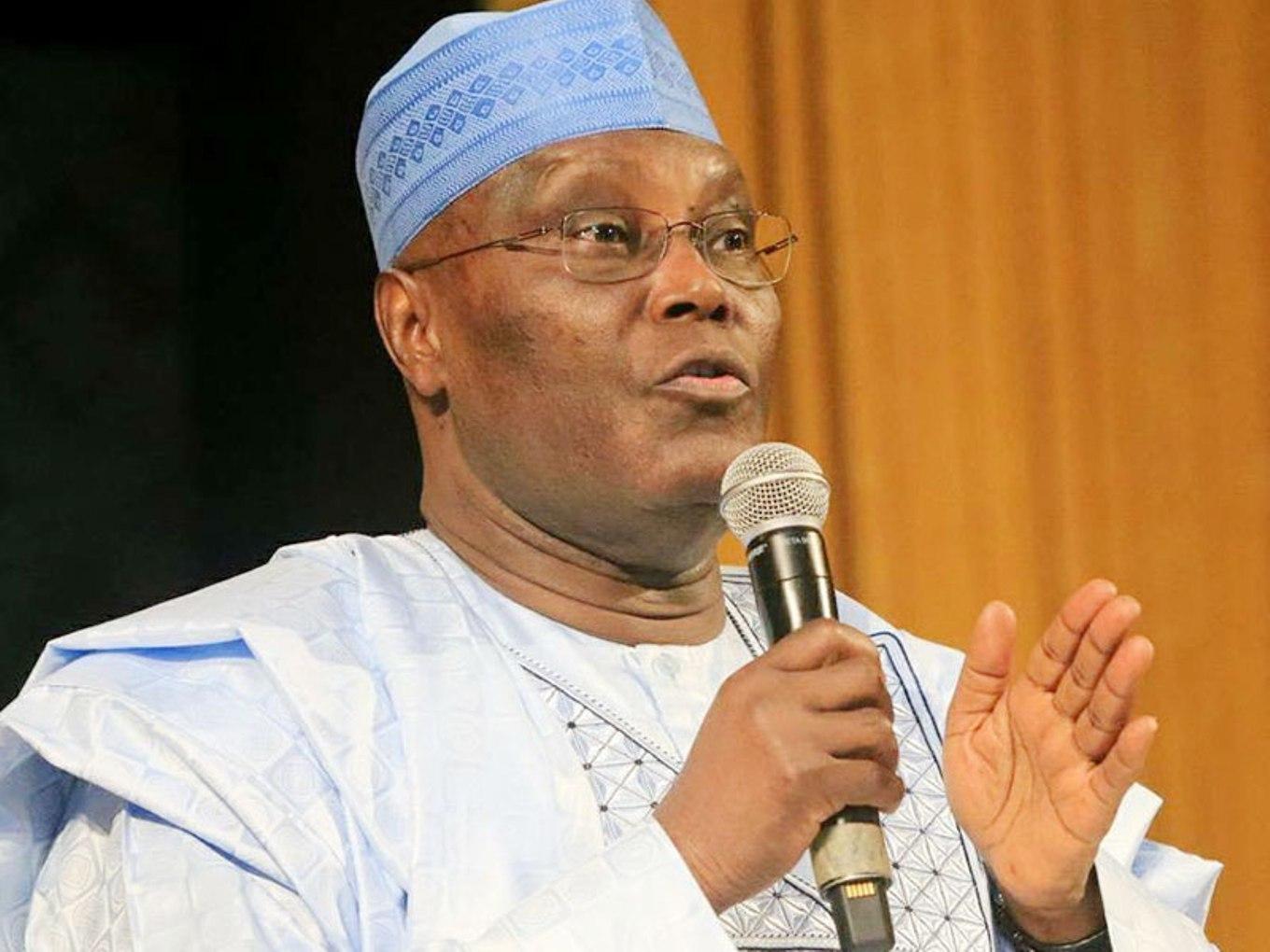
Former Vice President Atiku Abubakar has asked the Presidency and the National Assembly to clarify who is constitutionally exercising the powers of President Bola Ahmed Tinubu following the expiration of the 21-day period announced for the President’s annual vacation.
Recall that Tinubu left Nigeria on August 30 for a three-week annual vacation in Europe. The President’s absence coincided with Vice President Kashim Shettima’s official engagements outside the country, including his current representation of Nigeria at the 81st United Nations General Assembly in New York.
In a personally signed statement on Monday, Atiku argued that the expiration of the 21-day period had raised questions under Section 145 of the 1999 Constitution regarding the transfer of presidential powers.
Section 145(1) provides for the President to transmit a written declaration to the President of the Senate and the Speaker of the House of Representatives when proceeding on vacation extending beyond a specified period or when otherwise unable to perform the functions of his office.
Atiku said Nigerians had not been shown any such declaration transferring presidential functions to Shettima.
“President Tinubu left Nigeria on 30 August. The Presidency publicly announced a three-week vacation. Yet, to date, Nigerians have not been shown any constitutional letter transmitting presidential authority to Vice President Kashim Shettima.
“The 21 days have now elapsed. If such a letter exists, the Presidency should publish it immediately,” Atiku said.
The 2027 African Democratic Congress (ADC) presidential candidate, said the constitutional provision also addresses a situation where the President fails to transmit the required declaration.
He referred to Section 145(2), which provides that where the President is unable or fails to transmit the declaration within 21 days, the National Assembly can, by a simple majority in each chamber, mandate the Vice President to perform the functions of President as Acting President.
Atiku therefore asked the National Assembly to explain whether the constitutional procedure had been activated.
“If it does not, then the constitutional mechanism contemplated by Section 145(2) has been triggered, and the National Assembly owes Nigerians an explanation as to why it has not acted.
“This is not a matter of political convenience. It is a matter of constitutional order,” he said.
Atiku further drew attention to Shettima’s presence in New York, where he is leading Nigeria’s delegation to the 81st United Nations General Assembly based on the President’s directive.
Atiku said the situation raised a question about who was exercising presidential authority in Nigeria and under what constitutional instrument.
“So again: who is exercising presidential authority in Nigeria today, and under what constitutional instrument?” he asked.
The former Vice President also criticised what he described as reliance on informal indications of presidential activity while the President remains abroad.
“Nigeria cannot be governed by assumptions. It cannot be governed by presidential social-media posts from Europe.
“It cannot be governed by photographs from private dinners at the Élysée Palace.
“It cannot be governed on autopilot,” he said.
Atiku also said President Tinubu should be in the country at a time like this, linking his concerns to recent domestic developments in the country, including the deaths of 37 Nigerians in the custody of the Nigeria Security and Civil Defence Corps in Minna.
He said the incident had led to investigations, suspensions and calls for independent scrutiny.
He also raised concerns about petrol prices, claiming that the product was selling for as much as ₦1,500 per litre in some parts of the country.
“These are not ordinary times. Yet the President is abroad. The Vice President is abroad.
“The Senate President is abroad. And Nigerians have not been told, in the clear constitutional language required of a serious democracy, who is exercising the powers of the President,” Atiku said.
Atiku acknowledged the diplomatic significance of Tinubu’s private dinner with French President Emmanuel Macron in Paris but argued that Nigeria’s governance responsibilities could not be suspended while the President was abroad.
“President Tinubu’s private dinner with President Emmanuel Macron in Paris may serve diplomatic purposes. But Nigeria itself cannot be placed on vacation.
“The Constitution does not recognise a ‘working vacation’ as an alternative system of presidential succession.
“It provides a procedure. That procedure must be obeyed,” he argued.
Atiku consequently called on the Presidency to disclose whether Tinubu transmitted the declaration required under Section 145(1) before leaving Nigeria.
He also asked the President of the Senate and the Speaker of the House of Representatives to state whether they received such a communication.
“If no declaration was transmitted within the constitutionally stipulated period, the National Assembly must explain why the procedure provided by Section 145(2) has not been activated,” he said.
Atiku concluded that the issue was bigger than the President’s personal movements, arguing that Nigerians were entitled to know who was constitutionally responsible for the exercise of presidential powers.
“Nigeria is bigger than any President.
“At a time of severe economic hardship, rising energy costs, security challenges and the shocking deaths of citizens in government custody, the country deserves visible, accountable and constitutionally grounded leadership.
“The question will not disappear: Who, constitutionally, is in charge of Nigeria?” Atiku questioned.
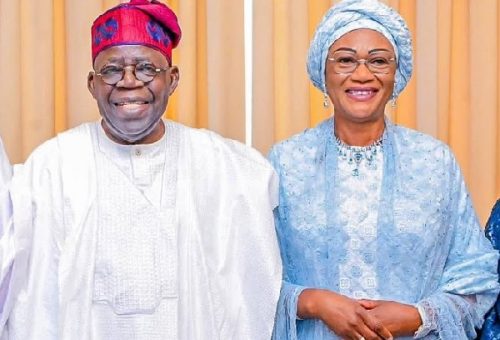
President Bola Tinubu has celebrated his wife, Oluremi, on her 66th birthday, describing her as his “truest friend and confidante”.
In a birthday tribute to the First Lady on his verified X handle on Monday, Tinubu praised her patience, courage, compassion and unwavering support throughout their years together.
The President, who described Oluremi as the woman who had stood by him through different seasons of his life, said she had shared his burdens and provided counsel during difficult moments.
“Today, I celebrate the woman who has walked beside me with patience, grace and uncommon courage. Àwọn àgbà sọ pé, ‘Ìyàwó rere ni adé ọkọ rẹ̀.’ A good wife is her husband’s crown,” he said.
Tinubu said Oluremi had given practical meaning to the biblical description of a virtuous woman, adding that she had remained a source of strength and understanding to him.
“The burdens that were mine to bear often found their way onto your shoulders. The thoughts I could not put into words somehow found their way to you.
“In difficult times, when the future was uncertain, you stayed calm beside me and prayed with me,” he stated.
The President described the First Lady as his “truest friend and confidante”, saying she was never afraid to offer him honest counsel.
“I call you my truest friend and confidante because you speak the truth plainly, even on the days I would rather not hear it,” Tinubu said.
He also praised Oluremi for her role in raising their children and grandchildren, saying her values of faith and kindness had shaped the family.
“Our home bears the lasting imprint of your devotion. Our children and grandchildren have grown beneath the shelter of your prayers. They carry your values of faith and kindness wherever life takes them,” he said.
Tinubu also highlighted the First Lady’s humanitarian activities, recalling her work through the New Era Foundation and the Renewed Hope Initiative.
“Nigerians know you for your compassion, kindness, generosity of spirit and steadfast faith. I have watched you touch lives quietly and consistently, offering hope and support to those in need,” he said.
He added that her initiatives had supported young people, widows, elderly citizens and women farmers across the country.
“From the New Era Foundation during our years in the saddle in Lagos to the Renewed Hope Initiative today, your care has reached many young boys and girls, widows, elderly citizens, and women farmers across the country,” the President stated.
Tinubu also acknowledged Oluremi’s advocacy for people affected by tuberculosis and other diseases, describing her as a compassionate advocate and determined champion.
He said her compassion transcended ethnic, regional and religious boundaries.
“For you, compassion has never recognised the boundaries of tribe, region or religion,” he said.
Reflecting on their years together, Tinubu said their shared experiences, including difficult decisions and sacrifices, had strengthened their relationship.
“A long journey teaches a man the true value of a good partner. We have travelled a long road together. I think of the difficult decisions we talked through for hours and the sacrifices no one else saw.
“Laughter and prayer carried us through many of them,” he said.
The President said he would choose Oluremi again if given the opportunity to relive his life.
“If life returned me to the beginning, I would choose the same road that led me to you. Through every mile, my heart has always remained at home with you,” Tinubu said.
The President wished the First Lady many more years in good health and happiness.
“Happy 66th birthday, my darling Oluremi. I pray that God Almighty will grant you many more years in good health and joy,” he said.
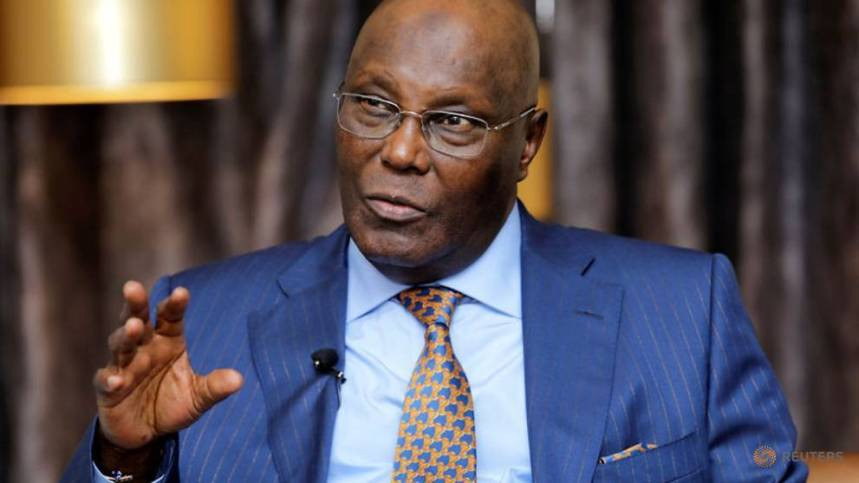
Former Vice President Atiku Abubakar demanded explanation as to why Tinubu had been repeatedly absent from UNGA, asking whether the president’s documented history with United States law-enforcement agencies has become a burden on Nigeria’s foreign relations.
In a statement by his Senior Special Assistant on Public Communication, Mr Phrank Shaibu, Atiku said Tinubu stayed away from the 79th UNGA session in 2024, the 80th in 2025, and now the 81st in 2026, repeatedly sending Shettima to stand in for him.
The former vice president said three consecutive absences could no longer be dismissed as coincidence or routine delegation but constituted a pattern of presidential evasion requiring an honest explanation.
He stated, “The United Nations General Assembly is one of the world’s most important diplomatic gatherings. It brings together the representatives of the UN’s 193 member states and provides a unique platform for presidents and prime ministers to defend their countries’ interests, negotiate partnerships and shape global decisions on trade, security and development.
“Vice President Shettima may represent Nigeria capably, but representation by delegation cannot permanently substitute for the personal authority, visibility and responsibility of the president.
“Tinubu cannot continue to treat Nigeria’s seat at the world’s biggest diplomatic table as though it were an inconvenient appointment that can be endlessly outsourced.
“Presidential absence on the global stage has consequences. UNGA is not merely a ceremonial gathering or an annual photo opportunity.
“Its side-lines are where leaders hold decisive bilateral meetings, court investors, negotiate trade partnerships, mobilise development finance and make the case for their countries.”
Atiku added, “When a president makes himself absent from that stage for three consecutive years, his country loses opportunities. Investment does not follow silence. International capital does not pursue a country whose leader repeatedly abandons the room in which consequential economic relationships are being built.
“The cost is eventually transferred to ordinary citizens: fewer investments mean fewer businesses and fewer jobs. Reduced capital inflows place additional pressure on the local currency.
“A weaker naira raises the cost of imports, production, transportation and food. These are among the economic pressures now punishing Nigerian families through the worst cost-of-living crisis in living memory.
“Tinubu may consider attending UNGA a matter of personal prerogative, but the economic and diplomatic consequences of his absence are being paid by Nigerians. A President may surrender his seat, but a nation cannot escape the bill.”


