Headlines
Full Text of President Buhari’s New Year Message to Nigerians


- /home/rhoncare/pointblank.ng/wp-content/plugins/mvp-social-buttons/mvp-social-buttons.php on line 27
https://pointblank.ng/wp-content/uploads/2019/04/Buhari-1-1000x576.jpeg&description=Full Text of President Buhari’s New Year Message to Nigerians', 'pinterestShare', 'width=750,height=350'); return false;" title="Pin This Post">
- Share
- Tweet /home/rhoncare/pointblank.ng/wp-content/plugins/mvp-social-buttons/mvp-social-buttons.php on line 69
https://pointblank.ng/wp-content/uploads/2019/04/Buhari-1-1000x576.jpeg&description=Full Text of President Buhari’s New Year Message to Nigerians', 'pinterestShare', 'width=750,height=350'); return false;" title="Pin This Post">
My fellow countrymen and women,
First, I would like to thank and praise the Almighty who saw us through the year 2020 and has given us the opportunity to witness the start of another new year. We especially thank God because the year 2020 was one of the most trying years since our existence as a Nation.
- This can also be said about all other nations around the world, due to the challenges posed on our collective humanity by the novel COVID-19 pandemic.
- While acknowledging that 2020 was a very tough year, we saw this year put to test our national resilience and ability to survive these tough times and also gave renewed hope that we will again brave any storms that lay ahead in 2021 and beyond.
- As we celebrate the opportunity before us in this New Year 2021, we must also acknowledge the passing away of our brothers and sisters who didn’t make it into this New Year. May their souls rest in perfect peace.
- We must remember that we also celebrated the historic occasion of our sixty years as an independent and sovereign country on October 1st 2020. In the spirit of hope and gratitude, I would like to remind us again that as a country on the difficult journey to nationhood and greatness, we have confounded the many pundits at home and around the world who never gave the newly-born country that emerged unto the world stage on 1st October 1960 a chance of surviving much longer than a few years.
- Yet, here we are, 61 years by the next anniversary in October, and not only are we here, we are standing tall in the comity of nations as one country united under the will of God and also actively growing that indivisible Nigerian spirit that has enabled us, year after year, decade after decade, to weather all stormy waters and emerge stronger and better where others have fallen and disintegrated. This nation, this Nigeria will survive and thrive.
- In this journey to nationhood, we have experienced the highs and lows. 2020 indeed came with a lot of challenges ranging from security and economic issues across the regions to understandable protests that were mainly led by our youths and served notice to the demand for police reforms and accountability. This government heard, this government listened and this government is committed to fulfilling the five demands of our youths, fully understanding that we all wish well for Nigeria.
- In the midst of all these challenges, I had initially pledged that as your elected President and Commander-in-Chief, I would ensure that these ongoing challenges will be faced head-on with renewed determination and with all the appropriateness and urgency required. Your voices have been heard and we would continue to listen to you, and all the key stakeholders who are committed to the unity of Nigeria to ensure that every region of this nation is safe for us all, while guaranteeing that the future is also secure for the coming generation.
- I wish to also use this occasion of New Year to reaffirm my commitment to the people of Nigeria, especially the youth who need our collective encouragement and support. In securing this nation we need to secure the future of our youth.
- Our young people are our most valuable natural resource, at home and abroad. Their ingenuity, creativity, innovation and entrepreneurial spirit is evident to all. Many of our young people are excelling in various spheres of life including sports, entertainment, information and communication technology, commerce and are globally recognized as achievers.
- As a Government we are committed to actively engaging with the creative energies of our young people. In this regard, we will partner with the legislature to develop an enabling environment to turn their passions into ideas that can be supported, groomed and scaled across regions. This will create vast opportunities in fintech, agriculture, business process startups and in the entertainment industry.
- The year 2021 will indeed be a year where we will work to reinforce the hopes of fellow Nigerians in the vision of a united and progressive Nigeria. This administration would continue focusing on delivering key strategic priorities under our “SEA” – (Security, Economy and Anti-Corruption) Agenda. Some of the key priority areas we would direct our attention and strengths to include:
ON SECURITY:
- Re-energizing and reorganizing the security apparatus and personnel of the armed forces and the police with a view to enhance their capacity to engage, push back and dismantle the operations of both internal and external extremist and criminal groups waging war against our communities in some parts of the country.
- In line with the current security challenges, we are facing as a Nation, I would like to reiterate the promise I made recently when over 300 of our boys abducted from Government Science Secondary School, Kankara were successfully rescued by our security operatives.
- The professionalism shown by our Security Forces and the collaboration from all stakeholders across both State and Federal Governments that led to the successful rescue of the boys is proof that Nigeria has the internal capacity to decisively deal with terror attacks on our citizens.
- However, we recognize that we rapidly have to move to a more proactive and preemptive posture to ensure that these sorts of traumatic incidents do not become a norm. Our administration is fully aware of the responsibility we have to protect the lives and property of all Nigerians, and we will not relent in learning and adapting to changing threats to our national security and civic wellbeing.
ON THE ECONOMY:
- Our focus is on revamping the economy through the national economic diversification agenda that supports the primary goal of national food self-sufficiency. This has helped reduce the growing food related inflationary figures and have in considerable measure positively impacted our food security status during the long months of the pandemic lock down.
- We are also currently rebuilding our national infrastructure base and, in the process, introducing transformation through the rehabilitation, modernization, and expansion of the railway system, national roads and bridges both in rural and urban centres, alongside the airports and seaports.
- The reforms we have put in place in the power sector would guarantee increased efficiency in our drive to significantly expand the generation and distribution of electricity for use in homes and factories.
- As an administration we are currently undertaking a series of special interventions designed to boost job creation and support the entrepreneurial drive of our youths.
- With the recent opening of our borders, we expect that the pent-up demand of legitimate cross-border and international trade will boost the fortunes of the many small businesses and agricultural enterprises that depend on Nigeria’s trade and commerce.
- The message to our West African neighbours is that Nigeria is once again fully open for those willing to conduct business in a fair and equitable way.
ANTI-CORRUPTION:
- On the anti-corruption drive of our administration, we have recorded substantial gains so far and this year, we are committed to continuing along the path of eradicating corruption, through collaboration with all the arms of Government to effectively prosecute this fight.
- While we would be working with the Legislature to enact laws that would strengthen this fight, we would also be looking at reviewing some of our laws which would ensure that this fight is more effective. On the part of the executive, we would ensure the diligent and timely prosecution of corruption cases, while appealing to the judiciary to ensure that corruption cases are dispensed with expeditiously.
- The persistence of various forms of violence has meant that in the most affected parts of the country, the fabric of inter-communal harmony woven through years of investment of effort at building trust, mutual respect, and harmony has been threatened.
- Insecurity as a challenge has direct repercussions on our national economic stability, growth, and development, setting us back at critical points through the destruction of public and private investments.
- In parts of the country where chronic poverty, social exclusion, and disillusionment among sections of the youth were already a problem, the cycles of violence that have been unleashed by mindless groups like Boko Haram and others have thwarted the efforts of government to undertake the social policy and associated investments that could make a huge difference in the quality of life of our citizens.
- I am aware that for some of our compatriots, the progress we have registered since the inception of this administration is not nearly as fast or as sufficient as they would wish. I do not begrudge them their views in so far as they signify a wish, in which we all share, for only the very best for our country.
- Nevertheless, I call upon all Nigerians to carefully recall the circumstances of our coming to office, the facts on the ground and the resources at our disposal since 2015 with the accomplishments of this administration.
- As a people, we have shown admirable resilience in the face of every adversity, an unmatched capacity to recover speedily from every setback, an unparalleled generosity of spirit when we resolve our differences, and a constant readiness to invest faith and hope in the destiny we share as a united country built on the diversity of its peoples.
- It is these attributes that underpin the Nigerian spirit of “can do, will do” that gives me hope that we shall yet get to destination and fulfill our calling together, especially with the solid resolutions we are setting in this new year.
- Keeping our country on a forward march is a duty which we all have and share. In this regard, keeping our country safe from a resurgent cycle of COVID-19 as this administration finalizes its plans to procure and efficiently and effectively distribute the COVID-19 vaccines, I urge you all fellow citizens to observe strict COVID-19 prevention protocols.
- As your elected President, my pledge to you is the same as it has always been; I will play my part fully and without fear or favour. I invite all of us to do the same. It is what we owe to the founding generation of our beloved country and also to the coming generation. It is what we desire for national prosperity for all demands.
- Long Live the Nigerian spirit of oneness, togetherness, and unity. Long Live the Federal Republic of Nigeria. I wish you a Happy and prosperous New Year.
May God bless the Federal Republic of Nigeria.


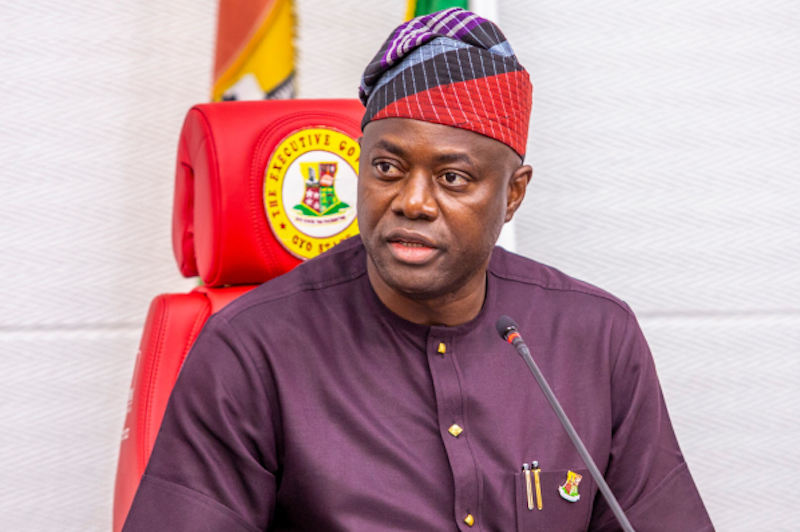
The Allied Peoples Movement (APM) presidential candidate, Seyi Makinde, on Thursday, criticised President Bola Tinubu’s “Emi Lokan” slogan ahead of the 2027 presidential election.
Makinde said Nigerians do not need “turn-by-turn nepotism”, arguing that voters should be free to decide who becomes the country’s next president in 2027.
The Oyo State governor spoke during the APM’s town hall meeting in Akure, Ondo State.
Makinde asked: “How can someone say ‘Eemi lokan’ in a country like Nigeria? You were given the opportunity. If you recall the 1999 presidential election, the South-West voted massively for Baba Olu Falae, but the rest of Nigerians voted for Baba Obasanjo. So, this is not an issue that only the South-West can resolve; it is an issue we must address collectively as Nigerians.
“We do not want ‘turn-by-turn nepotism’, nor do we want a situation where people say, ‘I will vote for projects because it is my turn’. You will not finish those projects, and when it becomes someone else’s turn, they will do the same thing. We will end up with a Nigeria where we cannot get value for the resources belonging to Nigerians.
“The Reset Nigeria agenda is about building a country where infrastructure development supports economic growth and addresses the concerns of young people and women.
“Once we fix our economy, no zone will be left behind, and no demographic group will be left behind.”
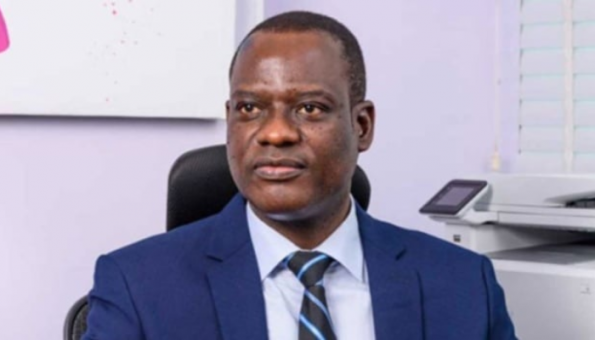
Minister of Finance and Coordinating Minister of the Economy, Taiwo Oyedele, has denied saying the Federal government will introduce a fuel tax when the economy stabilises and income levels improve.
In a post on X on Tuesday, Oyedele said his remarks during an interview with ARISE News was misrepresented, insisting that a “fuel tax is not on the table.”
However, during the interview with Rotus Odiri, ARISE News Business Correspondent, on the sidelines of the 2026 International Monetary Fund and World Bank annual meetings in Bangkok, Thailand, Oyedele said the tax would come when income levels improve enough for Nigerians to accommodate it.
He said taxes account for between 20 and 80 percent of pump prices in some countries, while many African countries impose between six and 10 different taxes on fuel products.
He said introducing fuel tax while petrol was still subsidised would have been counterproductive because government would effectively be paying the tax itself.
According to him, imposing the tax immediately after removal of petrol subsidy would be insensitive to Nigerians.
“The objective should be that instead of trying to suppress prices, which hasn’t worked for us, it hasn’t worked for any country in the world, not one. Instead of trying to suppress prices, think about how to grow income faster than prices rise,” Oyedele said.
“That’s how you bring prosperity and grow the middle class and that is exactly what we are doing as led by Mr. President himself.
“At the appropriate time, when the economy has stabilizes and income level will be able to accommodate it, those taxes will come. Not because we want to impose taxes,” he added.
In his Tuesday post, the minister reiterated that introducing a fuel tax at this time would be insensitive following removal of petrol subsidy, describing reports that government will introduce the levy when the economy stabilises as “fake news.”
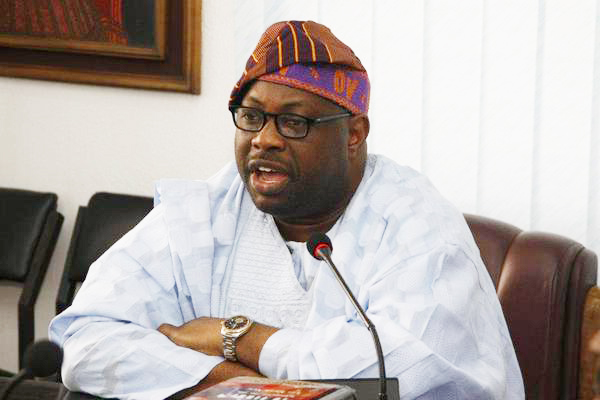
A chieftain of the African Democratic Congress (ADC), and Deputy Director of the Presidential Campaign Council, Chief Dele Momodu, has described former Vice-President Atiku Abubakar as the most nationally formidable and experienced among the leading contenders for the 2027 presidential election.
Momodu said Atiku’s experience at the national level distinguishes him from President Bola Tinubu and former Anambra State Governor, Peter Obi.
He stated this on Wednesday during an interview on Eagle 102.5 FM, Ilese-Ijebu, in Abeokuta.
“If you look at the antecedents of the three major candidates, between Atiku Abubakar and Peter Obi, you will see that Atiku is the most experienced. He has managed our country at the highest level,” he said.
Momodu traced Atiku’s political journey to the 1992 Social Democratic Party (SDP), presidential primary where he contested against late MKO Abiola and stepped down for him.
He said Atiku accepted the outcome without crisis even after he was not picked as Abiola’s running mate, describing it as a mark of true democratic temperament.
“He is the only one who started from around 1992, contested the SDP primary against Abiola and stepped down with uncommon equanimity. He did not make any noise,” Momodu said.
He noted that Atiku was among the founders of the Peoples Democratic Party, PDP, and served as Vice-President from 1999 to 2007.
Comparing Atiku with Obi, Momodu argued that while Obi’s best was demonstrated in Anambra, Atiku’s was at the presidency level managing the national economy.
“Peter Obi has tried his best in Anambra, while Atiku’s best is at the level of vice president controlling the economy of Nigeria. The difference is clear. He has matured in experience and exposure,” he said.
Momodu also said President Tinubu’s experience was largely limited to Lagos.
“What I’m trying to say is that Tinubu’s experience was limited to Lagos, and that is why when he became president, he thought Nigeria was Lagos. And he has found out now that Nigeria is not Lagos,” he said.
He argued that the current economic hardship under the present administration did not show prosperity, insisting Atiku remained better positioned to lead the country.
“Well, we are yet to see that prosperity, and if yesterday would determine today and tomorrow, it is obvious that Tinubu should retire now and let someone else do it,” Momodu added.
DailyPost