
Business
Glamour, Fun As Sunquest Partners Zenith, BandRus, Others to Host First Ever Alimosho Food Festival


- /home/rhoncare/pointblank.ng/wp-content/plugins/mvp-social-buttons/mvp-social-buttons.php on line 27
https://pointblank.ng/wp-content/uploads/2023/02/IMG-20230131-WA0015-1000x600.jpg&description=Glamour, Fun As Sunquest Partners Zenith, BandRus, Others to Host First Ever Alimosho Food Festival', 'pinterestShare', 'width=750,height=350'); return false;" title="Pin This Post">
- Share
- Tweet /home/rhoncare/pointblank.ng/wp-content/plugins/mvp-social-buttons/mvp-social-buttons.php on line 69
https://pointblank.ng/wp-content/uploads/2023/02/IMG-20230131-WA0015-1000x600.jpg&description=Glamour, Fun As Sunquest Partners Zenith, BandRus, Others to Host First Ever Alimosho Food Festival', 'pinterestShare', 'width=750,height=350'); return false;" title="Pin This Post">
By Eric Elezuo
The Youth Centre in the heart of Abesan Town in Alimosho Local Government Area of Lagos State, came alife penultimate Sunday, when Sunquest Discovery Limited in association with Zenith Bank, BandRus, MMS among others hosted the first ever food festival in the area.
Successful in all ramifications, stakeholders in the food sector, from all walks of life, gathered to showcase their culinary skills and technology embedded in the preparation of local and continental dishes and other edibles while calling on the local and state governments to address inflation and tackle the high cost of food materials so as to curb poverty in the country.

Speaking on the intentions behind the festival, the Chairman Sunquest Discovery Limited, the organisers of the festival, My Isiaka Lawal, said the festival was organised to give opportunities to good vendors to showcase their products as well as allow consumers to purchase food at cheaper prices against the high cost in the market.
He added that Alimosho, being the largest local government in Lagos State, was chosen because of its high population as it would afford more people the opportunity to benefit from the event.

“We understand the plight of the ordinary in trying to make a living, and also the fact that eating healthy food at affordable price will help to face the task of building the nation from all fronts.
“The cost of food as well as food shortage have become a problem in Nigeria which should be addressed by the government. While we call on the government to tackle the problem so as to make life easier for Nigerians, we have chosen this food festival to contribute our quota to alleviating the problem,” Lawal said.

He added that the festival also afforded the organizers the opportunity to test run an application which would allow food vendors to market their goods online.
On their part, stakeholders and food vendors also spoke of their expectations from both the government and organisers, citing high cost items as their major challenge.

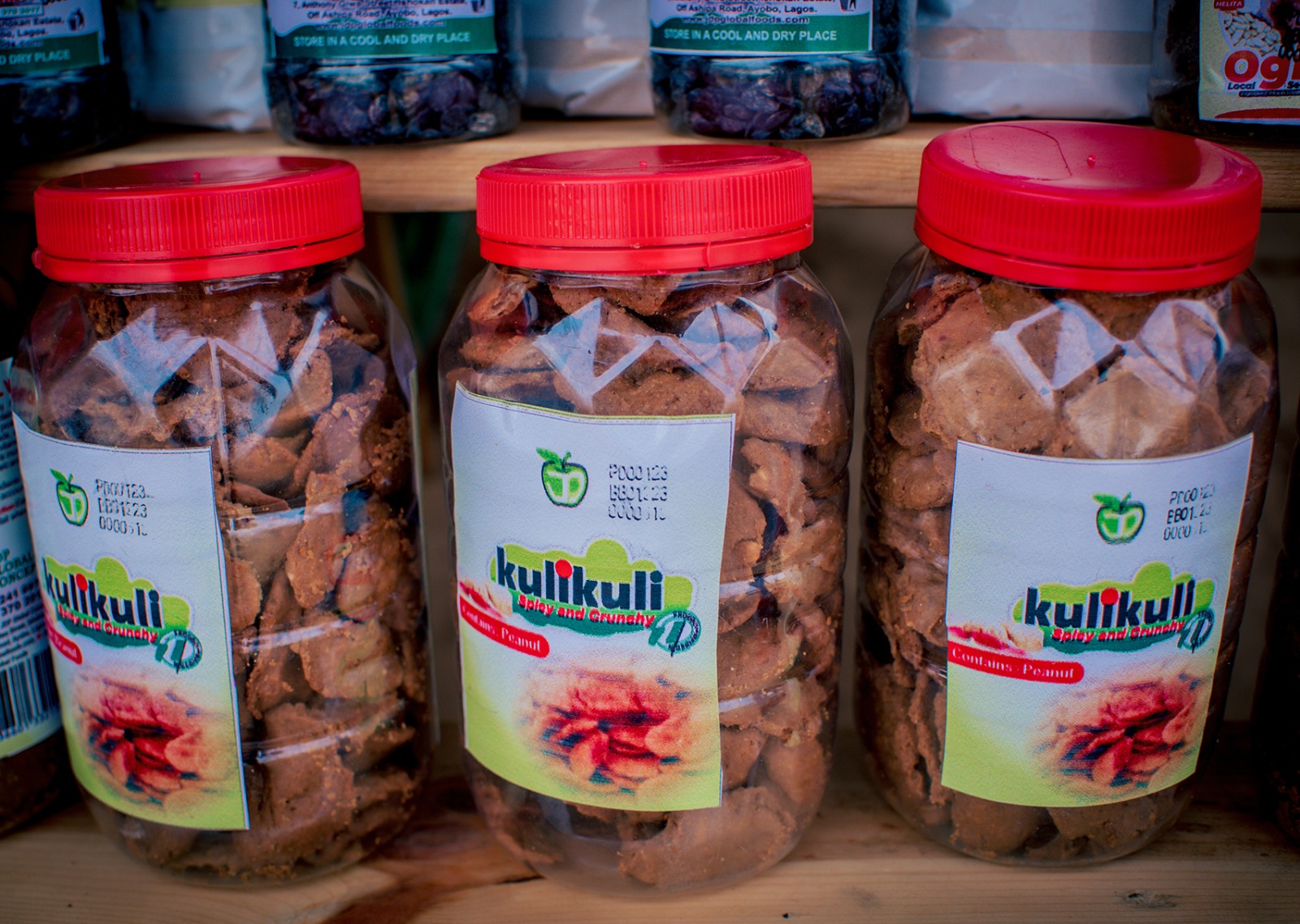
One of the vendors, Mrs Omoluyi Esther, who deals in sales of local food commended the organizers for putting together the event.
She however, lamented the daily increase in food items, which according to her, is affecting many companies involved in food production business.
“As small scale business owners, there are challenges we are facing such as daily increases in prices of food.
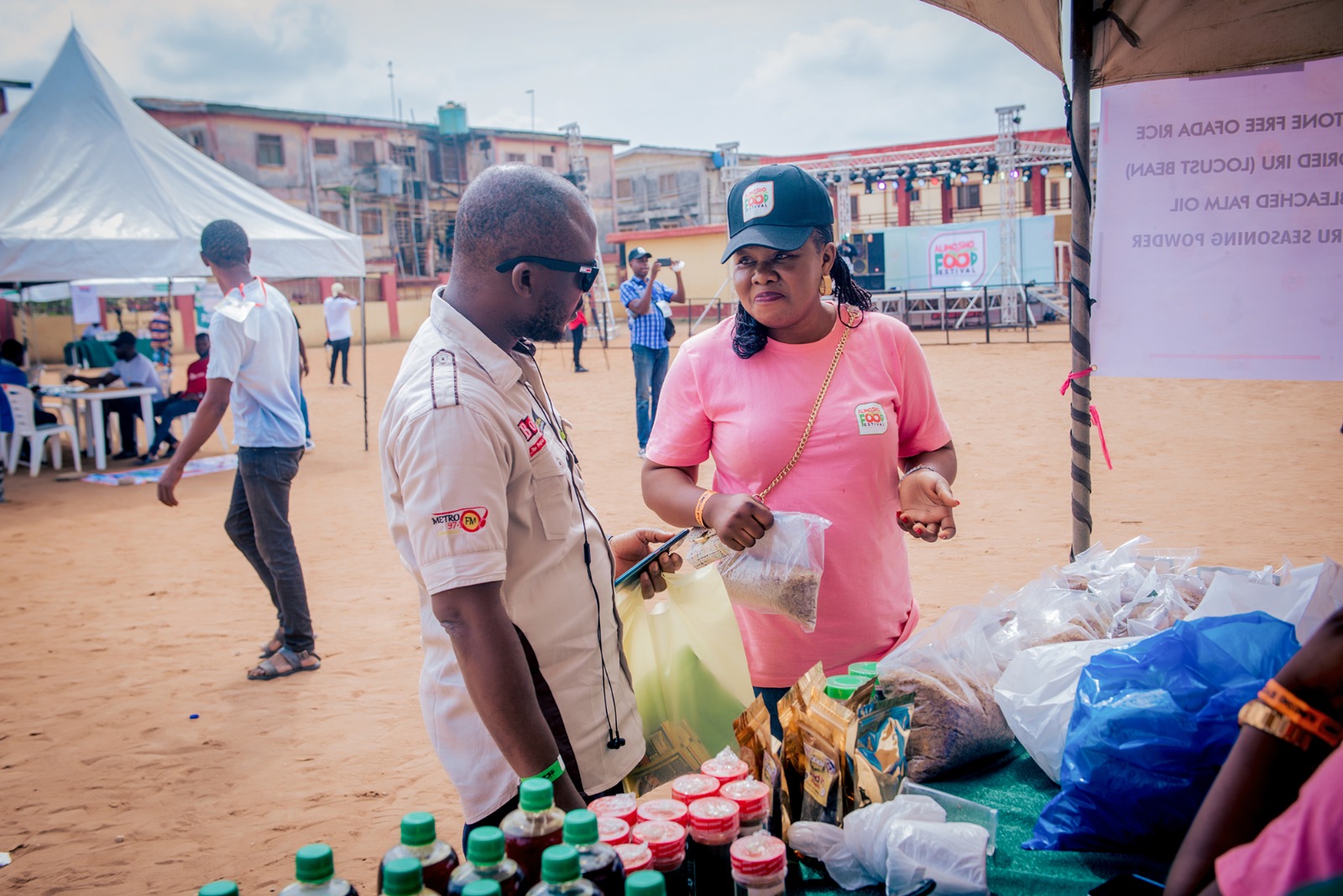
“Today you buy something for N200 and tomorrow it goes up to N500. Government should try to make sure there is money in circulation and bring down prices of food stuff. In that way, they can address food scarcity,” she said.
Another vendor, Mrs Adekunle Olamide of Checkers Food said for the government to reduce poverty, ‘ it should help to reduce in prices of goods.’
“They should make sure there is stability in the economy. The instability is affecting all brands and they are finding it hard to get materials for production. When they increase prices of their goods, it’s the consumers that bear the brunt. So the government should help us stabilize Nigeria’s economy so that brands will find it easier to produce,” she urged.

A Nollywood actor, Joseph Momodu, who was the special guest at the event commended the quality of food on display at the festival.
“The kind of food you see here, you might need to order them online before you get them, but this event has offered people the opportunity to get them at their doorsteps and cheaper. The festival is of great significance to everyone,” he said.
He added: “There is hunger in the land. The government should help us subsidize food stuff to the nearest minimum to make food available. They should also control inflation especially the dollar scarcity so that the common man can do his or her business. They promised us that dollar will go down but it’s not so now. Government should do their business so that the masses can enjoy.”

While appreciating the over 22 ventures, and all the stakeholders and sponsors, who turned up for the successful test run of the first edition, the Creative Director of Sunquest Discovery, Adekoya Afeez, said the quality of food and products was commendable, promising that the subsequent editions of the festival will be bigger, and also be taken to other parts of the state so that the entire state can feel the impact of the fieata.
Adekoya also invited more stakeholders and sponsors to join hands with the company as they get ready to host another edition in no distant time.

The highlight of the event was display of acrobotics and choreographed dance steps from happy participants and distribution of various food items by sponsors including Labule Farms, which gave out lots of garri, Checkers Custard and a host of others.



Ecobank Nigeria has announced the Top 20 finalists for InnovateX 2026, its flagship youth innovation challenge powered by Blaze by Ecobank in partnership with Verve. The finalists emerged from a competitive selection process involving 168 teams, comprising 672 undergraduate students from 90 universities across Nigeria.
The grand finale, scheduled for October 30, 2026, at the Ecobank Pan African Centre (EPAC), Lagos, will see the finalists compete for top honours and a share of the ₦20 million prize pool. Five teams will emerge as winners, while the remaining 15 teams will receive consolation prizes and further exposure within Nigeria’s innovation ecosystem.
InnovateX is a youth innovation and entrepreneurship challenge designed to empower young Nigerians to develop and pitch innovative solutions to real-world challenges across banking, technology, business and society. The initiative provides a platform for young innovators to showcase their ideas, compete for financial support and access opportunities for mentorship, skills development and career advancement.
The Top 20 finalists represent diverse sectors, including financial technology, artificial intelligence, sustainability, digital services, education, and enterprise solutions. Among the selected teams are IncluFi, Aselabs, Team Vhorde, Jolt, Kredo, Levromat, Konvoy, Impact, Barrow and Leopard Skin.
Designed for young people aged 16 to 25, InnovateX 2026 attracted aspiring entrepreneurs and innovators seeking to develop practical solutions to real-world challenges. Beyond financial support, participants stand to benefit from mentorship, skills development, industry exposure, networking opportunities and national recognition.
The selection process culminated in regional hackathons held in Lagos, Port Harcourt and Abuja, where participating teams pitched their ideas before panels of industry experts, technology leaders and innovation mentors.
InnovateX provides a platform for engaging emerging talent and encouraging entrepreneurship, connecting Ecobank with promising young Nigerians while reinforcing the Bank’s commitment to digital transformation, innovation and youth empowerment.
Speaking on the initiative, Victor Yalokwu, Head, Products & Analytics, Ecobank Nigeria, said: “InnovateX reflects our commitment to nurturing the next generation of innovators by providing access to the resources, networks, and opportunities they need to transform bold ideas into scalable and impactful ventures.”
Through initiatives such as InnovateX and Blaze by Ecobank, the Bank continues to create opportunities for young people to develop entrepreneurial skills, advance innovative ideas and contribute to economic growth across Nigeria and Africa.

Africa’s Global Bank, United Bank for Africa (UBA) Plc, has launched a Group-wide Climate Action Week to deepen climate awareness, promote responsible environmental practices and advance sustainable finance across its African and international operations.
The five-day campaign, running from October 26 to 30, 2026, is themed “Banking on Africa’s Climate Future” and reflects the Bank’s commitment to integrating environmental responsibility into its operations, customer engagement and financing solutions.
The initiative commenced with the deployment of waste segregation bins across UBA offices and measures to reduce the use of single-use plastics at the Bank’s head offices. These activities underscore UBA’s commitment to translating sustainability principles into practical actions within its workplace and across its wider ecosystem.
Throughout the week, UBA will disseminate educational content across its media and digital platforms to highlight the causes and consequences of climate change, including its impact on food prices, energy consumption and urban flooding. The campaign will also promote responsible plastic disposal, recycling and the critical role of financial institutions in financing clean energy, sustainable agriculture and other environmentally responsible businesses.
As part of the campaign’s community engagement component, UBA staff volunteers will participate in a Group-wide clean-up exercise on Saturday, November 7, in major cities across its markets. In Nigeria, the exercise will take place in Lagos, Kano and Port Harcourt, mobilising employees to contribute directly to cleaner and healthier communities.
UBA’s Group Managing Director/Chief Executive Officer, Oliver Alawuba, emphasised the importance of collective responsibility in addressing the growing impact of climate change.
“Climate change is no longer a distant environmental concern; it is increasingly shaping everyday life across Africa. We see its effects in rising food costs, increased energy demand and flooding that disrupts homes, businesses and livelihoods.
“At UBA, we believe that building a sustainable future requires collective action, beginning with the choices we make at work, at home and in our communities. Through this Climate Action Week, we are encouraging every member of the UBA Tribe, alongside our customers and other stakeholders, to embrace practical, sustainable habits and inspire others to do the same,” Alawuba said.
As part of its stakeholder engagement activities, UBA will sponsor Climate Convergence Week in Lagos on Friday, October 30, where the Bank will deliver a speaking session and participate in a panel discussion. The engagement will provide an opportunity to showcase UBA Green Finance, highlight the Bank’s sustainability initiatives and explore how financial institutions can support Africa’s transition to a more sustainable and climate-resilient economy.
Alawuba, noted that climate considerations were increasingly important to business resilience, risk management and long-term economic growth.
“Climate change presents significant risks to businesses, communities and economies. These risks can affect business continuity, operating costs and financial performance, making sustainability an increasingly important consideration for both businesses and the financial institutions that support them.
“Through UBA Green Finance, we seek to support eligible businesses investing in cleaner technologies and more sustainable operations. By helping customers explore financing solutions aligned with their needs, we can contribute to a more resilient private sector while unlocking opportunities for sustainable economic growth across Africa,” Alawuba further said.
In a further step towards strengthening its sustainability capabilities, UBA is set to join the Sustainability Professionals Institute of Nigeria (SPIN). The move is expected to deepen the Bank’s environmental, social and governance (ESG) expertise and support the continued professional development of its employees in sustainability-related disciplines.
The Climate Action Week forms part of UBA’s broader sustainability strategy, which integrates environmental responsibility into its Customer First philosophy through responsible business practices, employee engagement, community initiatives and green finance. By combining awareness, practical action and financing solutions, the Bank aims to encourage more sustainable choices while supporting businesses and communities in navigating the challenges and opportunities of climate change.
United Bank for Africa is one of Africa’s leading financial institutions and one of the largest employers in the continent’s financial sector, with approximately 25,000 employees and over 45 million customers globally. Operating in 20 African countries, as well as the United Kingdom, the United States of America, France and the United Arab Emirates, UBA provides retail, commercial and institutional banking services, advancing financial inclusion and leveraging technology to deliver innovative financial solutions.
Business
UBA Secures Court Order Against Vitol, Four Others in $242m Petroleum Products Diversion Claim
A Lagos State High Court, last Thursday, granted interim preservative orders of Mareva Injunction against Vitol SA – a Switzerland based Energy Trading company, and four other shipping companies in favour of United Bank for Africa Plc.
The bank alleged Vitol of wrongful release of cargoes of petroleum products which were consigned to the order of United Bank for Africa Plc in the Bills of Lading.
Addressing the Court, Bode Olanipekun, SAN, lead counsel for United Bank for Africa, urged the Court to grant the interim preservative orders against Vitol and the other shippers.
In a ruling on the application, the presiding judge, Honourable Justice K. A. Jose (Mrs.) granted three prayers in UBA’s application, including requests to restrain the dissipation of assets and dealings with funds up to the disputed amount by Vitol S.A.
“Prayers 1–3 are granted as prayed against the 2nd Respondent only,” the judge ruled.
The application was brought pursuant to Order 43 Rule 1 of the High Court of Lagos State (Civil Procedure) Rules 2019 and the Lagos State High Court Practice Direction No. 2 of 2019.
UBA is seeking to contend in the substantive proceedings that Vitol SA and the owners of the vessels, are liable for alleged conversion, misrepresentation and negligence arising from the non-delivery of the petroleum products.
UBA also cited 34 financial institutions and public agencies, including commercial banks, merchant banks, microfinance banks, the Nigerian Ports Authority and the Nigeria Customs Service, in connection with the application.
In an affidavit supporting the application, UBA’s Group Head of Recoveries and Remedial Management, Anthony Chilaka, stated that the bank issued a letter of credit for the benefit of Vitol SA to facilitate a petroleum products transactions.
UBA alleged that the cargo was transported to Nigeria and that the vessels’ masters issued several bills of lading.
The bank further alleged that Vitol subsequently endorsed the bills of lading “to the order of” UBA and handed over the original copies to it.
UBA maintained that the endorsement entitled it to take possession of the cargo upon completion of the voyage.
However, Chilaka stated that the bank had not received the gasoil despite the completion of the voyage.
“The applicant has not been given possession of the gasoil despite completion of the voyage,” the affidavit stated.
UBA alleged that the cargo was instead, applied to the use of another party, contending that the respondents’ failure to deliver it amounted to conversion and negligence.
The bank argued that the respondents had obligations arising from the transaction and the endorsement of the shipping documents, which it claimed were not fulfilled.
The bank alleged that the cargoes associated with those transactions were also diverted to the use of other parties after their voyages, rather than delivered to UBA.


