
Headlines
Go After Boko Haram, Leave Critics Alone – Nigerians Tell DSS


- /home/rhoncare/pointblank.ng/wp-content/plugins/mvp-social-buttons/mvp-social-buttons.php on line 27
https://pointblank.ng/wp-content/uploads/2019/08/DSS.jpg&description=Go After Boko Haram, Leave Critics Alone – Nigerians Tell DSS', 'pinterestShare', 'width=750,height=350'); return false;" title="Pin This Post">
- Share
- Tweet /home/rhoncare/pointblank.ng/wp-content/plugins/mvp-social-buttons/mvp-social-buttons.php on line 69
https://pointblank.ng/wp-content/uploads/2019/08/DSS.jpg&description=Go After Boko Haram, Leave Critics Alone – Nigerians Tell DSS', 'pinterestShare', 'width=750,height=350'); return false;" title="Pin This Post">
Nigerians on social media have blasted the Department of State Services (DSS) for threatening to hunt down citizens criticising the frustrations experienced and expressed by citizens under President Muhammadu Buhari-led government.
They asked the agency to desist from attempting to infringe on the rights of Nigerians to freely assemble, organise and express themselves without any intimidation.
Peter Afunanya, DSS spokesman had in a statement on Sunday said the service would no longer tolerate those aiming to “throw the country into anarchy.”
“While the Service reaffirms its unambiguous support to an indivisible, indissoluble and united Nigerian State in accordance with the provisions of the Constitution, it will no longer tolerate deliberate machinations by subversive and hostile groups whose agenda is to throw the country into anarchy so as to serve the interests of their sponsors.
“Consequently, the Service is assiduously working with other security and law enforcement agencies to ensure the maintenance of peace and internal security of the country,” he said.
Afunanya said among those threatening the federal government and Nigeria’s unity are “some religious and past political leaders who have either called for a forceful change of government or mass action against it.”
“It has been established that the main objective for these is to cause a disintegration of the country,” he added.
“It is unfortunate that those in the forefront of this are respectable individuals who should be patriotic and not allow their personal ambitions to ruin the nation. The Service has also noted their desperation and penchant to collaborate with external forces and influences against Nigeria.
“They are reminded that even though democracy offers free speech, it does not give room to reckless pronouncements capable of undermining security. It is instructive to note that the ballot box remains the vehicle of change in a democracy.
“In this regard, self-centred individuals and groups are warned to stop engaging in acts inimical to the peace and sovereignty of this nation. In the same manner, influential personalities should be sensitive to emerging situations and guard against divisive and inciting utterances that may cause a breakdown of law and order.”
The statement has continued to generate a backlash as many Nigerians urged the service to tackle the insecurity manifested through the marauding unknown gunmen, Boko Haram, kidnappers and bandits.
A Twitter user, @@cvickright, “From whose purse is Buhari and the DSS paid? If it’s Buhari’s money, they have the right to insinuate such, if it’s our money, Buhari and DSS should go away. Buhari has proven to be a disaster, he needed not be pampered, or told what he wants to hear by those morons.#ResignNow.”
Another user, “@OnasanyaG said, ‘DSS suddenly found it has lost voice. During the Pantami saga, DSS went on sabbatical. Now it’s Fr Mbaka, DSS suddenly found it’s voice. This clannish sentiment is overbearing. It’s shameful. They have lost all modicum of trust and integrity.”
For @Achopa5, “Since SSS changed to DSS, they have become a disaster, maybe the D stands for disaster.”
Saharareporters


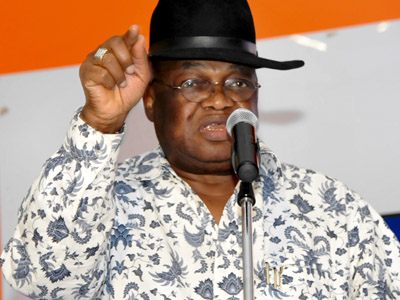
President Bola Tinubu has expressed sadness over the death of Ambassador Patrick Dele Cole, describing him as a distinguished diplomat, journalist, politician and public servant.
Cole died at 86.
In a statement on Saturday, Tinubu said Cole devoted his life to national service and brought distinction to his work in diplomacy, journalism and politics.
“His career reflected the enduring value of dialogue, tact, mutual respect and the pursuit of shared interests in advancing national development and international cooperation,” the President said.
Tinubu noted Cole’s contributions to Nigeria’s media landscape, particularly as Managing Director of the Daily Times, where he upheld the role of the press in holding public officials accountable, speaking truth to power and strengthening democratic governance.
“His legacy in journalism and public life remains an enduring part of our national story,” he said.
The President said at 86, Cole witnessed defining moments in Nigeria’s history and contributed to national development, adding that his life stands as a testament to experience, principled engagement and commitment to public good.
Tinubu extended condolences to Cole’s family, friends, professional associates and all whose lives he touched, praying that memories of his remarkable life will bring comfort and strength.
“May Almighty God grant Ambassador Cole eternal rest and give his family and all who mourn him the fortitude to bear this profound loss,” he said.
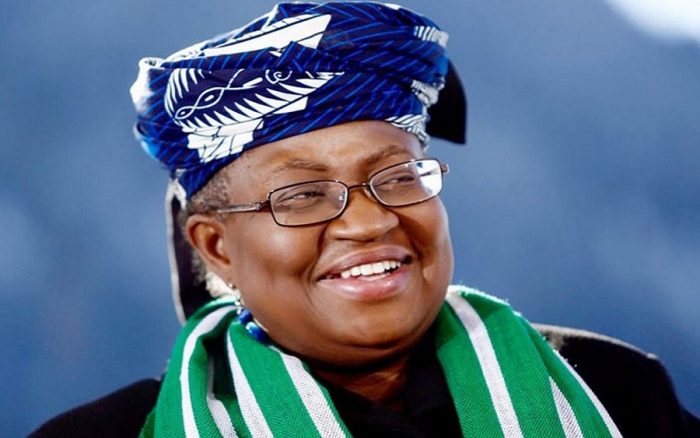
Director-General of the World Trade Organisation (WTO), Mrs. Ngozi Okonjo-Iweala, has said that her probe of an alleged $2.4bn subsidy fraud led to the abduction of her mother.
It would be recalled that the former Finance Minister’s mother, Kamene Okonjo, was kidnapped from her home in Ogwashi-Uku, Delta State, in December 2012.
In a recent interview with Bloomberg, Okonjo-Iweala said the abductors demanded that she resign as minister of finance and leave the country.
The WTO director-general served as Nigeria’s finance minister between 2011 and 2015 under former President Goodluck Jonathan.
She said the subsidy investigation began after her office noticed a sharp increase in claims submitted by petrol importers.
“So I went to the president and said, look, something is going on here. Could we audit the accounts? And he said, yes, go ahead. And we found about $2.4 billion worth of fraud. So, we refused to pay,” she recounted.
She said her mother was abducted shortly after the decision was announced, adding that her captors demanded her resignation as a condition for her release.
“I was told (by the kidnappers) that for her to be released, I should resign and leave the country,” she said.
The former minister described the incident as one of the most traumatic experiences of her life, saying her mother was held in a forest before escaping.
“She was held in the middle of a forest, and one night she escaped. She’s still alive. She’s 96 now,” Okonjo-Iweala said.
“It was a terrible, terrible five-day ordeal. I think the worst in my life.”
“I never dreamt my parents could ever be touched in this way, that people would be that evil,” she added.
Okonjo-Iweala said she considered resigning before her mother regained her freedom, but her father warned her against giving in to the abductors’ demands.
“He said, ‘We don’t give in to blackmail’. And he said, ‘You’ve got to carry on. You’ve got to go to work’,” she recalled.
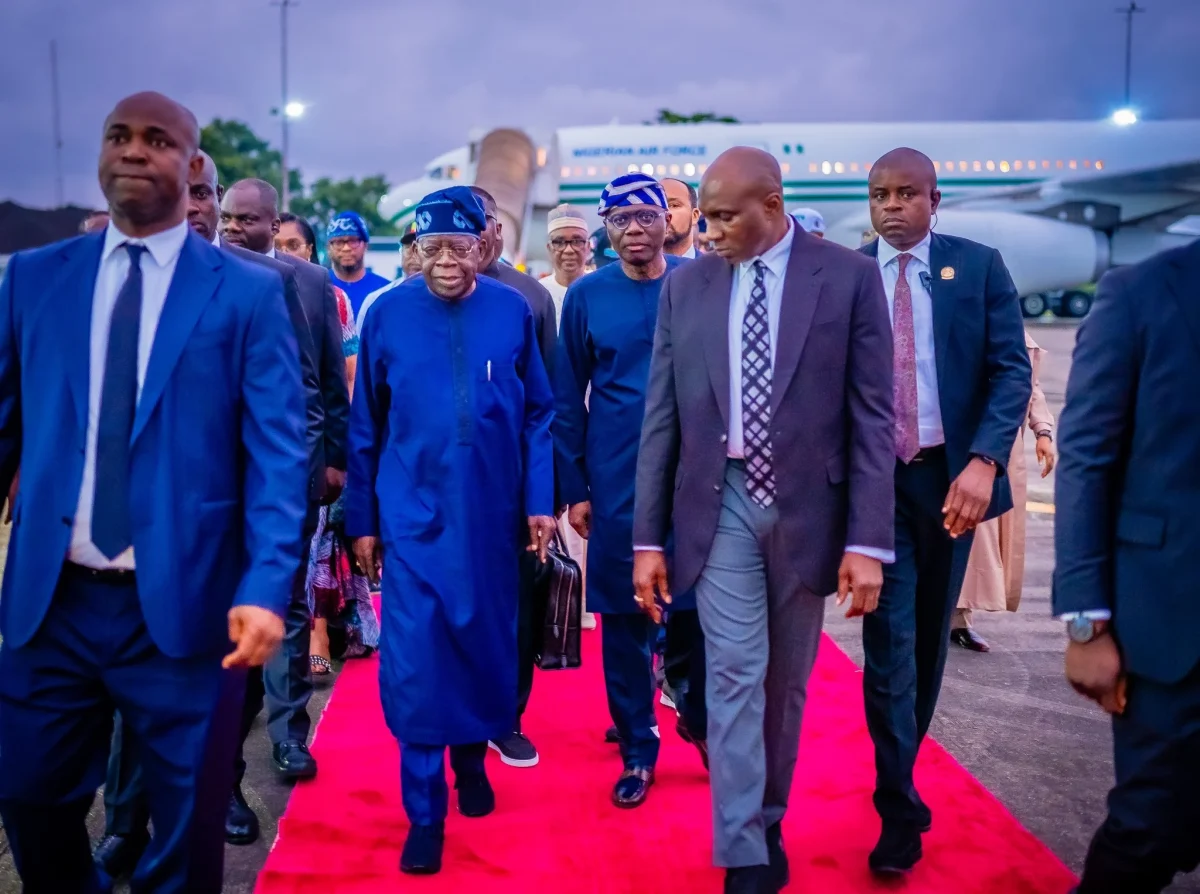
President Bola Tinubu has told members of the All Progressives Congress (APC) Presidential Campaign Council not to expect him to accompany them to every campaign event ahead of the 2027 general election, saying he must remain focused on governance and the country’s economic responsibilities.
Tinubu spoke on Wednesday during the inauguration of the APC Presidential Campaign Council in Abuja, where he urged members to take the party’s message to Nigerians across the states and local government areas while he continues to attend to matters of governance.
The president said he agreed with concerns that the demands of the campaign should not distract him from running the country, adding that Nigeria needs his attention at the moment.
“You’ve warned me not to allow the rigour of the campaign to distract me from governance, I hear you. I am in full agreement with your decision. Nigeria needs more attention now,” Tinubu said.
He told council members to excuse him from accompanying them to every campaign event, noting that his administration has bills to pay and international financial obligations to meet.
“So, you will excuse me from going everywhere with you, we have bills to pay. The American creditors cannot wait,” the President said.
Tinubu also said the government needs to attract investors who would commit to long-term investments in Nigeria and contribute to the future of the country’s children.
“We want those investors to come in, be here to stay, to invest for the future of our children,” he said.
The president, however, assured Nigerians that he would continue to engage them directly even as the campaign council took charge of mobilisation across the country.
“However, I will still make time to speak directly with Nigerians, even as you lead the campaign in the states and local government areas,” he said.
Tinubu described the inauguration of the council as more than a campaign activity, saying it represents a renewed commitment to Nigerians and the responsibilities of the ruling party.
“We have not gathered merely to inaugurate a council. We have gathered to renew a covenant. A covenant with Nigerian people and the historic responsibility they have entrusted to us as Nigeria’s governing party,” he said.
He added that the council is expected to communicate the administration’s vision, achievements and agenda to voters nationwide.
“This council will carry our vision, our records and our agenda to every Nigerian, and it will carry them to victory every ward of this country,” Tinubu said.
The president also commended APC members for completing the party’s congresses, recalling that some had predicted internal crises during the process.
He said the party has overcome the challenges and emerged united, crediting members for participating in the process from the ward level to the national leadership.
“They said there will be implosion. We passed through it. We did not fail. You didn’t let us down. We got here together,” he said.


