Metro
Goshen Reimagined: Africa As the Crucible of Global Sustainability


- /home/rhoncare/pointblank.ng/wp-content/plugins/mvp-social-buttons/mvp-social-buttons.php on line 27
https://pointblank.ng/wp-content/uploads/2025/08/DR.TOLULOPE-A.-ADEGOKE-AMBP-UN__-1-744x600.jpg&description=Goshen Reimagined: Africa As the Crucible of Global Sustainability', 'pinterestShare', 'width=750,height=350'); return false;" title="Pin This Post">
- Share
- Tweet /home/rhoncare/pointblank.ng/wp-content/plugins/mvp-social-buttons/mvp-social-buttons.php on line 69
https://pointblank.ng/wp-content/uploads/2025/08/DR.TOLULOPE-A.-ADEGOKE-AMBP-UN__-1-744x600.jpg&description=Goshen Reimagined: Africa As the Crucible of Global Sustainability', 'pinterestShare', 'width=750,height=350'); return false;" title="Pin This Post">
By Tolulope. Adegoke
“When the old world’s granaries emptied and its rivers ran thin, the nations did not look to the fallen pillars of their own making—they looked southward, to a land that had always known how to wait, how to hold, how to give. For in the quiet geology beneath Africa’s soil lies the pulse of a civilization yet to be born, and in the patience of its people lies the blueprint for a world that must learn to live again.” – Tolulope A. Adegoke, PhD
Introduction: The Contemporary Resonance of an Ancient Metaphor
In the narrative of Genesis, when famine swept across the known world, the land of Goshen in Egypt became a refuge for the family of Jacob—it was “the best of the land,” fertile and abundant, and under Joseph’s governance, it sustained life and multiplication amid widespread scarcity. The significance of Goshen was never merely geographical refuge; it was a strategic space that preserved the seeds of civilization and nurtured future strength in a time of crisis.
Projecting this metaphor onto the contemporary map of the global economy, the African continent is assuming a Goshen-like structural role. As the world confronts the multiple crises of climate breakdown, supply chain disruption, the pains of energy transition, and geo-economic fragmentation, Africa—with nearly one-third of the world’s critical minerals for energy transition, approximately seventy percent of its uncultivated arable land, and the world’s youngest demographic structure—constitutes an irreplaceable “reserve continent.” Africa is not only the key variable determining whether the global sustainable development agenda can be realized; it may well become the strategic fulcrum for reconstructing the world economic order.
Yet the Goshen metaphor also contains a warning. In the biblical narrative, Goshen was both a place of refuge and a site where the Israelites experienced a transition from “favored sojourners” to “enslaved laborers.” If contemporary Africa cannot assert leadership in the development of its minerals, land, and human capital, it may likewise fall into the historical cycle of “resource abundance without development.” This article aims to move beyond surface-level opportunity discourse and delve deeply into the structural conditions, potential risks, and strategic pathways of Africa as the world’s “Goshen.”
I. The Material Basis of Goshen: Irreplaceable Resource Endowments
Mineral Wealth: The Lifeblood of Energy Transition
The physical foundation of the global energy transition rests upon a group of raw materials known as “critical minerals.” Cobalt, lithium, manganese, graphite, rare earth elements, and platinum group metals constitute the core materials for batteries, wind turbines, solar panels, and hydrogen fuel cells. The international community increasingly recognizes that without stable supplies of these minerals, net-zero emissions targets will remain mere rhetoric.
Africa occupies a position in this domain that no industrialization strategist can afford to ignore. The Democratic Republic of the Congo holds approximately fifty percent of the world’s proven cobalt reserves—a metal that is a key component of lithium-ion battery cathodes. South Africa controls approximately eighty-three percent of global platinum group metal reserves, metals that possess irreplaceable functions in hydrogen technology and automotive catalytic converters. Guinea’s bauxite reserves account for more than approximately one-quarter of the global total, while Morocco controls approximately sixty-nine percent of global phosphate reserves—the latter being not only a raw material for fertilizers but also playing an increasingly important role in lithium iron phosphate battery technology. In terms of lithium resources, Zimbabwe possesses Africa’s largest reserves, estimated at approximately eleven million tonnes.
The significance of these figures extends far beyond the extractive industry. The energy transition is essentially a process of “moving from burning underground hydrocarbons to mining underground metals.” In this historic conversion, Africa holds structural pricing power and supply chain node status. A report by the United Nations University notes that by 2050, global revenues from copper, nickel, cobalt, and lithium could reach sixteen trillion US dollars, and sub-Saharan Africa is positioned to capture more than ten percent of this value.
Land and Agriculture: The Silent Granary
As global food insecurity rose by one hundred fifty percent between 2019 and 2022, and climate shocks expose global agricultural systems to unprecedented uncertainty, Africa’s strategic value in agriculture is equally prominent. Africa possesses nearly seventy percent of the world’s uncultivated arable land, and the agricultural sector already contributes more than one-third of the continent’s GDP.
The implications of these data need to be fully articulated. Global population is projected to approach ten billion by 2050, meaning food demand will grow by approximately fifty percent. Simultaneously, climate change is exposing traditional breadbasket regions—from the American Midwest to the Mekong Delta in Southeast Asia—to intensifying water stress and extreme weather events. Against this backdrop, Africa’s arable land reserves constitute a “strategic buffer” for global food security. As Kenny Fihla, CEO of Absa Group, stated, “Africa has the potential to become the world’s breadbasket.”
The B20 Special Task Force on Sustainable Food Systems and Agriculture has identified five forces reshaping the global food system: climate change, supply chain fragility, demand growth, technological transformation, and land management. Africa occupies a critical position across all five dimensions. Through the application of triple seed technology, digital agriculture platforms, and climate-smart practices, African agricultural productivity could achieve leapfrog growth. The task force estimates that merely repairing Africa’s supply chain bottlenecks could recover one to two percent of GDP annually, while tripling intra-African agricultural exports could generate approximately one hundred eighty billion US dollars in revenue and create ten million jobs.
Human Capital: The World’s Only Continuously Expanding Labor Pool
Africa’s most undervalued strategic asset is perhaps its human capital. As Global North countries confront severe prospects of population aging and labor force contraction, Africa is the only continent whose working-age population will continue to grow significantly in the coming decades.
However, this demographic dividend is not automatically realized. The World Economic Forum estimates that by 2030, nearly sixty percent of the global workforce will require reskilling. Africa faces structural unemployment, uneven educational quality, and a widening gap between educational outcomes and labor market demands. South Africa alone lost more than three hundred thousand jobs in the first quarter of 2026—a figure that reveals the pressures bearing down on traditional employment models.
At the same time, African youth have already demonstrated unique adaptability in global remote services. From software development and artificial intelligence data annotation to customer support and digital marketing, Africa’s “digital natives” are integrating into global value chains in unexpected ways. McKinsey estimates that generative artificial intelligence could create between sixty-one billion and one hundred three billion US dollars in economic value in Africa. The continent’s entrepreneurship rate ranks among the highest globally—an “entrepreneurial reflex” born of survival needs in environments where formal employment is scarce, and it also constitutes the unique resilience of Africa’s human capital.
II. The Structural Predicament of Goshen: Resource Curse and Institutional Deficits
The Paradox of “Poverty Amid Plenty”
The Goshen metaphor contains a profound tension. In the biblical narrative, the Israelites initially enjoyed prosperity and protection in Goshen, but as time passed, a new Pharaoh “who did not know Joseph” came to power, and this community was ultimately reduced to slavery. This narrative arc has an unsettling correspondence in contemporary African economic history.
Africa possesses approximately thirty percent of the world’s critical green mineral reserves, yet it has long remained at the periphery of global value chains. Minerals are exported as raw materials and returned to Africa as finished goods after processing, with the bulk of value addition captured by external economic systems. Claver Gatete, Executive Secretary of the United Nations Economic Commission for Africa, stated bluntly at the 2025 Africa Climate Summit: “We cannot repeat the exploitation patterns of the past. Africa must use its own resources to achieve industrialization and create jobs and sustainable growth for its people.”
This “de-industrialized” extractive model not only limits the capture of economic benefits but also deepens Africa’s structural vulnerability in the global economy. The Democratic Republic of the Congo supplies nearly half of the world’s cobalt, yet its own participation in the electric vehicle industry is virtually nil. Guinea’s bauxite supports the global aluminum industry, but Guinea itself lacks the capacity to convert alumina into aluminum. This model makes Africa highly sensitive to global commodity price fluctuations while unable to benefit from value growth in end markets.
Financial Constraints and Debt Traps
Transforming “Goshen” from metaphor to reality requires large-scale investment. Yet Africa faces severe financing constraints. Research from the United Nations University shows that Africa needs between twenty-five billion and fifty billion US dollars annually to achieve the 2030 universal energy access target, and an additional two hundred billion US dollars annually to finance its Nationally Determined Contribution climate commitments.
The reality is that current climate finance mechanisms continue to be dominated by loans rather than grants, saddling Africa with new debt burdens. Policy tools such as the European Union’s Carbon Border Adjustment Mechanism threaten Africa’s export revenues, raising fundamental questions of fairness. Professor Fatima Denton, Director of the United Nations University Institute for Natural Resources in Africa, points out: “Africa is being asked to serve as the world’s carbon sink, but without matching compensation or support mechanisms.”
The core contradiction of this financial constraint lies in the fact that Africa is being asked to play a key role in the provision of global public goods—from carbon sequestration to mineral supply to food security—yet is not granted corresponding financing conditions and institutional space to fulfill these functions. This is the contemporary version of the “Goshen dilemma”: being expected to provide refuge and resources without being equipped with the tools for autonomous development.
Governance Fragmentation and Institutional Deficits
The African continent comprises fifty-four countries, each with its own legal system, regulatory framework, and business environment. This fragmentation constitutes a significant obstacle to attracting investment and building regional value chains. The World Bank’s report “Integrating Africa” estimates that approximately sixty percent of trade costs are “unilateral or behind-the-border,” reflecting customs delays, inefficient logistics, transport restrictions, fragmented standards, and service barriers.
The African Continental Free Trade Area (AfCFTA) was designed as the institutional tool to address this challenge. The United Nations Economic Commission for Africa’s 2025 Economic Report notes that AfCFTA “offers a transformative opportunity to accelerate trade-led integration and drive inclusive sustainable development.” However, the distance between agreement signing and actual market operation remains vast. The World Bank report notes that deeper services liberalization could increase services trade within the AfCFTA region by approximately sixty to sixty-four percent.
III. The Path to Goshen: Strategic Pathways and Critical Choices
From Extraction to Transformation: Mineral Sovereignty and Industrialization
If Africa is to truly become the “Goshen” of the global sustainable development process, it must complete the role transition from raw material supplier to industrial transformer. The United Nations University Institute for Natural Resources in Africa report explicitly states that “mineral wealth must no longer be a paradox of ‘plenty without prosperity,'” and that Africa’s minerals are “not only crucial to the global decarbonization agenda but equally critical to Africa’s own industrialization, energy security, and technological advancement.”
The core of this transformation lies in local processing and value addition. The “Battery and Electric Vehicle Value Chain Initiative,” launched through collaboration between the United Nations Economic Commission for Africa and the African Export-Import Bank, aims to establish special economic zones in the Democratic Republic of the Congo and Zambia for the production of electric vehicle battery precursors and components. The symbolic and substantive significance of this initiative are equally important: it represents Africa’s shift from “resource extraction” to “prioritizing technological innovation and local value addition.”
To make this shift a systemic reality, Africa needs to establish a coordinated mineral governance framework. The “African Critical Minerals Alliance” concept proposed at the 2025 Africa Climate Summit aims to unify regulation, negotiate better trade terms, and promote intra-African collaboration. The logic of this collective action bears a structural resemblance to Joseph’s strategy of securing “the best of the land” for the entire family in Goshen: in the face of external pressures, only unity can ensure a space for survival and prosperity.
Agricultural Transformation: From Self-Sufficiency to Feeding the World
Converting Africa’s arable land potential into actual food output requires systemic change at multiple levels. The B20 task force’s recommendations encompass supply chain strengthening, access to inputs and technology, sustainable land management, and trade facilitation.
Technology is a key lever for this transformation. Precision agriculture, AI-driven extension services, and digital platforms can significantly boost productivity. The task force estimates that implementing similar technologies in Brazil has increased farmer incomes by twenty-five percent and reduced input costs by twenty percent, and Africa could potentially replicate or even exceed this trajectory. However, technology transfer must be accompanied by capacity building and adaptive innovation, rather than simple transplantation of solutions.
Infrastructure is another bottleneck. Africa’s agricultural supply chains face severe logistical challenges, from post-harvest losses to transport delays to market access barriers. Repairing these “clogs” could recover one to two percent of GDP annually—what the B20 task force describes as “low-hanging fruit and opportunities for entrepreneurs.” The African Continental Free Trade Area provides an institutional framework for building regional agricultural value chains, but requires accompanying hardware investment and policy coordination.
Human Capital Deepening: From Demographic Dividend to Skills Dividend
Africa’s demographic advantage can only become a genuine economic lever when converted into a skills advantage. KG Bako, a talent management executive at Absa Group, notes that “the future of work is, in fact, the future of skills. Skills—not job titles—are becoming the primary currency of employability, mobility, and productivity.”
This requires Africa to act in three directions. First, unlock the informal economy. The informal sector is the most defining feature of Africa’s labor market, constituting the majority of employment in most countries. Integrating this sector through financial accessibility, digital empowerment, and formal market linkages is the most direct opportunity for expanding productivity, broadening the tax base, and driving inclusive growth.
Second, advance gender inclusion. Women are disproportionately represented in the informal and under-served economic sectors, at rates as high as ninety percent. Expanding access to education, entrepreneurial finance, and leadership opportunities is not only a social obligation but also a clear economic lever.
Third, redefine workforce capabilities for the new era. As technology reshapes industrial landscapes, demand is shifting toward “power skills”—critical thinking, creativity, adaptability, ethical judgment, and collaboration. Africa’s education systems need to move from knowledge transmission to capability cultivation, from credential orientation to skills orientation.
Regional Integration: From Fragmentation to System
The successful implementation of the African Continental Free Trade Area is central to institutionalizing the Goshen vision. The United Nations Economic Commission for Africa’s report emphasizes that AfCFTA can reduce commodity dependence, boost manufacturing, and strengthen Africa’s position in global value chains by promoting intra-African trade.
The World Bank’s “Integrating Africa” report proposes four mutually reinforcing priorities: building regional value chains connected to cross-border production; reducing trade and regulatory friction; deepening, implementing, and enforcing regional trade agreements; and delivering regional public goods, including transport corridors, power markets, digital networks, and payment systems.
The implementation of these priorities requires African countries to find a balance between sovereignty and collective action. World Bank Vice President Ndiamé Diop notes that “Africa has a continental free trade agreement. The focus now is on implementation.” The distance from commitment to execution will determine whether Africa becomes an integrated continental market or a fragmented collection of states.
IV. The Global Significance of Goshen: An Anchor for a Just Transition
Positioning Africa as the “Goshen of the world” is not merely praise for Africa’s potential but a fundamental repositioning of the global sustainable development architecture. The core insight of this framework is that Africa’s future and the future of the rest of the world have become inextricably intertwined.
If Africa’s mineral wealth is used to finance its own industrialization, the global energy transition will gain a more stable and just supply chain foundation. If Africa’s arable land potential is sustainably activated, the global food system will gain a vital buffer space. If Africa’s youth population receives appropriate skills and opportunities, the global labor market will gain a continuously expanding talent pool. Conversely, if Africa remains locked in extractive relationships, the global sustainable development goals will be unattainable, and Africa will become a permanent source of crisis.
Professor Fatima Denton’s assertion strikes at the ethical core of this framework: “Justice must be at the heart of the green transition. Africa can no longer serve as a cheap carbon sink or the world’s raw material supplier.” The appropriate application of the Goshen metaphor in the contemporary context must include a serious commitment to justice. A “Goshen” built on unequal exchange is not a refuge but another form of enslavement.
Conclusion: Choice and Destiny
In the Genesis narrative, Goshen’s fate depended on the convergence of multiple forces: Joseph’s strategic foresight, Pharaoh’s governing will, and the Israelites’ own multiplication and perseverance. Contemporary Africa’s “Goshen moment” similarly depends on the interweaving of a complex set of factors: global demand for critical minerals, the strategic choices of African leaders, reform of the international financial architecture, and the agency of African peoples themselves.
Africa will not automatically become the world’s sustainable development engine. Resource endowments are a necessary condition but far from a sufficient one. Institutional quality, infrastructure, human capital, and political will determine whether these endowments are transformed into shared prosperity or locked into historical extractive patterns.
One thing, however, is clear: in the global sustainable development equation of the twenty-first century, Africa is no longer a remainder that can be ignored. It is becoming the core variable of the equation. As the world confronts the multiple pressures of climate breakdown, resource constraints, and demographic transition, what Africa possesses—minerals, land, youth—is precisely what is most scarce in the future.
Goshen holds significance in the biblical narrative not only because it was a refuge but also because it became the cradle of a people. The opportunity and challenge of contemporary Africa lie in precisely this: Can it become the stabilizing anchor of global sustainable development while completing its own transformation from resource provider to prosperity creator? The answer to this question will determine not only Africa’s destiny but the future of the entire world.
Dr. Tolulope A. Adegoke, AMBP-UN, is a globally recognized scholar-practitioner and thought leader at the nexus of security, governance, and strategic leadership. His mission is dedicated to advancing ethical governance, strategic human capital development, resilient nation-building, and global peace. He bridges the worlds of academic rigor and practical application, contributing to leadership discourse at the highest levels of policy and practice. He can be reached via: tolulopeadegoke01@gmail.com, globalstageimpacts@gmail.com


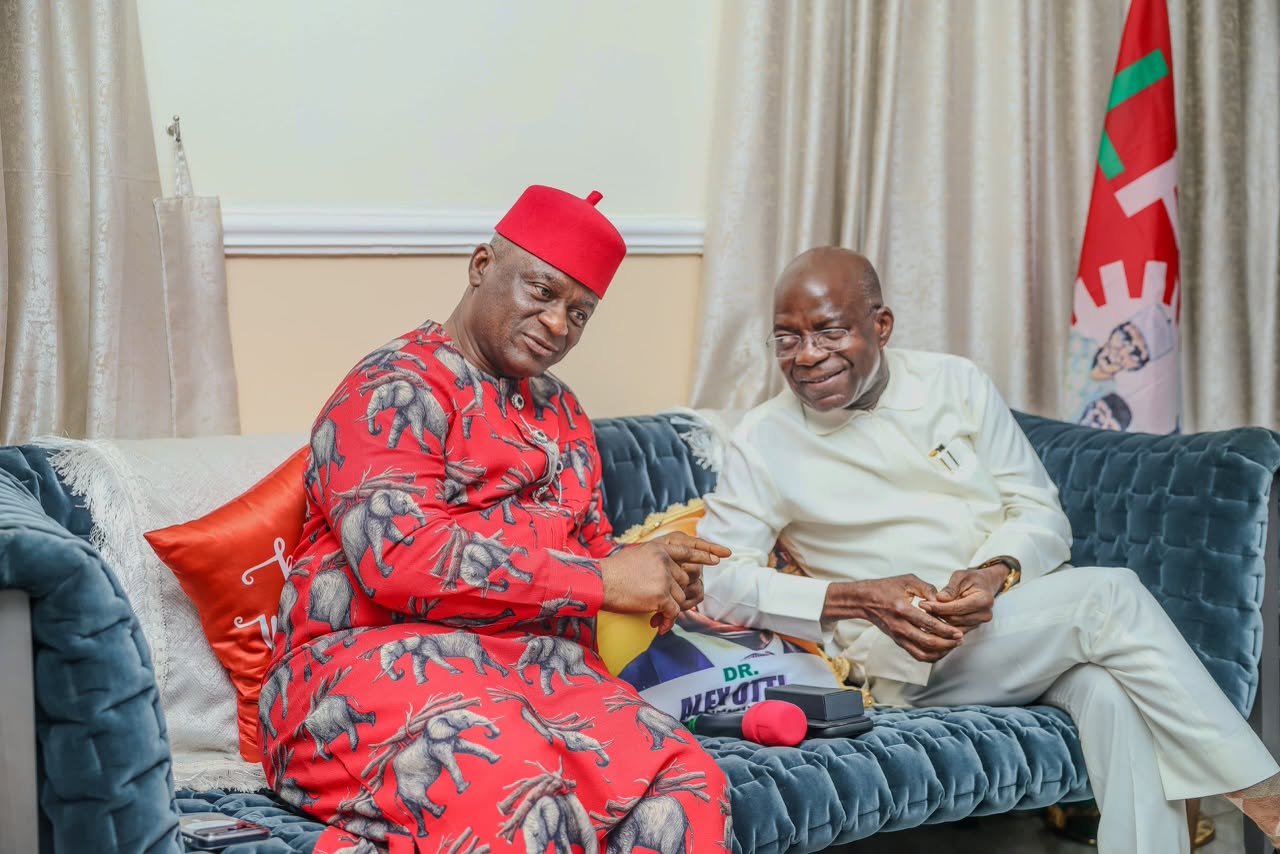
The Inspector-General of Police (IGP), Olatunji Disu, has assured Abia residents of improved security, pledging that the Nigeria Police Force would intensify efforts to protect lives and property across the State.
Disu gave the assurance during a courtesy visit to Governor Alex Otti at Government House, Umuahia, where he commended him for his sustained support to the police.
The IGP, who said he had received positive reports from the Commissioner of Police and the Assistant Inspector-General of Police on the State government’s assistance to the Force, promised that the police would reciprocate the gesture through improved service delivery.
“I want to thank you for all you have been doing for my officers. My Commissioner of Police has told me all you have been doing for us. The AIG too reiterated it. Thank you so much for it,” Disu said.
He assured the governor that the police would remain committed to tackling security challenges and ensuring the safety of residents.
“I will give you my word that we will continue to do our best to ensure proper policing so that people of the state will be able to sleep with their two eyes closed,” he said.
Disu explained that his visit to Abia was primarily to attend the traditional marriage ceremony of his orderly, Victor Nnah Sunday, at Amangwu, Abaki-Ndoki, in Ukwa East Local Government Area.
He, however, said he considered it necessary to pay homage to Otti, as the State’s Chief Security Officer, before proceeding to the wedding venue.
Responding, Otti commended the police leadership for its professionalism and prompt response to the state government’s requests for assistance in addressing security challenges.
“Thank you for what you do for the country. Thank you for the professionalism of the Force and for making everyone realise that the safety and security of the people is paramount.
“We have had instances where we called upon you and you responded swiftly,” the governor said.
Otti also praised the promotion of the immediate past Commissioner of Police in Abia to the rank of Assistant Inspector-General of Police (AIG), describing his service in the State as professional and tactful.
He said the former police commissioner demonstrated commitment in handling security matters, adding that although the state would have preferred to retain him, his elevation was a welcome development.
“He demonstrated professionalism and tact in the discharge of his duties. If not that it is a promotion, we would have resisted it, but we believe it is good for him to move on,” Otti said.
The governor expressed optimism that the officer would sustain his relationship with Abia despite his new position.
Otti also congratulated the IGP’s orderly on his traditional marriage, recalling that he had met him during an earlier encounter with the police chief.
The governor further commended Disu for what he described as his demonstration of national inclusiveness through the choice of aides and associates from different ethnic and geographical backgrounds.
He specifically noted that some of the IGP’s close aides hailed from different parts of the country, including Ohafia in Abia State.
Otti urged Nigerians to rise above ethnic and geographical sentiments, stressing that national unity would be strengthened when citizens saw themselves first as members of one country.
The IGP was accompanied on the visit by his wife, AIG Afolabi and some Commissioners of Police.
Members of the governor’s delegation included the Chief of Staff, Pastor Caleb Ajagba; Commissioner for Information, Prince Okey Kanu; Commissioner for Arts, Culture and Creative Economy, Dr. Matthew Ekwuribe; and other top government officials.

On Saturday, 7 November 2026, the Chinwe Bode-Akinwande (CBA) Foundation successfully hosted its annual Walk4Hope Charity Walk, bringing together individuals, corporate organisations, partners, customers and supporters in a collective show of solidarity for underprivileged widows and their children.
This year’s edition was particularly significant as it formed part of the Foundation’s 10th Anniversary celebration, marking a decade of purposeful intervention, advocacy and commitment to improving the lives of vulnerable women and children across Nigeria.
Walk4Hope is more than an annual charity walk. It is an awareness and fundraising initiative created to draw attention to the challenges faced by widows, including social discrimination, economic hardship, limited opportunities and the difficulties of providing for their children. Through the initiative, CBA Foundation continues to encourage individuals and organisations to take collective action towards creating a more supportive and inclusive society.
Since its establishment in 2015, CBA Foundation has remained committed to protecting, supporting and empowering underprivileged widows and their vulnerable children. Its interventions are driven by five key focus areas: women empowerment and capacity building, health interventions, nutrition, quality basic education and self-employment. Through these programmes, the Foundation provides opportunities for skills acquisition, business development, educational support and improved access to essential needs.
The 10th Anniversary celebration therefore represents more than a milestone, it is a reflection of the lives touched, communities reached and the collective commitment to ensuring that widows and their children are not left behind.
The Foundation extends its sincere appreciation to all participants, customers, volunteers, partners and supporters who came out, contributed and stood behind the Walk4Hope vision. Your presence and generosity helped make this year’s event a success.
Special appreciation goes to our sponsors and corporate partners:
FirstBank •Nominees · First Cap · First HoldCo · Nigerian Breweries · Nexra · Keskese · DigixPlus · Vyrus · EkoHotels · Truecaller · HopeStores
We are grateful to each of these organisations for their support and belief in our mission. We also extend a special thank you to all our customers and everyone who contributed in one way or another. Your support continues to strengthen our work and expand the reach of our interventions.
As we celebrate 10 years of impact, CBA Foundation remains steadfast in its mission to restore dignity, create opportunities and build a society where every widow and child has the support needed to live with hope and confidence.
Together, we can make a difference.
For more information about CBA Foundation, its programmes and opportunities to support its work, visit www.cbafoundation.org.
By Tolulope A. Adegoke
“They came searching for oil and found a nation; they stayed for minerals and discovered a people; they will remain for the harvest and inherit a future. Nigeria’s belly was never empty—it was waiting for the world to learn how to read its abundance. The renewed hope is not that Nigeria will rise, but that the world will finally recognise what has always been true: the Green White Green carries within its fold the seed of every nation’s tomorrow.”
Introduction: Reading the Abundance
For decades, the global narrative surrounding Nigeria has been stubbornly one-dimensional—a tale of paradox, of potential squandered, of a giant perpetually clearing its throat but never quite speaking. Yet, a dispassionate examination of empirical data, recent policy shifts, and geological realities reveals a different story. The Green White Green is not merely a flag of a nation struggling to find its footing; it is the standard of a sleeping giant now stirring with purpose. Nigeria’s metaphoric belly is not empty; it is filled to bursting with a diversity of resources—human, mineral, agricultural, and energy—that the world increasingly requires for its own survival. The renewed hope is not a political slogan; it is a quantifiable reality waiting to be harnessed. And for the early investor—whether institutional or individual, whether based in Lagos or London, Dubai or Toronto—this reality represents a narrowing window of opportunity that rewards those who move with discernment rather than those who wait for consensus.
The Hydrocarbon Bedrock and the Gas Dividend
While the world clamours for energy transition, the uncomfortable truth is that global energy security remains anchored in hydrocarbons. Nigeria’s position here is not merely significant; it is strategic. As of January 2026, the Nigerian Upstream Petroleum Regulatory Commission confirmed the nation’s total oil and condensate reserves at 37.01 billion barrels, alongside a staggering 215.19 trillion standard cubic feet of gas. To put this in perspective, the reserves life index stands at 59 years for oil and 85 years for gas, ensuring that Nigeria will remain a pivotal supplier to global markets for generations.
However, the story is no longer just about crude. The renewed hope is driven by a fundamental shift in how Nigeria manages these resources. The Petroleum Industry Act has moved the country from a stagnant regulatory environment to one that is attracting serious capital. Crude production has rebounded to approximately 1.6 to 1.7 million barrels per day, propelled by increased drilling activity and government-led initiatives to restore output.
What This Holds for Early Investors
The early investor in Nigeria’s upstream sector is not merely buying into a resource play; they are buying into a regulatory reset that has fundamentally altered the risk calculus. In August 2026, President Bola Ahmed Tinubu approved a landmark Deep Offshore Investment Framework designed to unlock up to US$50 billion in new investment by replacing project-by-project negotiations with a transparent, rules-based system. The framework begins with the approximately US$10 billion Bonga South West project and applies across multiple categories of qualifying developments, providing the certainty that globally mobile capital demands. For early movers, this represents an opportunity to enter at the ground floor of a revived deep-water province before competition intensifies.
Furthermore, the Nigerian Upstream Petroleum Regulatory Commission has announced the 2026 Licensing Round, offering 40 oil and gas blocks across land, shallow water, and deep-water terrains. The Commission’s chief executive has explicitly invited qualified Nigerian and international investors to “come and compete,” with full disclosure of evaluation methodology and beneficial ownership requirements—a signal that transparency is being institutionalised rather than merely promised. The immediate production upside is equally quantifiable: the Commission has identified more than 788,000 barrels per day of shut-in production across 63 operators, alongside offshore projects valued at an estimated $30 billion to $50 billion awaiting final investment decision . For the early investor with technical competence and financial capacity, these are not speculative figures; they are a pipeline of bankable opportunities.
The gas sub-sector offers perhaps the most compelling entry point for investors with a longer horizon. Nigeria sits on 215 trillion cubic feet of gas, yet daily production is barely 7 billion cubic feet . The government has completed major infrastructure projects to unlock gas supply and is advancing the Nigeria-Morocco Atlantic Gas Pipeline and Trans-Sahara Gas Pipeline, positioning Nigeria not merely as a domestic supplier but as a strategic corridor for European and regional demand. Early investors in gas processing, pipeline infrastructure, and liquefaction capacity are effectively securing a stake in the architecture of twenty-first-century African energy security.
The Silent Revolution in Solid Minerals
Perhaps the most compelling evidence of Nigeria’s renewed hope lies beneath the soil, in a sector long overshadowed by oil. In mid-2026, the federal government announced the discovery of a world-class polymetallic mineral province in Kaduna State, verified by the Nigerian Geological Survey Agency. This is not a minor find. It contains exceptionally high-grade deposits of platinum group metals, gold, nickel, copper, lithium, and rare earth elements—the very raw materials that power the global transition to electric vehicles, renewable energy infrastructure, and advanced electronics.
Simultaneously, an estimated 3.3 million metric tonnes of lithium reserves were unveiled at a site near Abuja, with the broader project hosting an estimated 94.8 million tonnes of mineral resources including lithium-bearing ore. This is the heartbeat of the twenty-first-century economy. While the world scrambles to secure supply chains for critical minerals, Nigeria has quietly positioned itself as an emerging destination. Crucially, the government has abandoned the old model of exporting raw ore. New licensing requirements mandate local processing and beneficiation, forcing investment into domestic value chains.
What This Holds for Early Investors
The lithium value chain presents a particularly instructive case study for early investors. Nigeria’s known lithium occurrences are concentrated in the North-Central and South-West geopolitical zones, with significant deposits in Nasarawa, Ekiti, Kwara, Kogi, Kaduna, Niger, and Oyo states. The principal lithium-bearing minerals identified include spodumene, lepidolite, petalite, and amblygonite—all recognised globally as important commercial sources of battery-grade lithium. The International Energy Agency projects that demand for lithium could grow by more than 40 times by 2040 under ambitious clean-energy scenarios, placing countries with commercially viable deposits in a strategically advantageous position.
For the early investor, the calculus is straightforward. Those who enter at the exploration and processing stage—rather than waiting for the sector to mature—can secure assets at valuations that do not yet reflect the full magnitude of global demand. The evidence of this opportunity is already materialising. Chinese investors have funded the bulk of Nigeria’s processing infrastructure, with a $600 million lithium processing plant near the Kaduna-Niger border planned to open and a $200 million lithium refinery on the outskirts of Abuja nearly completed, backed by firms including Jiuling Lithium Mining Company and Canmax Technologies. The government expects two additional processing plants in Nasarawa State. These are not pilot projects; they are the foundation of an industrial ecosystem.
The institutional architecture supporting these investments has also matured. The Electronic Mining Cadastral System (EMC+) has streamlined licensing into a fully digitised application process, while the newly launched Nigeria Minerals Decision Support System (NMDSS) provides critical hydrological, geological, and geographical data to assist investors in making informed decisions. The Minister of Solid Minerals Development, Dele Alake, has explicitly charged global mining giants—naming Glencore, Rio Tinto, and Rainbow Mines among others—to recognise Nigeria’s vast mineral resources and collaborate in their development. For early investors, the combination of de-risked licensing, transparent data, and government advocacy represents a rare alignment of conditions.
The Agricultural Engine and the Demographic Dividend
The world’s survival hinges not just on minerals, but on food and human capital. Here too, Nigeria’s belly is full. Agriculture contributes approximately 26 percent to Nigeria’s Gross Domestic Product and provides employment for more than 70 percent of the population across the agricultural value chain. The government has projected that agriculture could account for up to 30 percent of the nation’s one-trillion-dollar economy ambition, translating to approximately $300 billion.
What This Holds for Early Investors
The agricultural opportunity for early investors is anchored in a structural reality: Nigeria possesses 79 million hectares of arable land, of which only about 40 percent is currently cultivated. The productivity gap is equally pronounced. Yields for several Nigerian crops average between 1.3 and 1.5 tonnes per hectare, compared with approximately 11 tonnes per hectare recorded in Egypt under irrigation. Nigeria remains the world’s largest producer of cassava, with annual output estimated at 63 million metric tonnes, yet average yields of six to seven tonnes per hectare remain far below the nation’s capacity.
For the early investor, these gaps are not liabilities; they are arbitrage opportunities. The Federal Government has unveiled a $78.5 billion investment portfolio** featuring 65 projects across key sectors, including agriculture and agro-processing, which alone requires **$9.8 billion. The incentives are explicit: 100 percent foreign ownership, full capital repatriation, and tax credits designed to attract global investors. These are not aspirational policy statements; they are codified instruments available to those who move early.
The momentum is already visible on the ground. At COP31 in November 2026, Nigeria signed a $3 million agreement for a climate-smart greenhouse project in Kano State, deploying approximately 1,000 climate-adapted greenhouses for tomato production under the Special Agro-Industrial Processing Zones programme. The Bank of Agriculture will provide $1.5 million in structured financing for participating farmers, while Turkish firm Direkci Group will contribute another $1.5 million in private-sector financing and technology. The partners have agreed to a joint performance review after nine months, with a possible commercial expansion valued at a minimum of $30 million. For early investors in agro-processing, greenhouse technology, and structured agricultural finance, this is a template that can be replicated across multiple value chains and geographies.
The demographic dimension amplifies the agricultural opportunity. With an estimated population of 230 million—projected to reach between 450 and 500 million by 2050—Nigeria possesses the largest youth demographic on the African continent, with more than half of its people aged under 30 . Each year, 3.5 million young Nigerians enter the labour market, one of the largest waves of youth entering the workforce anywhere in the world. For early investors in labour-intensive sectors—agro-processing, manufacturing, digital services—this represents a structural cost advantage that will only deepen as global labour markets tighten.
A Strategic Partner for Global Stability
The empirical evidence converges on a single conclusion: Nigeria is not asking for charity; it is offering partnership. The financing gaps are real. Nigeria’s Third Nationally Determined Contribution estimates that $337 billion will be required between 2026 and 2035 to deliver its climate and sustainability commitments. The nation’s tax-to-GDP ratio of approximately 15.5 percent remains below regional benchmarks, limiting the government’s capacity to fund priority sectors and respond to shocks.
What This Holds for Early Investors
But these figures represent opportunity, not desperation—and the macro environment is stabilising in ways that directly benefit early entrants. By early 2026, the divergence between the official Nigerian Foreign Exchange Market and the parallel market rate narrowed to less than 2 percent on average. Foreign exchange reserves climbed to a 13-year high of $50.45 billion in February 2026, providing roughly 9.7 months of import cover. This liquidity surge was supported by the removal of FX restrictions on 44 items and a resurgence in foreign portfolio inflows—a signal that the currency risk that once deterred investors is being actively managed.
The capital markets are also opening. The Securities and Exchange Commission has announced plans to introduce an African depositary-receipt framework to attract foreign companies and investors, as part of a strategy to triple the market’s size to 750 trillion naira ($562 billion) by 2036** . The plan targets an increase in annual diaspora investment from **$4 billion to $10 billion** over the next decade, with assets managed by collective investment schemes rising from **$5.6 billion to $56 billion. For early investors in Nigerian equities and fixed income, this represents a structural expansion of the investor base and liquidity pool that will lift valuations across the market.
The proof of concept is already visible. The Dangote Petroleum Refinery is using global depositary receipts to reach investors outside Nigeria through an IPO seeking to raise approximately $2.1 billion, with the offering extended to allow participation from more African markets. For the early investor, this is not merely a single transaction; it is a demonstration that Nigerian assets can be structured to access global capital at scale. Those who establish positions before the depositary-receipt framework is fully operational will be participating in a market that is being deliberately redesigned to accommodate them.
The Window and the Warning
For the early investor, the Nigerian opportunity carries a temporal dimension that cannot be ignored. The conditions that make Nigeria attractive—reformed regulatory frameworks, transparent licensing, currency stabilisation, and a government actively courting foreign capital—are the product of deliberate policy choices made in the past three years. They are not permanent features of the landscape; they are the result of a specific political configuration that has prioritised investment climate over short-term extraction.
The licensing rounds will close. The deep offshore framework will be fully subscribed. The lithium processing capacity will be built out by those who move now. The agricultural corridors will be secured by investors who recognise that food security is the next frontier of global strategic competition. The demographic dividend, too, has a window: the United Nations projects that Nigeria’s working-age population will expand by more than 100 million people within 25 years, but if this surge is not absorbed into productive employment, the same demographic advantage could become a liability.
The early investor, therefore, is not merely seeking returns; they are participating in the construction of a new economic architecture. They are betting not on Nigeria’s resources alone, but on the proposition that a nation of 230 million people, endowed with oil and gas, lithium and gold, arable land and a youthful workforce, and governed by a administration that has staked its legitimacy on attracting capital, represents the most compelling growth story of the coming decade.
Conclusion: The Harvest is Ready
The belly is full. The harvest is ready. The world would do well to take notice—and the early investor would do well to move before the notice becomes consensus. Nigeria’s renewed hope is not a promise deferred; it is a destiny being unveiled, block by block, refinery by refinery, policy by policy. For those who read the abundance correctly, the Green White Green is not merely a flag to be admired from a distance. It is an invitation to participate in the most consequential economic transformation of the twenty-first century.
Note: This write-up draws on official regulatory announcements, government policy documents, and verified industry reporting from 2026. The figures cited are sourced from the Nigerian Upstream Petroleum Regulatory Commission, the Federal Ministry of Solid Minerals Development, the Securities and Exchange Commission, the African Development Bank, the World Economic Forum, and other institutional sources. Early investors are advised to conduct independent due diligence and engage with qualified legal and financial advisers before committing capital.
Dr. Tolulope A. Adegoke, AMBP-UN, is a globally recognized scholar-practitioner and thought leader at the nexus of security, governance, and strategic leadership. His mission is dedicated to advancing ethical governance, strategic human capital development, resilient nation-building, and global peace. He bridges the worlds of academic rigor and practical application, contributing to leadership discourse at the highest levels of policy and practice. He can be reached via: tolulopeadegoke01@gmail.com, globalstageimpacts@gmail.com