
Business
Hackaholics 6.0: 35 Teams Compete for Wema Bank’s ₦120m Grand Prize Pool

- /home/rhoncare/pointblank.ng/wp-content/plugins/mvp-social-buttons/mvp-social-buttons.php on line 27
https://pointblank.ng/wp-content/uploads/2022/01/Wema_Bank_Plc.jpg&description=Hackaholics 6.0: 35 Teams Compete for Wema Bank’s ₦120m Grand Prize Pool', 'pinterestShare', 'width=750,height=350'); return false;" title="Pin This Post">
- Share
- Tweet /home/rhoncare/pointblank.ng/wp-content/plugins/mvp-social-buttons/mvp-social-buttons.php on line 69
https://pointblank.ng/wp-content/uploads/2022/01/Wema_Bank_Plc.jpg&description=Hackaholics 6.0: 35 Teams Compete for Wema Bank’s ₦120m Grand Prize Pool', 'pinterestShare', 'width=750,height=350'); return false;" title="Pin This Post">
Wema Bank, Nigeria’s most innovative bank and pioneer of Africa’s first fully digital bank, ALAT, has announced a ₦120 million prize pool for the Hackaholics 6.0 Grand Finale. This announcement follows the emergence of 35 teams from regional pitch sessions that recorded 1,460 participants across seven cities in Nigeria.
Announcing the prize structure, the MD/CEO, Wema Bank, Mr. Moruf Oseni, disclosed that the ₦120 million will be awarded across several winning categories at the finale. The Ideathon prizes include ₦25 million for first place, ₦20 million for the first runner-up and ₦15 million for the second runner-up. In the Hackathon category, the first to fourth-place teams will receive ₦20 million, ₦15 million, ₦10 million and ₦5 million respectively. In addition, two women-led innovations, one from each vertical, will receive ₦5 million each in recognition of Wema Bank’s commitment to advancing female participation in technology and innovation.
According to Moruf Oseni, “Hackaholics continues to demonstrate the power of young people to shape the future of technology and nation-building. We believe strongly in the ideas, resilience, and ingenuity of the Nigerian youth, and our investment in this initiative is a clear testament of our commitment to giving them the resources, mentorship, and platform they need to transform their ideas into real-world solutions. As these finalists head to Lagos, we are confident that their innovations will create meaningful impact across industries and communities, and we are proud to be a champion for that transformation.”
The 35 finalist teams emerged from a regional pitch cycle that received over a thousand applications across eight pitch centres: Ahmadu Bello University (ABU Zaria), Federal University of Technology Akure (FUTA), Lagos State University (LASU), University of Uyo (UNIUYO), Babcock University, University of Ibadan (UI), Veritas University Abuja and Purple Academy Lagos. Each centre provided students with access to industry-led masterclasses, hands-on mentorship and structured pitch development sessions, culminating in highly competitive presentations before expert judges.
The finalists include 17 Ideathon teams, 12 Hackathon teams and six women-led teams, each tackling challenges across fraud detection, customer experience, onboarding, acquisition, credit management and other social impact areas. All teams will participate in a three-day pre-finale mentorship and shortlisting programme ahead of the Grand Finale in Lagos.
Finalists expressed excitement about advancing to the Lagos finale and the opportunities ahead. The team leader of Veritas’ Hackathon winner, Tensor, Medugu Wali, shared the reason they are participating in the competition. “We built ‘Wallet Padi’ because we believe it can genuinely improve how Nigerians manage their money. Advancing to the pre finale leg of Wema Bank Hackaholics is a big step toward bringing that vision to life, and we appreciate Wema Bank for creating this platform.”
Babcock’s Ideathon winner, Akobundu Gift, a participant who had earlier attempted the Hackaholics challenge in 2023 but didn’t win, expressed great enthusiasm at the prospect of moving on to the next stage. Extending his gratitude to Wema Bank, he reminisced on the journey of his Startup, ‘Chao’. According to him, “Chao started as a small campus food-delivery idea in 2023, and it has grown far beyond what we imagined. Reaching the Hackaholics finals again reflects how much we’ve evolved. We’re grateful to Wema Bank for the opportunity and excited to compete at the next stage.”
Ogunlana Tosin, founder of Eutopia.ai, the women-led project winner at Veritas University, also shared her joy after being announced winner at her Pitch Centre, adding “Not making it at Babcock was honestly painful, but we were determined to win so we took the feedback, refined our solution and returned to try again. Advancing beyond the preliminaries this time showed me what’s possible when we don’t give up. I’m truly grateful to Wema Bank for this opportunity and for continuing to champion women empowerment, helping women-led innovation to thrive, and supporting women through initiatives like SARA,” she said.
Since its inception in 2019, Hackaholics has grown into one of Nigeria’s most influential youth innovation platforms, attracting more than 12,000 applicants across 15 schools and disbursing over $300,000 in funding and support. Between 2023 and 2024 alone, ₦75 million was awarded to women-led teams. With the launch of the Hackaholics Accelerator and Collective Program earlier this year, Wema Bank now provides ongoing support to early-stage founders beyond the competition cycle.
The Hackaholics 6.0 Grand Finale will bring together industry leaders, policymakers, investors and technology experts in Lagos for live pitches, product showcases and the unveiling of Nigeria’s next generation of
transformative founders. For more information, visit hackaholics.wemabank.com or follow Wema Bank’s digital platforms.


Wema Bank, Nigeria’s oldest indigenous bank and pioneer of Africa’s first fully digital bank, ALAT, has been named Nigeria’s Best Digital Bank for Consumers 2026 by Euromoney, one of the world’s most respected authorities on financial services and banking excellence.
The prestigious recognition affirms the Bank’s sustained leadership in digital innovation, customer experience and financial inclusion, reinforcing its position as one of Nigeria’s leading technology-driven financial institutions.
Presented annually, the Euromoney Awards for Excellence celebrate banks that are redefining financial services through innovation, measurable impact and outstanding customer value. In selecting Wema Bank for the award, Euromoney recognised the Bank’s successful digital transformation journey, its continuous innovation through ALAT, Africa’s first fully digital bank, and its unwavering commitment to delivering simpler, smarter and more accessible banking experiences for customers.
Commenting on the recognition, the Managing Director/Chief Executive Officer of Wema Bank, Moruf Oseni, said: “This award is a strong validation of the deliberate investments we have made over the years to build a truly digital bank that puts customers at the centre of everything we do. Innovation for us has never been about technology for its own sake. It has always been about creating solutions that make banking easier, faster, safer and more rewarding for every customer.
“From pioneering Africa’s first fully digital bank with ALAT to continuously evolving our digital capabilities, we have remained focused on anticipating customer needs and building experiences that create real value. We are honoured by this recognition from Euromoney and inspired to continue pushing the boundaries of innovation as we shape the future of banking in Nigeria,” he concluded.
A key milestone in Wema Bank’s digital transformation has been the evolution and upgraded version of ALAT, which introduced next-generation capabilities including voice banking, tap-to-pay functionality, personalised financial services and integrated investment opportunities through strategic partnerships. Together with faster digital onboarding, AI-powered fraud monitoring, intelligent customer personalisation and an expanding agency banking network, these innovations continue to enhance customer experience while extending financial services to more Nigerians.
Euromoney also recognised Wema Bank’s ability to leverage technology to build deeper customer relationships through data-driven personalisation, enabling customers to receive tailored recommendations across savings, investments and credit products based on their financial needs and behaviour.
For over eight decades, Wema Bank has remained at the forefront of innovation in Nigeria’s financial services industry. As the pioneer of Africa’s first fully digital bank, the Bank continues to redefine banking by combining technology, customer insight and innovation to deliver seamless, secure and inclusive financial solutions for individuals, businesses and communities.
The Euromoney recognition further reinforces Wema Bank’s commitment to building the future of banking through continuous innovation, operational excellence and customer-centric solutions that create lasting value.
… Spotlight financial inclusion, others as sectors poised for exponential growth
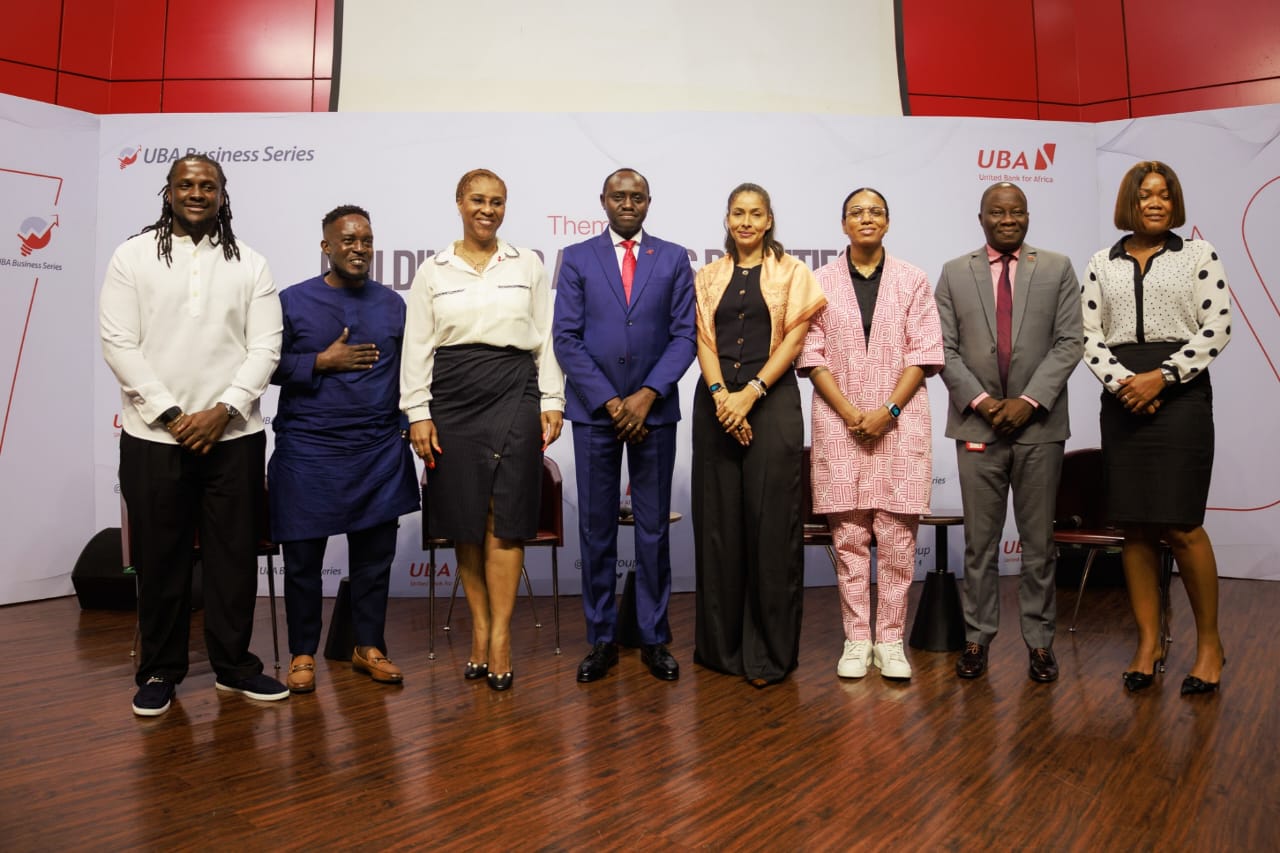
Africa’s Global Bank, United Bank for Africa (UBA) Plc, has hosted another impactful edition of its quarterly UBA Business Series, bringing together entrepreneurs, investors, innovators and business leaders to explore how customer insights and technology is shaping Africa’s next generation of high-growth businesses.
Held at the Bank’s corporate headquarters in Lagos under the theme, “Building for Africa’s Realities: Turning Consumer Feedback into Technology-Driven Solutions,” the event examined how African entrepreneurs are leveraging data, consumer behaviour and innovation to build scalable businesses tailored to the continent’s unique realities.
A major highlight of the discussion was the consensus among panellists that financial inclusion, the creative economy, sports, and small and medium enterprises (SMEs) represent the sectors most likely to produce Africa’s next billion-dollar companies.
They agreed that the businesses most likely to succeed will be those that remain deeply connected to the needs and behaviours of their customers.
Moderated by media entrepreneur and founder, Adaora Mbelu, the conversation featured an accomplished panel comprising Co-founder and Chief Executive Officer of Chowdeck, Femi Aluko; acclaimed rapper and entrepreneur, M.I Abaga; and Venture Capitalist/ Co-founder of Octerra Capital, Ashim Egunjobi.
Opening the conversation, Mbelu challenged entrepreneurs to pay closer attention to the realities around them.
“Building is not reserved for the smartest person in the room. It is about being observant enough to understand people, behaviour and context. The greatest opportunities often emerge from paying attention to what others overlook.”
Sharing the Chowdeck growth story, Aluko explained that some of the company’s biggest innovations emerged directly from analysing customer behaviour. He revealed that purchasing patterns within the platform inspired the creation of Chowstore, demonstrating how data can uncover entirely new business opportunities.
“Customers constantly tell you what they need. If you listen carefully, they will show you what to build next.”
Speaking on artificial intelligence, M.I Abaga described AI as a transformative opportunity for Africa’s creative industry rather than a threat. He noted that emerging technologies would enable African creators participate more competitively in the rapidly expanding global creative economy.
“Technology has always been part of creativity. AI gives African creators the opportunity to compete globally, solve bigger problems and build businesses that serve international markets.”
He also observed that the digital era has fundamentally changed how audiences are reached, enabling creators to build direct relationships with their communities while creating demand for stronger financial and business support systems.
Offering an investor’s perspective, Egunjobi emphasised that successful investing begins with backing resilient founders rather than impressive presentations.
Africa’s Global Bank, United Bank for Africa (UBA) Plc is set to host the latest edition of its quarterly UBA Business Series, turning the spotlight on how businesses can transform everyday customer feedback into technology that answers Africa’s real needs,
Scheduled for Thursday, 16 July 2026 at 11:00 a.m. (WAT), the event, themed “Building for Africa’s Realities: Turning Consumer Feedback into Technology-Driven Solutions,” will convene founders, investors and builders to share candid insight on designing products that work in African conditions rather than solutions borrowed wholesale from elsewhere.
Participants will be able to join virtually, as the session streams live across UBA’s digital platforms, including the Group’s YouTube channel, with those interested following the conversation online through the bank’s official channels.
The session will feature a lineup of speakers who have built for African markets first-hand, including rapper and entrepreneur, M.I Abaga; venture capitalist and co-founder of Octerra Capital, Ashim Egunjobi; and co-founder and chief executive of Chowdeck, Femi Aluko. The conversation will be hosted by media entrepreneur and founder, Adaora Mbelu.
Panelists are expected to share their personal journeys and perspectives on building consumer platforms, backing the founders behind them, and staying close enough to the customer to keep getting the product right in a fast-moving market.
Speaking ahead of the event, UBA’s Group Head, Brands, Marketing and Corporate Communications, Alero Ladipo, said the edition reflects the bank’s commitment to the entrepreneurs and businesses driving Africa’s growth.
“The best African businesses are not guessing what their customers want, they are listening, adapting and building accordingly,” Ladipo said.
“Through this edition of the UBA Business Series, we want to put that discipline within reach of every entrepreneur, and create a platform where honest conversations about product, technology and growth can take place. When our businesses build for Africa’s realities, the whole continent benefits.”
The quarterly UBA Business Series has grown into a major knowledge-sharing platform designed to equip entrepreneurs, professionals and business leaders with the insights, tools and strategies to build sustainable enterprises and navigate an evolving business environment.
With more than 25,000 employees and over 45 million customers globally, UBA is one of the largest employers in Africa’s financial sector. The bank operates in 20 African countries, as well as the United Kingdom, the United States, France and the United Arab Emirates, providing retail, commercial and institutional banking services while advancing financial inclusion through innovative technology.


