
News
Hike in WAEC, NECO Fees Cruel, Dangerous to Education, Atiku Tells Tinubu

- /home/rhoncare/pointblank.ng/wp-content/plugins/mvp-social-buttons/mvp-social-buttons.php on line 27
https://pointblank.ng/wp-content/uploads/2019/04/Atiku.jpg&description=Hike in WAEC, NECO Fees Cruel, Dangerous to Education, Atiku Tells Tinubu', 'pinterestShare', 'width=750,height=350'); return false;" title="Pin This Post">
- Share
- Tweet /home/rhoncare/pointblank.ng/wp-content/plugins/mvp-social-buttons/mvp-social-buttons.php on line 69
https://pointblank.ng/wp-content/uploads/2019/04/Atiku.jpg&description=Hike in WAEC, NECO Fees Cruel, Dangerous to Education, Atiku Tells Tinubu', 'pinterestShare', 'width=750,height=350'); return false;" title="Pin This Post">
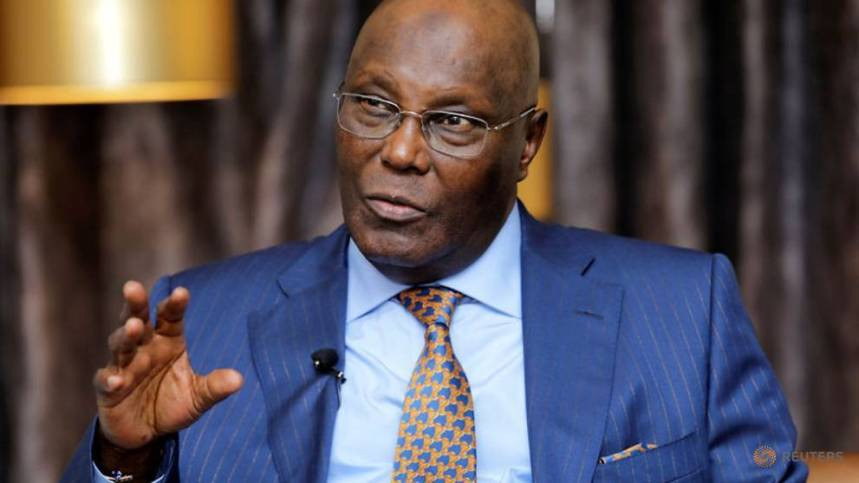
Former Vice President Atiku Abubakar has condemned the Federal Government’s continued escalation of the cost of public education, describing the recent increase in fees for Federal Unity Colleges and the reported approval of a uniform ₦50,000 examination fee for West African Examinations Council WAEC and National Examinations Council NECO candidates from 2027 as cruel.
In a statement issued by his Senior Special Assistant on Public Communication, Phrank Shaibu, on Sunday, Atiku noted that education remains the greatest instrument of social mobility and the surest pathway out of poverty for millions of children from humble backgrounds, adding that every additional financial burden imposed on parents translates into another child being denied the opportunity to learn, dream and contribute meaningfully to society.
“Nigeria already bears the painful distinction of having one of the largest populations of out-of-school children in the world. Depending on the methodology and age group measured, between 10.5 million and about 15 million Nigerian children and young people are already outside the classroom. Any government confronted with such a national emergency should be investing aggressively to bring these children back into school. Instead, this administration is choosing policies that will inevitably swell those numbers,” he said.
He warned that increasing fees in Federal Unity Colleges while imposing significantly higher costs on WAEC and NECO examinations would disproportionately affect children from poor and middle-income families, whose parents are already making impossible choices between food, healthcare, transportation, and education.
“The same administration whose policies are progressively narrowing access to public tertiary education continues to project the Nigerian Education Loan Fund (NELFUND) as one of its flagship achievements. Yet a university loan offers little comfort to a child who has already been priced out of secondary education or cannot afford the qualifying examination required for admission. A government cannot credibly claim to be expanding access to higher education while simultaneously erecting financial barriers that prevent millions of young Nigerians from ever reaching the university gates.
“Genuine educational reform begins by making education affordable from the primary and secondary levels, expanding the carrying capacity of our tertiary institutions, and ensuring that poverty never becomes the reason a child is denied the opportunity to learn. A government that truly believes in education invests in classrooms before it invests in loans.
“No nation has ever taxed its way into educational excellence. Countries that aspire to economic greatness invest more—not less—in education during difficult times because they understand that human capital is the engine of sustainable development. Nigeria cannot build a globally competitive economy while systematically pricing millions of its children out of classrooms”, he added.
Atiku therefore called on President Tinubu to immediately reverse the increase in Unity School fees and the proposed ₦50,000 WAEC and NECO examination fee, and convene an urgent stakeholders’ dialogue on sustainable financing for public education.
“By the grace of Almighty God, I remain confident that Nigerians will reject policies that punish their children and make education the exclusive preserve of those who can afford it. The African Democratic Congress is committed to restoring education as a public good, not a privilege.
“An ADC-led government will not permit this unjust and punitive increase in examination fees. Instead, we shall reverse policies that place education beyond the reach of ordinary families, expand access to quality education at every level, increase the carrying capacity of our tertiary institutions, and ensure that every Nigerian child, regardless of background, has a fair opportunity to learn, excel and fulfil his or her God-given potential,” he added.
The Vanguard


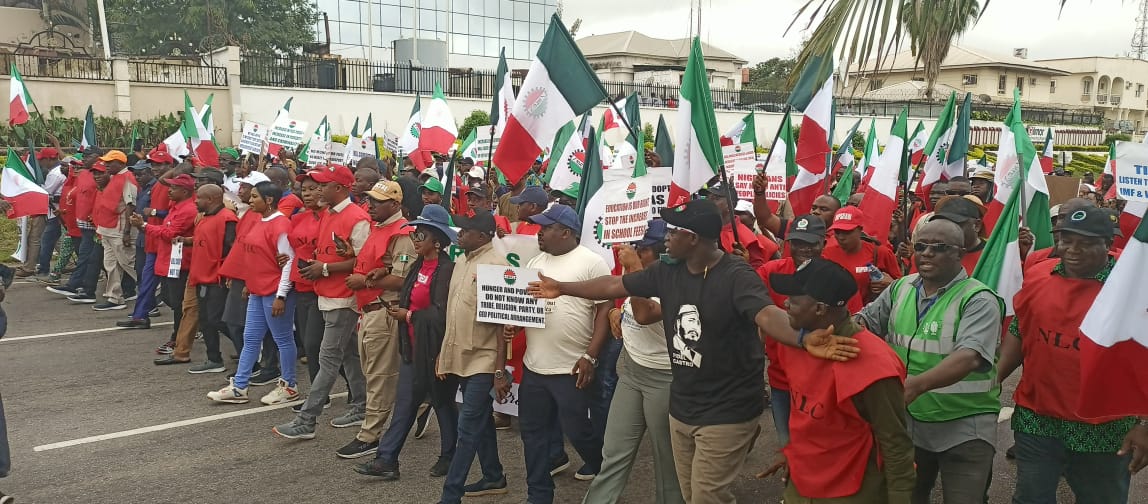
Public servants across Nigeria are set to shut down government offices and other public services from midnight on Friday, October 2, as the Joint National Public Service Negotiating Council (JNPSNC), Trade Union Side, begins a three-day warning strike over the worsening cost of living and what it described as the Federal government’s failure to respond to workers’ demands.
The warning strike is scheduled to run from Friday, October 2, to Sunday, October 4, 2026.
The JNPSNC formally activated the action in a circular dated October 1 and signed by its National Secretary, Comrade Olowoyo Gbenga. The circular was addressed to the national presidents and general secretaries as well as State chairmen and secretaries of the council’s affiliate unions.
Titled “Declaration of Three (3) Day Warning Strike; Action With Immediate Effect,” the circular recalled the council’s earlier position that workers would proceed with the strike if President Bola Tinubu fails to address its requests contained in a September 21 letter.
“Consequent upon the above, the strike shall start with effect from midnight of Friday, 2nd October, 2026 to Sunday, October 4th, 2026,” the council stated.
It directed public servants in the Federal, State and local government services to join the action, saying the economic and mental hardship being experienced by workers, their dependants and vulnerable Nigerians had become increasingly difficult to bear.
The council’s decision followed a September 30 deadline it had issued to the Federal Government over three major demands: a reduction in the price of petrol, an immediate wage award and the commencement of negotiations for a new national minimum wage.
The JNPSNC had earlier said the issues should be addressed before or through President Tinubu’s Independence Day address. It subsequently proceeded with the strike notice after the deadline elapsed.
At the heart of the dispute is the JNPSNC’s demand for an immediate reduction of the pump price of Premium Motor Spirit, popularly known as petrol, to N500 per litre.
The council has argued that the high cost of petrol has translated directly into higher transportation costs and, consequently, increased prices of food and other essential goods and services.
In its earlier statement, the council said petrol prices were ranging from about N1,450 to N2,000 per litre, with prices reportedly reaching N2,500 in some locations.
It proposed government intervention to reduce the landing cost of petrol and support domestic refining. It also called for crude oil to be made available to the Dangote Refinery and modular refinery operators on appropriate terms to boost domestic refining and help reduce the cost of petroleum products.
The second major demand is an immediate wage award for Nigerian workers. JNPSNC wants the Federal government to approve the payment as an emergency measure to cushion workers and their dependents against the effects of the current cost-of-living crisis.
The council is also demanding the immediate constitution of a tripartite committee to begin negotiations for a new national minimum wage ahead of 2027.
The unions are seeking a minimum wage of not less than N500,000 under the next wage arrangement.
According to the council, beginning the negotiations early would help prevent delays in negotiating, legislating and implementing the new wage when the current arrangement becomes due.
The demand comes as organised labour continues to argue that inflation and rising household expenses have significantly weakened the purchasing power of workers.
The strike will commence less than 24 hours after President Tinubu delivered his Independence Day address to mark Nigeria’s 66th anniversary.
In the address, the President acknowledged that the country’s economic journey had been difficult and said many Nigerians had experienced hardship. He nevertheless defended the economic reforms undertaken by his administration, arguing that they were necessary to correct longstanding weaknesses in the economy.
The JNPSNC action comes amid similar concerns raised by the Nigeria Labour Congress (NLC) in its Independence Day statement.
The NLC called for an immediate reduction in petrol prices, a nationwide wage award and the commencement of negotiations for a new national minimum wage.
The labour centre said rising transportation costs were feeding into the prices of food, rent, school fees and other necessities, while inflation had eroded the real value of workers’ wages. It also linked the current cost-of-living pressures to the increase in petrol prices following the removal of subsidy in 2023.
The NLC further called for the implementation of tax relief measures it said had been agreed with the Federal government, a reduction in the cost of governance and greater transparency in the management of public resources.
It also demanded the immediate constitution of a tripartite committee to negotiate a new wage standard for 2027, arguing that the N70,000 minimum wage had already been significantly eroded by inflation.
The JNPSNC comprises several unions representing workers across the public service, including the Nigeria Civil Service Union, Medical and Health Workers Union, Association of Senior Civil Servants of Nigeria and National Association of Nigerian Nurses and Midwives.
Others are the Amalgamated Union of Public Corporations, Civil Service Technical and Recreational Employees; Nigeria Union of Public Service, Reportorial, Secretarial, Data Processors and Allied Workers; National Union of Printing, Publishing and Paper Products Workers; and National Union of Agriculture and Allied Employees.
The October 1 circular directed the unions’ national and state structures to disseminate the strike notice and mobilise members for compliance.

The National Chairman of All Progressives Congress (APC), Professor Nentawe Yilwatda, has declared that the North would be the ultimate loser if President Bola Tinubu fails to secure a fresh mandate in the 2027 general elections.
Yilwatda made the remarks on Monday while receiving certain members of the African Democratic Congress (ADC) who defected to the ruling party.
The erstwhile ADC chieftains were led by Princess Aslam Aliyu.
Professor Yilwatda, who listed ongoing and completed road infrastructure projects across states in the region, also noted that the main beneficiaries of the Nigerian Education Loan Fund (NELFund) are from the northern region.
In apparent reference to the vow by the ADC Presidential candidate, Atiku Abubakar, to return fuel subsidy if elected as President, the APC National Chairman equally declared that states in the North benefited more from the removal of the subsidy regime, as he maintained that most states in the region could not pay the salaries of workers and the gratuities of pensioners before Tinubu came to office.
He said: “The same thing they keep on saying, you know, the outside radio stations tell us that they will return the subsidy. I keep on asking, how are they going to return the subsidy?
“You mean they will stop all these road constructions because they want to return the subsidy? Because there will be no money for this construction, all this road again. The gas they are bringing to the north.
“That gas will go with fertilizer. And we in the north, we need those fertilizers. You mean they should stop it? The CNG, they will come with the gas. We make transportation easier for the vulnerable people. Should we stop it?
“The beneficiaries of the student loan, most of them are from the north. We have more and more of them in this part of the country. Should we stop it? And most of our people who can’t afford school fees should go back as wheelbarrow pushers in the villages? Questions are too many. We can’t answer them all here.
“And I can also assure you, among the about 30 states that could not pay salaries in Nigeria, all the states in the north, none could pay salaries. None could pay salaries as of 2023, when President Tinubu took over. So should we say our state now should go back again? They can’t pay salaries, they can’t pay gratuities… increase poverty again in the north. These were some of the factors that were making poverty prevailing in the north and other parts of Nigeria also.”
Earlier in his presentation, Honourable Mohammed Hassan, who spoke on behalf of his other colleagues, pleaded with the APC National Chairman to ensure that they are integrated as members of the APC political family.
“We are not here merely to change the political platform, but to begin a new chapter of service and a great contribution to our people by supporting Baba Tinubu’s Renewable Agenda 2027.
“We respectfully ask the National Chairmanship and the entire leadership to receive us as brothers and partners, to give us the opportunity to contribute and support us as we take this new message back to our people.
“Our commitment remains clear: to support the party, mobilise our people, promote development and services to Nigeria with sincerity and dedication.”

A United States representative, Anna Paulina Luna, has raised the alarm over what she described as the incessant attacks and killings of Christians across different communities in Plateau State by Fulani ethnic militia terrorists and Islamist extremists.
The US lawmaker, who made the allegations in a statement shared on her verified X account on Friday, accused both the state and the federal governments of not doing enough to protect Christians in the state from the regular attacks they suffer when the terrorists descend on the communities.
In a post titled, “What is happening in Nigeria right now?”, the US lawmaker lamented that thousands of Christians in Plateau were facing a mortal threat while security forces had struggled to contain the situation.
“Hundreds of Fulani ethnic militia terrorists descended on Christian communities across Plateau State.
“Thousands of civilians are under mortal threat while the Nigerian Army and security forces struggle to hold the line,” Luna wrote.
According to her, the attacks were preceded by a series of violent incidents targeting Christians and other civilians in the affected communities.
Giving some specifics, Paulina said a pastor and his church secretary were shot dead while they were on their way to church in the days leading up to the latest attacks, while five Christians were attacked in another incident while travelling in a vehicle.
“A pastor and his church secretary were shot dead on their way to church. Five Christians were ambushed in their car.
“A civilian guard was killed outside his own home. A man and his son were beaten and left in critical condition,” the lawmaker said.
The US representative also alleged that security agencies had never taken warnings and security alerts issued before the attacks seriously, questioning why they had not been followed.


