
Personality in Focus
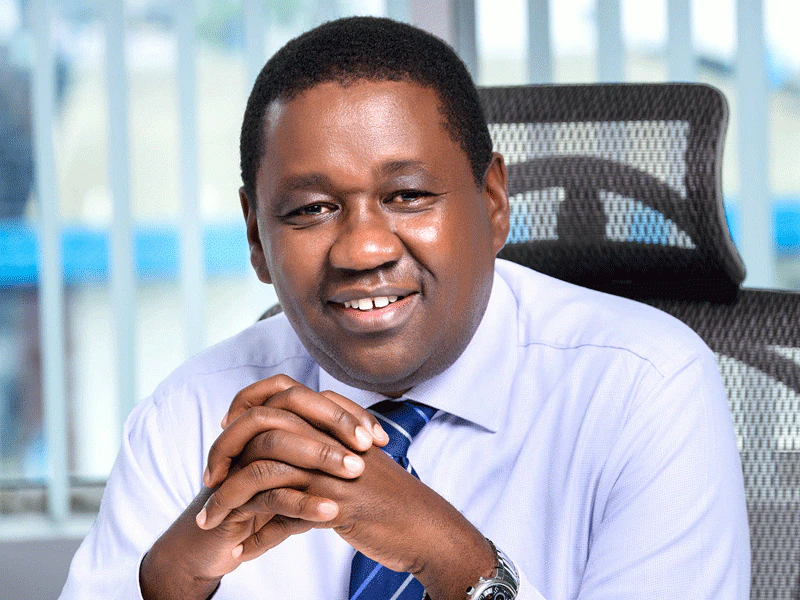
How FCWAMCO is Revolutionalising the Dairy Sector – Langat

- /home/rhoncare/pointblank.ng/wp-content/plugins/mvp-social-buttons/mvp-social-buttons.php on line 27
https://pointblank.ng/wp-content/uploads/2023/07/Dairy-1-CEO-Ben-Langat.webp&description=How FCWAMCO is Revolutionalising the Dairy Sector – Langat', 'pinterestShare', 'width=750,height=350'); return false;" title="Pin This Post">
- Share
- Tweet /home/rhoncare/pointblank.ng/wp-content/plugins/mvp-social-buttons/mvp-social-buttons.php on line 69
https://pointblank.ng/wp-content/uploads/2023/07/Dairy-1-CEO-Ben-Langat.webp&description=How FCWAMCO is Revolutionalising the Dairy Sector – Langat', 'pinterestShare', 'width=750,height=350'); return false;" title="Pin This Post">
Known in multinational circles as a turnaround business strategist, the Managing Director of FrieslandCampina WAMCO and Sub-Saharan Africa Cluster, Ben Langat, has maintained steam in the sustainable dairy breakthroughs that the firm has championed in more than a decade.
Since 2010 and still counting, FrieslandCampina WAMCO has invested over N21 billion in the Nigerian dairy sector even as the dairy giant continues to lead the transformation of the sector. Media visits to the dairy development sites of the firm across several states in the country show how the lives, living and livelihoods of thousands of farmers, their wives and children have gradually upscaled; improving their nutrition, health, earnings and access to child education, among other benefits that had eluded them for decades.
Thriving on its corporate commitment of nourishing Nigerians with quality dairy products, FrieslandCampina WAMCO continues to help solve issues of malnutrition, poverty, herders and farmers’ incessant clashes, as well as promote sustainable dairy practices through intense and creative backward integration.
The company has created over 100,000 employment opportunities, directly and indirectly through on-farm and off-farm activities; improved the livelihood of over 12,000 smallholder dairy farmers and pastoralists, which they have organized into cooperatives and integrated them into FrieslandCampina WAMCO’s fresh milk supply chain, which provides for the local dairy farmers guaranteed incomes and market access all-year round.
FrieslandCampina WAMCO provided access to potable water for communities and livestock with the construction of 109 solar-powered boreholes and proficient extension services for value chain actors; extensive farmer2farmer training where Dutch farmers visit Nigeria to train local farmers on animal health, hygienic milking, and best global dairy practices.
Besides developing productivity and efficiency in farm management, FrieslandCampina WAMCO is the highest off-taker of fresh milk produced locally for manufacturing in Oyo, Osun, Ogun, Kwara and Ondo and have spread their footprints into northern Nigeria as champions of the nation’s march towards a prosperous and self-sufficient dairy industry.
Speaking to the media recently, the eminent dairy management maestro, Langat fielded these questions among others, thus lending credence to the impact his company has made in the dairy sector…
How do you sustain local content for your products?
To grow high milk-yielding cows, you have to put in extra effort like we have been doing for over 12 years. FrieslandCampina WAMCO is the highest off-taker of fresh milk produced locally from five states in Nigeria. Our Yoghurt factories are running on local milk, so we can say we have brands that are 100% Nigerian in our portfolio. However, to be able to meet the total dairy nutrition demands in a country as large as Nigeria, the local milk currently available is still very much inadequate. In my opinion, the model that the country will run will still have a reasonable mix of importation of some of the raw materials, while local content is developed over a period of time.
What impact do your dairy activities have in your host communities?
We are doing all the right things if you look at it from the employment perspective. Among the 12,000 farmers we work with, there are about 1500 Fulani women who had been at home but today, they are productive and are being paid regularly for raw milk and their families are much more prosperous than before – the farmers, their wives and children. In some cases, their mud huts have been rebuilt to brick houses and their children now go to school, which they could not afford before.
How have you dealt with the paucity of Forex and threats of insecurity?
We have had to restrict our Forex needs as much as we can and also source it by any means legal. We sometimes source from commercial banks in addition to whatever the Central Bank is able to make available. Also, some of our service providers are able to source Forex and supply us products in Naira. This invariably means that the cost of raw materials will go up and ultimately affect the retail prices of our products. On insecurity, we have regular conversations with relevant government security agencies. We will never risk the lives of our people. Where we have security challenges around areas where we operate, we pull out for the time being like the case of the Bobi Reserve in Niger State. We had to withdraw from the location due to banditry in order not to risk the lives of our people. We are now in eight states in Nigeria; we work with 23 dairy cooperatives; we collect more than 40,000 litres of milk daily at peak periods and we have best-in-class raw milk quality, one of the best in Africa.


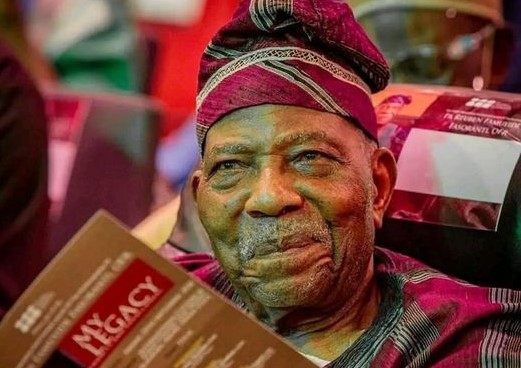
The national leader of the Pan Yoruba social-political organisation, Pa Reuben Famuyide Fasoranti, is dead.
The revered elder statesman and Afenifere chieftain passed away at the age of 100, which he celebrated May 11, 2026.
Born on May 11, 1926, in Uso, Ondo State, Pa Fasoranti was one of the major twines holding together the Yoruba nation and a bridge linking the politics of the First Republic to the present democratic order in the South West and in the country.
His political trajectory was rooted in progressivism and Yoruba ideals, having imbibed the political philosophy of Chief Obafemi Awolowo through th Action Group and later the Unity Party of Nigeria.
During the Second Republic, he served as Commissioner of Finance in the old Ondo State between 1979 and 1983. He later rose to become the leader of Afenifere following the death of Chief Abraham Adesanya, his predecessor.
A foremost Yoruba leader, Pa Fasoranti was one of the NADECO leaders whom the regime of the late General Sani Abacha attempted to assassinate in 1996.
He is regarded as symbol of the never-dying spirit of resistance against forces of tyranny and oppression with his politics never about himself but the advancement of his people, philosophy upheld by his resilience in the face of visible danger and personal losses, including the killing of his daughter by herders on the Benin-Ore road some years ago.
A teacher by training, he attended Ondo Boys’ High School, Yaba Higher College in Lagos, and the University College, Ibadan, where he bagged a higher degree in English/Geography.
He taught at his alma mater, Ondo Boys’ High School, and later served as Principal of Oyemekun Grammar School and Iju-Itaogbolu Grammar School. His dedication to education persisted after retirement, as evidenced by his establishment of Omolere Nursery and Primary School and Akure High School.
“His counsel, fatherly guidance and principled stand on issues of justice and good governance will be sorely missed. He lived a fulfilled life and left indelible footprints of honour and legacy for generations to come,” the Governor stated.
Meanwhile, Governor Lucky Aiyedatiwa, has described the late patriarch as a beacon of wisdom, integrity and selfless service whose century-long life was marked by uncommon commitment to the development of Ondo State, Yorubaland and Nigeria at large.
He said, “On behalf of the Government and the good people of Ondo State, I commiserate with the Fasoranti family, the people of Akure Kingdom and the entire State over this great loss. May his gentle soul rest in perfect peace.”
Until his death, Pa Fasoranti remained a towering figure in Yoruba politics and a strong advocate for the unity of the Yoruba people, the supremacy of Yoruba ideals and the betterment of the lot of his people.
He is survived by his children and grandchildren, as well as a legacy of service, integrity and leadership.
The Guardian
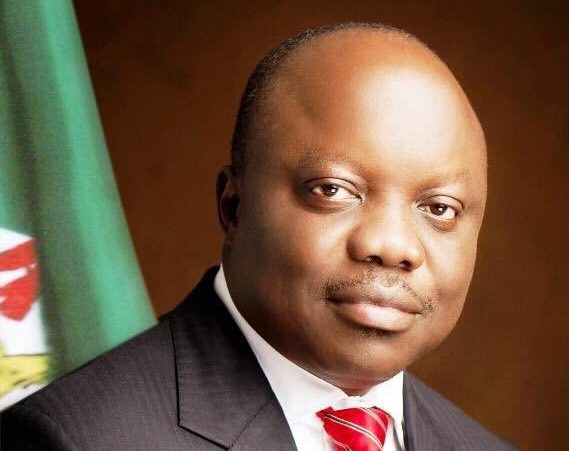
A former Governor of Delta State, Dr. Emmanuel Uduaghan is dead.
He died after a brief illness at the age of 71.
The Uduaghan family announced his death in a statement signed by Toju Andre Uduaghan, on Monday.
The statement, titled, ‘ANNOUNCEMENT OF THE PASSING OF HIS EXCELLENCY, DR. CHIEF EMMANUEL EWETA UDUAGHAN’, read:
“It is with hearts weighed down by immeasurable grief and profound sorrow that we announce the passing to glory of our beloved Father, Brother, Uncle, and Patriarch, His Excellency, Dr. Chief Emmanuel Eweta Uduaghan, former Governor of Delta State, who departed this world on the morning of 19th October 2026.
“His passing has left us devastated. Words can hardly express the depth of our sorrow at the loss of a man who meant so much to our family and whose life and service touched countless others across Delta State and Nigeria.
“He was a source of strength, a father figure, a beloved brother and uncle, and a respected elder. We will deeply miss his presence and forever cherish the memories and legacy he leaves behind.
“He served as Commissioner for Health from 1999 to 2003, Secretary to the Delta State Government from 2003 to 2007, and Governor of Delta State from 2007 to 2015. Throughout his years in public service, he demonstrated a commitment to the human and infrastructural development of Delta State.
“His passing is a profound loss to our family, the people of Delta State, and Nigeria at large. We are grateful to Almighty God for his life, his service, and the legacy he leaves behind.
“We pray that Almighty God, in His infinite mercy, will grant his soul eternal rest and comfort our family, friends, associates, former colleagues, and all who mourn this painful loss.
“Rest well, our beloved Father, Brother, and Uncle. Your memory will forever remain in our hearts, and your legacy will endure in the lives of those you touched.
“May your gentle soul rest in perfect peace. Amen.”

The Obi of Onitsha, His Majesty Igwe Alfred Nnaemeka Achebe, has commended Globacom for its unwavering commitment to the preservation and promotion of Nigeria’s cultural heritage, noting that the telecommunications company’s sustained support has helped transform the Ofala Festival into a world-renowned cultural celebration.
Speaking on the 2026 edition of the festival, held at Ime Obi, Onitsha, Anambra State, on Friday, the monarch paid a glowing tribute to Globacom for its longstanding role as the principal sponsor of the festival, a partnership that has spanned fifteen consecutive years since 2011.
According to the monarch, “Their partnership has transformed the festival from a palace ritual to a world-renowned cultural festival owes a great deal to purposeful partnership. Since 2011, Globacom has stood with us as our principal partner – now fifteen consecutive years of unwavering commitment.” He added that “In good times and challenging times, Globacom has helped us preserve the authenticity of Ofala while enhancing its presentation, documentation, broadcast and global reach. They have helped take a living heritage to the global stage”.
Igwe Achebe also applauded the vision of Globacom’s Chairman, Dr Mike Adenuga Jr., whose commitment to cultural preservation, he noted, reflects a profound appreciation of the role of indigenous traditions in strengthening national identity and social cohesion.
“I thank Globacom and its Chairman, Otunba (Dr) Mike Adenuga Jr., GCON, a true man of culture, for his vision and belief that culture is not a luxury but a foundation for unity,” the monarch said.
Commenting on the theme of this year’s festival, “Igba Mbo, Iga N’Iru” — Strive and Advance — Igwe Achebe described it as a compelling call to diligence, excellence, self-improvement and collective progress. He explained that the theme embodied the enduring spirit of the forebears who built the Onitsha kingdom on the banks of the Niger, while challenging younger generations to preserve that legacy through enterprise, purposeful endeavour and a commitment to progress.
In his goodwill message to the monarch and the people of Onitsha, Dr Adenuga described Globacom’s association with the Ofala Festival “since 2011 has been much more than a corporate partnership. It has been a relationship which we cherish deeply and regard as a privilege”. He expressed profound appreciation to Igwe Achebe for the opportunity afforded Globacom to contribute to the preservation, celebration and wider projection of the community’s priceless cultural heritage.
He noted that the annual festival provides a valuable platform for showcasing the rich cultural traditions, dignity and enduring values of the Onitsha people to audiences across Nigeria, Africa and the wider world.
Through its longstanding partnership with Ofala, Globacom continues to demonstrate that corporate citizenship extends beyond commercial enterprise to the preservation of the cultural foundations that give communities their identity, strengthen their unity and connect generations.


