
Headlines
How I Would Solve Nigeria’s Economic, Security Challenges – Peter Obi Tells CNN

- /home/rhoncare/pointblank.ng/wp-content/plugins/mvp-social-buttons/mvp-social-buttons.php on line 27
https://pointblank.ng/wp-content/uploads/2019/06/Obi.jpg&description=How I Would Solve Nigeria’s Economic, Security Challenges – Peter Obi Tells CNN', 'pinterestShare', 'width=750,height=350'); return false;" title="Pin This Post">
- Share
- Tweet /home/rhoncare/pointblank.ng/wp-content/plugins/mvp-social-buttons/mvp-social-buttons.php on line 69
https://pointblank.ng/wp-content/uploads/2019/06/Obi.jpg&description=How I Would Solve Nigeria’s Economic, Security Challenges – Peter Obi Tells CNN', 'pinterestShare', 'width=750,height=350'); return false;" title="Pin This Post">
By Eric Elezuo
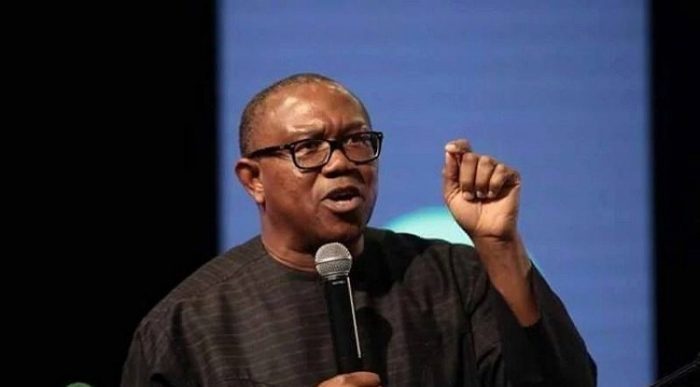
The candidate of the Labour Party, Mr. Peter Obi, was on Friday hosted by CNN’s Zain Asher, during a programme, Zain Exchange, where he spoke on his desire to tackle headlong the economic and security challenges of Nigeria if elected the president in 2023.
Zane Asher: Mr. Obi thank you so much for being with us. You’re certainly the most popular presidential candidate among young people in Nigeria, there’s so much momentum behind you. But here’s the problem. Nigerians are used to being disappointed by their leaders, and what do you think about some of the problems that are facing the country right now, they are systemic. I’m talking about the corruption, I’m talking about oil theft, I’m talking about insecurity, I’m talking about the fiscal hole that Nigeria is in right now. Can all of that really be solved by one person?
Peter Obi: Well, if you have a leader that is competent, has the capacity and commitment to start dealing with these challenges, you’re not going to solve it overnight, but there will be a clear, visible, measurable attempt to deal with these. And there is nothing that is not solve-able. Some issues just have to be dealt with decisively. But you need to have a capable leader such that when you look at his past records in office, you can say YES – He is capable.
Zane Asher: If you do, indeed, become Nigeria’s next president, Nigeria you know, is broke. It’s barely able to service its debts. It spends so much more that it earns. What are your plans? From a concrete perspective, what are your plans to take Nigeria’s economy off of life support?
Peter Obi: Well, a variety of things. One, is that we have to deal decisively with the issue of insecurity. It’s impacting negatively on our economy. We have to deal with it head on. We have to get our finances right — and start ensuring that the vast lands of the north are invested in and cultivated. We have to start pulling people out of poverty as quickly as possible. We have to immediately reduce aggressively, the cost of governance, and the issue of corruption.
Zane Asher: Anyone who knows anything about Nigeria knows that it has this embarrassing reputation of importing refined fuel, despite the fact that it’s Africa’s largest oil producer. What is your plan for transforming Nigeria’s economy from a consumption economy to a production economy?
Peter Obi: Let me tell you it’s not the issue of refineries not working — there’s no reason why we should not encourage the private sector to operate refineries. It can be done as quickly as possible. We can today, decide to remove the oil subsidies, and use the resources to invest in and support the principal areas of production; from critical infrastructure to education, to supporting investment in refinery, which will be, done in the shortest amount of time.
Zane Asher: A lot of Nigerian presidents have come in and talked about revitalizing the manufacturing sector, investing in refineries, but change, as you know, has been very, very slow. Why is it going to be different with you and what would you say were the biggest hurdles in making sure that all of the things that you just listed come to pass?
Peter Obi: Well, what people need to do is to look at what I promised as the state governor. When I said was going to turn around education, health, pull people out of poverty, bring sanity and civility in governance — did that happen or not?
When I said we were going to save money, did we do that? Yes, we did.
Zane Asher: I want to talk about one of the major issues that Nigeria is dealing with, grappling with right now. That’s violence and insecurity. You can barely travel from one part of Nigeria to another without fearing for your life. I’m talking about kidnapping. I’m talking about banditry. I’m talking about terrorism, I’m talking about Boko Haram. What is your plan for that?
Peter Obi: Initially, what we first have to deal with is the issue of security. Unless you have security, the farmers can’t — you can’t have investment. Nobody will ever want to put or invest money in an insecure country. So we will deal this issue of insecurity decisively. We will start by reorganizing our security architecture. We will then bring in more hands into the security system, and motivate them properly, so that we can defeat the issue of insecurity . It’s the most important thing that Nigeria needs today.
Zane Asher: You and I are both Nigerians, were are both from southeastern Nigeria. It’s a very hard country to hold together. You have too manage about 200 million people, with so many different tribes, so many different ideas. When you think about the fact that you are from the southeast, how easy is it going to be to rally Nigerians from the north behind you? That’s got to be on your mind?
Peter Obi: That was the situation obtainable in the past. We used to elect leaders based on ethnicity, religion, strong connection etc, and that has brought us to the bad situation we are in today. “Our structure”, the structure of criminality, is what we want to dismantle now. We want to ensure that the next election is based on character, capacity, competence, commitment to do the right thing. Nigeria not just in a fiscal mess, it is at the last stage to collapse. The people in the north don’t have a secure place, they don’t have good roads. They don’t buy bread cheaper than those in the South. They people in the south are facing the same issues. All what you hear about ethnicity, religion, connection, is an elite conspiracy to keep Nigeria undeveloped. But now we’ve reached the edge.
Zane Asher: Thank you for coming on our program.
Peter Obi: Thank you for inviting me.


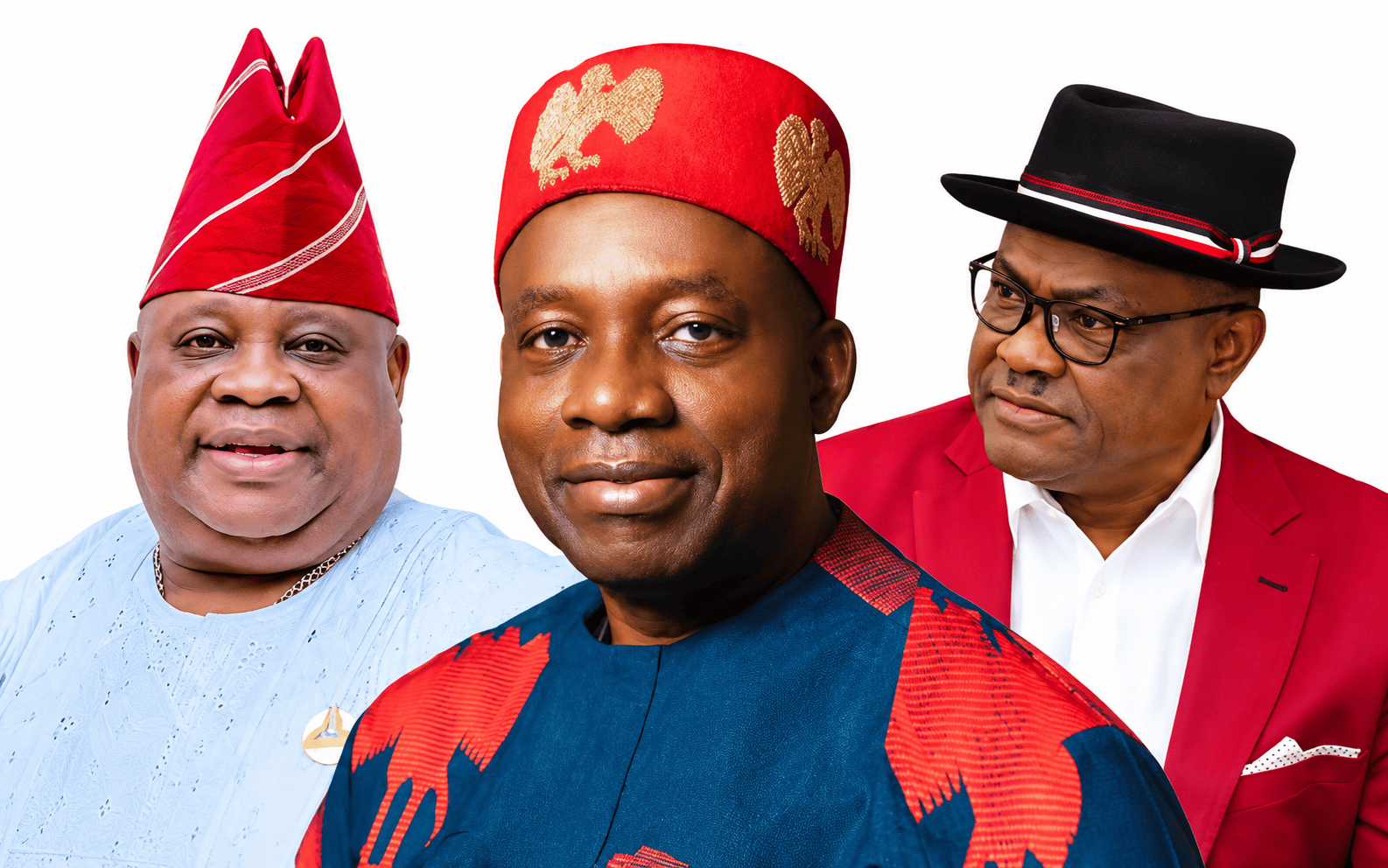
The All Progressives Congress (APC) has named Nyesom Wike, Minister of the Federal Capital Territory (FCT); Ademola Adeleke, Osun State governor; and Chukwuma Soludo, Anambra State governor, as campaign coordinators in its expanded presidential campaign council for the 2027 general election, despite their affiliations with other political parties.
Wike belongs to the Peoples’ Democratic Party (PDP), Soludo is a member of the All Progressives Grand Alliance (APGA), while Adeleke won re-election as Osun governor in 2026 under the Accord Party.
Under the new arrangement, Wike will coordinate the APC campaign in Rivers State and the FCT, Soludo will oversee Anambra, while Adeleke will coordinate the campaign in Osun.
The expanded list is scheduled for inauguration by President Bola Tinubu at the Presidential Villa in Abuja on Wednesday.
The APC initially released its campaign council list on August 22, naming Abdulaziz Yari, former Zamfara governor, as director-general. Senate President Godswill Akpabio, House of Representatives Speaker Tajudeen Abbas and Yobe Governor Mai Mala Buni were appointed deputy director-generals.
In the revised list, Akpabio, Abbas and Kwara Governor AbdulRahman AbdulRazaq are deputy vice-chairmen I, II and III, respectively, while Buni becomes deputy director-general I for the North.
The council also includes former governors and party chieftains as advisers, which include former APC national chairmen Adebisi Akande and Abdullahi Adamu; former Ogun State Governor Ibikunle Amosun; former Osun State Governor Iyiola Omisore; Senator Ibrahim Dankwambo; Senator George Akume; former Ogun State Governor Segun Osoba; and Wale Edun. Obafemi George is listed as an adviser on media.
The Directorate of Election Planning, Coordination, Monitoring and Mobilisation, established ahead of the 2027 general election, has Faleke as Deputy Director-General, with Stella Okotete and Engr. Abdullahi Garba Ramat serving as Secretary I and Secretary II, respectively. Audu Maikori is also listed as a secretary.
Other members of the directorate include Soares Omotola, Bashir Dabo, Sheriff Mohammed Usman, Jibrin Bancir, Ayoola Peter Olajolo, Abubakar Sadiq Sada and Princess Folasade Ogunbiyi.
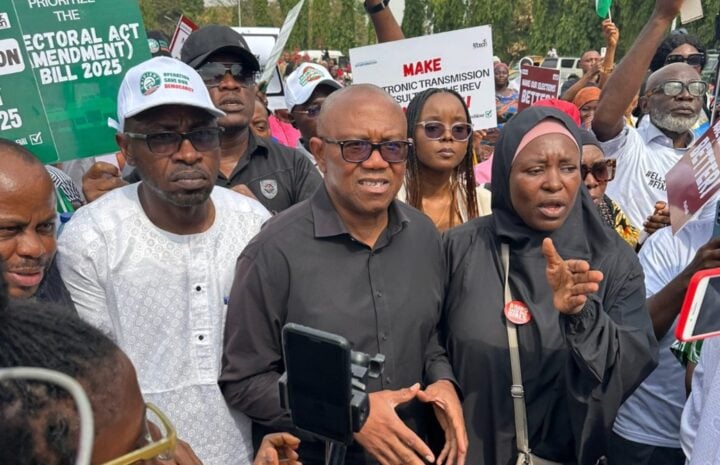
The Nigeria Democratic Congress (NDC) presidential candidate, Peter Obi, has questioned how the Federal government’s 30-day petrol price discount would reduce poverty, unemployment, insecurity and inequality in the country.
Obi raised the questions in a statement posted on his X platform on Sunday, describing the initiative as a reactive policy that substitutes political optics for sound economic planning.
He argued that the discount, which he said amounts to less than five per cent of petrol costs, is unlikely to address the wider economic challenges facing Nigerians.
“The announcement by the APC-led Federal government offering a 30-day discount on price of petrol to relieve the acute hardship and hunger caused Nigerians by its unplanned removal of subsidy can only be described as another very reactive and confused approach to governance that is now the culture of the Tinubu government,” he said.
Obi said he had delayed commenting on the policy to allow time to assess its outcome, but maintains that the measure has not demonstrated a sustainable approach to addressing the country’s economic difficulties.
He recalled that President Bola Tinubu removed the petrol subsidy on May 29, 2023, arguing that the decision was taken without adequate consultation or a proper assessment of its likely effects on the economy and the livelihoods of ordinary Nigerians.
According to Obi, the subsidy removal was followed by other policies, including the floating of the Naira and tax reforms, which he argued are being implemented without proper sequencing and coordination.
He also criticised the government’s handling of multiple budgets, arguing that the combined effect of the policies has contributed to inflation and rising costs of goods and services.
Obi attributed what he described as increasing multidimensional poverty, business closures, unemployment, insecurity, widening inequality and youth migration to the economic pressures arising from the policies.
He also said the policies had weakened the general well-being of Nigerians, insisting that the government should assess their impact before introducing temporary relief measures.
The former Anambra State governor called for a detailed and publicly available regulatory impact assessment of government policies, arguing that such an exercise would help identify their effects and guide necessary adjustments.
He said a government committed to sustainable economic growth should engage stakeholders and ordinary citizens in consultations to develop inclusive policies that improve living conditions and expand economic opportunities.
Questioning the objectives of the petrol discount, Obi asked whether it would increase productivity and exports or whether it was intended to determine if the subsidy should be restored.
“Will it reduce poverty, unemployment, insecurity, and inequality? Will it increase productivity and exports? Is it a test to ascertain if subsidy should be restored? Is it another political gambit in the face of threats of electoral loss in the 2027 election?” he asked.
“Too many questions, no answer!” the former Governor of Anambra State added.
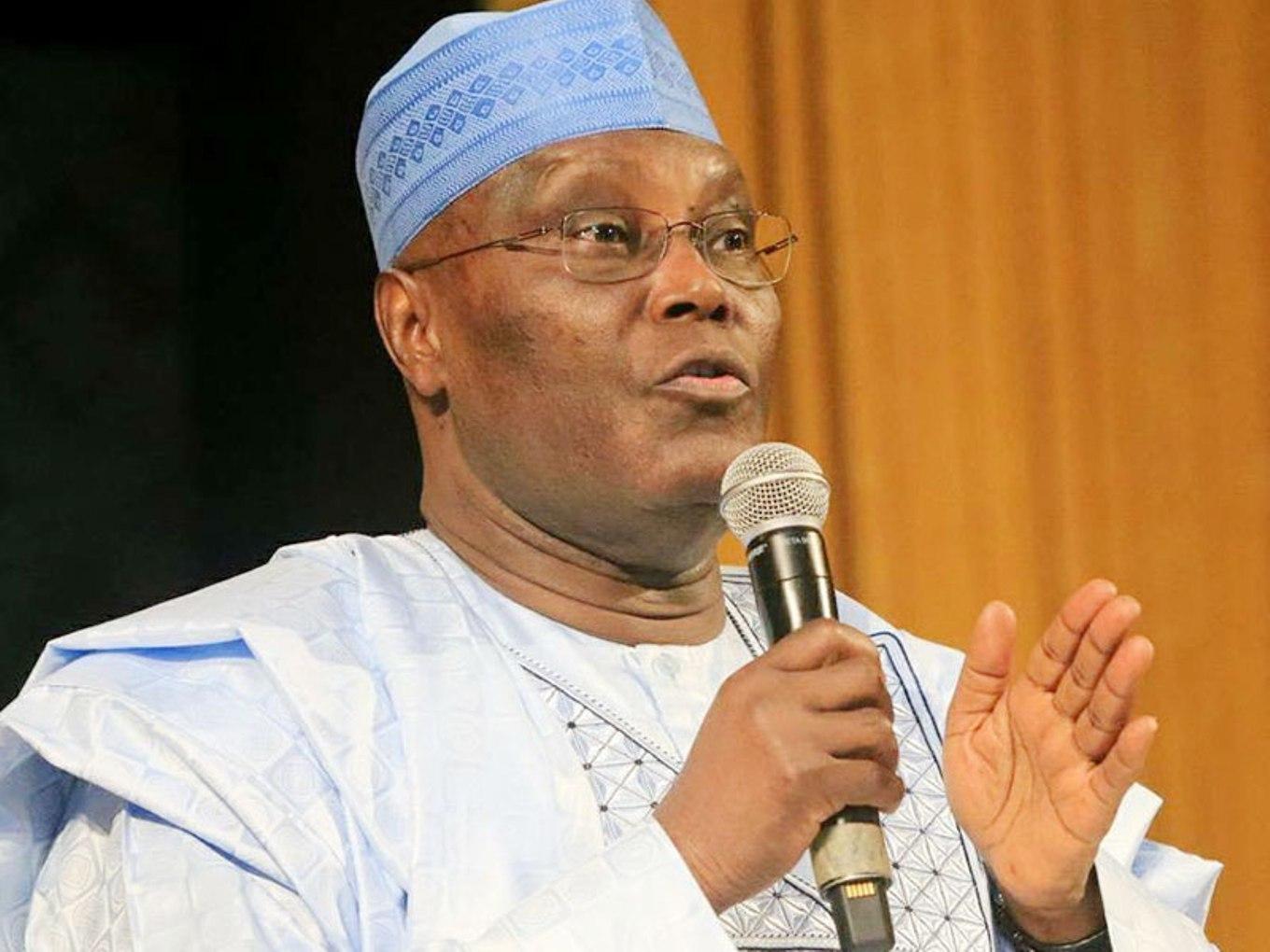
The African Democratic Congress (ADC) presidential candidate, Atiku Abubakar, has raised concerns over the lack of transparency surrounding the production of sensitive materials for the 2027 general elections, urging the Independent National Electoral Commission (INEC) to disclose the companies handling the printing.
Atiku warned that keeping details of the contracts and the process of selecting contractors from the public could weaken confidence in the electoral process.
In a statement issued by his Director of Strategic Communication, Phrank Shaibu, on behalf of the ADC Presidential Campaign Council, the former vice-president also called on INEC to explain recent changes involving officials in key departments responsible for election operations and information technology.
Reports said that Director Isa Magaji Gum has been moved from the Electoral Operations Department to the Voter Registry Department, while Mrs. Oluyemi Titilayo Adeyemi-Showunmi has been appointed to head Electoral Operations.
Dr. Lawrence Bayode was also identified as head of Information and Communication Technology.
Atiku said the commission has a responsibility to explain the reasons for the changes, and demonstrate that the decisions followed due process.
“These departments are at the heart of election administration. INEC must explain these decisions, publish the criteria applied and show that every appointment and redeployment followed due process, was based on merit and was free from political interference,” he said.
He also asked INEC to confirm or deny reports that Hitech, or a company linked to it, had secured a contract to print sensitive election materials for 2027.
“We are concerned by reports that more than half of the sensitive election materials, including presidential ballot materials, may have been allocated to an undisclosed company reportedly based in France. There are also questions about reports that the Nigerian Security Printing and Minting Plc is handling materials for only 15 to 17 states, while private companies are responsible for the remaining states.”
The former vice-president said Nigerians deserve to know which companies are producing their ballots and how the contracts were awarded.
“Nigerians should not have to depend on unnamed sources to discover who is producing their ballots,” he said.
The statement called for the publication of the names of the contractors, contract allocations, procurement procedures and security arrangements.
Atiku further argued that any contract awarded to Hitech or an associated company would raise questions about the commission’s neutrality.
He cited publicly reported business ties between the Chagoury family, which owns Hitech, and the Tinubu family.
He also referred to controversies surrounding major Hitech contracts under President Tinubu’s administration, including the Lagos-Calabar Coastal Highway project.
However, Atiku said INEC should clearly address the matter if neither Hitech nor any company linked to it has been selected to print election materials.
He also called on the Central Bank of Nigeria to disclose allocations for banknote printing and explain the roles of local and foreign contractors.
“We urge INEC to maximise the capacity of local security-printing firms and ensure that all ballot papers and result sheets are properly secured and accounted for at every stage of the electoral process. Any attempt to manipulate the 2027 elections will be resisted through the ballot, lawful civic action and other democratic means available to Nigerians,” he said.


