
Headlines
How We Spent N10bn Abia Airport Fund, Ikpeazu Opens Up

- /home/rhoncare/pointblank.ng/wp-content/plugins/mvp-social-buttons/mvp-social-buttons.php on line 27
https://pointblank.ng/wp-content/uploads/2020/06/f2f0e684-okezie-ikpeazu-773x600.jpg&description=How We Spent N10bn Abia Airport Fund, Ikpeazu Opens Up', 'pinterestShare', 'width=750,height=350'); return false;" title="Pin This Post">
- Share
- Tweet /home/rhoncare/pointblank.ng/wp-content/plugins/mvp-social-buttons/mvp-social-buttons.php on line 69
https://pointblank.ng/wp-content/uploads/2020/06/f2f0e684-okezie-ikpeazu-773x600.jpg&description=How We Spent N10bn Abia Airport Fund, Ikpeazu Opens Up', 'pinterestShare', 'width=750,height=350'); return false;" title="Pin This Post">
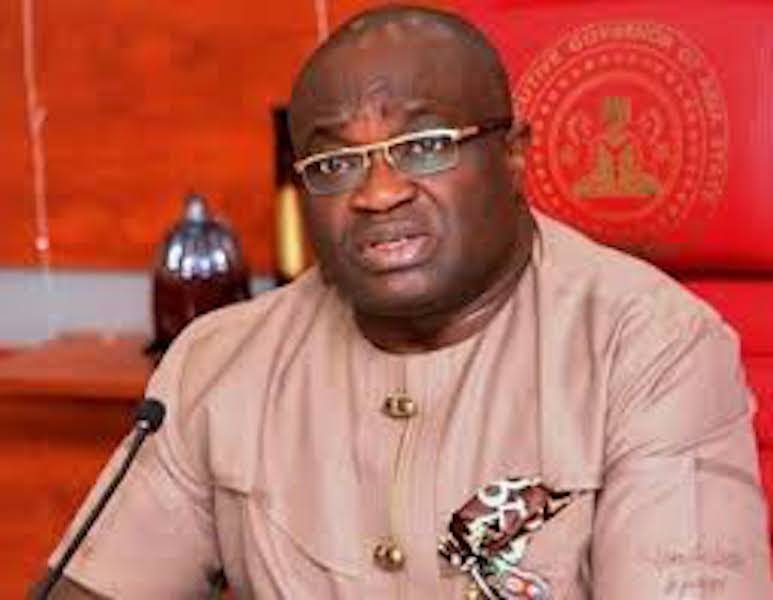
Immediate past governor of Abia State, Dr Okezie Ikpeazu, has said that contrary to the allegation of his successor, Alex Otti, the N10 billion budgeted by his administration for the Abia Airport project was neither embezzled nor diverted.
Ikpeazu said the money was rechannelled into other projects following the approval of the State Executive Council (SEC), after traditional rulers in the state, told him to forget the project but focus on repairing major roads in the state.
According to him, traditional rulers had argued that the airports in Owerri in Imo State and Uyo in Akwa Ibom State made an Abia airport project unviable.
The former governor, who spoke through his then commissioner for information, Chief John Okiyi Kalu, asked Otti to stop playing to the gallery and tell Abians the truth with documents at his disposal.
Okiyi-Kalu gave a detailed account of the roads and contractors that received the N10 billion initially marked out for construction of an airport and listed about 18 projects that were done, in place of the airport.
According to his list: “China Zonghghao for Osisioma flyover Aba & ABSUTH Road Aba got N800,000,000. Trackcare Construction Company for Aba-Owerri Road Aba (Brass to Osisioma junction segment, Ururuka road Aba, Afor Ibeji/ Ubakala Umuahia, Stella Marris Catholic Church, etc got N1,035,000,000.
“Ferrotex Construction Company for Aba-Owerri Road (Railway Junction-Brass junction segment) Aba, Obohia Road Aba, Opobo Junction-Ukpakiri Ogbor-Hill Aba, Uratta Ugwuati, Itungwa, Rehabilitation of failed Ururuka got N1,500,000,000.
“Shannah Jardon Construction Company for Okigwe Road Aba, Milverton Road Aba, Cemetery-Eziukwu Road Aba got N450,000,000. Ecklean: Osusu road Aba-N 200 000,000, Cosmos Construction Company for Immaculate Avenue Umungasi Aba got N150,000,000 while Setraco/Hartland for Port-Harcourt Road got N1,000,000,000.”
Further details are “Rockwaters for Ohanku Road Aba, Okpu Umuobo Aba got N650,000,000, MOW for Ebenma Street Aba and Ovom street Aba got N1, 130,000,000. Zubbalco for MBUBO Umuakwu got N200,000,000.”
Other details showed that “Tunnel End Construction Company got N780,000,000 for the construction of Umuene-Obikabia, Umuojima-umuokiri- Ekeakpara, Umuakatawom-Eziama-Ohanze while Paceo Carretera company got – N312,000,000 for the construction of Agalaba Ring Road in Obingwa.”
From the same details, it showed that Delhope Construction Company got N557,000,000 for the construction of Umuobiakwa-Owo Road Obingwa, Federal Medical Centre internal road, Aba Road Umuahia (GG-Shoprite).
It was also gathered that MOW construction got N325,000,000 for the construction of Umuobiakwa internal roads, umuobiakwa (Gov) roads, Mbawsi internal roads and desilting of Aba big gutter while BOK construction got -N100,000,000 for the construction of Agbama Ring Road Umuahia.
„Crystalkleen Construction for York/Jubilee/Nicholas street Aba got N30,000,000, Pumeco Construction for Aba road (Uchenna/ShopRite) Umuahia, Zero portholes in Umuahia roads got N353, 000,000, while Yodel construction for Afrata road, Umuahia got N100,000,000.
„E&P for Trinity College Road Umuahia got N60,000,000 and Obitex Development Company Ltd for construction of Ohuhu road from Isiokata, diversion from the gully erosion at Isiokata to Umuawa Ohuhu to Nkwoegwu got N125,000,000.“
More details provided show that Smutedge Company got N200,000,000 for the rehabilitation of failed portions of Umuikaa-Umuenne, Pacon Company got N12,000,000 for completion of drains at
Ozuomba/Ohazu Road.
„MOW Company for Zero potholes (Aba) got N 100,000,000, Charbel Company for Government House got 400,000,00 and the State Ministry of Public Utilities got N100,000,000 for Streetlights.“
Okiyi-Kalu, who later served as a commissioner for trade and investment, said it was shocking that after a demand was made for the publication of the much-talked about audit, Otti and his media handlers rushed to a blogger to publish an indicting report against his former principal instead of the forensic audit report.
He admonished Otti to focus on governance and stop deceiving the people with “lies and fiction”.
Ikpeazu, who spoke against the background of a report that his government awarded a N10 billion contract for the construction of an airport in Abia without doing same, insisted that Otti was on clout- chasing and deceiving gullible people with the alleged forensic report he conducted on Abia finances.
In a statement made available to journalists yesterday, Ikpeazu said Otti was diverting attention from the quarterly reports of Abia State, which showed that his government had been reckless with funds.
Ikpeazu said, “Accounting for the N10 billion, no dime was diverted. Otti is diverting attention from his own quarterly report which captured him spending N3 billion on research and non-existent projects. Why is it that he is using the same Ferrotex contractor, who he accused of receiving N10 billion from us for major contracts today? What stopped him or his auditors from asking Ferrotex for explanations? We have decided to respond to him with evidence of jobs done. The time of truth has come.”
Providing an insight into the spending of the money, Okiyi-Kalu said since Otti became the governor of Abia State, Ferotex Construction Company has been awarded the Umuimo Road, Shalom Road and Umuode Road all in Aba.
“Currently, Ferotex Construction Company is equally handling 22.5 kilometres Isuikwuato-Abariba section of the 67.6 kilometres Umuahia-Uzuakoli-Abiriba-Ohafia Road, which is Otti‘s biggest road project in Abia State,” he said.
Okiyi-Kalu said the airport project issue first came to the Abia State Executive Council at a meeting on September 24, 2020.
He said based on the presentation made to the Exco, they approved the project and also approved the borrowing of N10 billion “from UBA Plc as an initial investment by the state with repayment charged to our FAAC account with the bank.
„You may wish to recall that during the period, the country was still struggling to emerge from the COVID-19 pandemic with very low FAAC and IGR inflows across the states,“ he said.
Okiyi-Kalu said the current secretary to state government (SSG), who is an appointee of Otti, Prof Kenneth Kalu, can review and confirm his claim from Exco records in his custody.
„Shortly after we announced Exco‘s approval of the airport project, Governor Okezie Ikpeazu received in audience executives of Abia State Traditional Rulers Council then led by HRM Eze Joseph Nwabekee.
„On November 13, 2020, Governor Okezie Ikpeazu informed members of the State Executive Council about the details of his meeting with representatives of the traditional rulers in Abia State, who requested that we suspend the airport project and commit the funds earmarked for it to do more roads in the state, as we are surrounded by airports already but need to urgently improve internal roads that would give a further boost to the socio-economic activities of the state. Exco thereafter voted to approve the suspension and request to use the earmarked funds for road projects in the state.“
He said on November 17, 2020, Ikpeazu took to his official X (formerly Twitter) handle to inform Abia citizens that the airport project had been suspended.
Okiyi-Kalu said Ikpeazu must have informed the then commissioner for works, Elder Bob Ogu, of his intention to suspend the airport project in anticipation of Exco approval, hence the state Ministry of Works selected road projects in Abia 2020 budget for funding with the N10 billion and allocated resources to the contractors.
He, however, explained that the list containing the tranche payments was not exhaustive as those were the only ones in his personal Exco note that he kept during meetings.
He said that it is also true that other tranche payments were made from other sources, stressing that the Ministry of Works led by Elder Bob Ogu and the Ministry of Finance led by Dr Aham Uko back then, should be able to supply a more comprehensive list to what he was saying.
Source: Leadership Newspaper


Headlines
Our Objective is Not to Manage Poverty, But Defeat It, Tinubu Assures on 66th Independence Anniversary (Full speech)
By Eric Elezuo
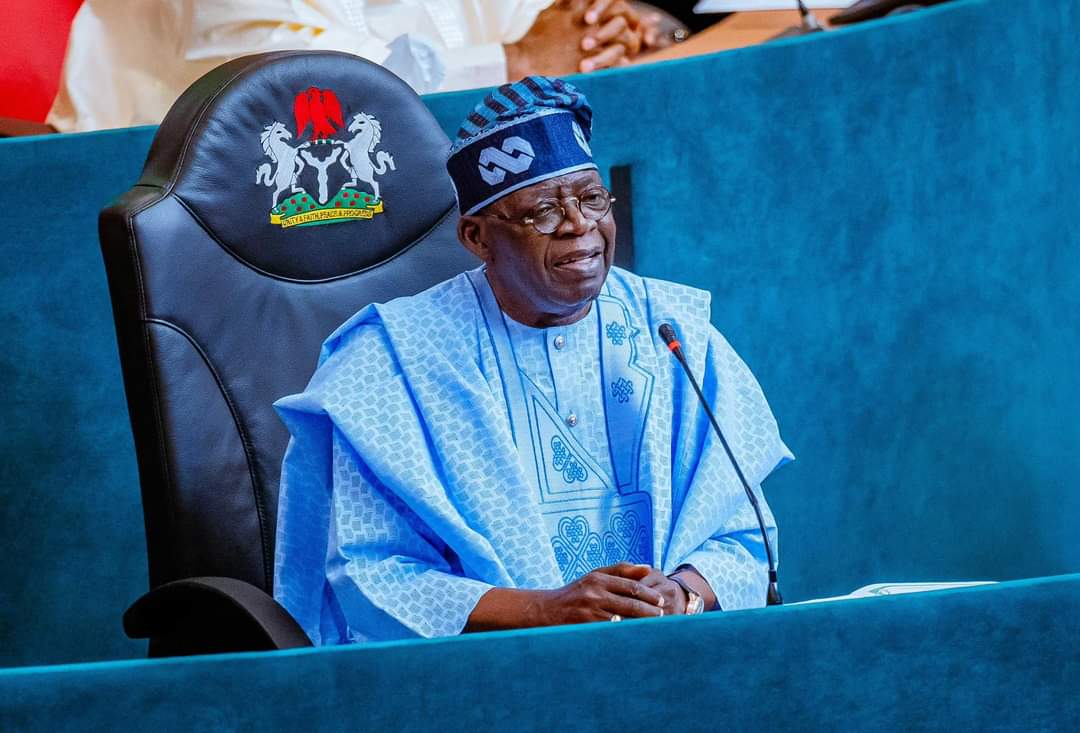
President Bola Tinubu has assured Nigerians that the intention of his government is not to manage poverty efficiently, but to completely defeat it, stressing that his administration has recorded massive achievements in the last three years since it assumed leadership.
Tinubu made the remarks while delivering his 66th Independence Day message, titled From Reform to Prosperity, to Nigerians on Thursday.
While bringing to the fore the programmes initiated by his administration to fight poverty, Tinubu insisted that that:
“These programmes are not substitutes for prosperity. They are a bridge to aid our nation’s citizens on their path towards it. Our objective is not to manage poverty more efficiently.
“We will defeat it.
“It will take time. It will require discipline. It will require sustained growth year after year and the creation of millions of productive opportunities across our country.”
Tinubu’s full Independence Day Speech:
My fellow Nigerians,
Sixty-six years ago today, our flag was raised, for the first time, over a free and sovereign nation. Since then, we have journeyed together as one nation, bound by our collective trust in the great promise of Nigeria: that a country of our size, our bountiful resources, our cultural diversity and, above all, our extraordinary people can build a giant in Africa; that in this blessed and fertile land we can build a united, strong and prosperous nation; a land of regional authority and global consequence.
Our journey has not always been easy. In truth, it has generally been too hard for too many. We have known moments of great hope and periods of profound disappointment. We have endured war, military rule, economic crises, insecurity and political upheaval. Yet through it all, Nigeria, with the indomitable spirit of its people, has endured.
It has endured through the efforts of the farmer who rises before dawn to work his land. The trader who opens her shop each morning, hopeful for a productive day. The teacher who believes in the children entrusted to her care and the young entrepreneur who refuses to surrender ambition to circumstance. We are grateful for the men and women of our Armed Forces and security services who place themselves in harm’s way so that the rest of us may live in peace.
Through every difficulty, generations of Nigerians have continued to believe in one thing: that this country of ours will be better.
This faith, which sustains us all, is the inheritance of independence. Our founding fathers did not struggle merely for a flag, an anthem or a place among the nations of the world. Independence carried a larger promise: that Nigerians would have the freedom to shape their own destiny and build a nation capable of providing opportunity, dignity and a better life for its people. Sixty-six years later, Almighty God has made it our responsibility to deliver that promise.
Today, as we celebrate our independence, we must speak honestly about the journey so far, the choices we made, and the country we are determined to build from here.
For too long, the promise of Nigeria was undermined by choices that postponed difficult decisions and allowed deep economic distortions to grow.
By 2023, poverty was rising, and hope was nearly gone. The country’s situation was darker than ever. We had no choice but to act.
Nigeria was like a sick patient who receives the terrible news that he has cancer. His doctor explains that the treatment will be difficult and painful, but that it offers a strong prospect of recovery. The patient has a choice. He can begin treatment, endure its discomfort and fight the disease. Or he can ask only for morphine, dull the pain and leave the cancer to spread.
For too long, Nigeria’s leaders chose morphine while praying for a miracle that never came.
They focused on symptoms while allowing the disease to take hold deep within the fabric of our society. We spent enormous sums sustaining inefficient arrangements that were never intended to last. We hid from difficult truths and passed the consequences from one generation to the next.
When this Administration assumed office, we resolved to do things differently. We chose to excise the cancer. The reforms that followed were difficult. The side effects were real. Yet, we must never confuse the medicine with the disease.
Our reforms did not create the weaknesses in our economy. They confronted them. Now, as certain influential but regressive voices would have us abandon the treatment and return ourselves to the abuse of addictive subsidies, we must resist their siren song. We must remember why we began this journey and how far we have already come.
Three and a half years later, the evidence that Nigeria’s economic outlook has improved is undeniable. Our economy has grown by over 4 per cent this year. Both oil and non-oil sectors have contributed to the renewed period of stable growth.
Oil theft is down. Inflation has fallen substantially from its peak. Our foreign reserves have been rebuilt, our foreign exchange market has stabilised, and in 2025 this country recorded its highest revenue from non-oil exports in its history, exceeding $6 billion. This is real money being made by real Nigerian businesses.
These are not idle claims. International observers, journalists, NGOs and multilateral institutions can see the change. Each has concluded that our reforms have strengthened Nigeria’s economic stability and resilience. The private sector has long since delivered its verdict, and foreign direct investment continues to rise each year.
My fellow Nigerians, we have reached a turning point.
The emergency treatment is over. The foundation has been repaired. The central economic task before us has changed. For three years, our overriding purpose was to correct our nation’s course.
Now, our purpose is simple: shared and widespread prosperity.
When I speak of prosperity, I do not speak merely of a larger economy, abstract numbers or better statistics. I mean something much more personal.
I mean a Nigeria in which the farmer can cultivate his land safely, produce more at lower cost, and earn a decent return for his labour. A Nigeria in which factories have reliable power, businesses can obtain credit, and young people can find productive work. A Nigeria in which food and transportation are affordable, education is within reach, and hard-working families can look towards the future with confidence.
This is the promise we must now fulfil.
Our priority is to bring down the cost of living. We will achieve this by lowering the cost of producing and moving the things Nigerians consume.
We have the land and people to feed ourselves. My government is therefore focused on expanding mechanised irrigation and dry-season farming, improving access to seeds and fertiliser, holistically increasing mechanisation, and investing in storage and transportation. We are building and completing the roads, railways and ports that connect farms and factories to markets.
Our logic is simple. When a farmer produces more cheaply, when fewer crops are lost between the farm and the market, when a manufacturer spends less on electricity, when a truck reaches its destination faster, and when the business environment fosters fair competition, all those savings will ultimately find their way into the price of goods in the market.
But prosperity requires more than cheaper goods. It requires productive work.
Nigeria is a young country. Millions of young Nigerians enter adulthood every year with talent, energy and ambition. Our responsibility is to ensure that this great demographic strength becomes an engine of production rather than a source of despair.
We are therefore placing jobs, enterprise, and industrial growth at the heart of our government’s policies.
We will use our gas to power new industries. We will support businesses that work to bring factories back to life in our great industrial centres. We will expand digital connectivity into communities that have waited too long to participate in the modern economy. We will invest in the skills employers demand and support Nigerian businesses with the infrastructure and finance they need to grow.
I want to see more Nigerians making things. I want to see more Nigerian farms feeding our cities and supplying our factories. I want to see Nigerian businesses selling Nigerian goods to the whole world. I want young Nigerians building unicorns and creating opportunities for others here at home.
I am also conscious that millions of our fellow citizens cannot wait for tomorrow. Some Nigerian families still struggle today for the next meal, the next school fee, the next medical bill, or simply enough money to get to work. Their circumstances did not begin with the reforms of the last three years. Their struggle is the accumulated consequence of decades of low productivity, inadequate infrastructure, insufficient opportunity and institutions that too often failed those who needed them most.
We cannot erase in four years what accumulated over generations. But we can change its course. We can build an economy that steadily lifts people out of poverty while ensuring that those who remain vulnerable are not abandoned along the way.
That is why we are strengthening direct support for the poorest households and improving the National Social Register so that assistance reaches those who genuinely need it.
It is why the Nigerian Education Loan Fund is ensuring that the child of a low-income family need not surrender the dream of higher education simply because his parents cannot afford the fees.
It is why CREDICORP is giving working Nigerians access to consumer credit, allowing people to acquire vehicles, solar systems, digital devices and other essential assets without first having to accumulate years of savings.
That is why, working with our states and local governments, we will continue to strengthen primary healthcare, basic education, and the essential public services poorer Nigerians depend on most. Since 2023, we have paid salaries and pensions on time and in full. We have reformed the national pension program to benefit retirees and the vulnerable.
These programmes are not substitutes for prosperity. They are a bridge to aid our nation’s citizens on their path towards it. Our objective is not to manage poverty more efficiently.
We will defeat it.
It will take time. It will require discipline. It will require sustained growth year after year and the creation of millions of productive opportunities across our country.
But for the first time in decades, we embark on this task from a position of strength; with an economy whose fundamental direction has been corrected. We confronted the difficult choices we faced and have laid the foundations for lasting prosperity. Rather than fail the promise of a better future for our children, the time has come for us to build that future.
The age of reform has done its work. Now begins the age of prosperity. An age in which the promise of this great nation must finally become the lived experience of Nigerians from all walks of life.
We have travelled through difficult years together. We have made hard decisions together. And now, still together, we must build the country those decisions have made possible.
I believe deeply in what lies ahead.
I believe in the millions of ordinary men and women whose work, courage and determination have always been the true strength of our country. The road ahead will still demand much from us. But we now travel it with firm footing, a clear direction, and renewed hope in our collective future.
Nigeria has corrected its course. We have passed through our own Red Sea. This is not the time to look back. Let us go forward together, with faith in ourselves, faith in our country, and faith that the sacrifices we have made will yield their reward.
The Promised Land before us is a Nigeria of abundance and opportunity; a nation where prosperity is broadly shared, where every child can dream beyond the circumstances of his birth, and where our country’s immense promise is finally reflected in the lives of our people.
Our destination is in sight. Our foundations are strong. Our direction is clear. So let us go forward. No looking back.
Happy Independence Day, my fellow Nigerians. God bless you all, and God bless the Federal Republic of Nigeria.
Bola Ahmed Tinubu, GCFR
President and Commander-in-Chief of the Armed Forces of the Federal Republic of Nigeria
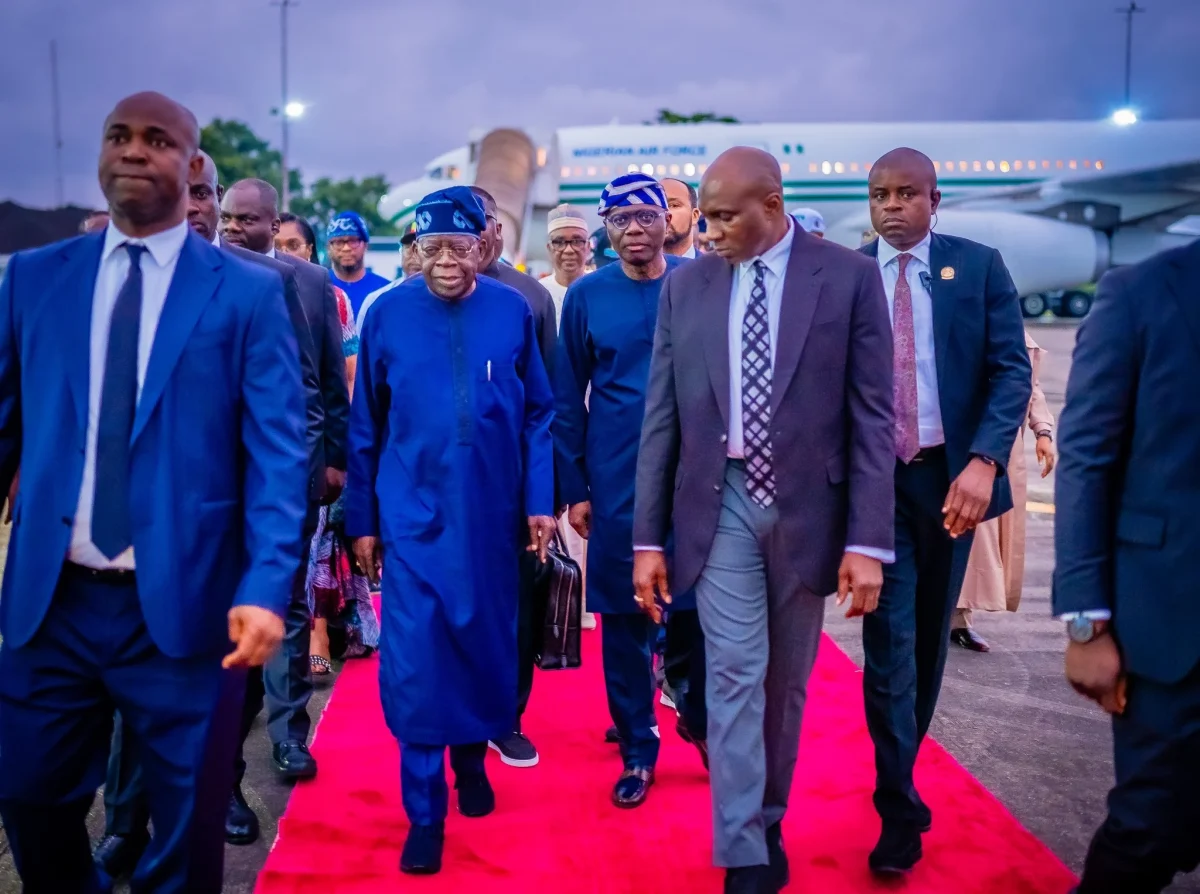
President Bola Tinubu has dismissed concerns over rumoured ill-health following his return to Nigeria from an extended working vacation in Europe, declaring that he is “healthy, sound, and ready to go.”
Tinubu spoke with journalists on Tuesday shortly after arriving in Lagos from Paris, where he spent the latter part of his stay abroad.
The President was responding to questions about concerns raised by some Nigerians and his supporters towards the end of his vacation regarding his health.
Tinubu rejected the concerns, saying there was nothing wrong with him.
“Ready to kick, ready to walk. There’s nothing wrong,” the President said.
He added: “Rumour will always be emanating from politics, but the facts remain I’m here. Healthy, sound, and ready to go.”
Tinubu left Nigeria on August 30 for a three-week working vacation in Europe. He initially travelled to London before proceeding to Paris, France.
The Presidency subsequently announced an extension of his stay, saying the President remained in touch with developments at home and continued to direct the affairs of the country while abroad.
His prolonged absence generated public discussion, particularly over the length of his stay outside Nigeria and its implications for his official responsibilities.
The African Action Congress also instituted legal action against Tinubu and the National Assembly over the trip, alleging that the President failed to notify the National Assembly before leaving the country.
With his return, Tinubu is expected to resume official engagements in Nigeria as the country prepares to mark its Independence anniversary on October 1.
The President’s comments in Lagos therefore sought to put to rest speculation surrounding his health, while signalling his readiness to resume his activities at home after several weeks in Europe.
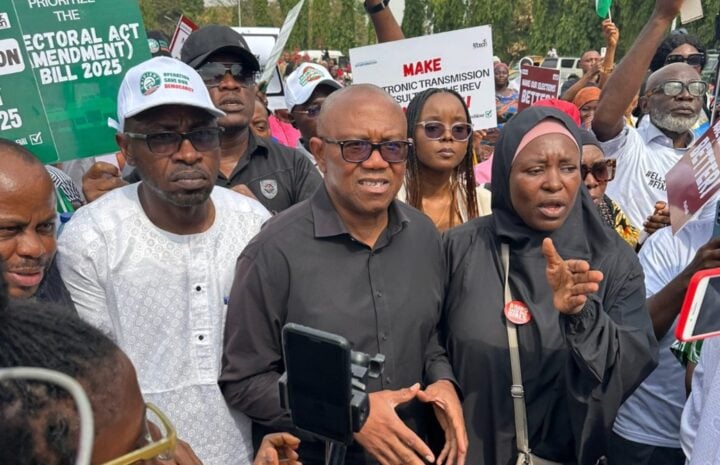
The Nigeria Democratic Congress (NDC) presidential candidate, Peter Obi, has blamed the ruling All Progressives Congress (APC) for worsening poverty and insecurity in Nigeria, promising to restore citizens’ confidence in governance if elected in 2027.
Obi spoke on Monday in Sokoto during a town hall meeting with members and supporters of the party, where he outlined his plans for security, education, agriculture, transportation and economic development.
He alleged that the APC-led administration had failed to adequately provide basic infrastructure and social interventions for Nigerians.
According to him, the situation had contributed to the worsening economic hardship confronting citizens across the country.
“The current administration and some political leaders in the country have abandoned the citizenry without basic infrastructure and intervention. That is why the country is the highest poverty-stricken in the world,” Obi alleged.
He said an NDC administration would prioritise security, education and agriculture in its efforts to rebuild the economy and restore hope among Nigerians.
“We are committed to transforming the country under a united, secure and prosperous leadership of the NDC.
“It is only the NDC that has the capacity and visionary policies that would reverse the system rot. No fake promises will come from us. You will see our commitment by keeping to our promises,” he said.
On transportation, the former Governor of Anambra State described an efficient railway system as critical to economic growth, saying his administration would expand rail connectivity across the country.
He specifically promised to pursue rail links connecting Sokoto, Kebbi and Zamfara states with other parts of the North-West and the country.
“I will effectively ensure rail transport connects Sokoto, Kebbi and Zamfara states, the entire North-West and other regions,” Obi said.
The NDC candidate also promised greater coordination between the president and vice-president, saying his proposed partnership with Rabiu Musa Kwankwaso would ensure that both leaders worked towards the same objectives.
“You will see how leadership works in the same direction. Myself and the Vice Presidential candidate will be working together the way you see us together in Sokoto today,” he said.
On fuel subsidy, Obi said his administration would introduce a transparent system that would ensure Nigerians benefit from government interventions while eliminating opportunities for corruption.
He described the previous subsidy regime as having been undermined by corruption, promising to establish greater transparency in the management of the country’s oil and gas resources.
“Kwankwaso and I will initiate a work plan that would transparently arrive at the quantum of crude, nature of transactions, import and export, and revenue accruing from every single oil and gas transaction and activity for the benefit of Nigerians,” he said.
He further pledged to work with state governors, particularly in the North, to address insecurity and its impact on local economies.
According to him, banditry, kidnapping and terrorism have disrupted economic activities and development in many communities across the region.
Obi also promised to support farmers through fertiliser subsidies and other agricultural interventions aimed at increasing food production and strengthening food security.
He urged voters in Sokoto State to support the NDC, describing the state as strategically important to the party’s plans for the 2027 election.
Also speaking, the NDC vice-presidential candidate, Rabiu Musa Kwankwaso, accused the APC administration of failing to adequately address the challenges confronting Nigerians, particularly insecurity in the North-West.
Kwankwaso urged residents of Sokoto, Zamfara, Kebbi, Kano, Kaduna, Katsina and Jigawa states to demand improved security and better economic opportunities.
He said the Obi-Kwankwaso ticket represented an attempt to provide a different approach to governance, particularly in tackling insecurity, poverty and underdevelopment.
The former Kano State governor said the North was still facing challenges in education, industrialisation and security, promising that an NDC administration would prioritise the sectors.
He cited previous political partnerships involving leaders from different regions and faiths, including the relationships between Sir Ahmadu Bello and Nnamdi Azikiwe, Shehu Shagari and Alex Ekwueme, Olusegun Obasanjo and Atiku Abubakar, and Goodluck Jonathan and Namadi Sambo.
Earlier, the NDC governorship candidate in Sokoto State, Shamsuddeen Haido, urged party members and supporters to intensify mobilisation ahead of the 2027 elections.
The State chairman of the party, Bello Sani Yabo, described the town hall meeting as an opportunity for members to engage with the party’s proposed agenda for the country.
He assured that the party remained committed to working for victory in Sokoto State.
Meanwhile, Obi and Kwankwaso paid a courtesy visit to the Sultan of Sokoto, Muhammadu Sa’ad Abubakar III, where they sought his blessings ahead of the 2027 general elections.


