Connect with us

Metro

I Poisoned My Stepson, Osun Housewife Admits

Published

on

A 24-year-old housewife resident in Ede, Osun State, Mariam Musa, has confessed to killing her stepson because her husband cared more for the boy’s mother.

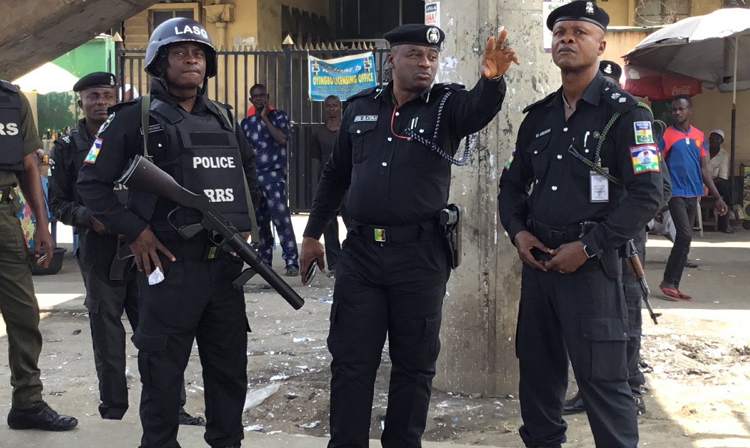
Mariam, a tailor, was one of 12 suspects arrested for various crimes across the state.

They were paraded on Tuesday by the new Osun State Commissioner of Police, Wale Olokode, in Osogbo.

The suspect said the three-year-old boy, Rokeeb, left his mother and came to her room on the day she committed the act, adding that she put insecticide in the victim’s mouth, which killed him.

Mariam, who is five months pregnant, said the mother of the deceased used to disrespect her because she was the favourite of their husband.

She also said after committing the act, she felt remorseful and confessed to her husband.

“Greed and jealousy made me to kill the son of my husband’s second wife. She had a male child and I was not happy that our husband was showing her more care,” Mariam said.

The police commissioner also paraded two suspected kidnappers — Idris Quadri and Quadri Okanlawon — who allegedly abducted passengers in a Kwara State-bound vehicle on December 30, 2020.

He said, “The 12 passengers in a Sharon Volkswagen were coming from Ekiti State, and heading for Offa in Kwara State. On getting to Asi along Oyan Road, in the Odo-Otin Local Government Area of Osun State, they were attacked by gunmen and kidnapped.

“The intensive combing of the bush led to the arrest of two members of the gang, and the kidnappers were forced to release the remaining six victims on Friday. The victims have since reunited with their families.”

Also paraded were Garuba Lukman, Tajudeen Monsuru, Hamsat Akeem and Yusuf Awayewaserere, who were arrested for murder, conspiracy and selling of human parts in Iwo town.

The Punch

Continue Reading
Advertisement


Click to comment

Leave a Reply

Your email address will not be published. Required fields are marked *

Metro

The Inherited Fracture: Escaping the Divide-and-Rule Instinct Across Board

Published

on

By Tolulope A. Adegoke

“The old empire did not bequeath us a map; it bequeathed us a reflex. We are the first generation with the tools to see the fracture, and therefore the first with the moral chore of mending it—not through the erasure of difference, but through the deliberate weaving of it into a load-bearing fabric. The shackle was never iron; it was a story we mistook for our skin. The task, therefore, is not to break free, but to finally tell a truer one, and in the telling, become whole enough to bequeath wholeness.” 

Introduction: The Quiet Inheritance

No child is born with a map of enemies. No infant instinctively divides the world into “us” and “them.” Yet by adolescence, most of us have unconsciously inherited a vivid cartography of division—lines drawn long before our first breath, tracing the borders of tribe, class, ideology, and nation. This inheritance is not accidental. It is the meticulously preserved residue of a strategy so ancient and so effective that it has become woven into the invisible fabric of how we organize our families, our work, and our geopolitics.

The strategy is “divide and rule,” and its enduring victory is not that it conquered past civilizations, but that it continues to conquer future ones before they are even born. The shackle from the past is not a rusty iron chain we can see and cut; it is a psychological operating system, a default setting of fragmentation that tells us difference is dangerous, that another’s gain is our loss, and that solidarity is a naïve dream. This write-up is an inquiry into how that inherited mantle still drapes itself over the three great arenas of human life—Peoples, Corporates, and Nations—and, more crucially, how we can finally, generationally, set it down.

Part I: Tracing the Original Wound

To understand why division feels so instinctive, we must first recognize that it was carefully taught. The imperial architects of history—from the Roman Senate setting Gallic tribes against each other to the colonial census offices that rigidly codified fluid identities into immutable castes—were not mere conquerors of land. They were engineers of human psychology. Their profound insight was chilling in its simplicity: a people busy fighting each other over manufactured scarcities of dignity, resources, and recognition will never marshal the collective strength to question the structure of the room they are all trapped in.

This method did not fade with the lowering of colonial flags. It shape-shifted. It flowed seamlessly into the architecture of modern politics, where wedge issues and culture wars create passionate, performative tribes that exhaust public energy on symbolic combat while systemic questions go unasked. It entered the economic realm, where labor is pitted against labor across borders, and the workplace is structured into competing fiefdoms. It found its ultimate amplifier in the digital age, where algorithms, optimized not for truth but for engagement, feed us a personalized diet of indignation, continuously redrawing the lines between “our” fact and “their” fiction.

The deepest shackle, therefore, is not an external policy but an internalized reflex. The generational problem we face is that we parent, manage, and govern with the inherited assumption that a cohesive whole is a dangerous fiction, and that a controlled, managed division is the safest form of stability. We have mistaken a centuries-old psychological warfare tactic for human nature itself.

Part II: Peoples – From Inherited Suspicion to Chosen Solidarity

The most intimate theater of the divide-and-rule legacy is the community, where the human need for belonging is manipulated into a weapon against other belonging. We inherit not just our grandmother’s recipes but also her historical wounds, her curated list of historical betrayals by “the others.” When identity becomes a fortress, and every interaction across difference is framed as a potential siege, society unravels into a zero-sum competition of grievances. One group’s acknowledgment becomes another’s perceived erasure, and the common ground—the very earth we all need to survive on—becomes a forgotten abstraction.

The Generative Pivot: The Loom, Not the Mosaic

The conventional metaphor for unity is the mosaic—distinct tiles fixed in place. But a more dynamic, human solution is the loom. In weaving, distinct, colorful threads do not merely sit beside each other; they actively interlace under creative tension to produce a fabric far stronger and more beautiful than the loose pile of individual strands. This is the generational work: to weave a social fabric where difference is not merely tolerated but is the essential, structural component of collective strength.

1.     The Alchemy of Shared Enterprise: Nothing dissolves manufactured mistrust like sweating together for a common purpose invisible to ideology. When a neighborhood of diverse faiths and backgrounds collaboratively designs a green space, starts a community-owned energy cooperative, or builds a multi-generational playground, something alchemical occurs. The direct, felt experience of shared competence and mutual reliance creates a counter-narrative to the inherited one. A child watching a Sikh father and a Muslim mother co-chair a local river cleanup does not just learn tolerance; they learn the tangible truth of interdependence. This solves the generational problem of social fragmentation not through lectures on unity, but by providing the real, material evidence that we live better, safer, and richer lives when we are bound together in practical projects. It transforms the public from an audience of divided spectators into a collaborative cast of problem-solvers.

2.     Re-narrating the Past Together: The past is often a weapon, parceled out in separate, conflicting memories. A generational solution is the community-wide re-narration project—a collective, facilitated process where a town’s entire history, including its moments of deep division and injustice, is documented and acknowledged not by one side for its own vindication, but by all sides for the purpose of a shared, complex inheritance. When a painful historical event ceases to be “their crime against us” and becomes “a tragedy in our shared story from which we must all learn,” the emotional charge is diffused. The next generation inherits not a selective, incendiary pamphlet, but a full, somber, and ultimately uniting library of shared experience.

Part III: Corporates – From Fiefdoms of Turf to Ecosystems of Flow

The modern corporation, for all its talk of disruption, is often a deeply conservative feudal structure. The inherited mantle here is the cult of the silo. Departments become sovereign nations with their own languages, rituals, and guarded borders. Marketing and Sales engage in a cold war of blame; Product and Engineering view each other as obstacles. This is internal divide-and-rule in its most mundane, daily form: a management inheritance that subconsciously fears a truly unified, cross-functional workforce because a fluidly collaborating team is harder to control than a set of competing baronies.

The generational cost is the “perfect department, failing company” paradox, where each unit optimizes for its own narrow metrics—sales volume, lines of code, ad impressions—while the living, breathing organism of the enterprise, the thing that actually delivers value to a human customer, atrophies.

The Generative Pivot: The Symphony, Not the Org Chart

The solution is a fundamental shift in structural metaphor from a static hierarchy to a living symphony. An orchestra does not succeed because the brass section beats the strings. Every musician has a completely different, highly specialized instrument and a distinct musical line to play, yet all are integrated by a single unifying element: the full score.

1.     The Shared Score of Radical Transparency: The corporate “score” is a single, universally accessible, real-time operating system that visualizes all work, all customer feedback, all financial flow. When a junior developer can see exactly how her code latency impacts customer churn in a chart viewable by the CEO, the informational hoarding that powers silo politics evaporates. Power no longer comes from guarding a border of knowledge but from contributing to the visible whole. This solves the generational problem of corporate sclerosis by ensuring that the enterprise inherits a nervous system, not a suit of armor. An organization that sees itself whole can act whole.

2.     Mission-Driven, Ephemeral Teams: Instead of permanent departments, work flows to ephemeral, mission-specific teams that form, solve a problem, and dissolve back into the organizational fluid. A sustainability initiative, for example, is staffed not by a permanent “Green Department” that everyone else ignores, but by a temporary swarm pulling in a supply chain veteran, a materials chemist, a brand storyteller, and a frontline retailer. Their shared KPI is a unified, real-world outcome. When a professional identity is no longer “I am a Marketing person defending my turf” but “I am a problem-solver who brings marketing insight to the mission,” the inherited mantle of internal division is finally unwoven. The company’s grandchildren—its long-term future products and culture—are protected by this fluid, adaptive resilience.

Part IV: Nations – Beyond the Westphalian Straitjacket

The nation-state system is the most monumental and seemingly immovable of the inherited mantles. Born from the idea of absolute, internally homogenous sovereignty, it creates a world of hard containers where the most critical threats we face—a warming atmosphere, a migrating virus, the existential risk of ungoverned artificial intelligence—flow like water across borders we treat as concrete. We are trying to solve planetary-scale, networked problems with a batch of standalone, disconnected operating systems. An election-cycle-driven leader performing national interest for a domestic audience is structurally incentivized to prioritize a 2% short-term domestic gain over averting a 20% long-term global disaster.

This is the ultimate gerontocracy of concepts: an inherited 17th-century political structure mismanaging 21st-century existential threats. The shackle is a logic that says global cooperation is a zero-sum sacrifice of sovereignty, rather than a strategic extension of it.

The Generative Pivot: The Bioregion and the Commons Trust

The generational escape is not a single world government—that is just the old divide-and-rule hierarchy scaled to a terrifying, monocultural extreme. The human-scale solution is a layered, functional network where sovereignty is not abolished but intelligently pooled for specific planetary survival missions.

1.     The Bioregional, Not Just National, Identity: The most profound counter to artificial national division is the cultivation of a bioregional consciousness. A person living in the Nile Delta has a more fundamental, generational relationship with someone upstream in the Ethiopian highlands than with a fellow citizen in a distant desert city of the same nation. The flow of water, the health of soil, the migration of pollinators—these create a natural, non-negotiable community of fate. The generational solution is to elevate these bioregional governance bodies—river basin authorities, regional seas commissions—to full political stature, granting them real, binding legal power co-equal to national parliaments on issues within their ecological domain. An upstream dam project would no longer be just a national prerogative; it would be subject to the legal authority of a bioregional commons trust in which the downstream nation is an equal partner. This solves the problem of resource conflict by changing the unit of political identity itself.

2.     The Global Mandate for the Global Commons: For the atmosphere, the high seas, and the polar-regions, nations must charter autonomous, science-driven Global Commons Trusts with a sliver of strongly delegated sovereignty. Imagine an Atmospheric Integrity Agency, governed not by political negotiation but by a fiduciary duty to a set planetary threshold. It monitors, sets a global price on carbon extraction, and distributes the proceeds back to every human on Earth as a universal basic dividend. The division of a global “us vs. them” on climate collapses when a family in Indonesia and a family in Canada receive the same quarterly check from their shared atmospheric trust. It transforms a zone of geopolitical conflict into a zone of shared, inheritable wealth. A child born into such a world inherits a planet managed by a logic of collective trusteeship, not competitive looting.

Conclusion: The Task of the Living

The mantle of divide and rule is weighty because it is lined with the lead of fear: fear of the stranger, fear of irrelevance, fear of a future that demands we think in wholes while our institutions are built in pieces. Yet it is a mantle we have woven and placed upon our own shoulders, generation after generation, mistaking it for the very fabric of reality.

The profound, hopeful truth is that it is a garment, not our skin. We can shed it. The human capacity for direct, unmediated connection, for the fierce protection of our children’s future, and for the intuitive understanding that a forest is not a war of trees but a symphony of mutual nourishment—these are not new inventions. They are our original inheritance, buried under the heavy, historical robes of empire and distrust.

The generational task is not to fight the darkness with weapons it has forged. It is to quietly, persistently, and structurally build the new loom, learn the new score, and chart the new watershed. By weaving a social fabric of chosen interdependence, by organizing work into symphonies of shared value, and by governing the planet as the single, breathing commons it actually is, we finally fulfill the obligation we hold to the future. We bequeath not the cold chains of an imperial past, but a living, breathing inheritance of wholeness—one that equips our grandchildren not for a life of perennial conflict, but for the magnificent and ongoing project of building a single, richly varied human world.

Dr. Tolulope A. Adegoke, AMBP-UN is a globally recognized scholar-practitioner and thought leader at the nexus of security, governance, and strategic leadership. His mission is dedicated to advancing ethical governance, strategic human capital development, resilient nation building, and global peace. He can be reached via: tolulopeadegoke01@gmail.comglobalstageimpacts@gmail.com

Continue Reading

Metro

Vision of Drug-Free Nigeria is Achievable, Marwa Tells Participants at NOMA Capacity Workshop

Published

on

The Chairman and Chief Executive Officer of the National Drug Law Enforcement Agency (NDLEA), Brigadier General Mohammed Buba Marwa (Rtd), has re-emphasized calls for strategic partners with media practitioners to fight against drug abuse, warning that the country remains at the centre of a growing drug crisis that requires urgent and collective action.

Marwa, who was represented by Mrs. Rita Geh, a Deputy Director in the agency, made the remarks while delivering a keynote address at the Media Capacity Building Programme organized by the Nigerian Online Media Alliance (NOMA), in Lagos, to commemorate the 2026 International Day Against Drug Abuse and Illicit Trafficking.

The event, which brought together journalists, public health experts, anti-drug advocates, policymakers, and stakeholders to examine the role of the media in preventing substance abuse and promoting advocacy, was held at the Federal Neuro-Psychiatric Hospital, Yaba on Thursday 25th June, 2026, and themed: “Responsible Media, Drug-Free Nigeria: The Journalist’s Role in Prevention and Advocacy.”

The NDLEA boss described media professionals as “shapers of perception, architects of public opinion, and indispensable partners in national development,” emphasizing that the fight against drug abuse cannot be won through law enforcement alone.

According to him, Africa faces a particularly alarming drug challenge, with projections indicating that drug use on the continent could increase by as much as 40 per cent by 2030, compared to a relatively modest rise globally.

“Nigeria, by virtue of its population and strategic position, sits at the centre of this challenge. The 2018 national drug use survey showed that 14.4 per cent of Nigerians use drugs, compared to the global average of 5.6 per cent. This is not a statistic we can afford to ignore,” he said.

Marwa stressed that while enforcement remains a critical component of the anti-drug campaign, sustainable success depends on prevention, education, advocacy, and community involvement.

He noted that under his leadership, the NDLEA has adopted a balanced strategy that combines supply reduction with demand reduction efforts.

Highlighting the agency’s achievements, Marwa disclosed that the NDLEA has recorded more than 77,859 arrests, secured over 14,122 convictions, and seized in excess of 15 million kilograms of illicit substances across the country in recent years.

He further revealed that within the first ten months of 2025 alone, the agency made over 19,000 arrests, secured approximately 3,000 convictions, confiscated millions of kilograms of narcotics, and destroyed large cannabis plantations nationwide.

“These figures represent more than statistics. Behind every arrest, conviction, and seizure are lives saved, families protected, and communities made safer,” he said.

According to the NDLEA chairman, the agency’s operations have also disrupted criminal supply chains and weakened financial networks linked to organized crime and terrorism.

Despite these achievements, Marwa maintained that reducing the demand for drugs remains the ultimate solution to the problem.

“It is in the area of demand reduction that the role of the media becomes indispensable. The narratives journalists create, the stories they choose to tell, and the information they disseminate influence the choices people make, particularly young people,” he said.

The retired military officer urged journalists to prioritize responsible reporting by emphasizing accuracy over sensationalism and public education over entertainment.

He challenged media practitioners to use their platforms to educate the public on the dangers of substance abuse while highlighting stories of recovery, resilience, and rehabilitation.

According to him, reporting that focuses solely on criminality and punishment can reinforce stigma, discourage treatment-seeking behaviour, and undermine prevention efforts.

“Responsible media practice means going beyond headlines. It means helping people understand the realities of drug abuse, promoting evidence-based information, and showing that recovery is possible,” Marwa stated.

He also emphasized the media’s watchdog role, encouraging journalists to hold institutions accountable while fostering informed public discourse around drug policy, prevention, and public health interventions.

The NDLEA chairman described the programme’s broader focus on community involvement, media advocacy, and self-consciousness as central to achieving a drug-free society.

“This fight begins with the individual, gains strength from the community, and reaches its widest impact through the media. When these three forces work together, the results can be transformative,” he said.

Marwa called on journalists to actively support national anti-drug campaigns by countering misinformation, promoting healthy lifestyles, and amplifying prevention messages targeted at young people.

He reaffirmed the agency’s commitment to transparency, professionalism, and collaboration with the media, noting that regular engagement remains essential for public awareness and advocacy.

The NDLEA chairman also highlighted the agency’s ongoing investments in prevention programmes, including school-based sensitization campaigns, community outreach initiatives, rehabilitation services, and the nationwide War Against Drug Abuse (WADA) campaign.

According to him, millions of Nigerians, particularly young people, have already been reached through these interventions.

He further stressed the importance of community participation, urging parents, teachers, religious leaders, and community influencers to remain vigilant and proactive in protecting young people from substance abuse.

“Early education, open conversations, and supportive environments remain our strongest defences against drug abuse. A drug-free Nigeria cannot be achieved without active community involvement and personal responsibility,” he said.

Expressing optimism about the future, Marwa noted that a drug-free Nigeria remains an achievable goal if stakeholders sustain their commitment and continue to work together.

“The vision of a drug-free Nigeria is not a distant dream. It is achievable through commitment, consistency, and collective action. Together, we can build a nation where young people make informed choices and where communities remain safe, productive, and free from the scourge of drugs,” he concluded.

Continue Reading

Metro

Lagos Residents Cry Out As Flood Sacks Homes, Schools, Work Places

Published

on

Residents of Lagos have taken to the internet to express their frustrations as floodwater take over different parts of the State.

Unceasing rainfall since on Sunday has caused many households displaced, while schools and workplaces have been temporarily shut.

Commenting on the development in an X post Tuesday, a governorship candidate of the African Democratic Congress (ADC) in Lagos, Gbadebo Rhodes-Vivour wrote: “The flooding we are witnessing across Lagos is yet another reminder that waste management, stormwater drainage, and urban planning are inseparable. You cannot neglect one and expect the others to function effectively…

“Despite repeated promises, the city continues to flood year after year, with no comprehensive drainage strategy or innovative approach to building a climate-resilient Lagos…

“Sadly, poorly regulated sand filling, unchecked development, the destruction of wetlands, and weak urban planning have displaced several vulnerable communities and exposed millions of residents to damaged homes, ruined vehicles, lost businesses, and reduced productivity. “

The Nigerian Meteorological Agency (NiMet) had earlier forecast that 2026 would witness above-normal rainfall, with Lagos expected to experience a greater impact due to its coastal geography and low-lying terrain.

Writing on X, @abazwhyllzz wrote: “Lagos residents are going through a lot this rainy season.”

@Morris_Monye shared a video and added: “Just look at the flooding going on round Lagos. My goodness. If a toddler falls down here, it’s finished.”

@Accoid commented: “I was so early into that Ikorodu road flood yesterday, I quickly maneuvered my way into ilupeju where I saw line up of Mercedes Benz all parked, I turned around inward town planning towards Onipanu, that was how I escaped that Ikorodu road flooding stress.

“At Kayode onipanu, I saw flood layered with heap of waste caused mostly by road side vendors.

“Lagos people, stop selling by the road side, you’re causing traffic and also clogging the gutters!

“By the time I joined Ikorodu Road from Onipanu, not a single car on the highway, every human driving from Anthony, Obanikoro was stuck behind.”

@Vibesznnz disagreed that the Lagos-Calabar Coastal Highway under construction was the cause of the flooding: “The coastal road is not the cause of the flooding in Lagos. Eko Atlantic, which is close to the road, is not flooded. So how can areas far away be flooded and people blame the road? That logic doesn’t add up.”

Also, @e_galoti wrote, “The Lagos flood situation is crazy. It used to seem like a joke when people talked about using canoe during the rainy season. Now it’s looking real.”

The Commissioner of Environment and Water Resources, Tokunbo Wahab, said on X on Monday, while commenting on the suggestion that roadside vendors should be stopped to protect drainage, that Lagosians must take responsibility.

He said: “As a government, we have continued to intensify efforts to mitigate the impact of flooding through the clearing of drainage channels, enforcement against illegal developments obstructing waterways, and other proactive interventions. At the same time, we appeal to all Lagosians to play their part by refraining from indiscriminate waste disposal, illegal dumping, and other activities that obstruct the free flow of storm-water.

“Given NiMet’s forecast, the risks associated with heavy rainfall remain significant. Government will continue to do its part, but safeguarding lives and property also requires the cooperation and collective responsibility of every resident.”

Continue Reading