
Headlines
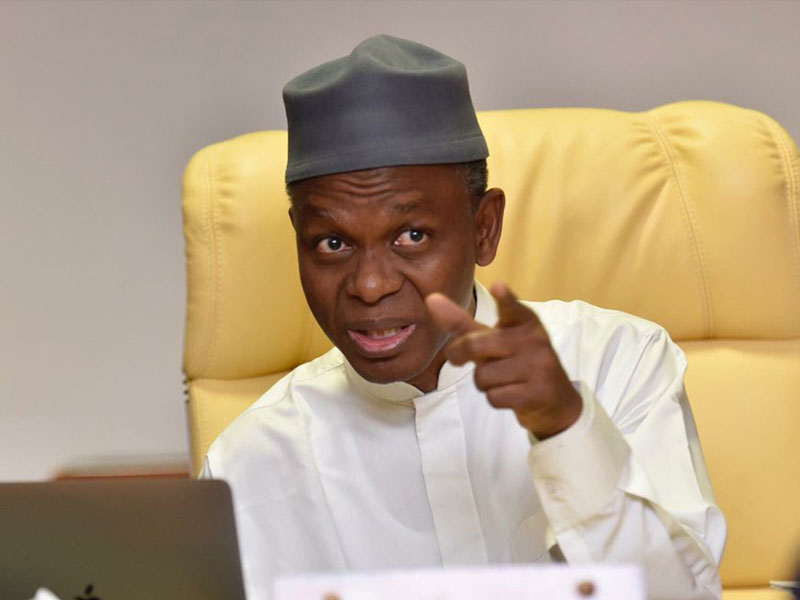
ICPC Accuses El-Rufai Govt of Diverting N1.37bn Light Rail Project Fund

- /home/rhoncare/pointblank.ng/wp-content/plugins/mvp-social-buttons/mvp-social-buttons.php on line 27
https://pointblank.ng/wp-content/uploads/2019/04/5fae31a7-nasir-el-rufa-800x600.jpg&description=ICPC Accuses El-Rufai Govt of Diverting N1.37bn Light Rail Project Fund', 'pinterestShare', 'width=750,height=350'); return false;" title="Pin This Post">
- Share
- Tweet /home/rhoncare/pointblank.ng/wp-content/plugins/mvp-social-buttons/mvp-social-buttons.php on line 69
https://pointblank.ng/wp-content/uploads/2019/04/5fae31a7-nasir-el-rufa-800x600.jpg&description=ICPC Accuses El-Rufai Govt of Diverting N1.37bn Light Rail Project Fund', 'pinterestShare', 'width=750,height=350'); return false;" title="Pin This Post">
The Independent Corrupt Practices and Other Related Offences Commission, ICPC, has discovered N1.37 billion allegedly diverted from funds allocated for Kaduna State’s now-abandoned light rail project.
The money, it was learned, was siphoned into a private account during the administration of former Governor Nasir El-Rufai, who led the state from 2015 to 2023.
The ICPC detailed its findings in an application filed at the Federal High Court in Abuja, seeking the forfeiture of the funds. The commission argued that the alleged diversion deprived Kaduna residents of a vital rail transport system.
According to the ICPC, the fraud stemmed from a purported joint venture agreement signed in October 2016 between the El-Rufai-led administration and Indo Kaduna Mrts JV Nigeria Limited. Payments to the entity began in December 2016, even though the company was not officially incorporated until May 10, 2017.
Between December 2016 and January 2017, the El-Rufai administration approved the payment of N11.1 billion to Mrts JV Nigeria’s account with Sterling Bank. Out of this amount, N1.37 billion was traced to a private account.
On February 14, 2024, the ICPC sought an interim forfeiture order and requested that notices be published in national newspapers, inviting any claimants to show cause why the funds should not be permanently forfeited.
The investigation began after the ICPC received a petition in June 2024 from a lawyer, M. Yahaya, alleging financial misappropriation by officials of the El-Rufai administration. The commission’s probe found that the Kaduna State Government had transferred N11.1 billion in multiple tranches to the joint venture’s account before it was officially registered.
Payments included N890.3 million from the state treasury on December 23, 2016, N2.3 billion on January 10, 2017, and two more tranches of N3 billion and N4.9 billion on January 17, 2017.
On the same day that the final payments were made, Skipper Nigeria Limited, linked to the joint venture, directed Sterling Bank to place the funds in a fixed deposit account. By July 2019, Indo Kaduna Mrts JV Nigeria Limited refunded N10 billion to the Kaduna State Government, leaving a balance of N1.046 billion.
The fixed deposit had also accrued N326.8 million in interest, both of which were allegedly diverted to accounts belonging to GTA Engineering Nigeria Limited, a subsidiary of Skipper Nigeria Limited.
The ICPC claims that the N1.046 billion was labeled as payment for feasibility study, but no such study was conducted. The commission has since recovered both the diverted sum and the accrued interest, totaling N1.37 billion, and is now seeking a court order for its forfeiture.
Former appointees of El-Rufai have denied any wrongdoing, calling the ICPC’s move an abuse of power. They argue that the project was part of a Build, Own, Operate, and Transfer agreement requiring Kaduna State to contribute 15 percent equity, with the rest funded by an Indian loan.
However, the project stalled due to the federal government’s failure to provide a sovereign guarantee. The former officials insist that the joint venture was legally established and challenge critics to present evidence of misconduct.


The Nigerian Air Force (NAF) has released the identities of the people who died in the crash involving an NAF ATR 42 aircraft in the Igbokoda area of Ondo State, on Monday.
The aircraft, NAF 931, was carrying five crew members and 20 passengers when it crashed during a routine mission from Benin to Lagos.
In a statement, Air Commodore Ehimen Ejodame, NAF spokesperson, said no survivor had been found following the accident, which prompted the immediate activation of search-and-rescue operations in coordination with relevant authorities.
Those killed include five crew members: Squadron Leader MI Aburime, the flight captain; Squadron Leader AP Man-Ugwueje, co-pilot; Flight Lieutenant IS Bako, co-pilot; Warrant Officer Abubakar A, aircraft technician; and Corporal Uguru HC, aircraft technician.
The 20 passengers were identified as Flight Lieutenant TL Lazarus; Flight Lieutenant M Akinloye; Flying Officer IM Adeshina; Master Warrant Officer Onwuka F; Master Warrant Officer Matini BA; Warrant Officer Nuhu FS; Flight Sergeant James RB; Flight Sergeant Mohammed AI; Sergeant Ani AE; Sergeant Izibenikien SI; Sergeant Alafuka C; Sergeant Mbadugha AN; Lance Corporal Ugwuba FC; Lance Corporal Eledan GE; Mrs Ezeh Nneka; Godstmine Tarabina; Joy Micheal; Sunday Micheal; Ukeme David; and Gideon Omotola.
The Chief of the Air Staff, Air Marshal Sunday Kelvin Aneke, expressed profound condolences to the families, loved ones and colleagues of those who lost their lives in the crash.
Aneke described the incident as a deeply painful moment for the Nigerian Air Force and the country, while assuring the bereaved families of the Service’s full support during the difficult period.
He has also directed a comprehensive investigation to establish the circumstances surrounding the crash.
Meanwhile, a condolence register has been opened at the Headquarters of the Nigerian Air Force in Abuja for senior government officials, members of the diplomatic corps, heads of security agencies and other well-wishers wishing to pay their respects and sympathise with the families of the deceased and the NAF.
The statement was signed by the Director of Public Relations and Information, Headquarters Nigerian Air Force.
Daily Trust
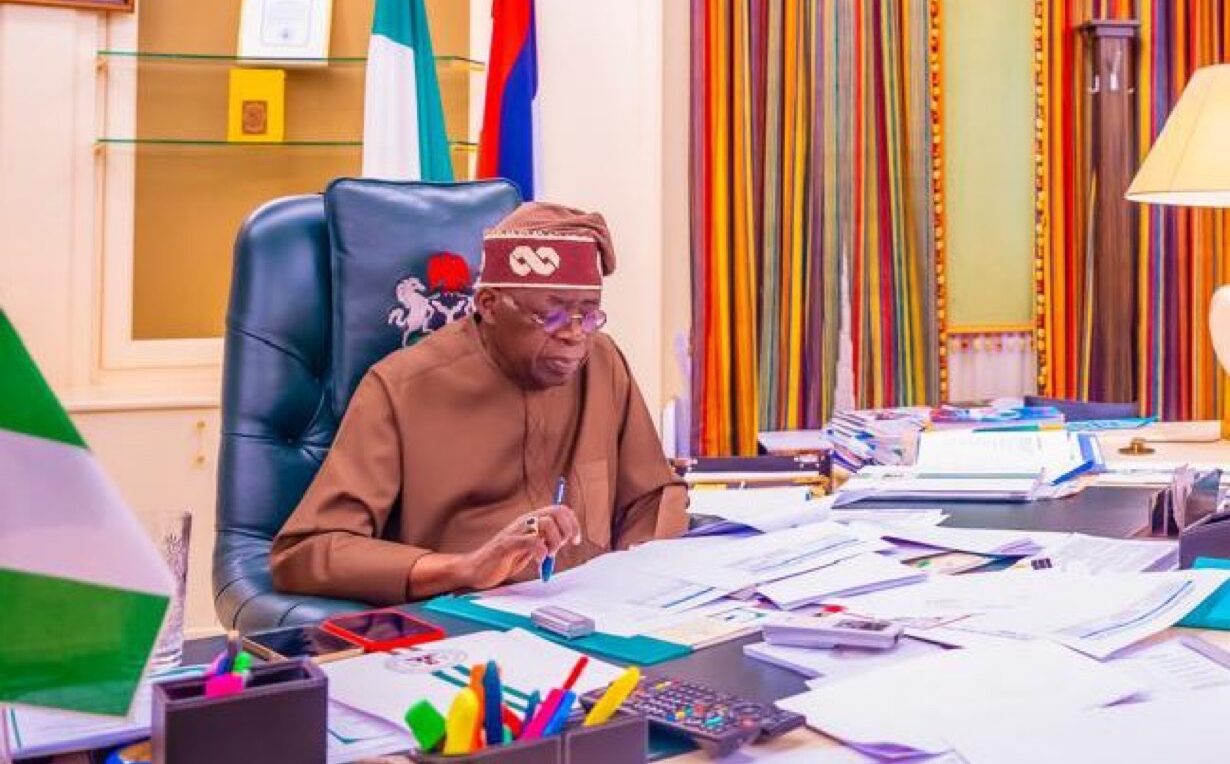
President Bola Tinubu has declared a three-day national mourning over the Ondo military aircraft crash and is also calling for a probe into the incident.
He also directed that flags should be flown at half-mast throughout the country as a mark of respect to the officers.
In a statement on Monday, presidential spokesman Bayo Onanuga said Tinubu “extends his deepest condolences to the family of the 25 passengers and seven crew members involved, the Chief of the Air Staff, Air Marshal Sunday Kelvin Aneke, and all officers, airmen and airwomen of the Nigerian Air Force.”
A military source confirmed to Channels Television that all 32 persons on board the aircraft died in the crash.
The passenger aircraft was on a “routine mission” from Benin City in southern Nigeria to the economic hub of Lagos when it went down at Igbokoda in Ondo State shortly after 9:00 am (0800 GMT), the President and the Air Force said.
“This is a painful moment for our Armed Forces and for the entire nation. Our Air Force personnel put their lives on the line every day to secure Nigeria. Their sacrifice will never be forgotten,” Tinubu was quoted as saying.
“I commend the Nigerian Air Force for activating an immediate Search and Rescue operation following the accident. I pray for the repose of the souls of the gallant officers and for Almighty God to grant their families and the Nigerian Air Force the fortitude to bear the unfortunate loss.
“I assure the Nigerian Air Force of the continued support of our administration as they continue their vital role in securing our nation. I also commend the swift response of first responders and the Ondo State Government at the crash site,” the president said.

The Confederation of African Football (CAF) has confirmed that the 2026 edition of its annual awards ceremony will take place in Lagos, Nigeria, on December 7.
The decision was reached at a virtual meeting of the CAF Executive Committee (EXCO), chaired by the organisation’s president, Patrice Motsepe, on Friday, 2 October.
The meeting also approved the CAF Competitions Calendar for 2026–2030, alongside amendments to the regulations governing the continent’s interclub competitions.
Nigeria will host another major CAF event, the organisation’s Ordinary General Assembly, on 21 November.
The 2026 CAF Awards will bring together leading footballers, coaches, clubs and administrators to celebrate outstanding performances in African football.
The ceremony recognises achievements across men’s and women’s football, including the Player of the Year, Coach of the Year, Goalkeeper of the Year, Young Player of the Year and Club of the Year categories.
Nigeria has enjoyed considerable success at the awards, particularly in the men’s and women’s Player of the Year categories.
Ademola Lookman won the men’s award in 2024, following Victor Osimhen’s triumph in 2023, making them the first Nigerian pair to secure consecutive victories in the category since Nwankwo Kanu and Victor Ikpeba achieved the feat in 1996 and 1997, respectively.
The 2024 ceremony, held in Marrakech, Morocco, also saw Nigeria’s Super Falcons named Women’s National Team of the Year, while goalkeeper Chiamaka Nnadozie received the Women’s Goalkeeper of the Year award.
At the 2025 edition held in Rabat, Morocco dominated the ceremony during a historic night in Rabat, with Achraf Hakimi (Morocco/Paris Saint-Germain) and Ghizlane Chebbak (Morocco/Al Hilal) winning the Men’s and Women’s Player of the Year awards, respectively.
Yassine Bounou (Morocco/Al Hilal) and Nigeria’s Chiamaka Nnadozie (Brighton & Hove Albion) claimed the Men’s and Women’s Goalkeeper of the Year honours, and Othmane Maamma (Morocco/Watford) and Doha El Madani (Morocco/AS FAR) were named Men’s and Women’s Young Players of the Year, respectively.
Beyond the awards announcement, the EXCO approved significant changes to the regulations governing the CAF Champions League and CAF Confederation Cup.
Under the revised rules, players will be permitted to represent more than one club during a single CAF interclub season, a change that could provide clubs with greater flexibility in managing their squads.
The committee also approved an increase in the number of players clubs can register, setting the maximum at 40 players at any point during the season.
Clubs will additionally be allowed to replace four players during the final registration window, provided those players have not featured in any CAF interclub match during the season.
Another significant amendment concerns disciplinary proceedings. All disciplinary matters will now be referred to the CAF Disciplinary Board, removing that responsibility from the Interclub Committee.
The changes are expected to influence how clubs approach player recruitment, registration and squad management in continental competitions.
The EXCO also approved the dates for the 2026 CAF Women’s Champions League, with the final tournament scheduled to run from 1 to 15 November.
The competition, which brings together the leading women’s club sides from across Africa, has become a major platform for the development and visibility of women’s football on the continent.
Nigeria’s Edo Queen’s participation in this year’s competition is presently being challenged following the annulment of their victory at the WAFU B tournament after a protest by Ampem Dakoa.
In another decision, CAF confirmed that Senegal will host the 2026 Beach Soccer Africa Cup of Nations from 28 November to 6 December.
The West African country, which won the previous edition, will host the tournament as it seeks to defend its continental title.


