
News
IGP Egbetokun Appoints CP Disu as PSO, Unveils New Policing Strategy


- /home/rhoncare/pointblank.ng/wp-content/plugins/mvp-social-buttons/mvp-social-buttons.php on line 27
https://pointblank.ng/wp-content/uploads/2023/06/IMG-20230623-WA0069-1000x600.jpg&description=IGP Egbetokun Appoints CP Disu as PSO, Unveils New Policing Strategy', 'pinterestShare', 'width=750,height=350'); return false;" title="Pin This Post">
- Share
- Tweet /home/rhoncare/pointblank.ng/wp-content/plugins/mvp-social-buttons/mvp-social-buttons.php on line 69
https://pointblank.ng/wp-content/uploads/2023/06/IMG-20230623-WA0069-1000x600.jpg&description=IGP Egbetokun Appoints CP Disu as PSO, Unveils New Policing Strategy', 'pinterestShare', 'width=750,height=350'); return false;" title="Pin This Post">
The Inspector-General of Police, Ag. IGP Olukayode Adeolu Egbetokun, PhD, NPM, has unveiled new policing strategies for the Nigeria Police Force. The IGP publicized the new strategy aimed at achieving operational successes and re-igniting public trust, today, Friday, 23rd June, 2023, during the inaugural conference with Strategic Police Managers comprising members of the Force Management Team, Assistant Inspectors-General of Police, Commissioners of Police and other Heads of Police Formations in the country, at the Goodluck Ebele Jonathan Peacekeeping Hall, Force Headquarters, Abuja.
The highlights of the IGP’s policing vision include; upholding the sanctity of the legal framework of the Nigeria Police Force; tackling the menace of crimes and criminality with the establishment of a specialized Quick Intervention Squad comprising combat ready Police Mobile Force personnel with effective and enhanced training in crisis de-escalation and violent crime reduction strategies; leveraging cutting-edge tools, data analytics, and intelligence networks for a robust and effective human and technical intelligence gathering process to enhance Police capacity; and strengthened inter-agency collaboration.
Similarly, the new policing vision focuses on enhancing the Police training curriculum with special focus on attitudinal and behavioural changes; improved welfare and resuscitating the Police Officer Support Unit (POSU) of the Police Medical Services to serve as confidential support and counseling facility for all police officers; implementing a new Recognition and Reward system to better motivate and encourage our dedicated personnel; and community policing, through a more vibrant engagement of the Police Community Relations Committee (PCRC), and the establishment of a Citizens Engagement Focus Group.
Meanwhile, the IGP has appointed CP Olatunji Disu as his Principal Staff Officer. CP Disu holds a B.A English (Education), PGD International Relations and Strategic Studies, MSc. Public Administration, Advanced Diploma in Forensic Investigation & Criminal Intelligence and MSc. Criminology, Security & Legal Psychology. He has attended several courses both within and outside Nigeria, and is a Member of several professional bodies including the International Academy of Forensics (IAF), National Association of Investigative Specialist, United States of America (NAIS), Nigerian Institute of Public Relations (NIPR), Chartered Institute of Personnel Management (CIPM) amongst others. He is Third Dan Blackbelter, and celebrated medalist in Judo who has served in various administrative, investigative, and operational capacities in the Force including as Commander Rapid Response Squad (RRS) Lagos, and DCP Intelligende Response Team (IRT), FIB, Abuja.
Also, other aides have been appointed by the IGP including CSP Ganiyu Adebowale as Personal Assistant (PA-IGP), SP Adewale Ajibuwa as Chief Protocol Officer (CPO-IGP), DSP Sheriff Lawal as Aide-de-Camp (ADC-IGP) and DSP Olawole Ogunwusi J. as Chief Security Officer (CSO-IGP).
The Inspector-General of Police reassures citizens that the Nigeria Police Force under his command will symbolize excellence, integrity, and compassion. He urged the citizens to collaborate with the Police to shape a future where justice triumphs, the vulnerable find solace, citizens go about their lawful businesses without fear of insecurity or molestation, and where every citizen can truly believe in the power of law enforcement.



Afrobeats music singer, David Adeleke aka Davido, has said he will seek the intervention of United States President, Donald Trump, if anything goes wrong during the forthcoming Osun State governorship election.
The singer made the statement during a livestream hosted by content creator Carter Efe, where he discussed his interest in politics and his concerns about the conduct of elections in Nigeria.
Davido said he would consider joining politics when he is convinced that the country’s electoral system is transparent and allows voters to freely choose their leaders.
According to him, he is confident of emerging victorious in an election that is conducted fairly.
He said the lack of transparency remains one of the reasons he has not ventured into politics despite his interest.
“Until there’s transparency, then I can go ahead with politics because nobody can beat me in any election,” he said.
Davido added that he would be confident of winning if Nigerians were allowed to vote freely and have their votes properly counted.
He also expressed concern about the upcoming Osun governorship election, saying he was waiting to see how the exercise would be conducted.
“I want to see what they are going to do in Osun. We are waiting,” he said.
The singer then disclosed that he would reach out to Trump if he became dissatisfied with the electoral process in Osun.
Davido said he would tag and call the US president and, if necessary, take his concerns to the White House.
“I’ll tag Trump, I’ll call Trump, everybody. If they still don’t see anything, I’ll go in front of the White House and say, ‘Help us,’”
“Trump will just say, ‘I think there’s a Nigerian artiste sending me a message. Don’t worry, my message will be delivered.’he said.
He stressed that his threat should not be dismissed as a joke, adding that he expected his concerns to reach the US president.
Davido concluded by calling on those involved in the electoral process to allow the people of Osun State to freely determine their next governor.
“Leave Osun alone oo, leave it,” he said.
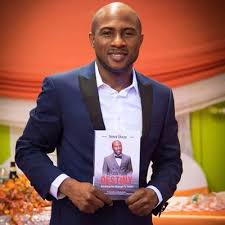
By Henry Ukazu
Destiny Friends,
The word ‘love’ is very significant. This is because of its descriptive power towDearards an action or feeling directed at someone or something. However, love means many things to many people, depending on one’s side of the divide.
Love is a beautiful thing. It is a beautiful experience and feeling when one gets it right. It breaks the heart when one loves someone and he/she is not loved back. Trust me, it really hits differently when one is loved in the manner they wished to be loved.
Love cuts all barriers of life, whether we are talking about purpose, health, academic, spirituality, finance, relationships, family, and career/vocation.
Let’s take a minute to dwell on the concepts of love as it relates to loving what one does.
Purpose:
Our purpose in life is much more important than our career. It’s instructive to note your profession is what you are trained to do as an attorney, doctor, engineer, accountant; your vocation is what one is paid to do as 9-5 work or skill work; but your ministry is your calling, that’s where you find your passion, your gift/talent. Our focus in life is to align our vocation, profession and ministry together.
Health:
If we love ourselves, we’ll pay attention to our health and that entails what we eat, how we exercise, and how we pay attention to our body. When we love our health, we’ll pay attention to what we do because our health will ultimately affect all we do.
Academic:
Loving what we do also affects our academics. It’s sad to see students who read majors they have no interest in just because of the job market. If one studies a major they don’t like, it will have an impact in their personal and professional lives. Imagine reading law when one’s interest is in accountancy, engineering or even Mass communication. The level of impact and fulfilment one gets studying a major they like is different from the impact they will deliver if they one don’t like the major. So, it’s advisable for one to study a major they have a strong interest in.
Spirituality:
Our spirituality plays an important role in what we do. We can’t succeed in life without the support of God. According to Evangelist Ebuka Obi, behind every successful man, there’s a spirit working for him. I totally agree with this saying because when you love what you do, the universe has a way of coming close and conspiring to make you succeed because it’s in alignment with God’s master plan and purpose for your life.
Finance
When we love what we do, it will have an influence on our finances especially when we are good at what we do. Everyone likes the best person who can do a job and that even entails paying for a premium service. One of the reasons why most people are poor is simply because they are not solving problems, even though they are solving problems, they are not solving the right problem, or they are not solving the right problem for the right people at the right places and time.
Relationships
To succeed in life, we must pay attention to our relationships because our relationships determine our network which ultimately determines our net worth. Loving what one does also entails being intentional in the people they let into their lives.
Family,
Family is the highest influence in a child’s life. When there is love in the family, the child will learn to love other people when they go outside. According to Mr. Okechukwu Ukazu, you can choose your boyfriend, girlfriend, husband, wife, and best friend, but you can’t choose your family. We don’t have control over who becomes our family either as parents or siblings because that’s how God designed it. Do you see why family is everything?
Career/vocation
Succeeding in life entails working in a profession or vocation we like. When we like what we are doing, and what we are doing like us, we shall be successful. It’s sad to see people working in jobs they don’t like just to pay the bills. It’s instructive to note that at creation God grants us talents and gifts to succeed in life, but because of the challenges of life, some of us now settle for something else. This is why some people are victims of defective success because as they climb the corporate ladder, one day, they will realize that they have gotten to the top only to realize they were climbing the wrong ladder of success.
Have you ever wondered why some people feel frustrated and depressed in life despite having resources at their disposal? It’s simply because they don’t like what they are doing. Loving what you do has a strong correlation to one’s physical and psychological and mental success in life.
In conclusion, to succeed, endeavor to love what you do.
Henry Ukazu writes from New York. He works with the New York City Department of Correction as the Legal Coordinator. He’s the founder of Gloemi. He’s a Transformative Human Capacity and Mindset coach. He is also a public speaker, youth advocate, creative writer and author of Design Your Destiny Design, Unleash Your Destiny and The Six Pillars of Succes . He can be reached via info@gloemi.com

Digital solution provider, Globacom, recorded the highest Internet subscriber growth among Nigeria’s major telecom companies for the month of May.
Data from the Nigerian Communications Commission, NCC, Nigeria’s total Internet users increased to 157 million in May, up from 154.3 million in April. That is a growth of 2.67 million users in one month.
Globacom led the market by adding about 1.2 million new Internet subscribers. This means Glo was responsible for almost half of all new Internet users in May.
The company’s subscriber base grew from 15.5 million in April to 16.8 million in May. Airtel came second with 1.07 million new users, moving from 54.8 million to 55.8 million. MTN added 382,894 users to reach 83.5 million.
T2 Mobile, formerly 9mobile, recorded no growth for the second month in a row. Its subscriber base remained at 802,534. This is despite its roaming agreement with MTN, which was approved almost a year ago to help T2 customers use MTN’s network in areas with poor coverage.
Industry experts say Glo’s strong growth is due to its ongoing network upgrade. Since last year, the company has been building new base stations, expanding its fibre network, and adding thousands of new 4G sites across cities and rural areas.
The upgrades have improved voice and data quality for customers, while Globacom remain committed to providing better network experience and affordable Internet services to more Nigerians.


