
Entertainment
‘I’m Now Grace-Charis Bassey, No Longer Bellinda Effah’


Award winning Nigeria actress and global brand, Belinda Effah on Monday 26th of April officially announced her name change in a press conference that took place at The Ethnic Hub.
The actress disclosed that her brother renamed her and her sisters because he felt they needed an English name.
She claimed that she bore the name without knowing it meant pretty serpent. Belinda explained that she researched about her name at a time when people started asking what her name meant.
Having discovered the meaning, she took steps to change her name 3 years ago but she backed out because she couldn’t withstand the tedious process.
According to her she had a divine encounter with God last year 15th of August to change her name.
“A couple of years ago I wanted to change my name when I found out that I could not really grasps the meaning of my name. Some people said it meant ‘beauty’ some other people said it meant ‘beautiful serpent’. So I was cut in between not knowing what the right meaning is. Linda seemed to have diverse meaning and I wasn’t quite comfortable with that.
“Also with the fact that Belinda was not the first name that my parents gave to me.
“My birth name is Uyu.
I came across Belinda in secondary school, one day my brother came up with the idea of changing my name and my sister’s name because we were all bearing native names. He came up with different names and asked us to pick. Funny enough I picked Melinda but I didn’t like the name because people started calling me Mirinda in school. So I decided to just go on with Belinda because they could not twist it to something funny like Mirinda.
“I should have known not to pick Belinda because my brother actually picked it for my sister but she said she wanted Fiona. She checked the meaning and it was cool and she went on with it. I didn’t check I just got carried away with Belinda because it sounded cool, it sounded hip, and that’s what I get all the time when people hear my name. they say oh, I like that name.”
“On the 15th of August 2020. I had a divine encounter with God to change my name to Grace.
“Nobody changed my name to Grace, God did.
So after my encounter with God, I called my parents and told them not to call me Belinda anymore, and my mom said wow… congratulations. The interesting part is that my mom said she named me Grace at birth.
“She said, she had a friend who bears Grace and she went through all the troubles with her during the Labour of my delivery. So she decided to honor her friend by naming me after her so she named me Grace. Since my father has the final say as to what name I bear, he insisted that I bear Uyu”.
Former Belinda adviced the world to bear names with good meaning as your name represents you.
“I believe that name should not be about how it sounds or how hip or cool it is but about the meaning, because name is about representation. When you are being identified by a name it represents you”.
Having narrated the aforesaid, she officially announced her new name and unveiled her new business name.
“So… dear world, ladies and gentlemen of the press, dear family and friends.
“I will like to be recognised and identified as Grace-Charis Bassey henceforth, and not as Belinda Effah anymore.
“I know it’s going to take a while for people to adopt to this, people may make mistakes and still call me Belinda. It’s ok, I’m giving you guys six months to get use to it.
“I’m Grace-Charis Bassey and I want to unveil my new logo for my business. From House Of Belinda to Grace-Charis Bassey empire. So this is my representation now. A couple of people have asked me what Charis means. Charis means Grace, so I’m double dose of grace,” she concluded.


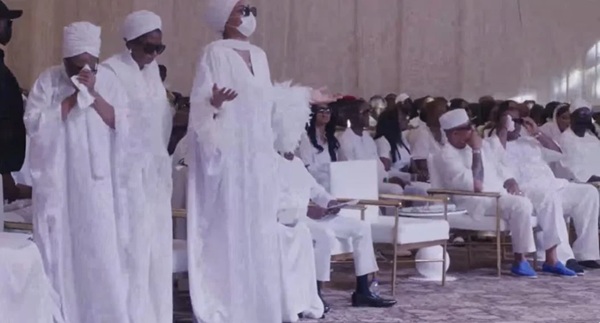
Members of Nigeria’s entertainment industry turned out in large numbers on Wednesday for the service of songs of late actor Alex Ekubo.
Ekubo died on May 11, 2026, after a battle with kidney cancer.
Colleagues, friends, and dignitaries filled The Monarch Event Centre for the ceremony, dressed strictly in white as requested by the Ekubo family.
Attendees included Funke Akindele, Kate Henshaw, Chioma Akpotha, Ebele Okaro, Nancy Isime, Ruth Kadiri, Nkechi Blessing, Stan Nze, Blessing Obasi, Ik Ogbonna, Ebuka Obi-Uchendu, singer Chike, and socialite Cubana Chief Priest.
The evening featured worship led by gospel ministers Peterson Okopi and Ebuka Songs, with Pastor Jerry Eze, Nathaniel Bassey, and Kaestrings also ministering.
The Ekubo family had earlier released an obituary on the late actor’s Instagram page, asking the public to keep them in prayer.
Wednesday’s service of songs officially opened Alex Ekubo’s burial rites.
The funeral moves to Arochukwu, Abia State, for a wake-keep on June 17, with burial scheduled for June 18.
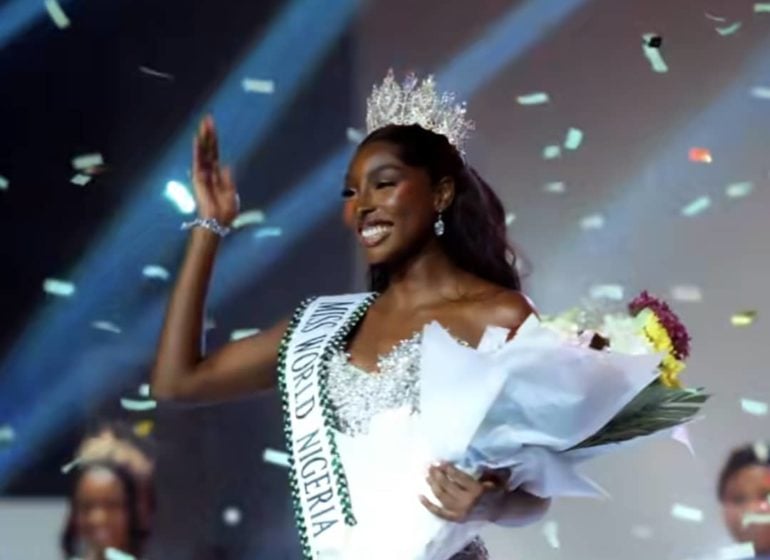
Tamunosoye Karibi-George has been crowned Miss World Nigeria 2026 after emerging winner at the pageant’s grand finale held at Balmoral Hall, Federal Palace Hotel, Lagos, on Saturday, June 6, 2026.
The 26-year-old beauty queen, who represented Bayelsa State and hails from Port Harcourt, Rivers State, beat 19 other contestants in the competition themed “Pride, Power and Purpose.”
She succeeds Joy Mojisola Raimi, Miss World Nigeria 2025, and will represent Nigeria at the 73rd Miss World Festival scheduled to hold in Ho Chi Minh City, Vietnam, from August 9 to September 5, 2026.
Miss Karibi-George is the founder of Beyond Labels, an initiative that supports children with special needs and promotes inclusion and equal opportunities.
Joining Karibi-George in the top five were Dionne Chisom Nwagbo of Anambra State, who finished as first runner-up; Shuntell Ezomo of Edo State, who emerged second runner-up; Irene Irene of Abuja; and Gold of Rivers State.
Miss World Nigeria, organized by the Silverbird Group, is one of Nigeria’s leading beauty pageants and selects the country’s representative for the international Miss World competition.

Award-winning artiste – Davido – is scheduled to perform at FIFA’s World Cup 2026 Countdown Concert in Los Angeles, adding another major global platform to his career.
Davido will perform alongside Major Lazer, the music project led by producer Diplo.
FIFA announced the lineup on Instagram, noting that more special guests will be unveiled in the coming days.
The concert is part of FIFA’s first synchronised live entertainment series across the tournament’s three host nations: the United States, Canada and Mexico.
“Featuring Diplo’s Major Lazer and Davido, and more special guests to be announced soon,” FIFA wrote.
The Los Angeles show will open doors at 5:00pm PT, with the live broadcast beginning at 6:00pm PT.
The series is designed to link audiences across the host countries, with simultaneous live performances streamed from Mexico City and Toronto.
FIFA said the event will stream globally across its digital platforms, including an exclusive livestream on TikTok.
Full concert and behind-the-scenes footage will be available on VuMe Live the following day.
The 2026 FIFA World Cup begins June 11, 2026.


