
Personality in Focus
INEC Gets New Acting Chairman, May Agbamuche-Mbu


- /home/rhoncare/pointblank.ng/wp-content/plugins/mvp-social-buttons/mvp-social-buttons.php on line 27
https://pointblank.ng/wp-content/uploads/2025/10/16ad0350-a394-11f0-a8f6-eb7ec80af907.jpg.webp&description=INEC Gets New Acting Chairman, May Agbamuche-Mbu', 'pinterestShare', 'width=750,height=350'); return false;" title="Pin This Post">
- Share
- Tweet /home/rhoncare/pointblank.ng/wp-content/plugins/mvp-social-buttons/mvp-social-buttons.php on line 69
https://pointblank.ng/wp-content/uploads/2025/10/16ad0350-a394-11f0-a8f6-eb7ec80af907.jpg.webp&description=INEC Gets New Acting Chairman, May Agbamuche-Mbu', 'pinterestShare', 'width=750,height=350'); return false;" title="Pin This Post">
A National Commissioner at the Independent National Electoral Commission, May Agbamuche-Mbu, has taken over as the acting Chairman of the Commission.
This followed the formal handover of duties by Professor Mahmood Yakubu, who is proceeding on a terminal leave.
The transition was announced during a stakeholders’ meeting with Resident Electoral Commissioners held on Tuesday at the INEC headquarters in Abuja.
Speaking at the meeting, Yakubu explained that he was stepping down in accordance with Section 306, Subsections 1 and 2 of the 1999 Constitution (as amended).
“In recognition of the significant challenges ahead, and having had the honour of serving the Commission for the past 10 years, with only a few weeks remaining in my tenure. I have made a decision.
“In the interim, I am handing over to one of the most senior national commissioners by date of appointment. Following consultation with other national commissioners, May Agbamuche-Mbu will serve in an acting capacity pending the appointment of a substantive chairman of the Commission.
“I hope that this will afford the appointing authorities adequate time to appoint a new chairman. It will also enable the new chairman to quickly settle down to the task of conducting elections and electoral activities in Africa’s most demographically and logistically complex environment.
“Since 2015, I have worked with 24 national commissioners and 67 resident electoral commissioners, so also to the staff of the Commission. Those involved in elections or vastly knowledgeable about election management understand the conduct of elections and what it entails. I will forever cherish the support of successive secretaries and staff of the Commission nationwide,” he noted.
Yakubu expressed gratitude to colleagues, stakeholders, civil society groups, development partners, and Nigerians, acknowledging their roles in supporting electoral processes during his tenure.
He also praised members of the National Youth Service Corps, calling them “among the most educated and most patriotic and also most knowledgeable election officials I have worked with.
“Above all, I thank Nigerians for their comments as well as criticisms, which encouraged rather than discouraged us to persevere.”
As part of his farewell, Yakubu presented two publications documenting the Commission’s work during his tenure: Election Management in Nigeria 2015–2025 and Innovations in Electoral Technology 2015–2025.
“All that remains at this point is for me to pray that God will continue to bless our country and our democracy,” Yakubu said as he handed over to Agbamuche-Mbu.
He added, “It is now my pleasure to sign my official handing over notes and present the same to Agbamuche-Mbu. And from that point, I will take my exit.”
Before taking his exit, the outgoing chairman outlined the Commission’s preparations for several upcoming elections, including the Anambra State governorship election next month, the Area Council election in the Federal Capital Territory in February 2026, the Ekiti State governorship election in June 2026, and the Osun governorship election in August 2026.
He also confirmed that “INEC has already begun preparations for the 2027 general elections” while awaiting the passage of “a new Electoral Act currently before the National Assembly.”
“Beyond these reviews, the commission needs to further clean up the voters’ register, review the locations of some of the polling units, and allotment of voters to them. The management of party primaries is another major area of activity,” he said.
Yakubu reflected on the logistics and challenges of managing Nigeria’s electoral process, highlighting issues such as insecurity, natural disasters like floods, and the need to update frameworks for internally displaced persons’ voting.
“Over the years, we achieved a lot in responding to challenges and monitoring our introducing many innovations. We have consolidated the biometric register of voters and replaced many of our manual processes with digital platforms and applications,” he said.
He listed innovations introduced under his leadership, including technologies for locating election facilities, virtual training, management of political party finances, and monitoring elections through the Election Monitoring and Support Centre.
“Indeed, we have made tremendous progress, but a lot more needs to be done,” he said.
Before his foray into electoral administration, Yakubu, born in May 1962, served as Executive Secretary of the Education Trust Fund.
Former president Muhammadu Buhari appointed Yakubu as INEC on October 21, 2015, following Senate confirmation, and he assumed office on November 9, 2015, succeeding Professor Attahiru Jega.
In 2020, he was reappointed for a second five-year term, again confirmed by the Senate — first in Nigeria’s democratic history.
The Punch



Kardinal Business Travel, a travel technology company with African and global focus, was among 60 startups that pitched at the 2nd edition of the Economic Community of West African States (ECOWAS) Startup Awards, held at the ECOWAS Commission headquarters in Abuja recently.
The company’s Chief Executive Officer and Founder, Cornelius Ugwunwa, presented the company’s case at the three-day event. The awards was part of an ECOWAS initiative to help West African businesses and startups scale through digital transformation, regional integration and sustainable value chains, with the aim of widening access to global markets.
Temitope Kareem, founder of Nigerian healthtech firm HubPharm Africa, won the top prize of $30,000. Senegal’s Gaynako took home $20,000 as first runner-up, while Steve Bah Blesson’s MyOpinion from Côte d’Ivoire won $15,000 as second runner-up.
Speaking during his pitch, Ugwunwa said Africa needs a new system for business travel. He cited a market with $75 billion in inbound travel spending and a strong business travel component in 2025, while travel and tourism as a whole contributed $228 billion to the regional economy.
“When a company sends its employees across Africa for a business engagement, we at Kardinal noticed the challenges of countless inboxes, spreadsheets and emails, mostly after the trip.
Businesses keep asking: How much did we spend? Who did we spend it on? Was it above or below budget? Can we reconcile everything on one platform?” he said.
He described African business travel as a $30 billion market that is largely fragmented and overly dependent on manual processes.
According to him, many businesses lose over $1 billion to manual travel processing and cannot track spending in real time. “That is why Kardinal exists: to solve this entrenched problem,” he said.
Ugwunwa said GoKardinal is an artificial intelligence-driven platform built to track expenses for African businesses. It brings the entire business travel lifecycle (planning, budgeting, booking, financing and expense tracking) onto one platform, in real time.
“GoKardinal is not another travel platform. It is an infrastructure for business travel, powered by AI for expense management,” he said, adding that the idea is to help businesses move without delay from one location to another to do their best work, expand and make profit.
On the company’s performance, he said the platform serves over 51 businesses in Nigeria and across Africa, with estimated weekly profit of $10,000 and gross merchandise value of over $1 million, growing at 65 per cent annually. he added.
He noted that about 80 per cent of African businesses still run their business travel manually, without any form of expense tracking, in a market worth over $30 billion annually. “African business travel is not just travelling for the fun of it.
It is an ecosystem with the potential to generate over $70 billion when digitalised,” Ugwunwa said.

The President of Security Resources & Risk Management Academy, Lagos, Mr. Matthew Ibadin, has charged officers of the Nigerian Armed Forces and allied nations to practice emotional discipline, warning that unmanaged anger remains a greater threat to a Staff Officer than the enemy.
Ibadin, who is also a doctoral researcher at the Nigerian Defence Academy (NDA) and University of Abuja, stated this on Monday while delivering a lecture on “Emotional Discipline Under Pressure and Anger Management for Staff Officers” to participants of Senior Course 48 at the Armed Forces Command and Staff College (AFCSC), Jaji, Kaduna.
The lecture was attended by 436 officers comprising the Nigerian Army, Nigerian Navy, Nigerian Air Force and officers from eight friendly nations.
Describing anger as “a temporary madness that leaves a permanent record,” Ibadin warned officers that “the line between a respected officer and an inmate is thinner than you can imagine.”
“Anger may enter the room, but must never take command,” he said.
The Lion Principle
Illustrating his point with the parable of the lions, Ibadin noted that while both male and female lions roar, the female roars only when necessary and lives 15-18 years compared to 10-12 years for the male.
“She lives longer not because she is weaker, but because she is more disciplined. Many of us have become male lions in uniform – fighting juniors, spouses, traffic, minor disagreements even when no real threat exists. That constant agitation slowly destroys what you have built,” he said.
He therefore charged officers to “be a female lion in strategy and a male lion only when tactically necessary.”
Five Battlefields Where Anger Destroys
Ibadin identified five battlefields where undisciplined anger destroys officers: Health, Home Front, Office and Command, Career and Prison, and Relationships.
On health, he described anger as a silent killer that triggers hypertension, stroke and cardiac arrest, noting that many officers survive the war front but do not survive peacetime.
“At Jaji, your rank commands respect, but at home your rank is irrelevant. If you win at the office and lose at home, you have lost. An officer whose home is under emotional fire cannot think clearly at the command post,” he cautioned.
He warned that signatures appended in anger to operational orders, procurement papers and personnel assessments could lead to Boards of Inquiry, career ruin and mission failure.
He added that 70 percent of inmates in correctional centres for murder never planned to kill, but acted in a moment of unmanaged anger.
Practical Tools
Ibadin introduced practical tools including the 90-Second Rule and the S.T.O.P Protocol – Stop, Take a Breath (4-4-4), Observe, and Proceed with Discipline – for decisions under pressure.
He adopted Aristotle’s five tests for disciplining anger: Right Person, Right Reason, Right Time, Right Degree, and Right Manner.
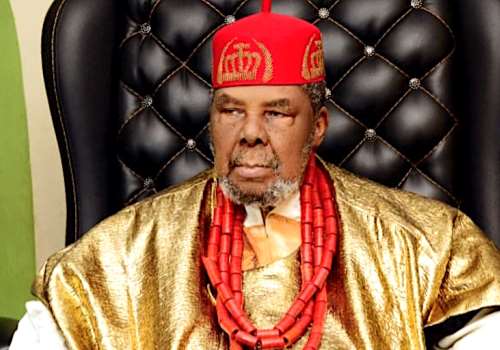
Veteran Nollywood actor, Pete Edochie has declared Chinua Achebe’s 1958 novel ‘Things Fall Apart’ as the greatest African book of all-time.
Speaking in a recent interview with TV3, Edochie explained that ‘Things Fall Apart’ is the greatest African book ever written because it tells the African story.
He stated that the book wouldn’t have been as popular as it is if it were telling the story of the colonisers.
He pointed out that many other African authors have also made efforts in telling African stories since ‘Things Fall Apart’ but none is as “strong” as it.
“The reason why ‘Things Fall Apart’ is the greatest book ever written on the African continent is because it is telling our own story.
“If it had been telling the story of the White man, it won’t be that popular. Many others have made efforts since then but not as strong as ‘Things Fall Apart’,” he said.
He urged African writers and creatives to focus on telling African stories, stressing that it would be their unique strength on the global stage.
The movie star, however, lamented that Africans were allowing their talents to be submerged by embracing foreign influences.
“We Africans permitted our talents to be submerged by overseas influences. I remember once upon a time I was being called Elvis Presley and John Wayne.
“I actually enjoyed answering those names but at some point I had to discard them and pick a name that’s culturally relevant to me. Then I went back to the root and started answering Uwadiegwu,” he added.
Source: DailyPost


